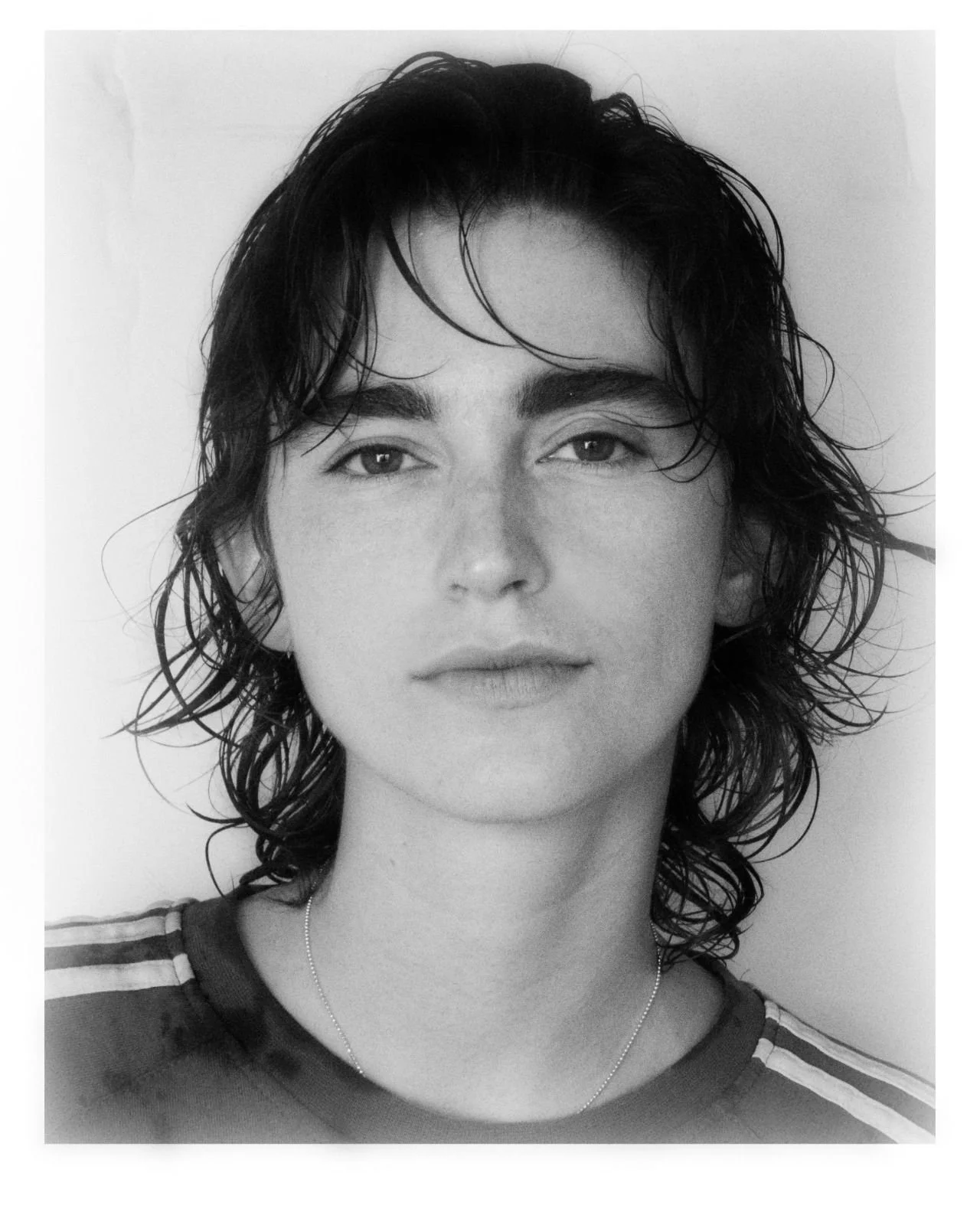
Pressing close; closer. Split open, then gathered.
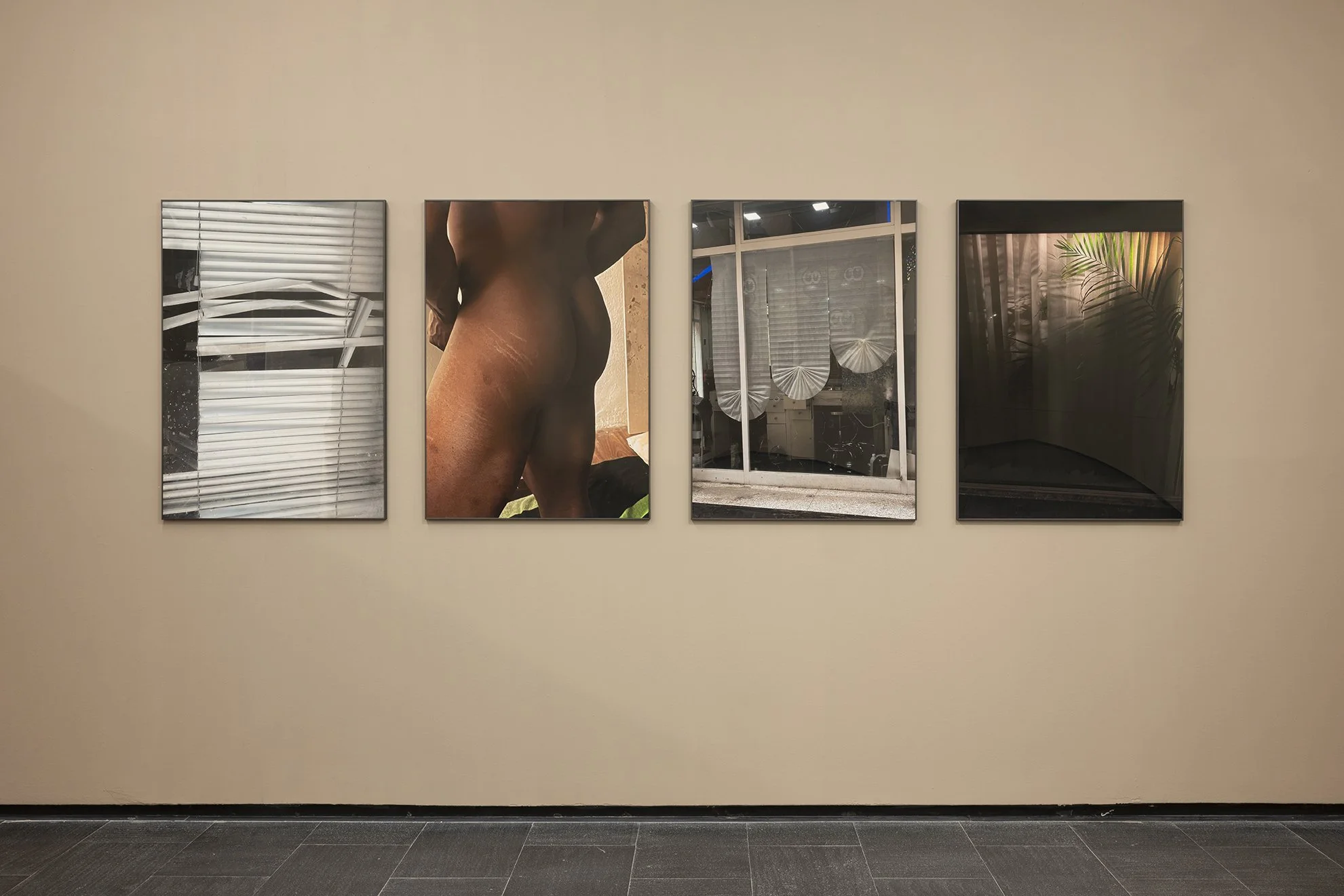
Installation view of Lucía Àngel C. Pino: You Who Have Beautiful Manners. Courtesy of the artist and CA2M, Madrid.
You Who Have Beautiful Manners marks the first retrospective of Lucía Àngel C. Pino at a public institution in Madrid. Curated by Aimar Arriola, the exhibition unfolds in two tempos, reflecting both a site-specific response to radically different spaces within the museum and a curatorial interest in delineating, through a syntactical exercise, what may be considered two bodies of work, or rather, two recent articulations of the artist’s long-term concerns.
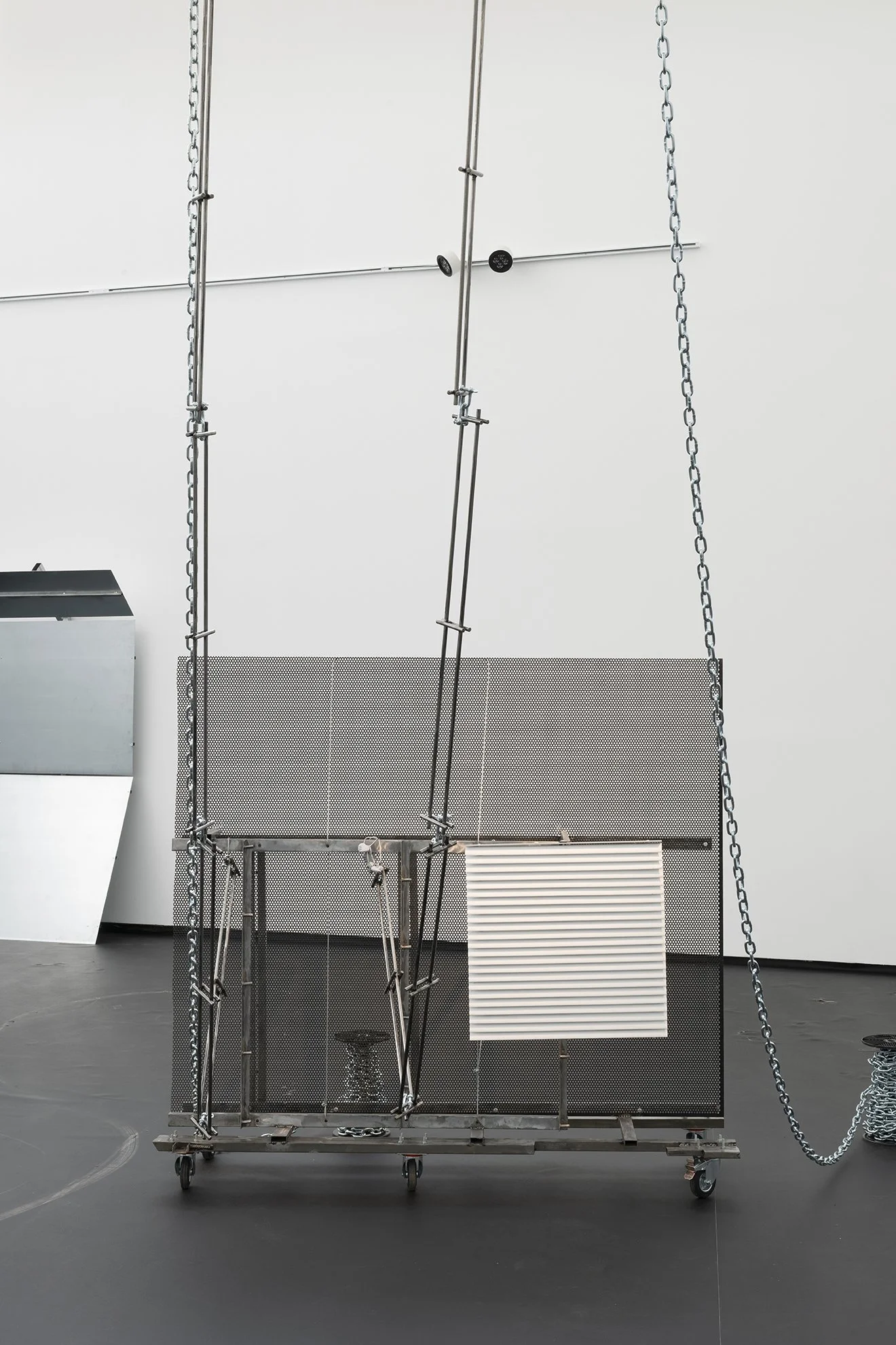
C. Pino’s work is indeed hard to categorize, not only because of what is formally evident—their installations propose sculptural entanglements that bring together disparate objects, media, and visual strategies—but also because theirs is a practice focused on assembling and re-assembling old and new material histories. Given their interest in circular economies, it is likely that some of the elements shaping this project will be reused in future ones, each carrying its own background and leaving a syncretic diegesis in its wake. Still, the exhibition proposes two sets or stages—two frameworks from which to negotiate with this methodological wholeness: denim works and photographs in one room, metal works in the other. There seem to be logical drives behind such a division—matching the scale of the pieces to that of the building, playing with a domestic–monumental contraposition, or simply engaging with the languages that have been emerging in their recent works. However, there’s no particular sense of delineated progression from one space to another, no A to B. When I head to the second room, the sculptural ensemble feels loosely familiar. Then I start tracing the surfaces around me—a white aluminium blind, first of all—and realize that I am inside a recursive exercise, one that enables a self-sustaining dynamic. The same motifs appear, soften, and reappear before me, operating as signifiers without committing to a single meaning; their character is not fundamental but scenographic.
Installation view of Lucía Àngel C. Pino: You Who Have Beautiful Manners. Courtesy of the artist and CA2M, Madrid.
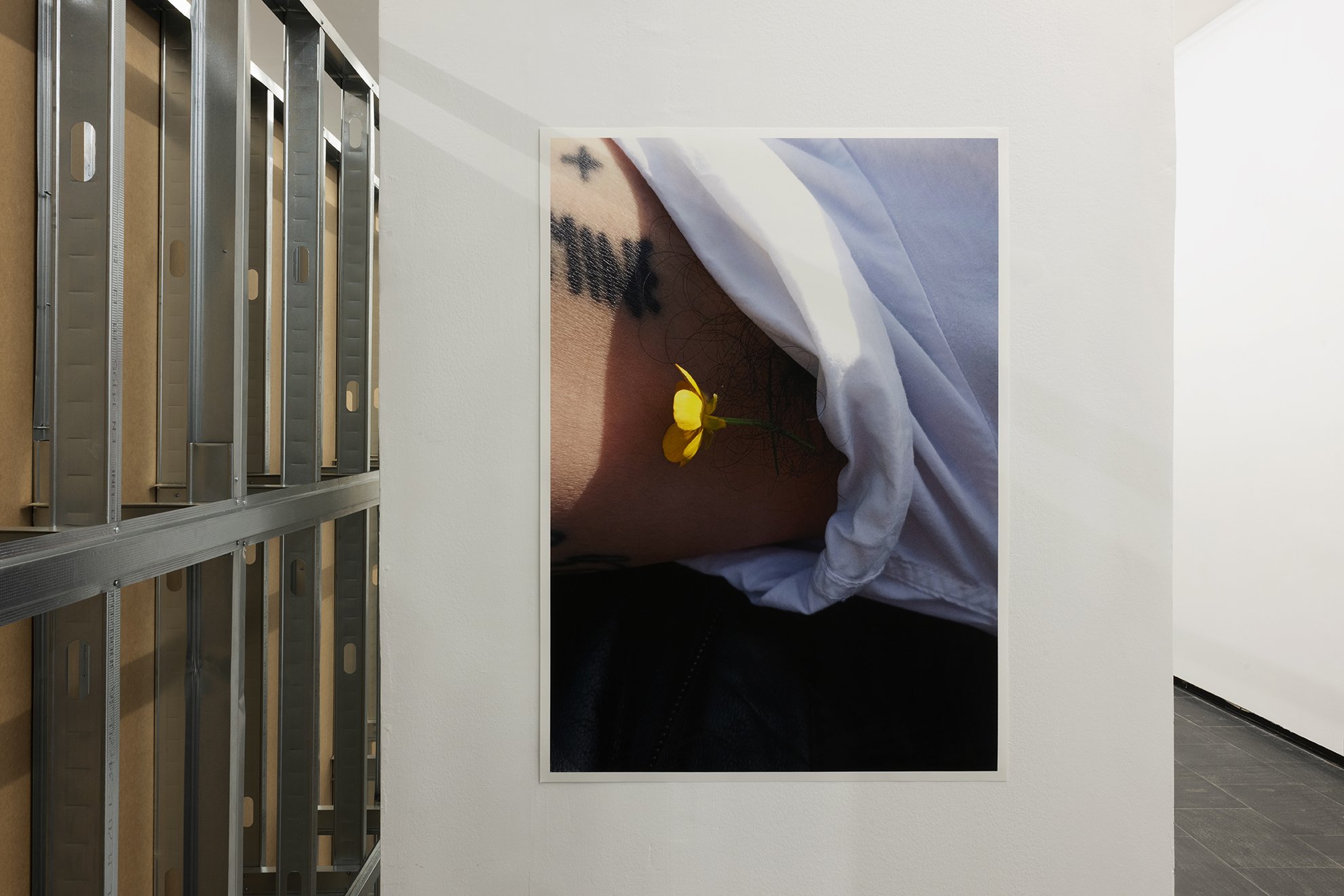
This poetic “cleavage” is further underscored by a containment system designed by Roger Serret i Ricou. Following a closed-circuit logic, the exhibition display guides me along a path that ends where it started; to reach the exit, I have to retrace my own steps, so, without noticing, I’m back at the beginning. There’s a persistence in this thought process, in this circular gathering. To my right, a set of industrial panels closes off the atrium that would otherwise feel immense—in a lonely way, like those public spaces meant only to be walked through. From here, I only see the back of these metallic screens, whose articulated structure folds in on itself, hiding what lies beyond, which I have already seen. To my left, the very same hallway: a corridor built up by drywall modules that leads me to the smaller space, more conventional in appearance but painted craft-sand—a choice that will nonetheless disrupt anyone seeking an immaculate, “neutral” white surface to lean on. It’s no coincidence that the first work one encounters is a close-up image of an armpit, with a flower tangled within it, and half covered by a white cotton T-shirt. All these access architectures bias the perception of what I have just experienced, of my own empirical knowledge [1]. There’s a sensual inclination toward opacity—an obscure lexical regime, offset by the directness of the infrastructural artifice opening up, bluntly.
Installation view of Lucía Àngel C. Pino: You Who Have Beautiful Manners. Courtesy of the artist and CA2M, Madrid.
You Who Have Beautiful Manners is the third chapter in a trilogy about love. Preceding it, But If u Love Us (Centro Botín, Santander, 2023–24) and U said Stay, so I stayed (Galería Elba Benítez, Madrid, 2024–25) introduced a lexicon that revolves, among other issues, around the dynamics of representation of queer experience: not merely around what gets to be visible, but rather around the conditions of possibility of this representational regime and the negative ontological spaces resulting from specific processes of queering within particular contexts—which is to say, particular absences, traces, and stories. Since this project is a continuation, it gets hard to fully grasp what I am seeing. In fact, all the practices of concealment articulated by both the works and the display seem to hinge on the same paradox: what you see is partial, yet more than what you would usually perceive. Or, the representable holds what is non-representable [2]. The cadence of decisions, materials, and support structures that shape the exhibition provides a simple lesson in historical materialism: when something becomes visible, gaining access to certain spaces of representation, it does so sustained by an invisible chain of agents. There is no act of enunciation that does not entail displacement, and there is always a lot of labor—and actual workforce—behind it.
On my way out, I stick to the title: you who have beautiful manners. From a verse of Sappho translated by Anne Carson, to the words of Lebanese author Jalal Toufic, or what is found in an archival photograph of Syria before 2011, C. Pino’s titles seem to speak to someone in particular, seeking an active interlocutor, a lover, or an accomplice. Neither closed nor fully open, this statement marks an entrance, an outset, giving a sense of accountability to what happens inside the exhibit room. Having crossed that linguistic threshold, I left the museum halfway—still there, though not there completely. And I run that phrase through my head all day, and the following days, and all the days I spend writing this article. It’s a symbolic game, of course, just like the broken, theatrical linearity: another way to make tangible, physically present, in the mind that stays awake, vigilant, what is already in there, pressing closer.
References:
[1] Rebeca Schneider: Performing Remains, 2011.
[2] Bea Ortega Botas: Sobre You Who Have Beautiful Manners de Lucía C. Pino, 2025.
Lucía Àngel C. Pino: You Who Have Beautiful Manners was on view at CA2M from November 7, 2025 to March 8, 2026.