.webp)

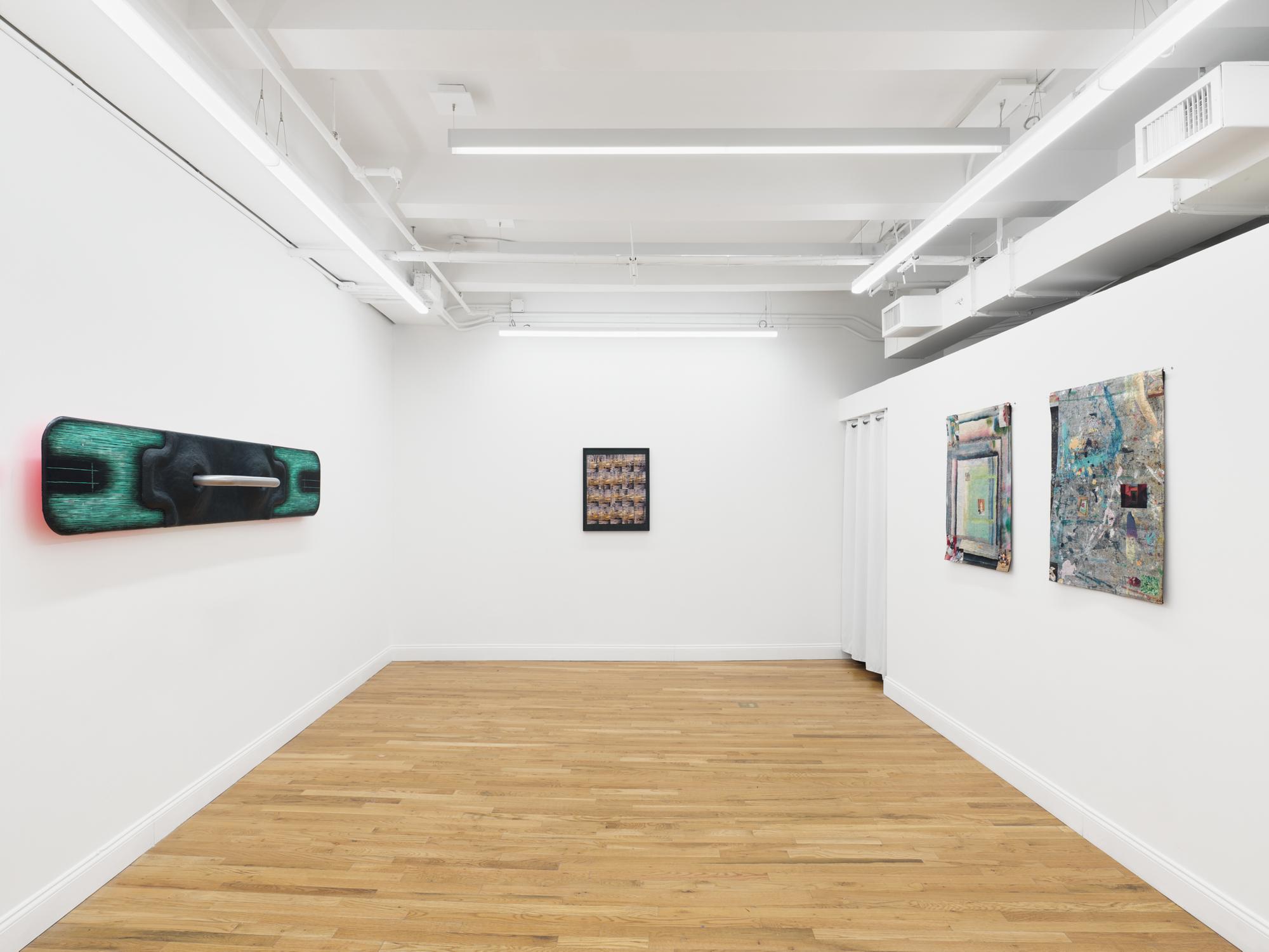
“Wetware” at RAINRAIN Gallery, Curated by Spine
Review
There are images that age alongside us and others that wait for time to turn against them. William Eggleston’s photographs are the latter. The Last Dyes at David Zwirner, New York, presents the final dye-transfer prints ever made from Eggleston’s negatives, marking the end of the analog process that defined his practice. Yet what feels most consequential about this exhibition is not the death of a technique, but the altered life of the images themselves. The world they preserve, locked in these frames, is one we can no longer inhabit. It is in that space between what is seen and what can no longer be touched that the terror of these images resides.
When William Eggleston debuted his 1976 exhibition, Color Photographs, at the Museum of Modern Art, he presented 76 dye-transfer prints to an audience skeptical of color photography’s artistic legitimacy. Today, in a world over-indexed with images, it is Eggleston’s framing, not the dye-transfer process, that now carries the greater gravity. His persistent use of a low vantage point lends the ordinary a cinematic sensibility, intensifying the pursuit that grounds these pictures: a diabolical solitude.
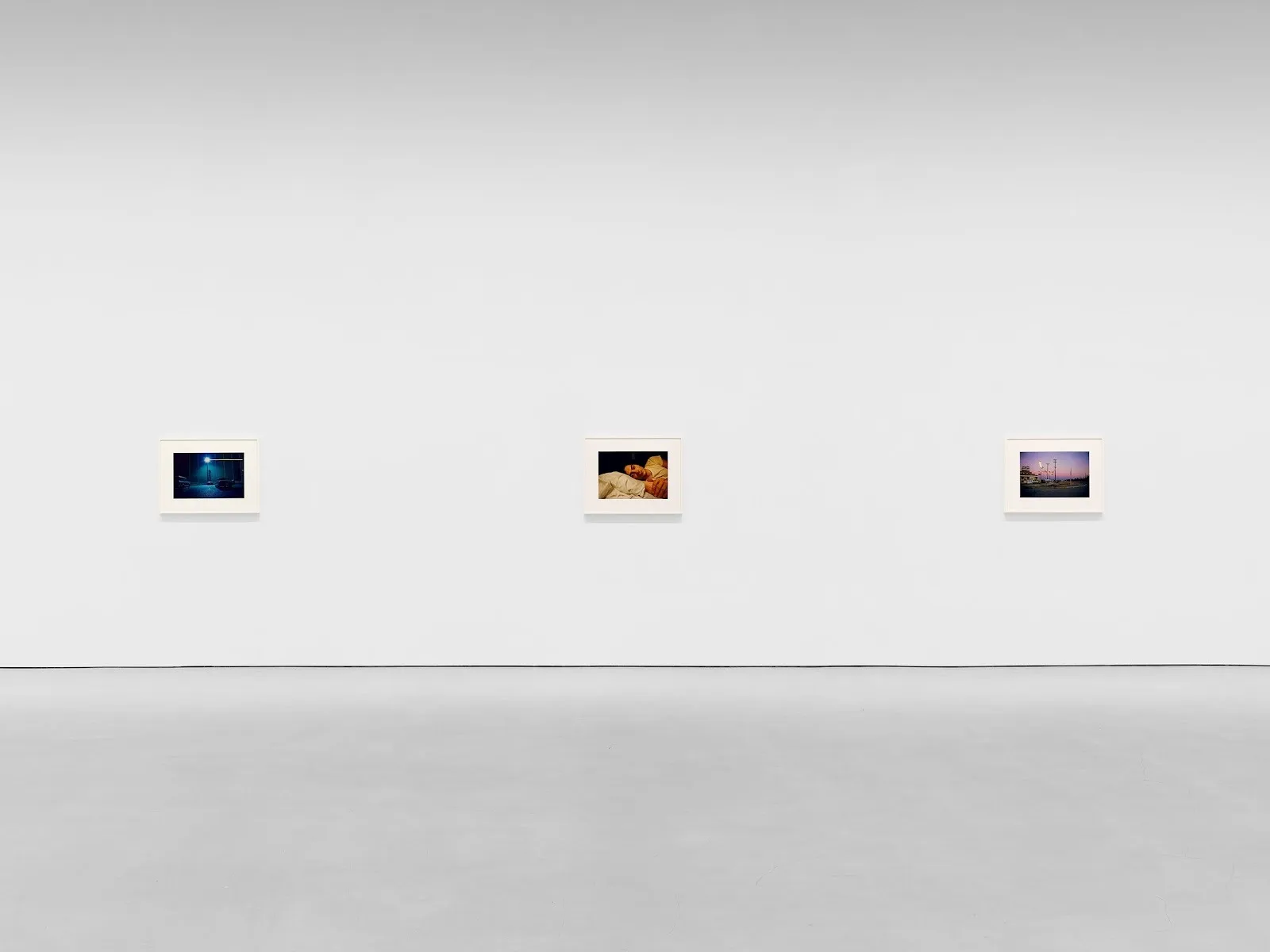
The Last Dyes gathers images from the Outlands and Chromes series (1969–74) alongside works from the 1976 exhibition. The iconic Greenwood, Mississippi (Untitled, Red Ceiling) (1973) is replaced by a similar image, Untitled (1973), which features a saturated blue ceiling. Shot from nearly the same position, the single exposed bulb juts from a light fixture stripped of its canopy. An extension cord slices across the ceiling, structuring the composition, while the top of a curtain and a hanging belt anchor the lower edge of the frame. The tension arises less from chromatic intensity than from spatial compression. Here, color acts as a descriptor, while the framing traps the view into a state of stillness. Without that structural rigor, the view would dissolve into saturation.
The selection of photographs for The Last Dyes uses the remaining dye-transfer materials Eggleston amassed from Kodak over the years, delivering the full force of his vision for longtime admirers and those encountering these works for the first time. The materiality of the dye-transfer almost reads as painting, rich and physical. Perhaps the most direct of the group is the self-portrait, Untitled (1970), shot head-on while Eggleston lies in bed, wearing a white T-shirt against a white pillowcase, surrounded by a sea of negative space that feels unending. This is the moment photography stretches against its own bounds: pushing into a sculptural realm, frontloading a chiaroscuro known to painting, and, in that single frame, challenging the medium itself.
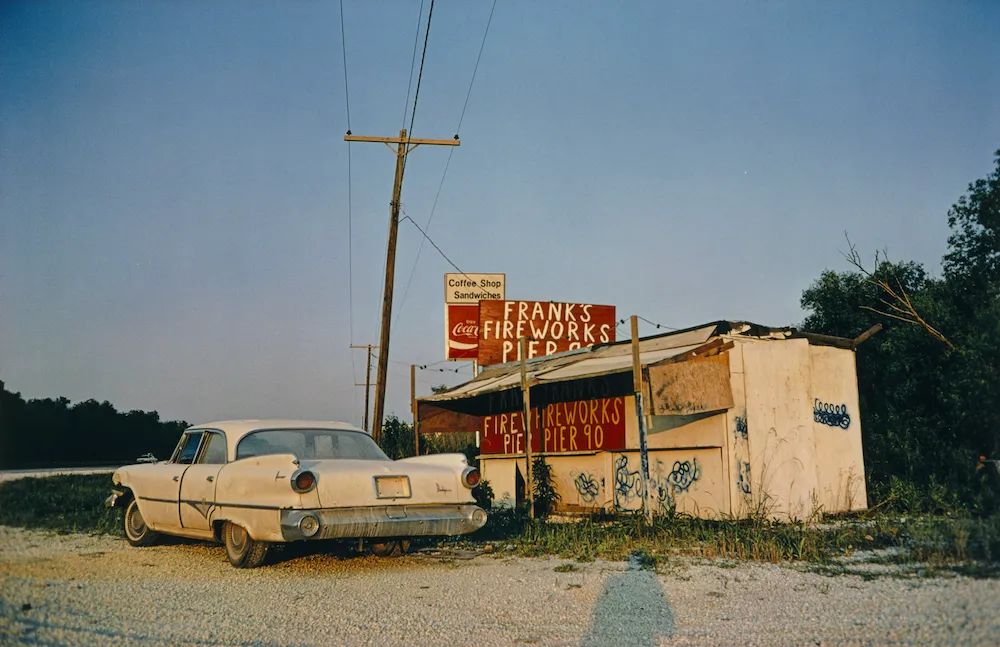
The world around us, as Eggleston had understood through examining the banal, has conditions that go ignored because they are not part of the theatre we call life. The impact of five decades has exposed the privilege that once allowed these images to appear neutral or mundane, even democratic in vision. This is not to argue that the past becomes less defiant with time, nor that distance softens its hypocrisies or injustices. Rather, the question these images ask today is how to measure the slowness of a past world against the one that consumes us now. Just as Eggleston’s gaze once revealed a changing American landscape, contemporary viewers now approach these photographs in reverse: not to discover the present in the ordinary, but to locate the conditions that once made such ordinariness seem possible.
The prints in The Last Dyes feel more urgent than painting, more bodily than a chromogenic print. Untitled (1970), commonly known as Red Toilet, makes this shift palpable. The dense red and green dyes saturate the cramped bathroom with suffocating intensity. Shot from the ground, the gaze moves upward toward a lifted toilet seat set aglow by a noxious red light. What ultimately commands attention is the small metal vent near the top of the bathroom wall, which suddenly reveals the image’s progression of thresholds, more aptly understood as portals. Today, these portals transform the bathroom into a mausoleum. This is how an image can change on you, sometimes dramatically, with time.
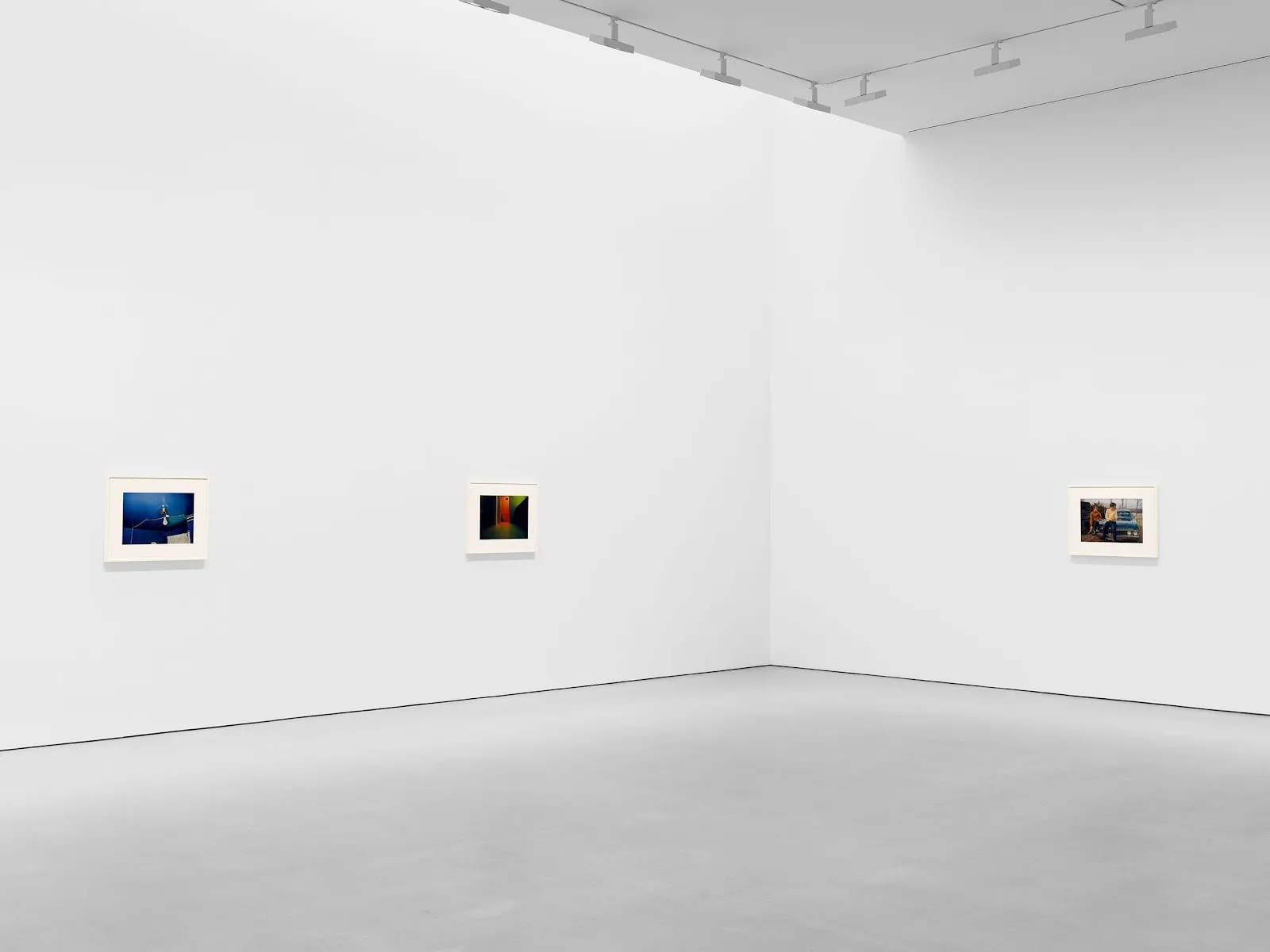
Viewers of the exhibition will arrive with different motivations: the desire to witness the conclusion of an analog process, admiration for the sheer mastery of dye transfer, nostalgia for one’s own attachment to Eggleston’s world, or curiosity about a window into another time. What lingers, however, is not predictability but disillusionment, the sense of a world once known and now experienced differently through the act of looking. The American vernacular, as Eggleston once captured, has eroded over time. This disillusionment is separate from the determinants shaping Eggleston’s choices across his career. Those decisions remain tied irrevocably to their moment in time, to the medium itself, and, crucially, to the South.
The finality of the analog printing process, as it was known to Eggleston, does not merely close a chapter on its mechanics. It carries with it the disappearance of a world that relied, however imperfectly, on a slowness that could carry a singular vision like Eggleston’s to the surface. That these final images are rendered through such extreme dye saturation only underscores their belonging to a theater of the past, one that now appears less distant than unreachable.
William Eggleston: The Last Dyes is on view at David Zwirner, New York: 19th Street, from January 15 to March 7, 2026.