
.webp)
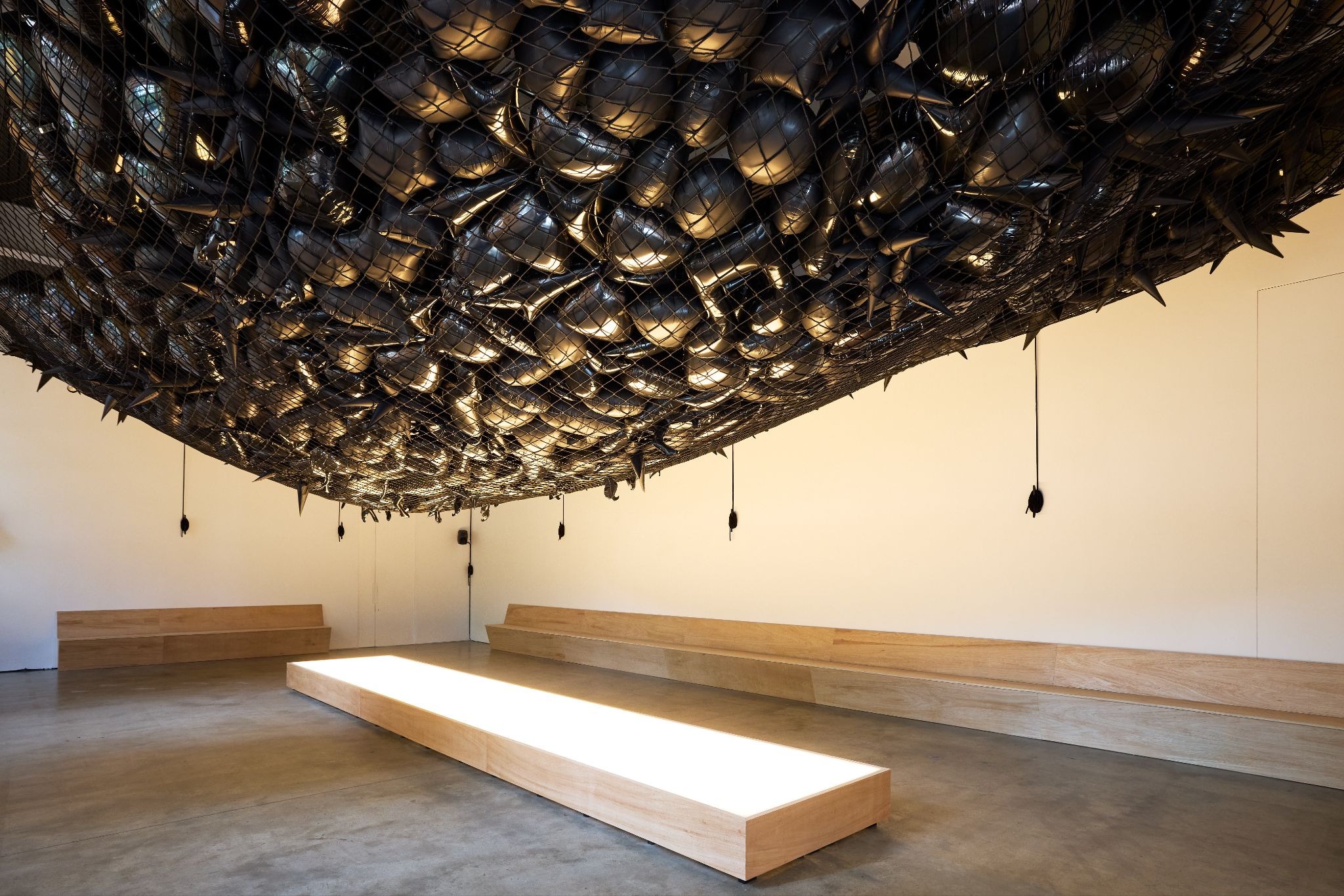
Marie Lorenz and Jeff Williams: "Roll, Pitch, and Yaw" at International Waters
Review
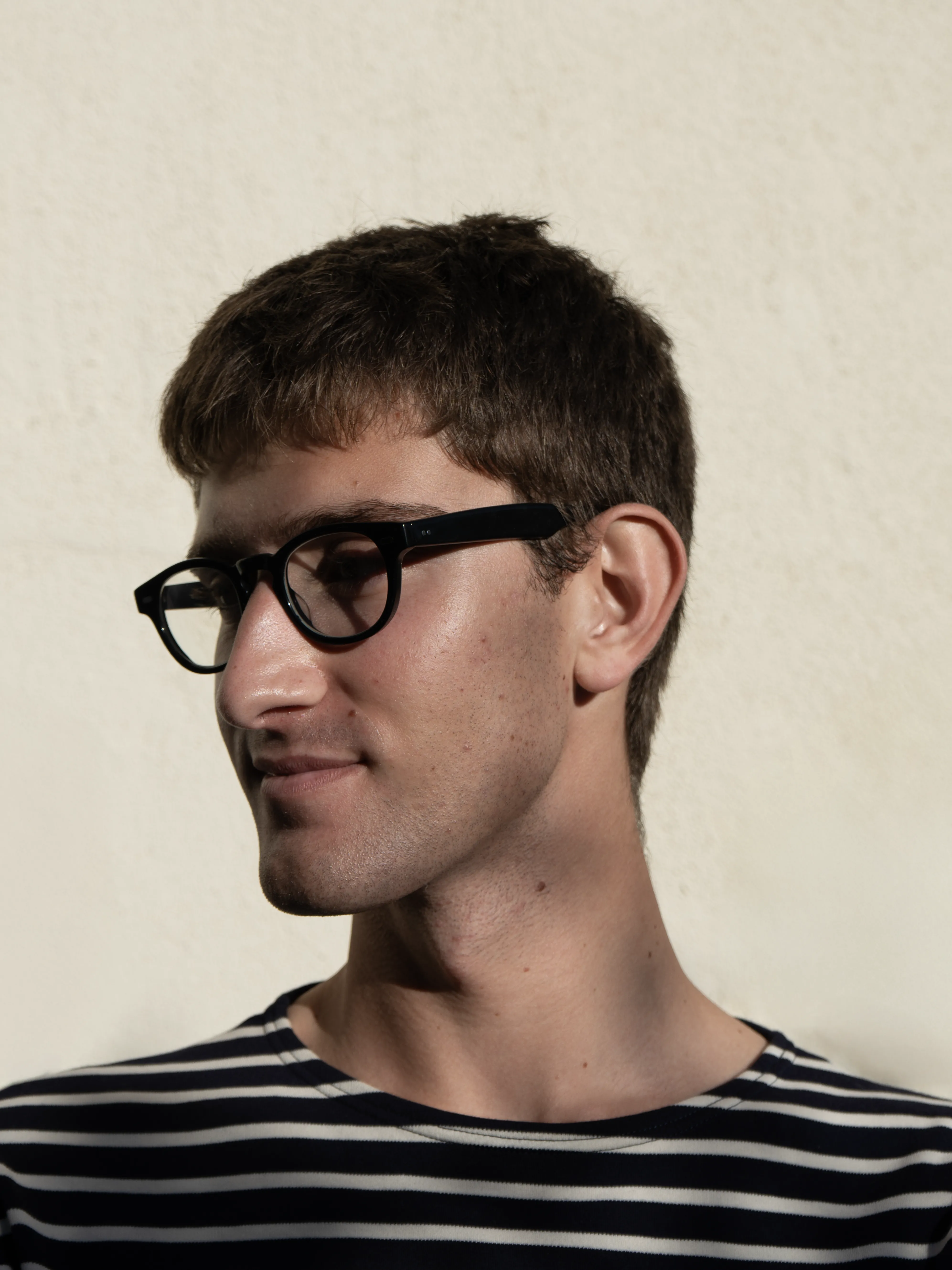
Of their collaboration, sculptor Pam Lins says, “It happened easily, without much thought,” and painter Roger White concurs that “it was very wordless and rapid.” That they are so well-fitted to one another, having known each other for years, is readily evident in their duo exhibition Laterness at Uffner & Liu. The show comprises three new bodies of work: a series of sculptures by Lins, one of cut-paper pieces by White, and the synthesis of the two artists' practices, the Galaxies—which, following the influence of Frederick Kiesler, blur the boundaries between image and sculpture (all works 2025).
In conversation, they tell me that they met around the time Rachel Uffner opened her gallery with a show of White’s paintings in September 2008—the month of the global financial collapse. It is unsurprising, then, that in our present period of late fascism marked by economic, ecological, and social instabilities, Lins and White have set so urgently to work together. They have each on their own been long invested in making art as a political action, but, as White puts it, “It’s getting late. The clock is ticking on so many things. It’s time to be fairly direct about that.” They both feel that the emergency of the present moment calls for a reassessment of the ways they have tended to map political effects onto formal decision-making. It calls for new techniques and a reduced scale. Therefore, in the process of conceiving this body of work, collaboration is their first step in this new direction.
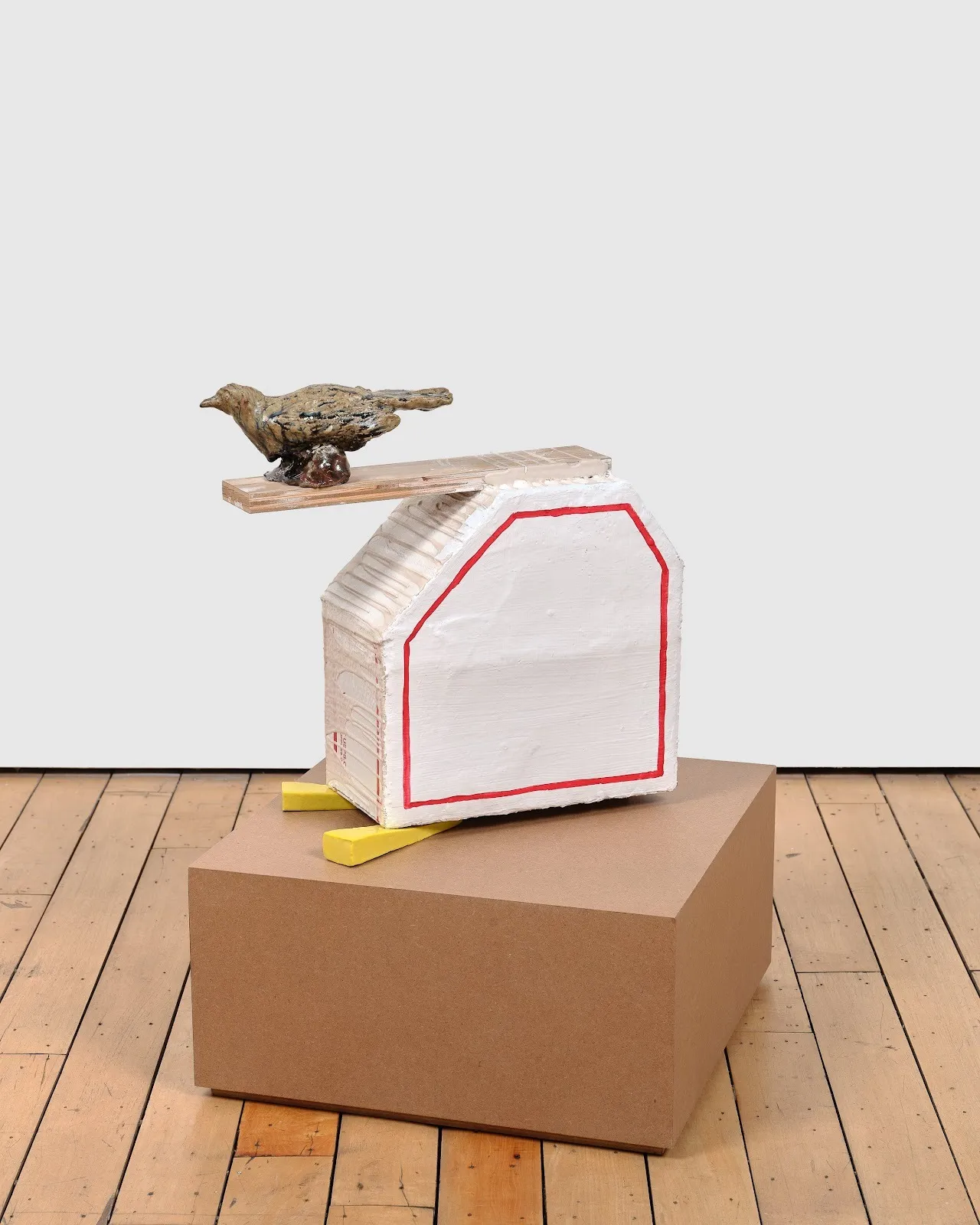
For Lins, another early step involves asking herself, “What can I use that’s already in my studio? What can I make by hand? What can I do fast?” These questions are informed by her reading of David Joselit and Pamela M. Lee’s “Six Propositions After Trump’s Second Victory,” which suggests that one of art’s functions might be to enable other relations to time than the relentless presentism of Trump’s media tactics. Lins finds an answer (one among many) in the USPS flat rate boxes she frequently uses in her work: “The boxes are small, medium, and large,” she explains. “They don’t have extra-large, so there’s no possibility of infinite scalability.” Such a modest means of making art at a predetermined scale fails by design to keep up with the societal demand for bigger spectacles and more information. Further, there’s no greater symbol of delayed reception than postal parcels marooned on the floor of a gallery. Lins also peppers her sculptures with glazed ceramic representations of John James Audubon’s mystery birds—images corresponding to no known species in nature. As the terms within a taxonomic system that undermine the very system itself, “a kind of lie,” as Lins puts it, these birds are humble invitations to ponder truth, history, and our relations to them. “They’re little commas in the works.”
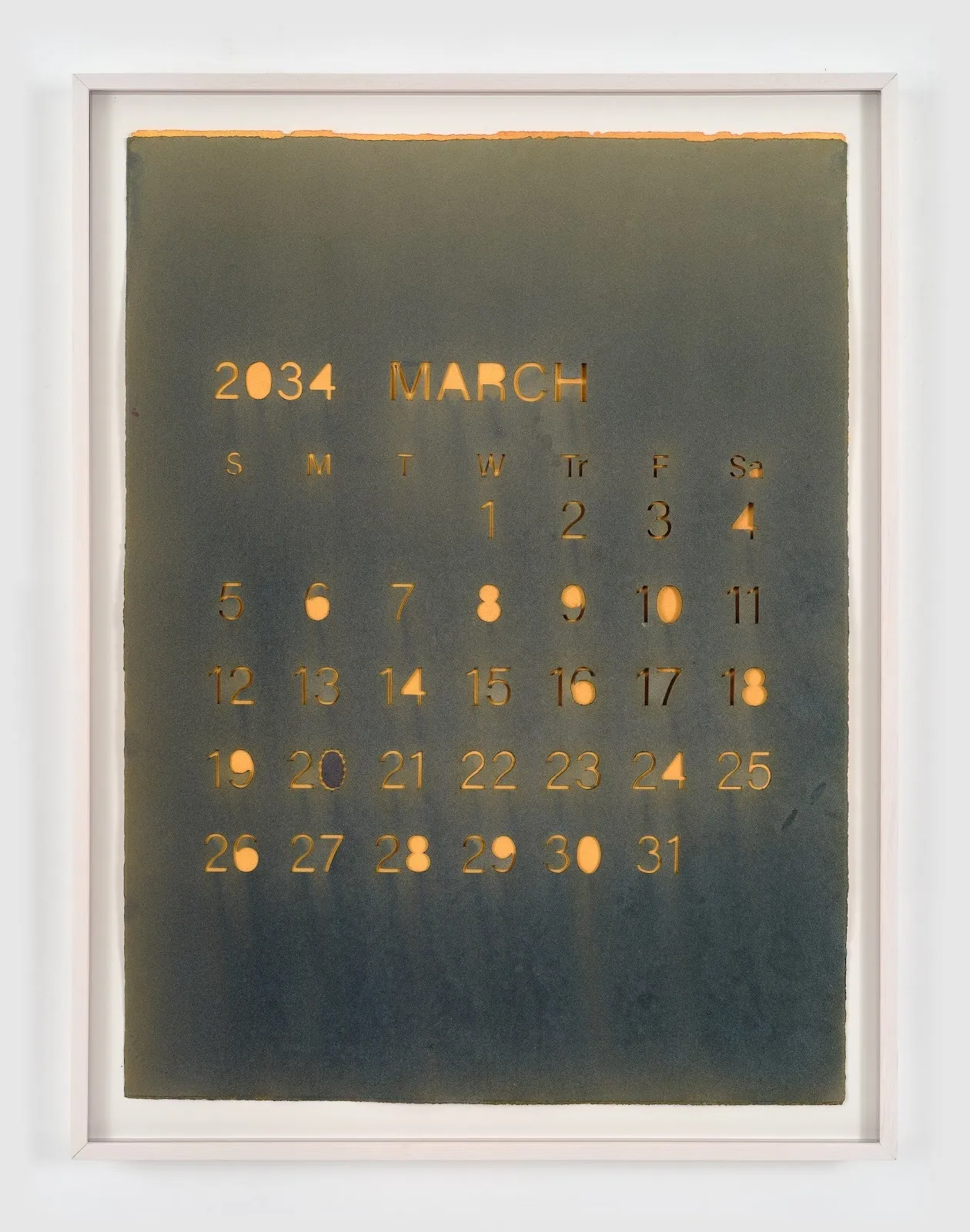
Similarly, White thinks “it’d be interesting to try to make a picture with each physical part of it—you first made its color and then put them all together, instead of applying paint in different ways.” Hence he submerges watercolor paper in acrylic baths, using only the process colors of cyan, magenta, yellow, and black to produce the component parts of his new works. “There’s a limit to how big I can go with the size of the paper,” he explains, “because I stand there to let it dry. And also, past a certain point, color looks different.” Rather than sitting on the surface of the paper, the colors saturate it through and through. The pictures, then, resist photographic mediation: one has to be there with them. Their various subjects—for instance, a self-portrait, a plastic water bottle, and a calendar dated March 2034—all fall between two poles: mundane objects and evocations of abstract time. The question animating these images is: “Since the end of high modernism, why has art become so future-adverse?” It is one that White leaves open.
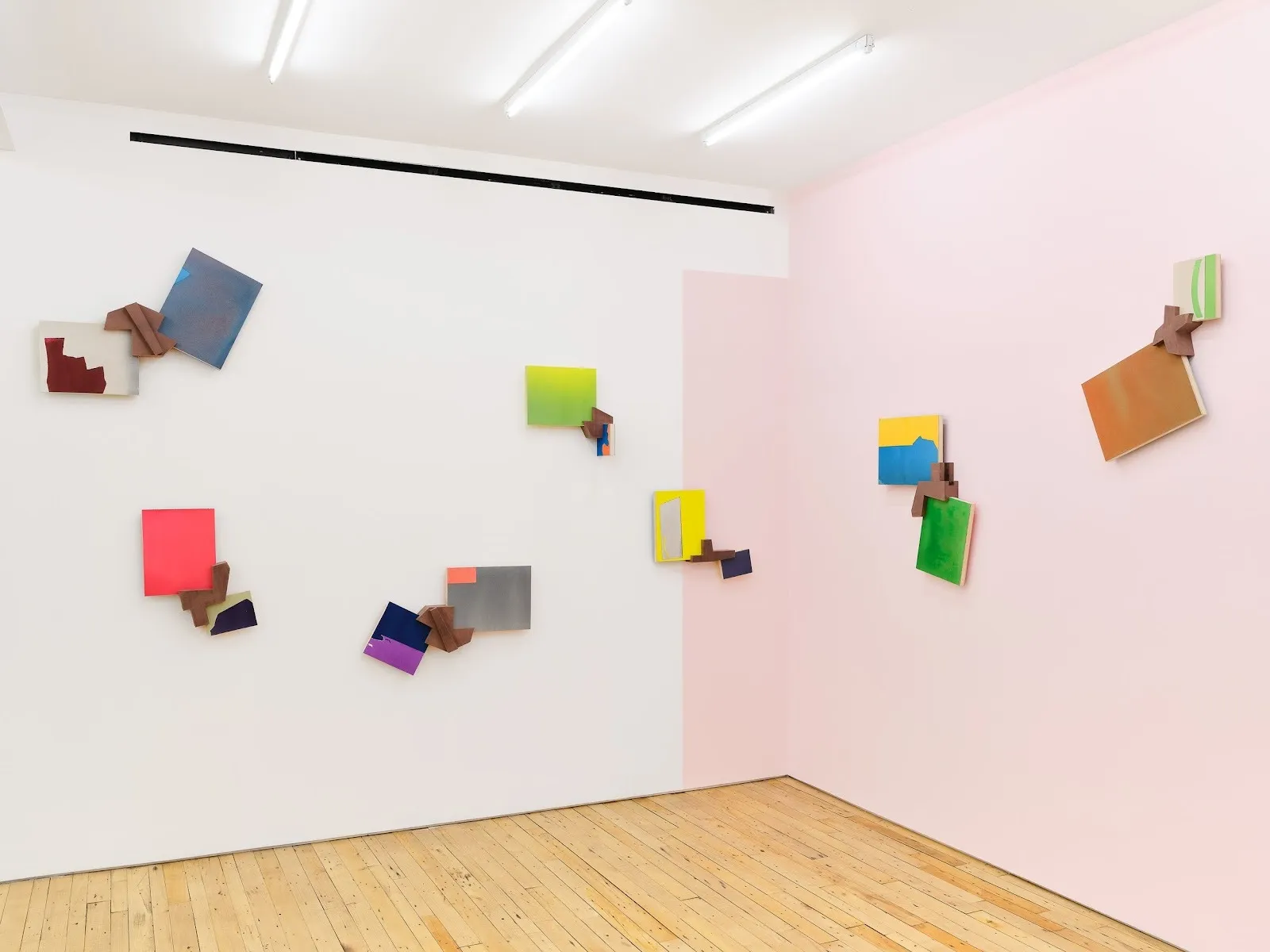
The collaborative series titled Galaxies—each work composed of geometric forms by Lins with vibrant surfaces by White—combines these various tactics and directions toward the shared aim of engendering a sense of hope. Indeed, the term laterness, above all else, names a future yet to come, a time even later than now. “We’re gesturing toward the idea that having panels in a funny relation will necessarily do certain things,” White says in addressing what is achieved by crossing medial boundaries. “But I’m conscious of the mechanisms and discourses that go into making that idea seem like political action. If anything, I think we’re presenting situations in which viewers can experience epistemic doubt within guidelines.” And Lins adds, “We’re revisiting the utopian prospects of art.”
Pam Lins & Roger White: Laterness is on view at Uffner & Liu from November 6, 2025 through January 10, 2026.