

.webp)

Wenfei Quan: “Contemporary Hominin” at TaThaTa
Review
It’s difficult to come out of Miami Art Week unscathed by its overwhelming exuberance, with hundreds of exhibitors visiting from around the globe doing everything to capture the attention of curators, collectors, press, and the art lovers. Given that it’s essentially a choose-your-own-adventure, it’s a fool’s errand trying to declare an all-encompassing statement about the whole week—or even the dozen art fairs happening all at once.
Nonetheless, I will focus on three fairs: Art Basel, Untitled Art Fair, and NADA. As far as capturing the attention economy, Basel’s digital art section, “Zero 10,” was a homerun. This wouldn’t pose an issue if the selection wasn’t stuck between safe and offensively bad—the worst offender being Beeple’s instantly viral Regular Animals, a for-the-rich-by-the-rich faux-critique of art capitalism made for millionaires to laugh at billionaires. Otherwise, paintings and drawings, both figurative and abstract, dominated. We also saw a welcomed abundance of textile-based, mixed media, and installation work. Photography was the primary victim, with very little representation across the fairs.
This curated list spotlights artists and exhibitors who worked against the grain at Miami—curatorially, politically, or stylistically. It also consciously counterbalances the blue-chip vision of the fairs constructed by other art publications, filling some gaps along the way. It celebrates multiple voices and presentation styles, prioritizing artists and art spaces working against traditional media, vertical institutional bodies, market trends, and neoliberal capture, while attempting to respond to the contemporary condition.
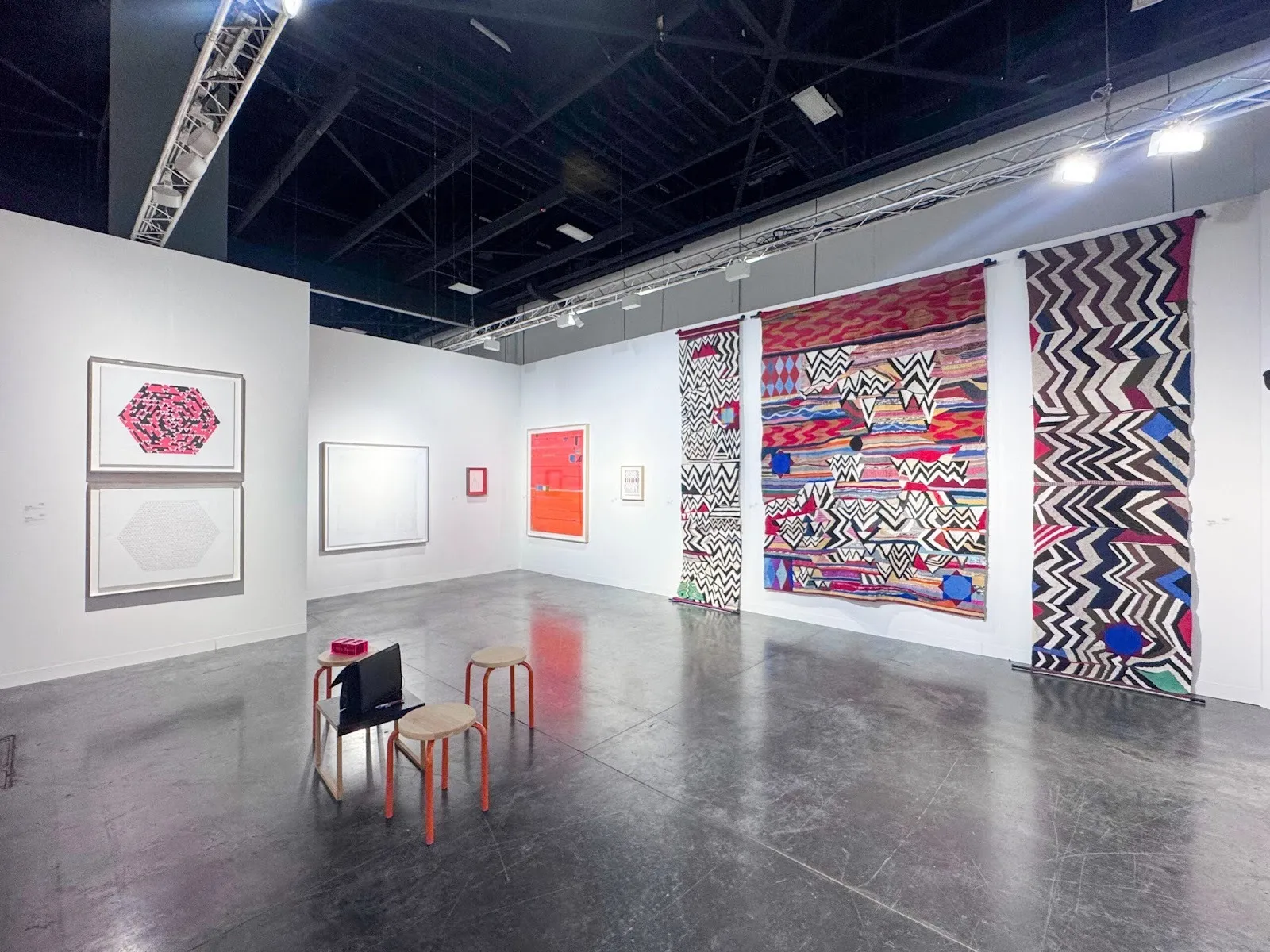
Unique at Art Basel, 1 Mira Madrid / 2 Mira Archiv opened a focused conversation between three pioneers of Latin American feminist art: Lotty Rosenfeld, Esther Ferrer, and Teresa Lanceta. Mira Bernabreu’s curatorial style radiated with clear intentionality, revealing points of contact connecting these artists while showing feminist art manifest in many forms. The political resistance guiding Lanceta’s abstract textile works gained urgency alongside the archive-based presentation of Rosenfeld’ art actions against the Pinochet Regime with Chile’s Colectivo Acciones de Arte (CADA). Ferrer’s experimental drawings visually mirrored Lanceta’s works, though given her performance-based feminist art actions in 1970s Spain, she also stands here as Rosenfeld’s analogue. Most striking was the CADA archives: a mixture of ephemera, documents, video, and protest objects, presented as one consolidated tapestry on a single wall. Not-for-sale, the CADA archives was a radical imposition of anti-capitalist, anti-authoritarian politics into Basel and seems to be a move against art market commodification. The booth was one of the very few to urgently address our political climate.
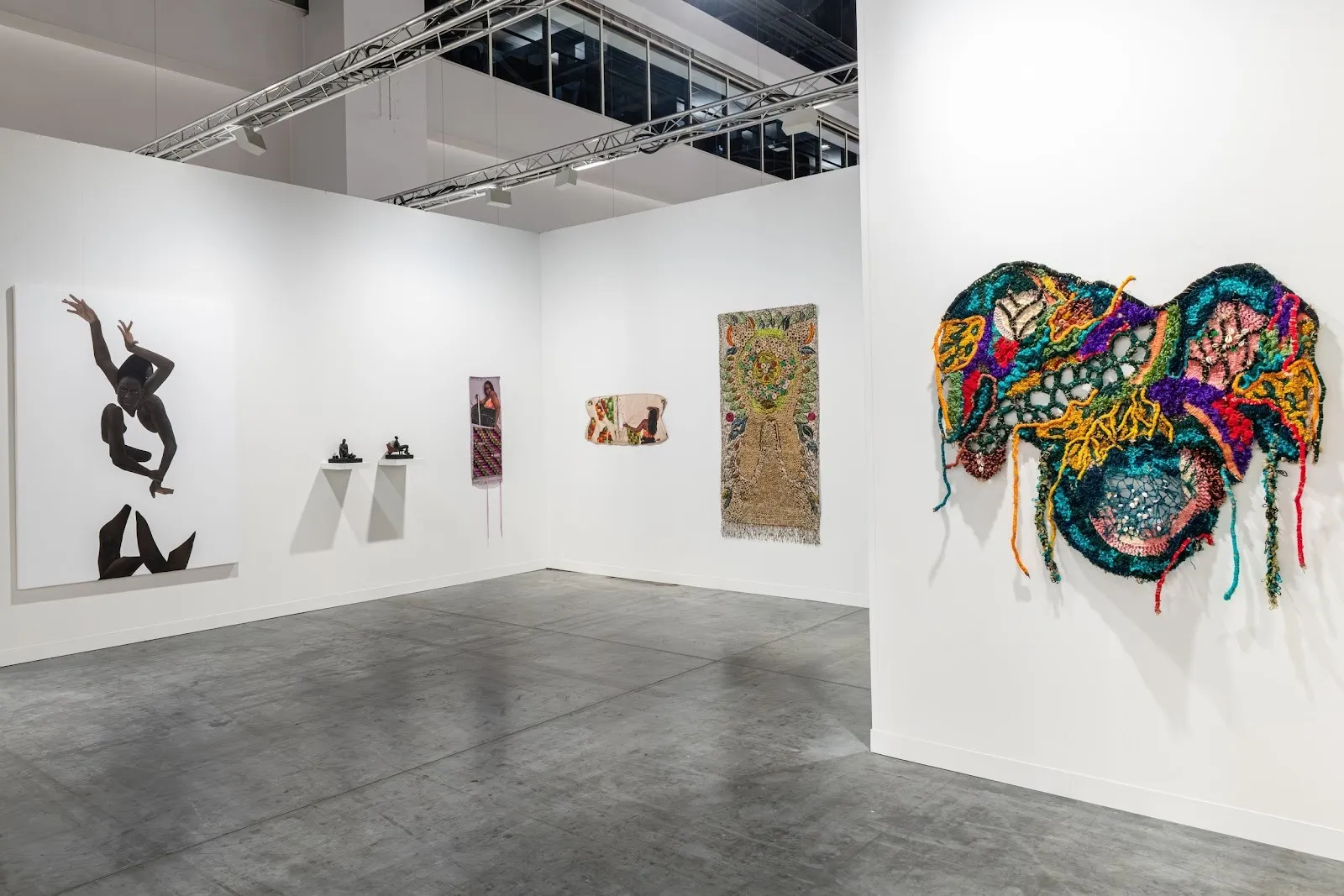
Afriart Gallery (AAG) brought seven artists from East Africa and the Horn of Africa to Art Basel. Working experimentally across media, Henry Mzili Mujunga, Sungi Mlengeya, Sanaa Gateja, Richard Atugonza, Charlene Komuntale, Kaleab Abate, and Fiker Solomon all honored their local heritage and visual traditions to open larger questions of cultural syncretism and material memories. Though not exclusively textile-based, everything was interwoven there: bodies interlaced, waste recycled for bead-like tapestries, natural materials labored into body relics, textile-based installations incarnating the life cycle, tools of subjugation repaired into feminist objects of care, or nostalgic recollections collapsing with new technology. The mixed media assemblages of Ethiopian artist Kaleab Abate stood out, fusing paper, textile, and archives to construct surfaces for printmaking—what he calls his “fantasized realities.” Concerted together, these artists asserted that artmaking is transformation instead of just creation, following that principle to rebuild lost memories, interrogate false narratives, and construct utopias specific to their national contexts, yet relevant to the entire African continent.
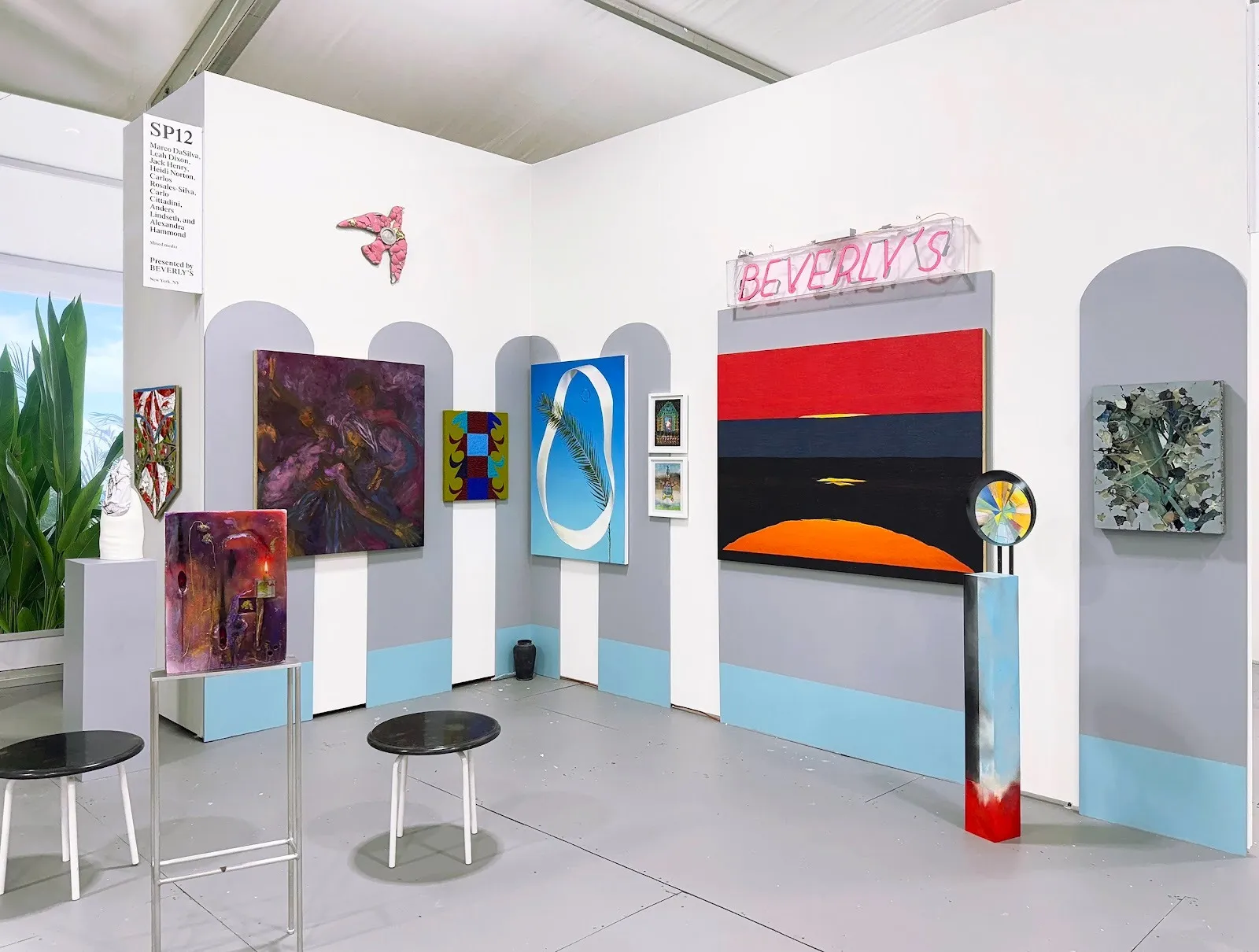
At Untitled, artist-run collective BEVERLY’S embraced their dual-identity as a hub for Lower Manhattan’s art scene and nightlife. Titled Acqua Alta (High Tide), their booth was a conceptual recreation of a flooded palace, nodding to the shared precarity of Miami Beach, Venice, and New York by rising sea level. In addition to the bar’s original pink neon sign, the booth presented an eclectic assortment of multimedia work by Marco DaSilva, Jack Henry, Leah Dixon, Heidi Norton, Carlos Rosales-Silva, Anders Lindseth, Carlo Cittadini, Andrew Birk, Alexandra Hammond, and Juan Alvear. The structure of art fairs makes it difficult to retain a sense of place, which BEVERLY’S consciously resisted. Through the conceptual device and the collective world-making of Lindseth’s sunset, paired with Hamond’s blue quantum painting or the mixed media assemblages of DaSilva and Norton, BEVERLY’S found a way to spotlight each artist, channel the affect and aesthetic of the bar, and nod to the precarious decadence of Miami Art Week.
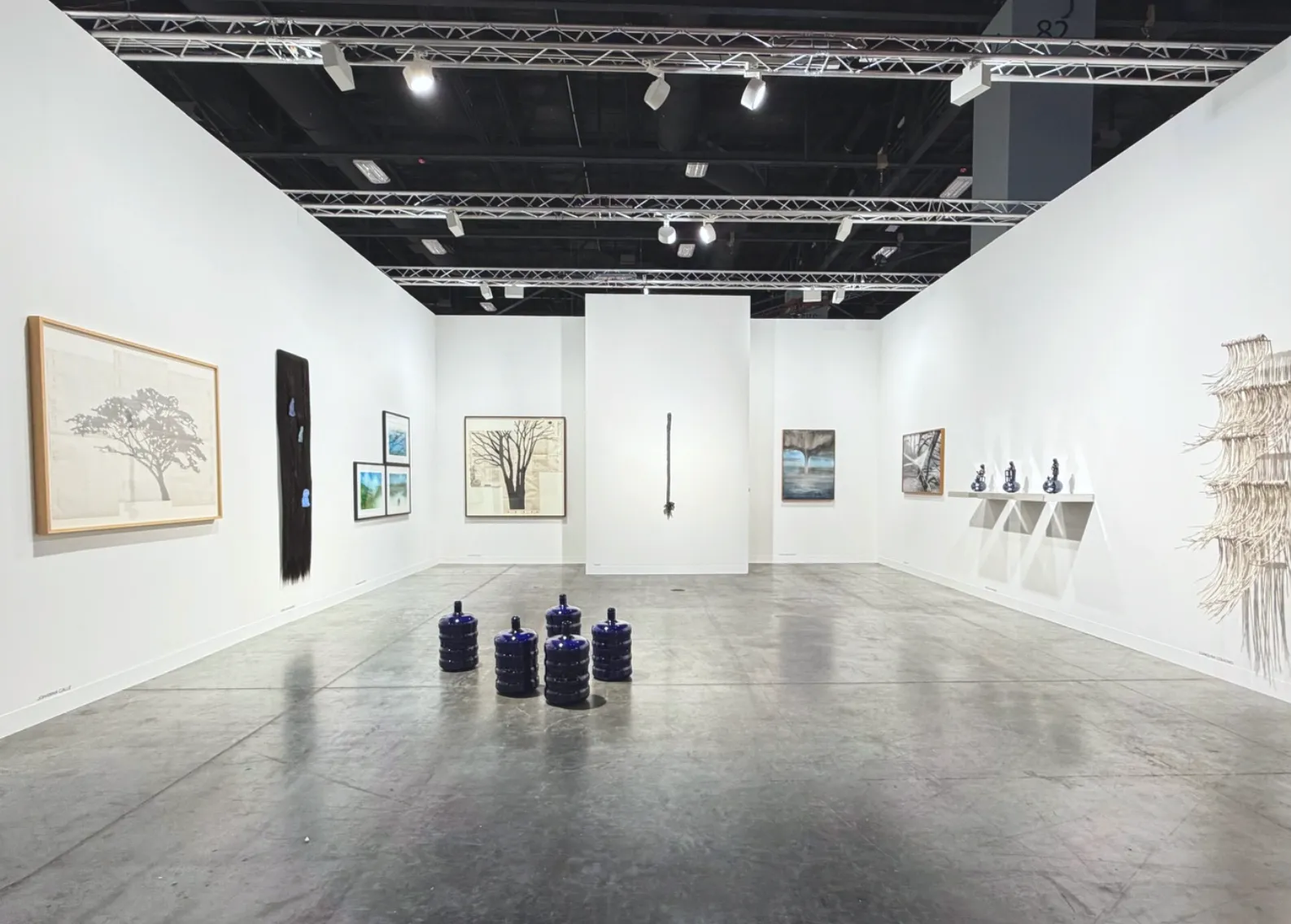
Every artwork in Galeria Marilia Razuk’s booth at Art Basel concealed some gesture of dissent: protrusions, obfuscations, and rewritings. Opening a cross-cultural dialogue between the work of Tunga, Johanna Calle, Seba Calfuqueo, Maria Laet, Thiago Rocha Pitta, Débora Bolzsoni, Carolina Colichio, Ana Sant’Anna, and Anália Moraes, politics is here deployed not through figuration, but in textual and material remnants. Calle’s trees are codified by text—growing on or graphed from the written word—emerging from the artist’s research on law and linguistics. Laet archives her subtle art actions to capture the afterlife of encounters between body and land. Calfuqueo stood out with works from three different series unearthing the violent ripples of colonialism, eugenics, and heterosexism in modern-day Chile with experimental reimaginings of traditional Mapuche practices. The booth consolidates as an intentional showcase of art-based community-building, severing the nature-culture divide, breaking the illusion of territorial ownership, and honoring the quiet practice of everyday resistance.
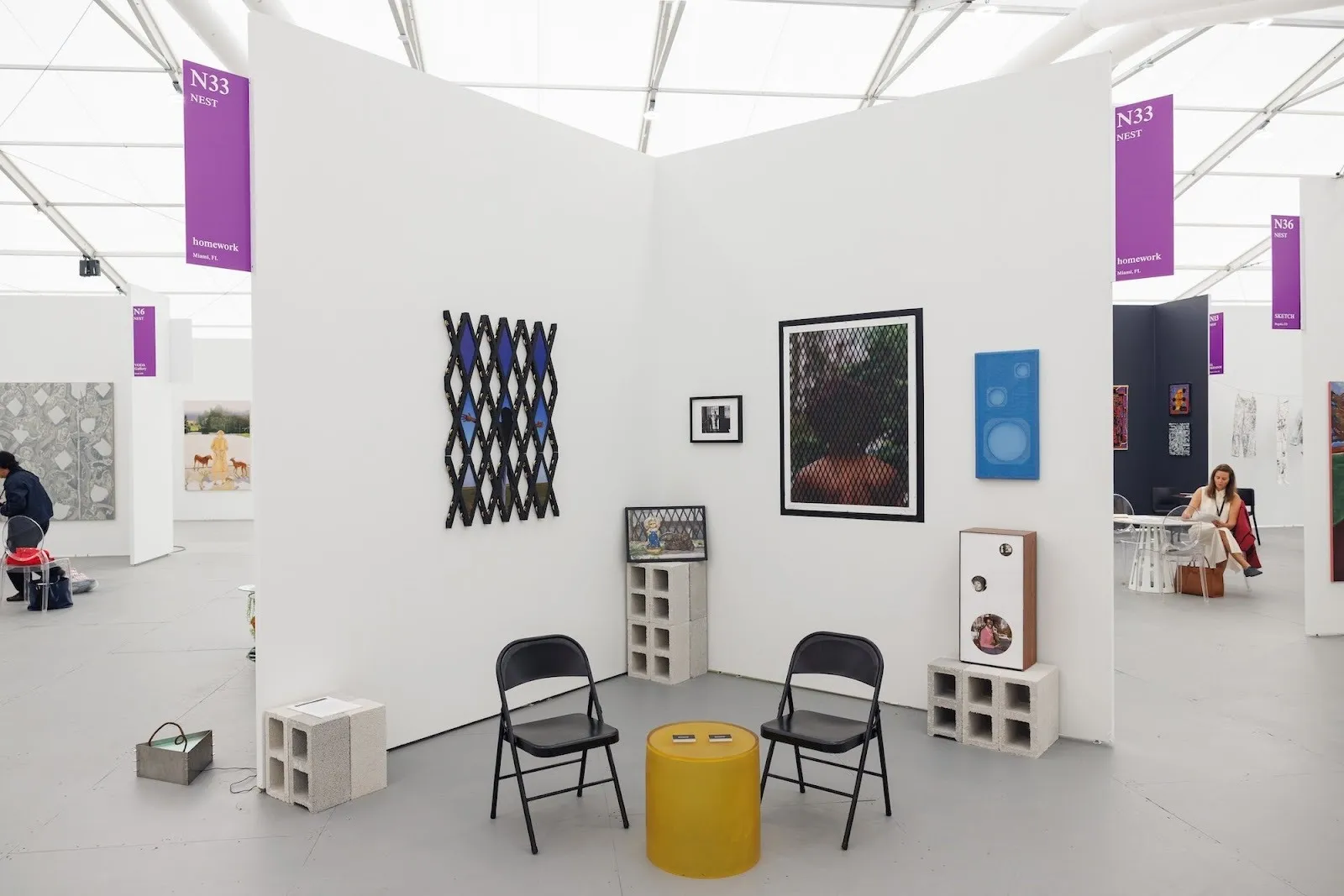
For Untitled’s “Nest” initiative, homework gallery organized a solo booth of Miami-born multidisciplinary artist Roscoè B. Thické III. Curated around two new works, The Witness (2025) and The Redeemer (2025), the installation fused photography, found objects, sculpture, and painting to weave a visual memoir of family lineage, devotion, and the outer world. Drawing from biblical iconography of Christ, The Redeemer shows a man embracing the horizon, fragmented through a diamond-shaped window pane. The same pattern also veils The Witness, which shows the artist’s son turned towards his own pictorial world, and two vernacular photographs probing at the boundary between domestic and public life. The wooden base of an analog speaker is hollowed out to house three devotional icons of the artist’s grandmother: its cover hangs above, wrapped in blue plastic. Stacks of hollow concrete blocks mark every corner, evoking a construction site. The booth captures the tensions at the heart of Thické’s practice: how marginalized communities find sacredness in everyday life amidst the violence of late-stage capitalism, gentrification, and systemic racism.
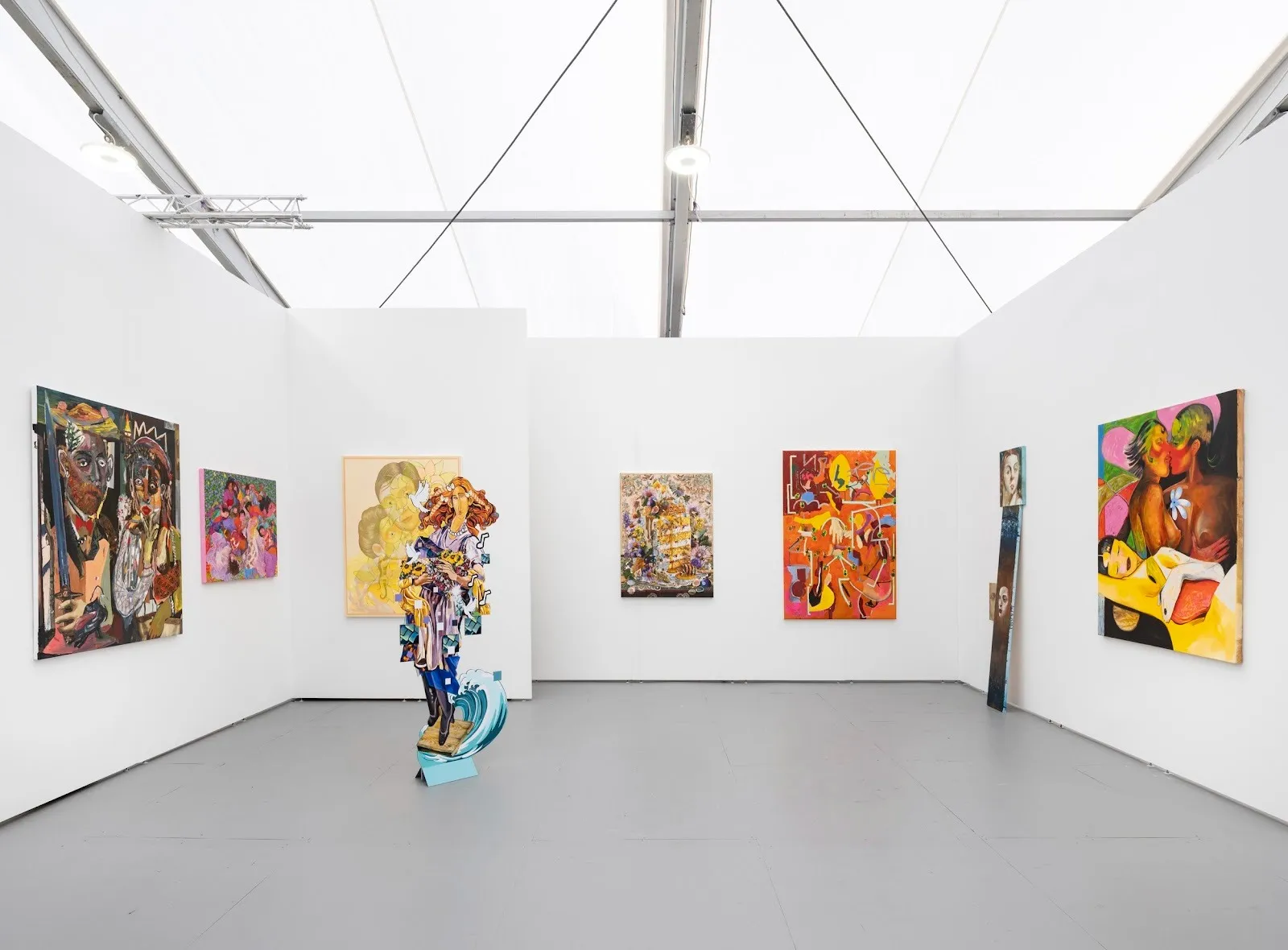
As far as embracing maximalism, few booths at Untitled harmonized so beautifully as Kravets Wehby’s group presentation showcasing the work of Christina Nicodema, Dannielle Hodson, Sejiro Avoseh, Manuel Esnoz, Buket Savci, Allison Zuckerman, Olivier Jean-Daniel Souffrant, Wendell Gladstone, Anna Berghuis, and Jade Thacker. Excess became a guiding principle here: from Nicodema’s cake still life—which seems painted straight from Marie Antoinette’s instagram—to Esnoz’s labyrinthian diagram, or Savci’s queer-femme group portrait unfolding as a flower garden. In Berghuis’s installation piece, Totem (Tall Child) (2025), the body precariously appears in fragmented form, decaying and splitting, as if torn between physical and digital space. As a whole, Kravets Wehby stands out as a rare gallery interested in work that feels distinctly responsive to and conscious of the post-digital turn. There’s something refreshing about that aesthetic commitment.
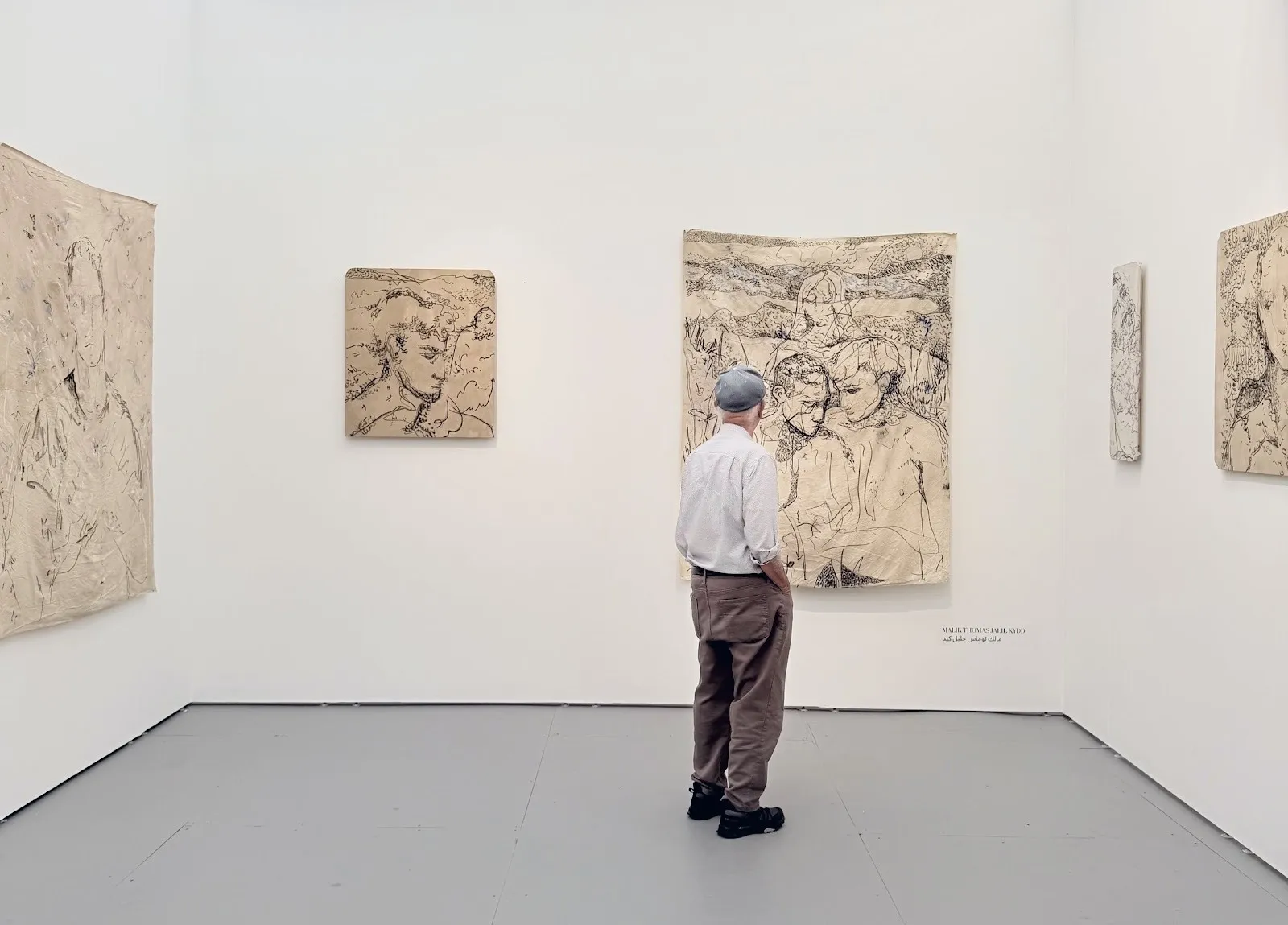
Force and tenderness inhabit every brushstroke in Malik Thomas Jalil Kydd’s portraits shown in Galerie NIL’s solo booth at Untitled. Born in the UK, Thomas’s work is closely tied to his Iraqi heritage and his relationship to the Arab world as a queer man. Made of charcoal and pastel on sage dyed silk, this new series of portraits unfolds as a bouquet of poems—explorative, delicate, yet viscerally expressive. They each appear as vague fragments of intimate encounters, marked by the nostalgia of love past or the haunting melancholia of love unrealized. The land here is not merely a backdrop, but a metaphysical promise: what José Esteban Muñoz might call “queerness as a horizon,” which here gains a distinctly decolonial connotation. Beyond collapsing body and land, Thomas’s minimalistic draughtsmanship also brings attention to the materiality of his portraits: silk and sage bear the memory of diasporic dispossession, as well as a sense of buried sensuality. The booth was a miraculous space of quiet meditation in Miami.
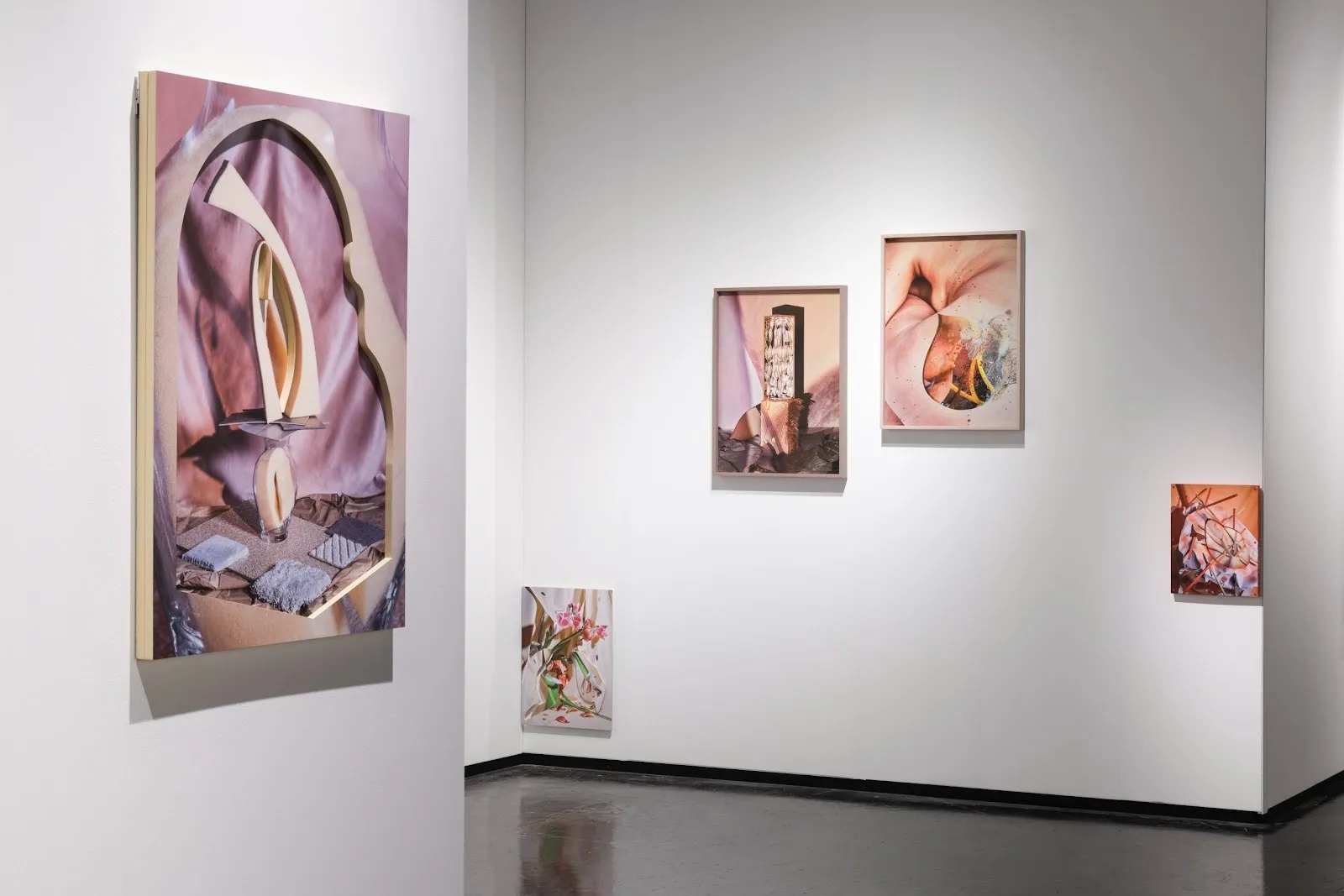
Through the eyes of Taiwanese-born lens-based artist Yi Hsuan Lai, flatness contains infinite expanse, unfolding inward into fleshy, unearthly caverns. Her solo booth at NADA, presented by queer and femme-led exhibition space SoMad, showcased her experimental approach to staged photography, where her body and obsolete found materials collide to turn self-portraiture into a dual-exploration of inner and outer selves. It’s an attempt at self-making proper to her experience as an immigrant with material as metaphor. The artist constructs portals stitching the here and elsewhere, overlaying soft sheets of foam and rubber with drapes and metal fences, which rather than unbreakable bounds, function as obstacles to be transgressed. The cherry on top was SoMad’s dynamic presentation that experiments with curatorial style, which transformed the viewing of Lai’s works into an embodied experience.
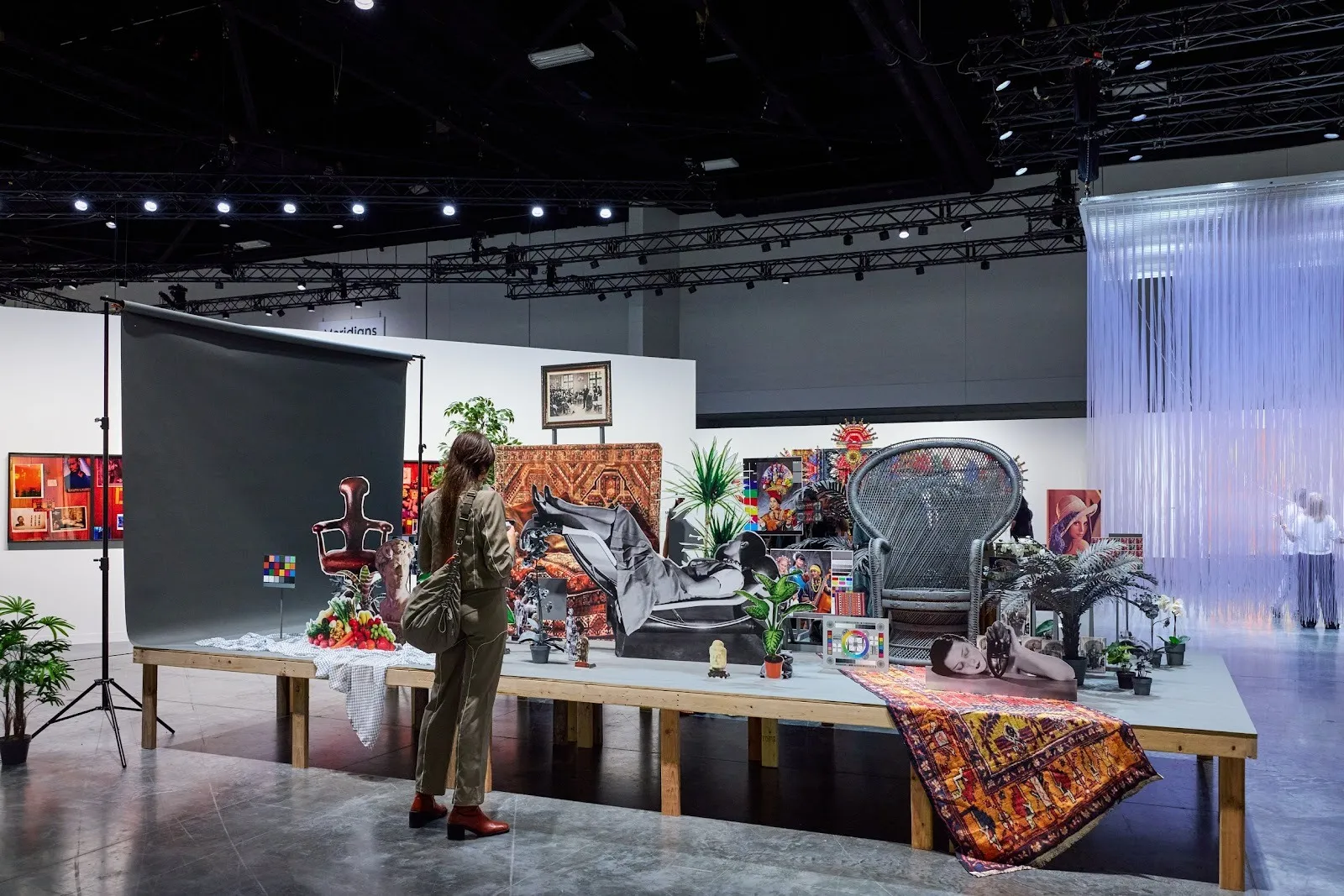
Despite its present resonance, Stephanie Syjuco first made Neutral Calibration Studies (Ornament + Crime) in 2016. Co-presented at Art Basel by the Catharine Clark Gallery and RYAN LEE Gallery, the multi-media installation consists of an overwhelming assortment of digital images mounted on wood, 3D-printed objects, and color calibration tools on an elevated stage. Centering European and North American fetischistic appropriation and resignification of “foreign” cultural objects, the installation meditates on the afterlife of colonial violence through image-making. For Freud, whose own couch appears prominently, Orientalist designs offered a path for psychoanalysis, whereas for Black Panther founder Huey Newton, the peacock chair, whose origin can be traced to the Philippines,became a symbol of revolution. Cultural appropriation, like color calibration, is an act of deception, yet the deployment of cultural objects and skin color exerts real political force. Image-making has long been key to this process, though its ease of proliferation has only intensified in a post-digital age: with infinite duplicates comes infinite possibilities for an image. The advent of 3D-printing has extended the same reproductive potential to objects. Yet, as you walk behind the stage, everything is the same neutral gray. It’s all an illusion, Syjuco warns.
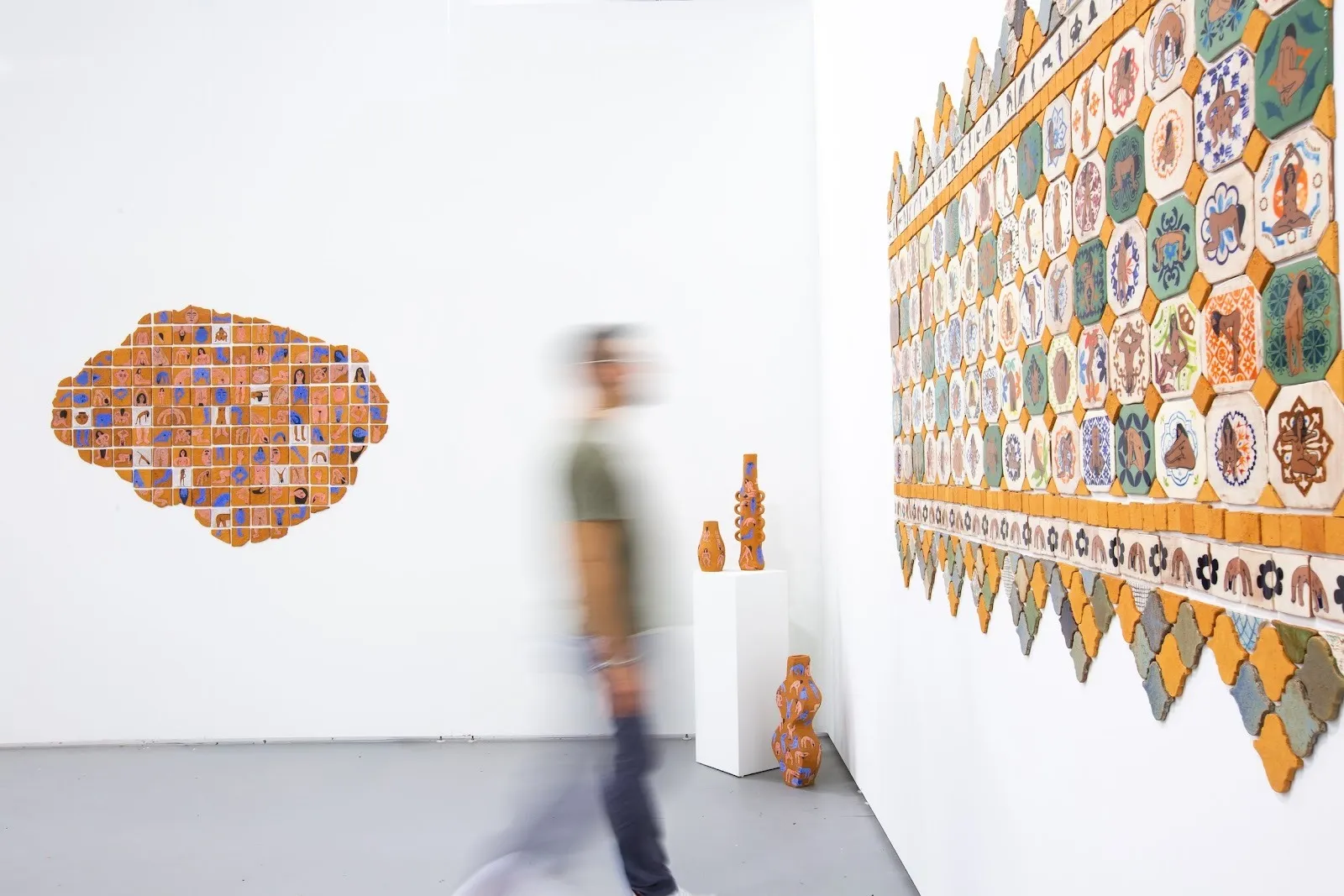
At Untitled, Wishbone Art Gallery presented the ceramic works of Argentine-born artist Florencia Rothschild. Working with painted and glazed handmade terracotta vases and tiled installations, Rothschild situates her practice between the ancient and the contemporary. Delicate yet rugged, her ceramics are populated with nude women against painted patterns. Instead of being sexualized or reduced to decorative motifs, her women are distinctly autonomous, playful, acrobatic and ever-moving, seeming to be experimenting with the ways in which their bodies can take up space. They contort, stretch, hop, lounge, dance, or stand upside down, unbothered by patriarchal dominance. The Wishbone booth became a playground for Rothschild’s feminist utopia to blossom and propagate its mythology to each passing visitor.