Fragments Toward a Monument
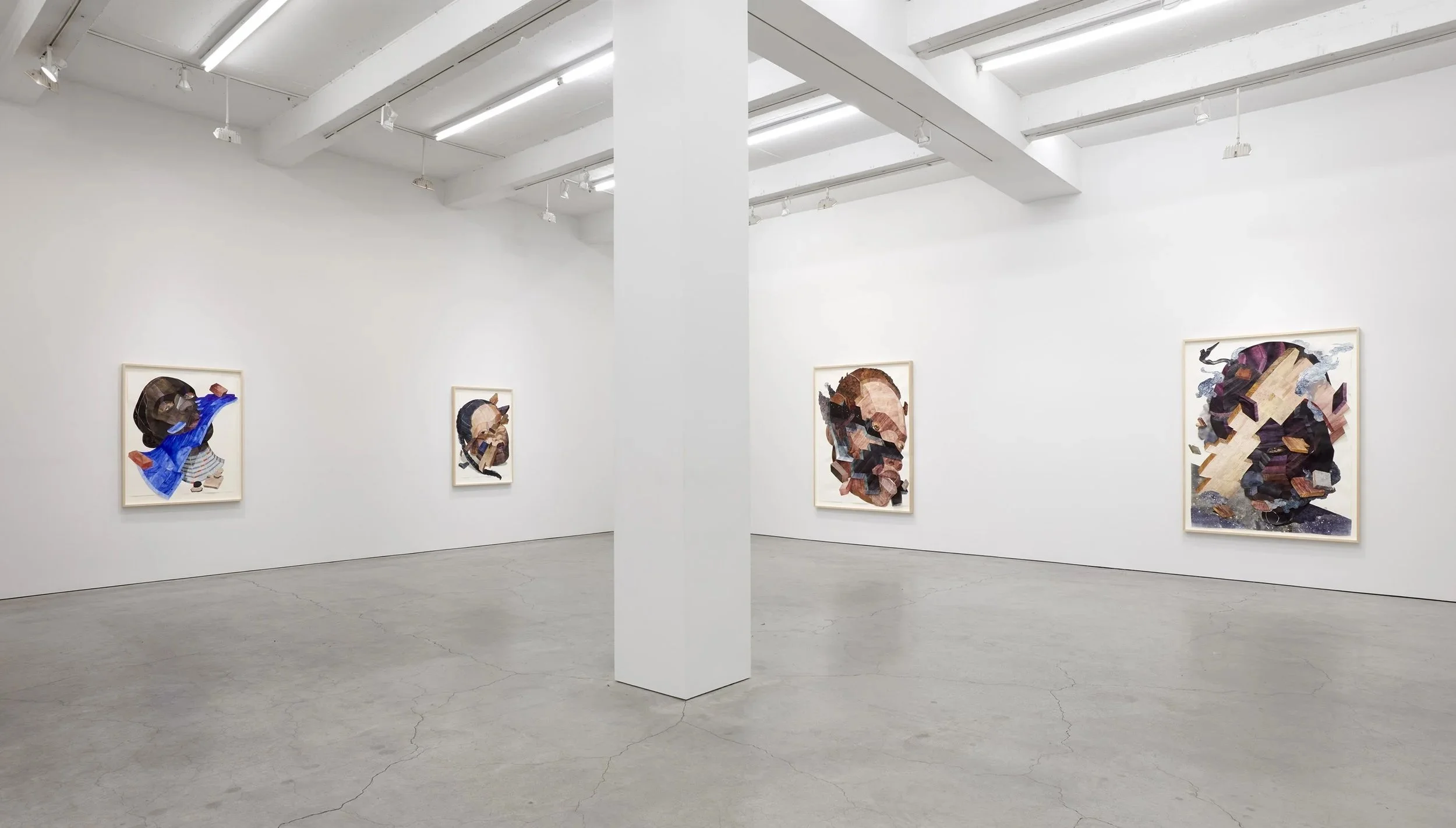
Installation view: Yashua Klos, Proposal for a Monument, Sikkema Malloy Jenkins, New York, 2026. Photo: Jason Wyche.
The white cube has long depended on a fiction of neutrality: smooth walls, controlled fluorescent lighting, and sparse architecture promise a space emptied of history, a site where art can appear detached from the social and material conditions that produced it. Yet the gallery has never been neutral. It is a structure built from exclusion, a container that has historically determined which bodies, images, and narratives are permitted to occupy its walls. What happens when the white wall is forced to hold a presence it was never designed to accommodate?
Yashua Klos’s Proposal for a Monument, currently on view at Sikkema Malloy Jenkins, approaches this question through scale, material accumulation, and a monumental figuration that unsettles the gallery’s architectural logic. Rather than presenting a singular sculptural monument in the traditional sense, Klos constructs monumentality across the walls themselves. Large-scale woodblock print collages assemble fragmented Black figures that expand outward, pushing against the boundaries of the white cube and transforming the gallery into a site of spatial and historical pressure. The figures that emerge are not singular portraits but accumulations of fragments: woodgrain textures, geometric grids, architectural scaffolds, and layered blocks of inked paper that form monumental busts and torsos. A cheek dissolves into a lattice of angular fragments; a shoulder merges with a network of rectilinear structures reminiscent of wood flooring. These bodies appear assembled under conditions of pressure, as though identity itself were an ongoing structure built from the materials of lived environments.
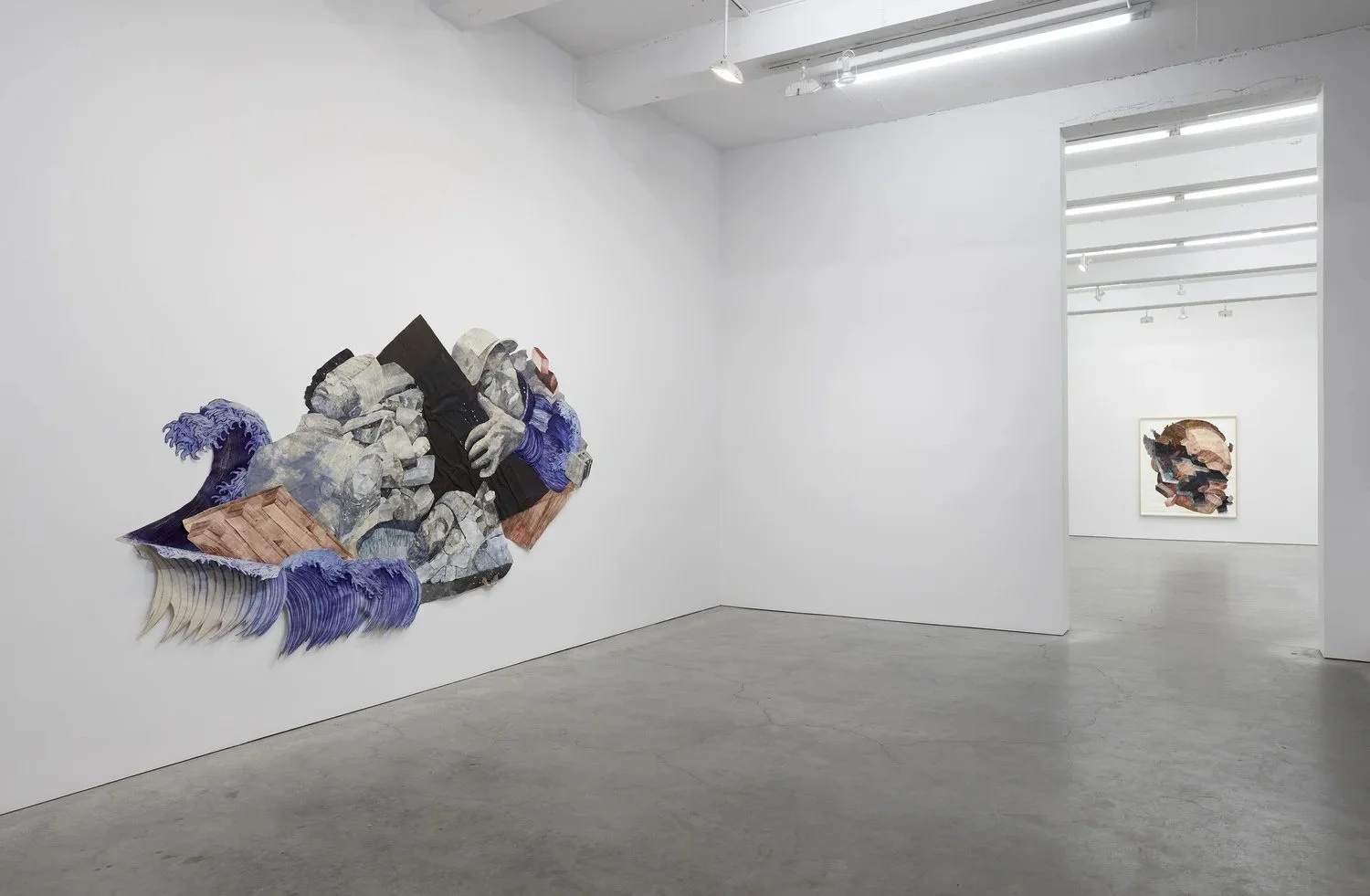
Installation view: Yashua Klos, Proposal for a Monument, Sikkema Malloy Jenkins, New York, 2026. Photo: Jason Wyche.
The exhibition’s title carries a subtle provocation. It does not present the monument itself, but the possibility of one still forming, unfinished, perhaps too large, too dense, too alive to ever settle into the quiet permanence monuments traditionally promise. There is a clear departure from the historical framework of monuments existing as a site of stability and singularity to a new proposal of monumentality through multiplicity and accumulation. Though imposing in scale, Klos’s figures remain provisional and fragmented, composed of hundreds of dimensional pieces that resist the visual coherence traditionally associated with Western ideals of heroic representation.
The figures evoke a new kind of hero—the everyday person embedded within compositions that reflect the built environments of contemporary cityscapes—but also gesture beyond the purely physical. They are both grounded and celestial, suggesting a kind of futurism in which one’s understanding of the self extends into spaces that have yet to be realized. At the same time, this futurity is specific and distinctly Black. The figures seem suspended between solidity and dispersal, raising a quiet question: are they fragmented, or are they dissolving into the backdrop of a Black utopia yet to come?
While at times the works feel small against the gallery’s expansive walls, the spacing allowed time to linger on each piece. In the quiet moments between them, it becomes easy to imagine what might be missing: another figure, a different perspective, or a glimpse into the world Klos inhabits but the viewer cannot fully access. This tension creates a lingering sense that something larger existed just beyond what could be seen. Each figure gazes outward into the ether, their forms slowly deconstructing into lattices of fragments and architectural grids. Together, they transform the exhibition space into a site of cumulative force, gathering density through repetition with their layered surfaces producing an effect that feels almost geological. Each fragment operates like a unit of material memory, accumulating into bodies that feel collective rather than individual.
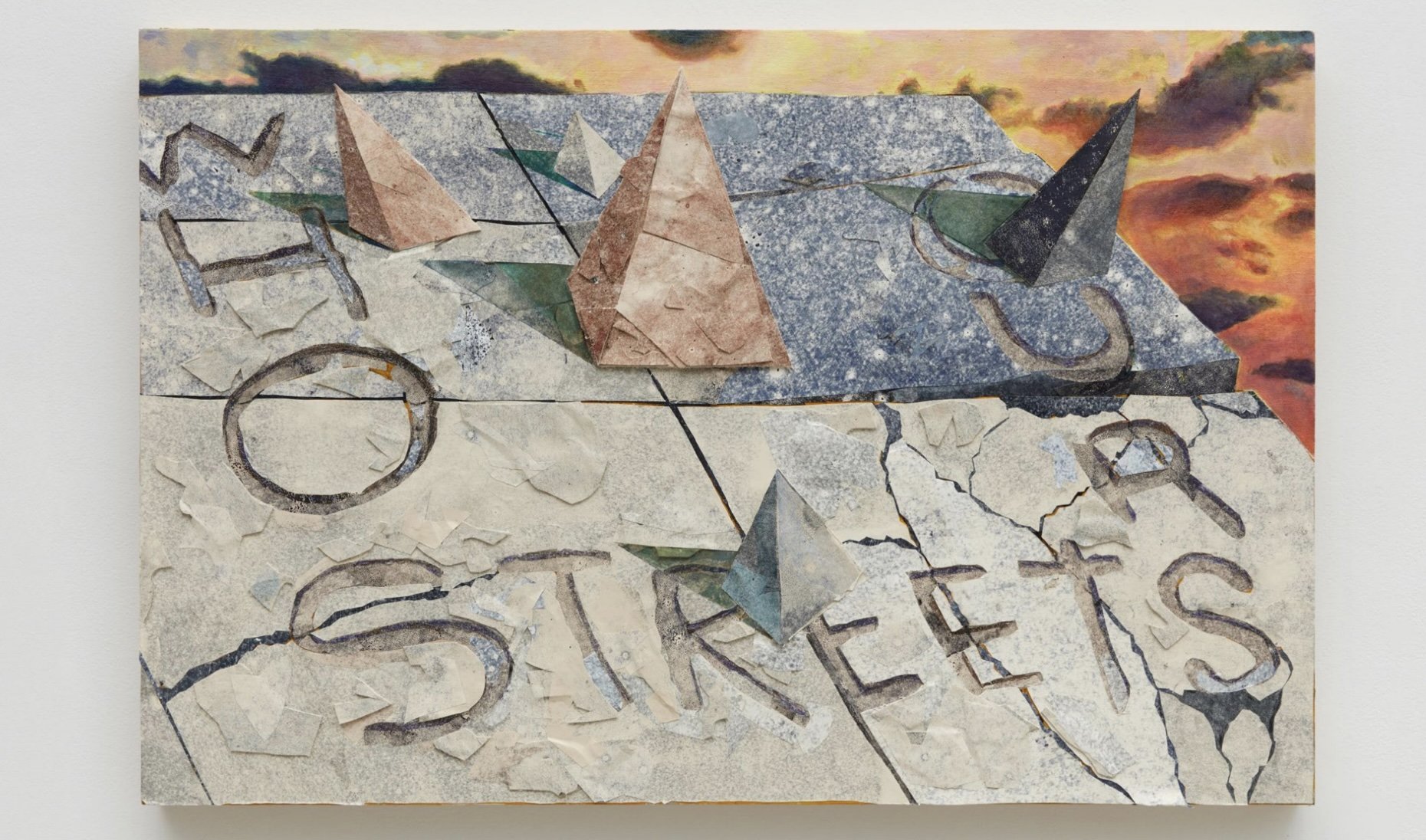
Yashua Klos, Who’s Streets?, 2026. Sikkema Malloy Jenkins, New York, 2026. Photo: Jason Wyche.
Ultimately, Proposal for a Monument does not resolve into a stable exhibition. There is no singular statement meant to carry the full weight of the show. Instead, it leaves the viewer with the sense of something still unfolding. Klos’s figures, assembled through repetition and fragmentation, stand less as final monuments than as propositions for a different understanding of scale, presence, and historical memory. Their density accumulates across the walls until the gallery itself feels altered by their weight. What remains is not a singular heroic image, but a collective body composed through fragments, insisting that monumentality can emerge not from permanence, but from the persistent act of occupying space.
Yashua Klos: Proposal for a Monument is on view at Sikkema Malloy Jenkins from February 12 to March 21, 2026.