

.webp)

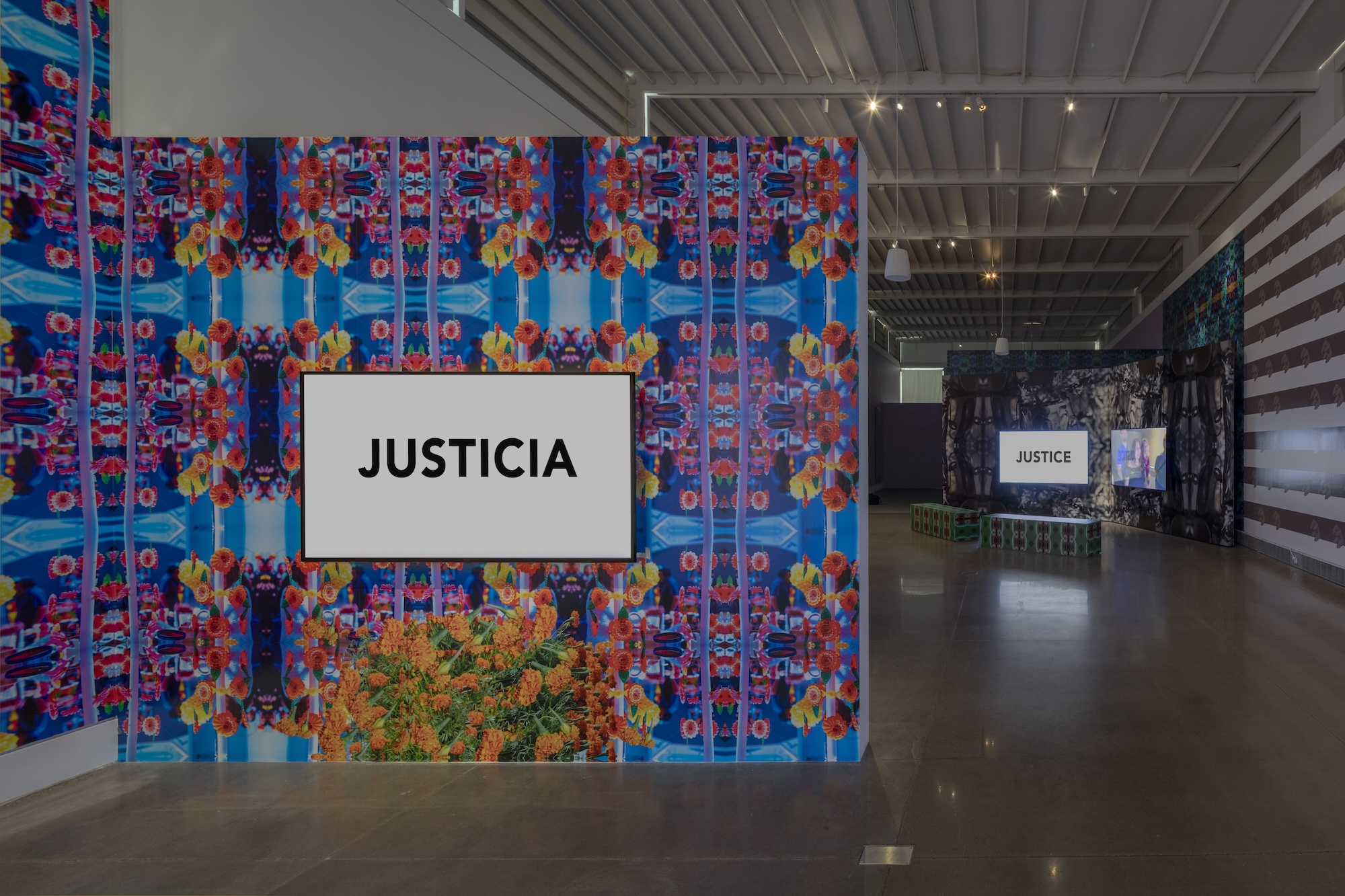
Sonia Boyce: “Demonstrate” at the Queens Museum
Review
Dreaming, as we generally understand it, happens at night—despite the drool of daydreams peppering our waking hours, turning days into daze. In recent years, researchers have come to a growing consensus: dreaming during sleep, particularly during the REM cycle, is critical to the brain’s ability to cleanse and recalibrate itself. Dreaming functions like a carwash, flushing neurochemical waste while sorting emotions and memories, resetting neural circuits for the work of the following day. So what happens to someone like artist Karla Diaz, who, for more than a decade after a stroke, lives with intense insomnia and may no longer dream or sleep the way she once did?
Of course, she runs—upwards of two hours a day for heart health. But for the deeper recesses of the brain, Diaz has found another form of exercise, or excision, to clear not only neural pathways, but something closer to the soul.
Diaz’s deeply intuitive, generative, and psycho-emotional drawing practice began in the wee hours of the night, when sleep refused to come. Faced with the vastness of time, she turned to pen and paper, but found the blank page too daunting. Instead, she flooded it with watercolor: splotches of pigment blooming and bleeding into one another, reminiscent of 1960s liquid light shows and acid-trip luminosity. From within this abstract terrain, forms began to emerge with images surfacing the way dreams bubble up from the unconscious. Diaz now refers to this process as a kind of psychic excavation—a practice of “rendering at night.”
What appears in her mind’s eye and then the page is expansive and unruly. Childhood visions. Family scenes. Memories inherited through the ancestral grapevine. Stories of love, death, political provocation, and historical and ongoing abuses. Fears and hopes alike channel themselves into paper. Over time, as Diaz became more adept at handling these images, a shift has occurred and the work includes scenes beyond personal memory into something collective, tapping a deeper well of shared consciousness. Serial-killer luchadoras, urban myths, personal loss, community violence, and invented worlds collide and co-mingle.
Recently, Diaz began a new project born from interruption and missed connections. After receiving countless phone calls meant for someone else, she started painting the people who left her voicemails. Their stories, confessions, and fragments of lives misdirected into her inbox, now given form on paper. On the other end of the line, Diaz becomes a kind of priestess, a reluctant holder of confession and in a psychic-like fugue state. She imagines what these unseen callers might look like, giving form to the disembodied ghosts traveling through digital ether from their mouths to her ears.
This flow state is deeply fragile. Conjuring images takes a toll on both body and mind. It is a form of conscious free association—an improvised therapy that navigates the inner monologue of a restless, loving spirit. Yet it is profoundly cathartic: a way of responding to emotion, to states of being, to the need for safety and self-determination. “I own this. I need this,” Diaz asserts, claiming space for healing, for storytelling, for repair.
Where does healing happen for the self, for the individual, and for the collective? In her own words, Diaz offers a quiet but radical proposition: “a community that is healed is the most powerful form of protest.”
— Jesse Firestone
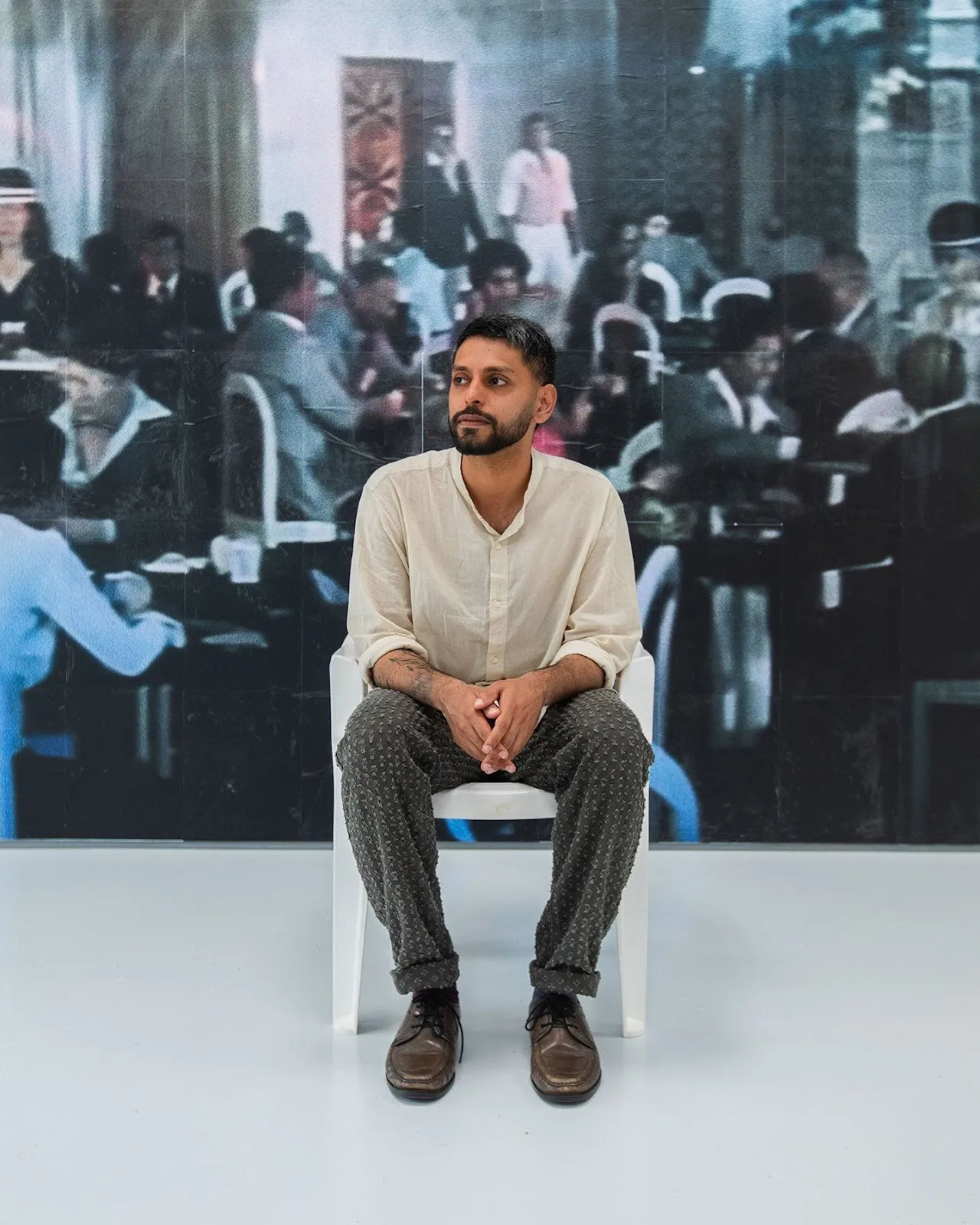
What does a contemporary multimedia artist’s studio look like? For London-based artist Harmeet Rahal, a studio is a wall, a table, and a chair, with a few sketchbooks and a laptop. Then, wherever he goes—whichever site welcomes his next project—is a second workspace. Due to constant movement and exhibitions at different locations, the gallery becomes an alternate site for composing works, thus dividing the workload. He breaks the white cube as a display site and challenges what an exhibition should be; site-specificity and project-oriented installations take precedence.
Rahal’s practice across mediums takes a stance against socio-politically structured violence in India and among its diasporic communities. In one of his most striking works, Chori Chori (2025), he guides his audience into both a nostalgic comfort and melancholia through poetry, music, narration, and documentary visuals. It’s a journey, a memory, a fever dream, a journal, held together by a convincing and soothing voice that oscillates between autobiographical monologues, history, or something entirely random. But the voice never loses track—it moves the story forward.
Rahal weaves these narratives together through paintings, animation, film footage, or videos he makes himself, composing music and choreographing performances. Rahal is deeply fascinated by the rehearsal, the pre—the sketch before the work, and how it is seen, heard, and embodied by both himself and the few who get to witness his drafts. Although the final production process is deeply isolated and entrenched in front of a laptop, he often invites friends to his studio to see works in progress, preferring to gather a few heads together before any project is finalized. These are never mere sketches, but fleshed-out and structured pieces waiting for refinement. His artwork in presentation is already a set of meta-dialogues between himself, digital and sonic media, the audience, and the presentation space. The rehearsal then becomes a second layer of meta-activation—a foundational experience not only for the artist and collaborators, but for an audience that can never access that space of vulnerability.
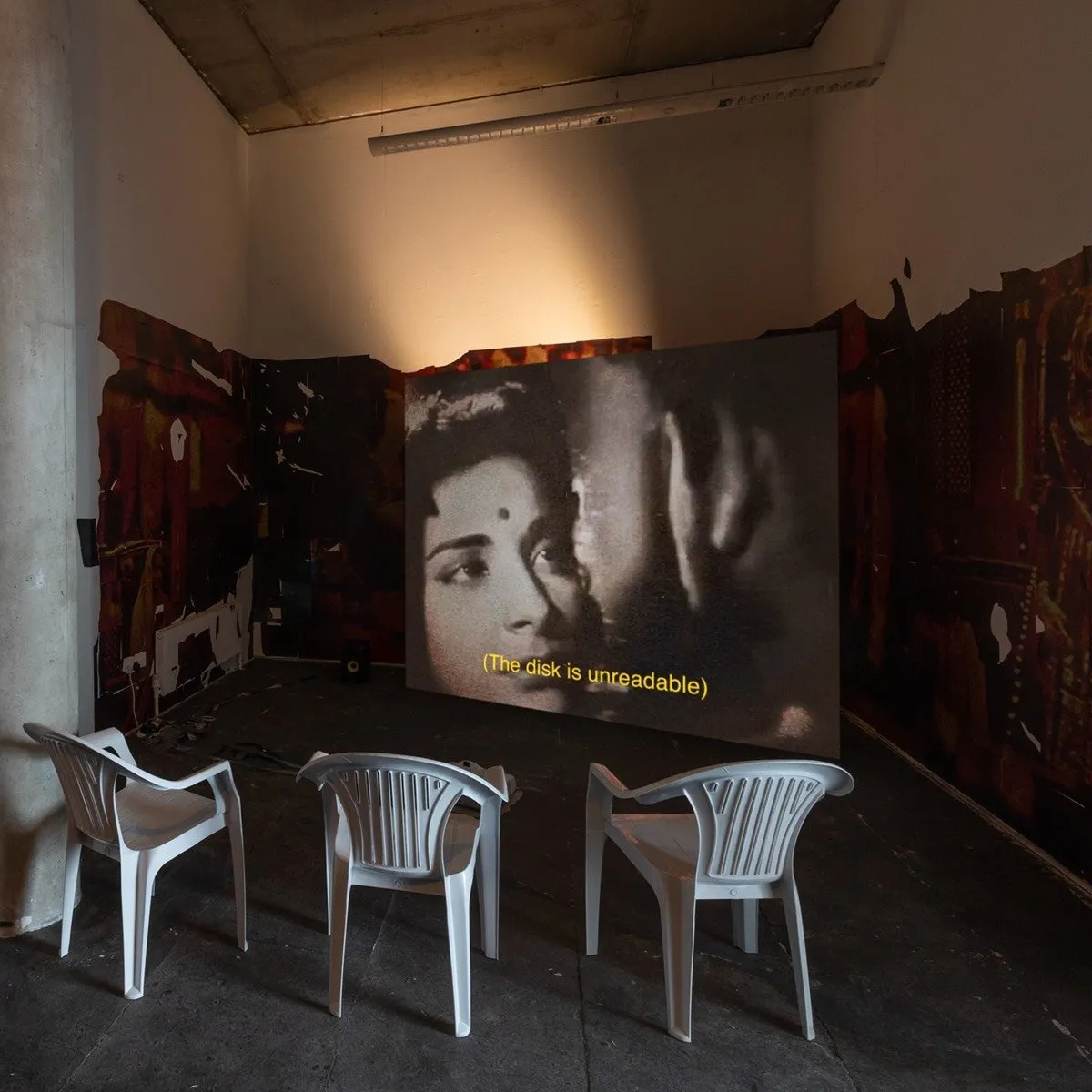
Unlike most contemporary performance artists who position their physical presence as the primary exponent, Rahal diffuses emphasis onto other media: the installation, the video, the sound, the ambience. As his voice becomes the guide in Chori Chori, his performances become guides through what is happening in the gallery, making the audience acutely aware of technicalities and distortions, adding layers to stories being experienced. He becomes the system that regulates experience in real time—a bridge connecting audience and work, a producer in the moment.
The artist acknowledges that there is a deep vulnerability in both being present and using that presence as a highlight. He does, however, relish in the underlying joy of having accepted his position before an audience: shy and awkward. There is great freedom beyond that, he claims.
— Abbas Malakar
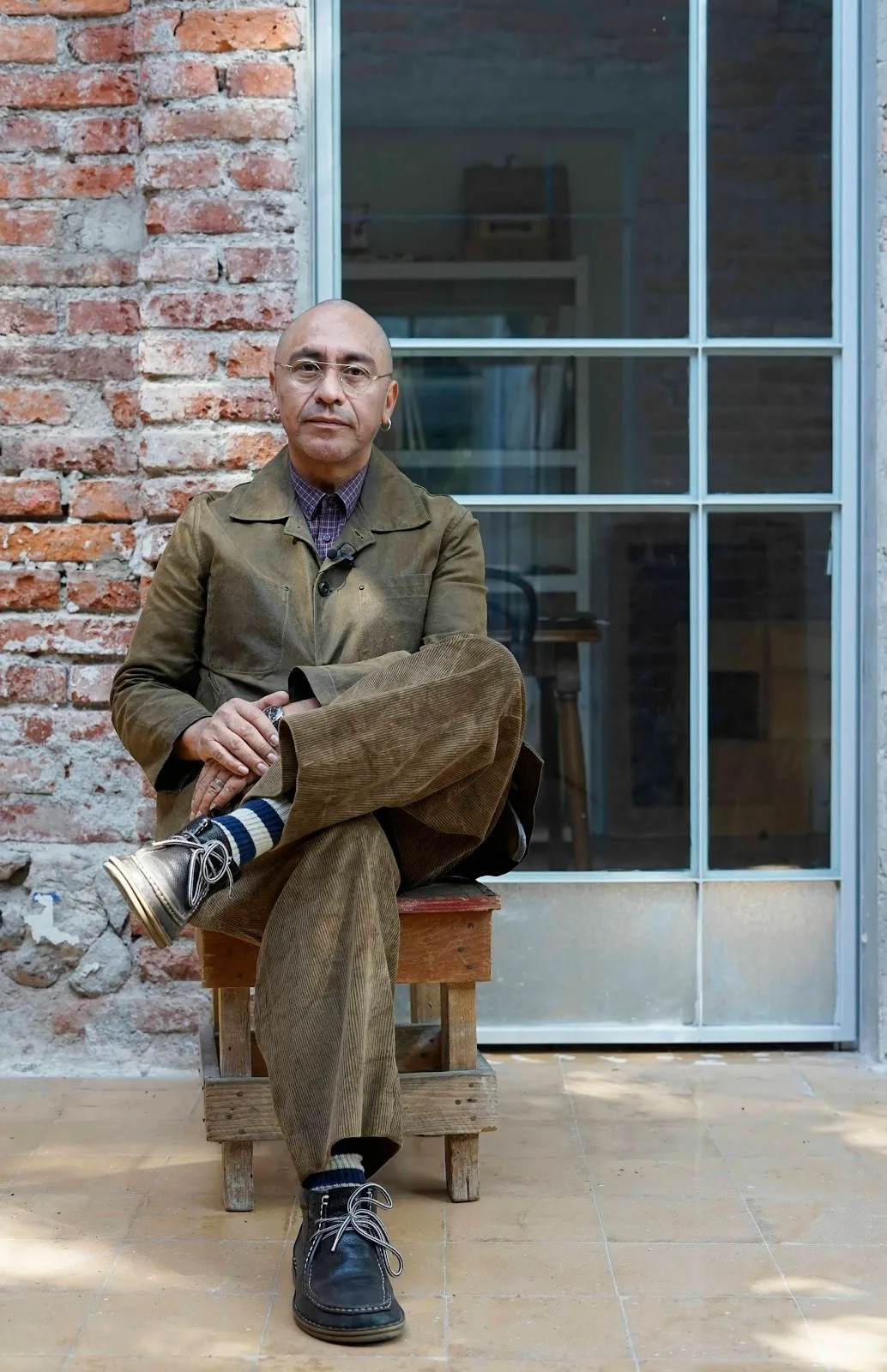
“The house where I grew up was an auto-constructed house,” Abraham Cruzvillegas shares, referring to the colonias populares of Mexico City where residents build homes incrementally and innovatively, using whatever they can source and whatever is at hand. “Later on, when I was a young artist, I understood that this experience is also a part of my work,” he continues. In fact, within his artistic practice, autoconstrucción has become a guiding principle. In throwing out any rules, the artist instead favors improvisation, collaboration, and all the beauty to be found in the unexpected. It is this philosophy that led him to say yes when the Louis M. Martini winery approached him to create an identity for their new four-grape blend, Terra Mista, through a performance art piece.
Cruzvillegas is a self-proclaimed “indisciplinary” artist, preferring this term to “multidisciplinary,” which he rejects. To be “indisciplinary” is to refuse the rules of any given craft, be it in writing, teaching, sculpting, or curating. Cruzvillegas thrives in the in-between: “I normally work with whatever is at hand, improvising and collaborating, and then all these references take shape in space, the way I can call it art. It’s not that I’m illustrating the idea of auto-construction, it’s more like activating the dynamics of auto-construction.” This philosophy, which allows Cruzvillegas to exist and work in a constant state of flux, was further solidified by his recent appointment as the Artistic Director of the inaugural Bienal de Yucatán in 2027. As a writer and researcher, he is constantly investigating and learning: “Any time I can witness my own learning, I’m happy.”
In the fields of the Napa Valley, he investigated the community of organisms that sustain the vineyard. Research into traditional milpa intercropping, an ancient Mayan agricultural system based on the symbiosis of acorns, beans, and squash, revealed parallels in the winery’s own ecosystem, where every part is equally important. At Art Basel Miami, all this on-the-ground research collided with the white-cube world during a live performance for the new Terra Mista label. The form of the wine label somewhat dictated the process (“It’s a label, so we need paper,” he quipped), but he allowed for a fair dose of uncertainty, inviting the audience to witness the improvisation so central to his art-making practice. “Making the process transparent and public is quite painful,” Cruzvillegas admits, “but it is daring.”
— Paige Miller
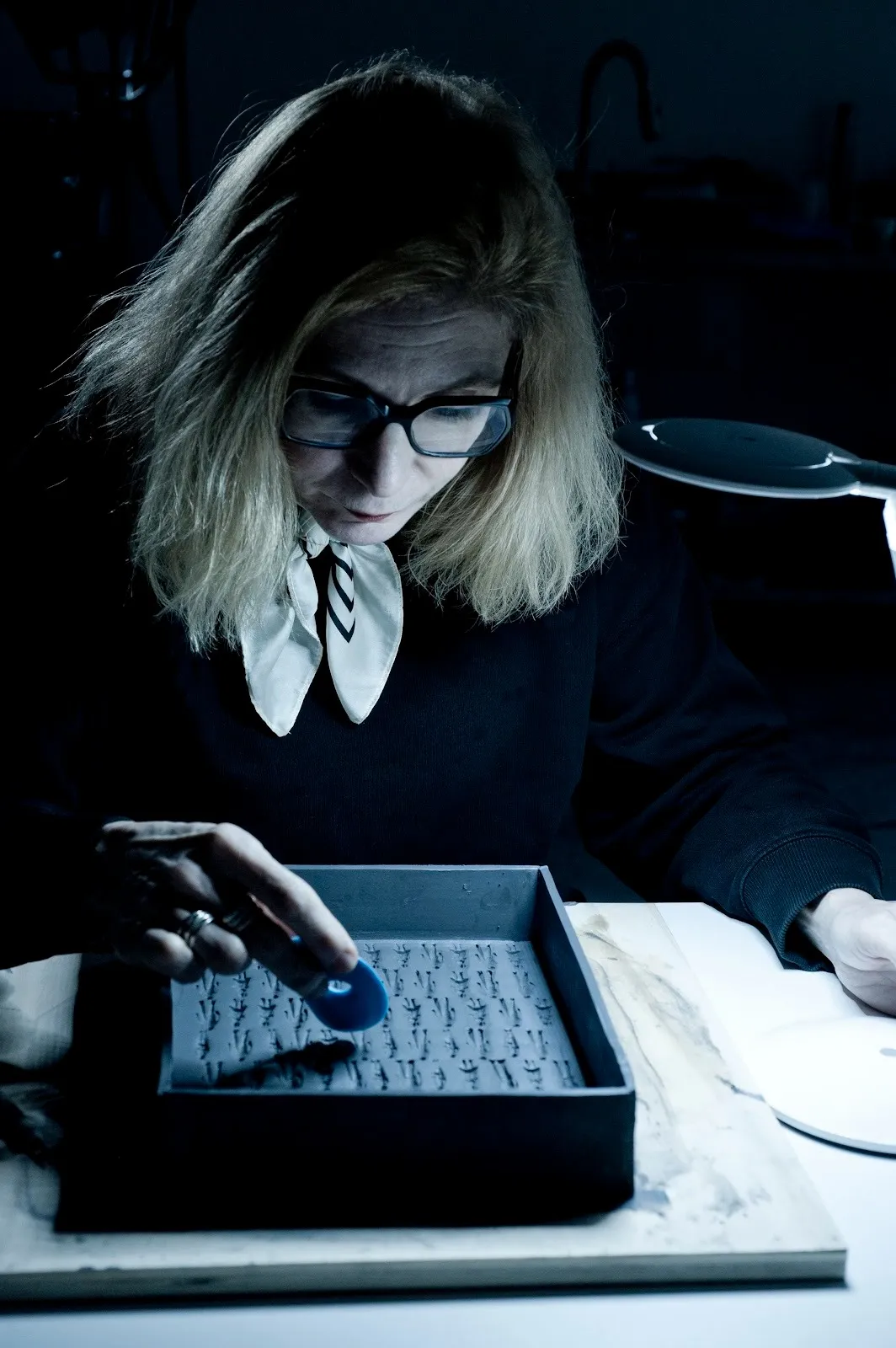
What is the first thing a photograph forgets? When asked, Emmanuelle Fructus explains that “photography offers us a unique experience of activating forgetting and making it perceptible at the very moment of viewing . . . fragments of forgotten lives can be set in motion, in complete freedom.” Working with mostly anonymous, private photographic archives, Fructus liberates “forgotten” figures from their original context, cutting them out and placing them in new, blank spaces, as she “borrows the act of cutting from the women who, in the past, arranged images in family albums, thus weaving family narratives.” Her resulting artistic practice is an exercise in “preserving these lives by re-inscribing their presence in a different, more legible space of interpretation.”
This month, Fructus moved into her studio as the first artist-in-residence at La Junqueira Lille, the intergenerational residency for artists and seniors to live and share experiences, founded by Stéphane Mulliez. The intergenerational aspect of the residency attracted the artist because, as she shares, “I believe that elderly people have, at certain points in my life, saved my life.” A true collector of almost twenty years, Fructus has donated over 40,000 photographs to the French Photographic Society and, for the past few years, has built a collection of images of older people for the historian Phillipe Artieres and the magazine VIF. Upon arrival in her new studio space at La Junqueira Lille, she quickly began to explore archives that had previously been difficult for her to access: a series of large-format figures, each approximately 15 cm tall.
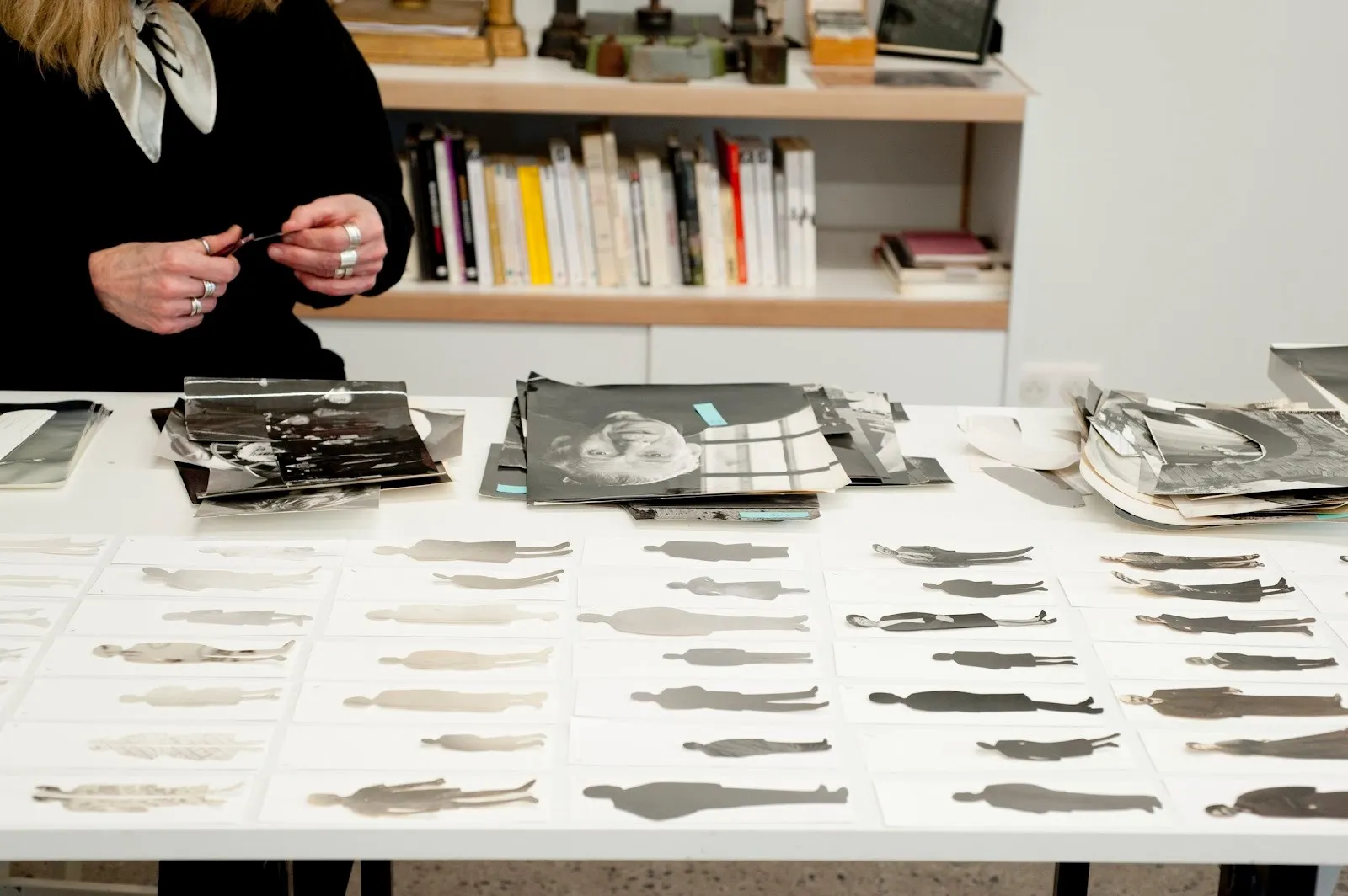
When she first moved to Saint-André-lez-Lille, the echoes of old textile factories and coal mines inspired Fructus’s research into the region’s history. For her residency project, the artist explores labor exploitation as she divides her figures into two, then later pieces them together with archival photograph remnants, evoking the “alteration and fragility of bodies subjected to harsh working conditions.” The only sounds in her studio are the snip of scissors and the recorded voices of local residents sharing testimonies and local history. “The images,” she shares, “create enough noise all on their own.”
An exhibition of Fructus’s work from the residency will be held from March 27 to April 3, entitled Du noir tombe (From black falls). The title is borrowed from a poem by Jacques Roubaud, mathematician, poet, and member of OuliPo, published in Quelque chose noir in 1986. It begins: “Where are you? Who? Under the lamp, surrounded by black, I place you: In two dimensions.” Roubaud writes the absence, and Fructus cuts it. They both ask: who are you when “where” no longer exists? “Photography,” Fructus offers, “is a complex and paradoxical medium: it allows us to forget everything without ever forgetting anything.”
— Paige Miller