

.webp)

Sonia Boyce: “Demonstrate” at the Queens Museum
Review
In the seventh edition of the AIM Biennial, the Bronx Museum brings together work that sheds light upon connection and community in its myriad forms. The artists in this exhibition are members of the 2024 or 2025 AIM Fellowship cohorts, a program that fosters an ongoing conversation between the artists, the Bronx Museum, and the diverse communities that make New York City unique. Below are a handful of the many artworks in this show that serve as gentle yet crucial reminders of what brings us together, what we owe to one another, and what we must choose to carry within us in order to move forward as a community.
Piero Penizzotto’s Big Brother Obii Knows Best (Ft. Freddy & Shawn) (2025) greets visitors upon entry. The human-sized papier-mâché sculptures depict a teacher and two students in the Bronx school where Penizzotto teaches. The artist’s attention to detail results in a sense of realism that makes his subjects appear all the more familiar to us, with quotidian details such as the Gatorade squeeze bottle peeking out of a student’s backpack or the teacher’s lanyard dangling from his pocket. The three figures have a relaxed body language; they engage in light conversation with big smiles. Penizzotto’s formal stylization ironically lends a mimetic atmosphere to the trio; the small details, candid poses, and specific expressions captured reflect an obvious dedication and attention to the artist’s students.
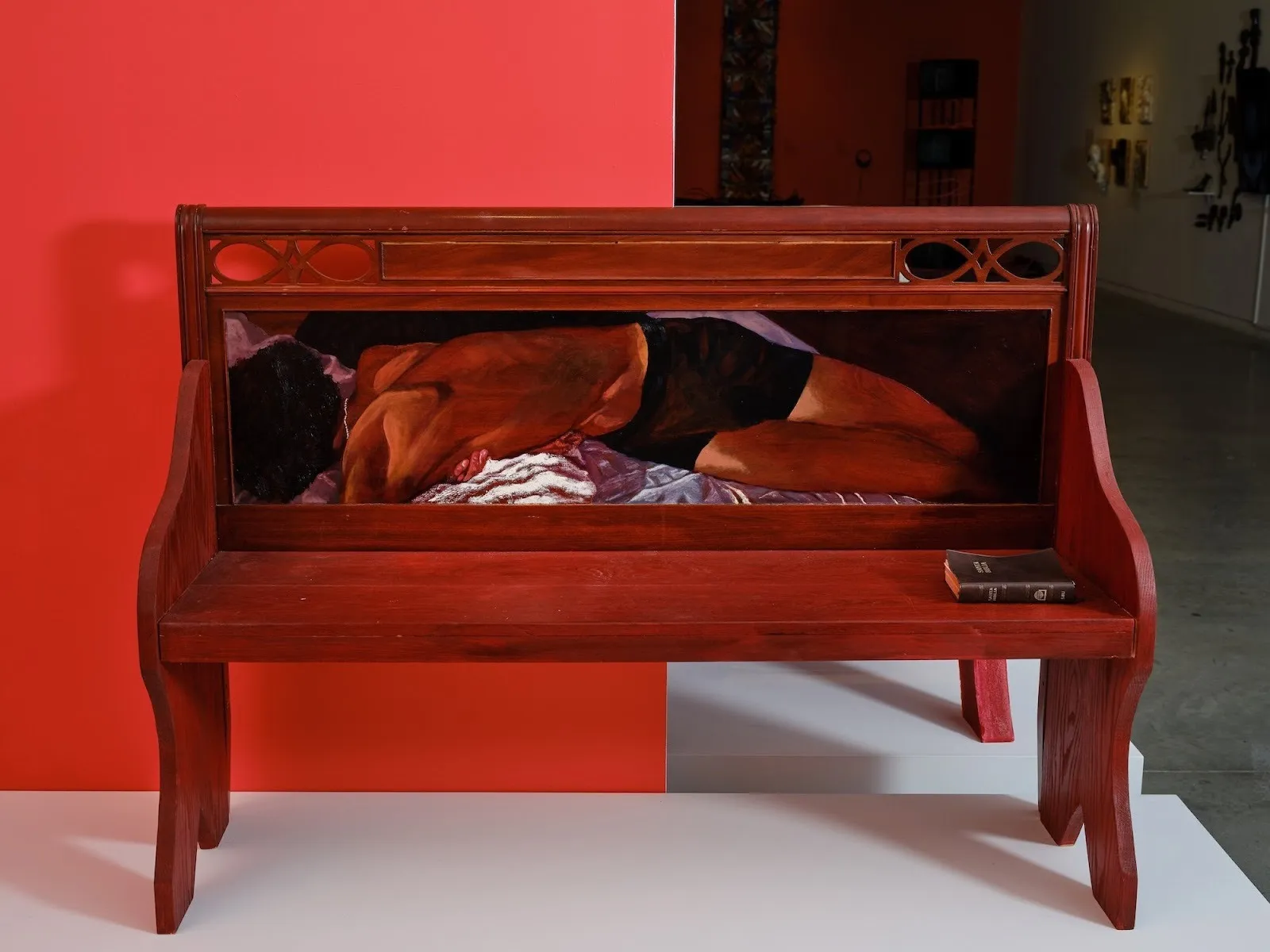
The Messenger’s Pew (2025) by kiarita is a visual pun: on the backrest of the pew is a painted figure of someone’s back turned towards us as they rest. If one were to sit on this pew, there would be a reciprocal support between themselves and the painted figure, as they both rest literally back-to-back. This intimacy is strengthened by kiarita’s repurposing of a found headboard to form the backrest of The Messenger’s Pew, inviting the viewer to consider the gesture of offering a safe place to rest as an essential act of love and care.
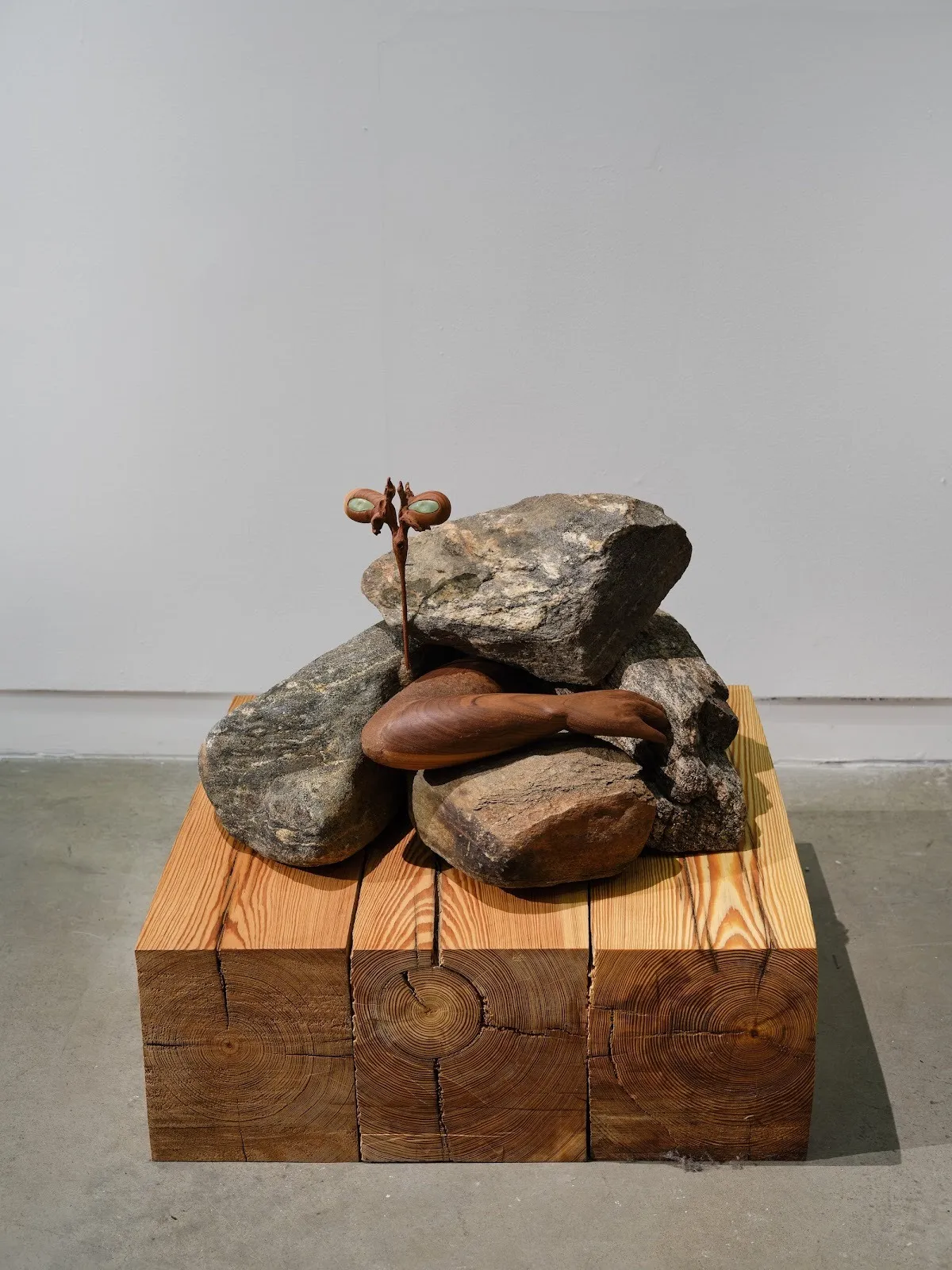
In medieval Christian iconography, Saint Lucy is often depicted as holding her gouged-out eyes on a platter, in reference to her martyrdom. In Jill Cohen-Nuñez’s Untitled (ojos) (2026), the platter has been replaced with natural materials, such as stones from Pelham Bay Park, acting as an altar that connects the physical landscape of New York City to the spiritual beliefs shared by many of its residents. The sculpture could also be interpreted as a protective talisman against mal de ojo, the evil eye, warding off any possible misfortune or injury.
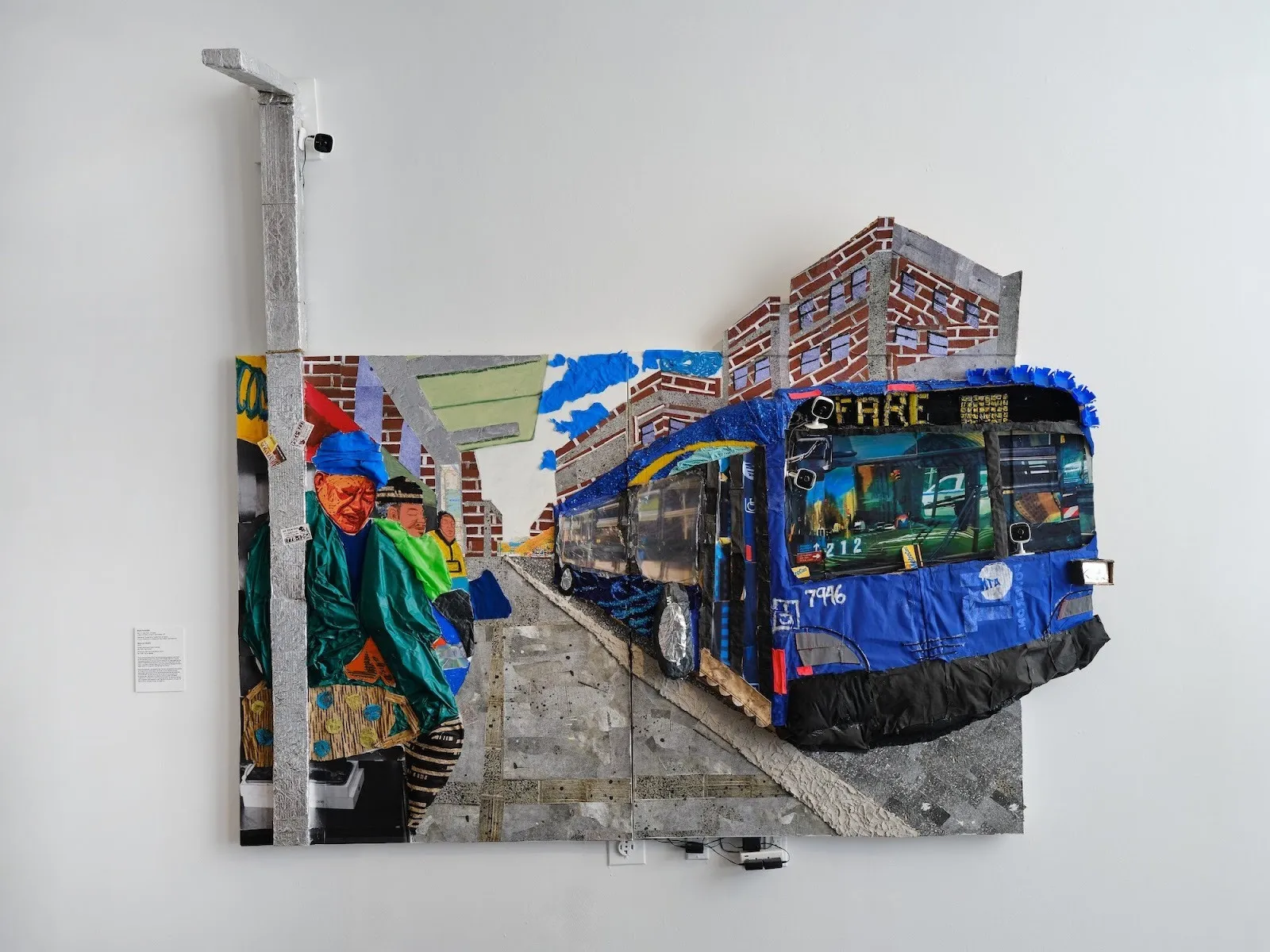
Bryan Fernandez’s Beso a La Cámara (2025) portrays a mundane scene familiar to any commuter in the city. The piece’s details prompt close examination of the piece; it is amusing to pick out familiar elements such as the paper cards advertising rooms for rent and the now-defunct Metrocard. But soon, the discomforting discovery of the live cameras embedded within the piece implicates the viewer in turn. Beso a La Cámara calls attention to the state of surveillance within New York City, where cameras are propped up on every conceivable corner—from NYPD cameras surveilling public parks and crosswalks to the security cameras recording the customers at a local bodega, or even the Ring cameras that some New Yorkers install on their front doors. Fernandez forces viewers to question the ethical and legal implications of being under constant surveillance, as well as the interpersonal, voyeuristic underpinning of this act of looking underwritten by the state or tech companies, distinguishing the experience of being seen from being watched.
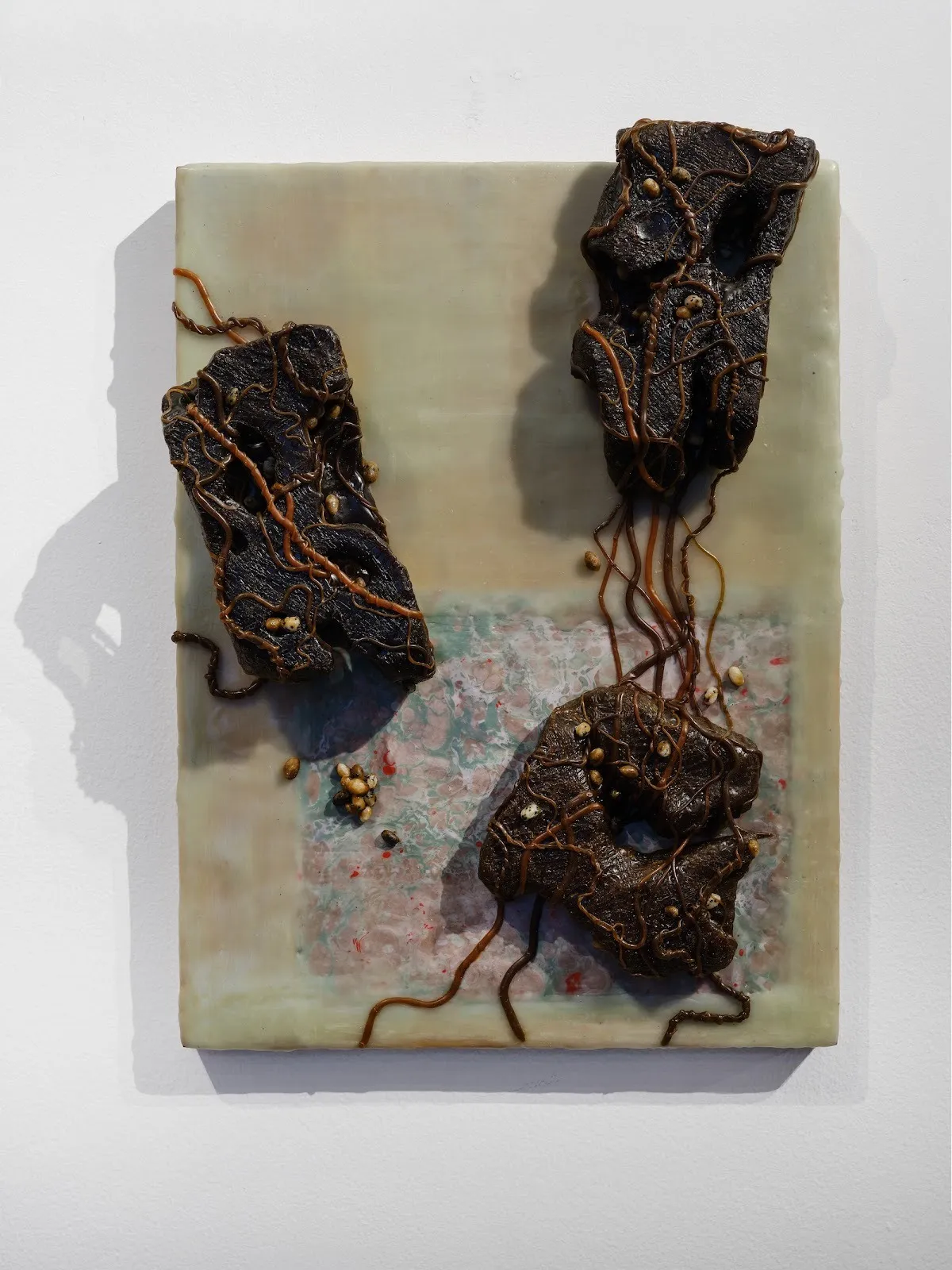
Nazli Efe’s Open Weave series (2024) draws inspiration from paper marbling techniques and molybdomancy, or kurşun dökme, a Turkish divination practice involving the interpretation of water and molten lead. In place of lead, the Open Weave series incorporates gauze, salt, and beeswax as materials used to preserve Efe’s personal memories. The tension between ephemerality and permanence is softened by Efe’s usage of gauze as a symbol of protection, care, and healing. Through this series, the physical transformation of the material echoes the ever-changing nature of memory itself, forcing us to question the fragility of our own personal histories and recollections.
The Seventh AIM Biennial: Forms of Connection is grounded in a sense of place, addressing ways of life shaped by New York’s singular conditions. Material emphasis conceptually fortifies works that consider both the strength of dense, diverse communities as well as the cost of urban living. What emerges from this exhibition is an overwhelming sense of togetherness: protection, rest, and connection through deeply personal and site-referential works that allow for prolonged viewing and an affirmation of belonging.
The Seventh AIM Biennial: Forms of Connection is on view at the Bronx Museum from January 23 to June 29, 2026.