.jpg)

.webp)

Brussels Art Week 2026
Review
Currently on its 14th iteration, Mumbai Gallery Weekend, led by Mumbai Gallery Association and supported by India Art Fair, is a festival that not only celebrates the moment but guides a vision for the future. It is somewhere in between a biennale and an art fair—not just a review of great masters nor an entirely speculative experiment—quiet, critical, fun, and also moving the market. Here, artists’ enthusiastic and passionate approach to their practices guide business in India’s art capital.
Muziris Contemporary sets the tone, presenting artists Nivedita Shinde and Mansoor Mansoori in Time and Place, a joint exploration of urban and suburban landscapes. Shinde paints brutally honest, red monochrome renditions of a city—packed buildings, rumbling automobiles—with all the heat, smoke, sweat, and frustration of a midday traffic stop. Mansoori goes a separate direction with oil paintings of empty roads at night, tired and ghostly under sodium vapor lamps. The former’s escape is in the clouds and an overarching sky devoid of the city’s burdens; Mansoori evokes a similar timelessness in creating images that blur decades into the archetypal night. Realism is juxtaposed against realism, visions of the infinite clash with the intimate.
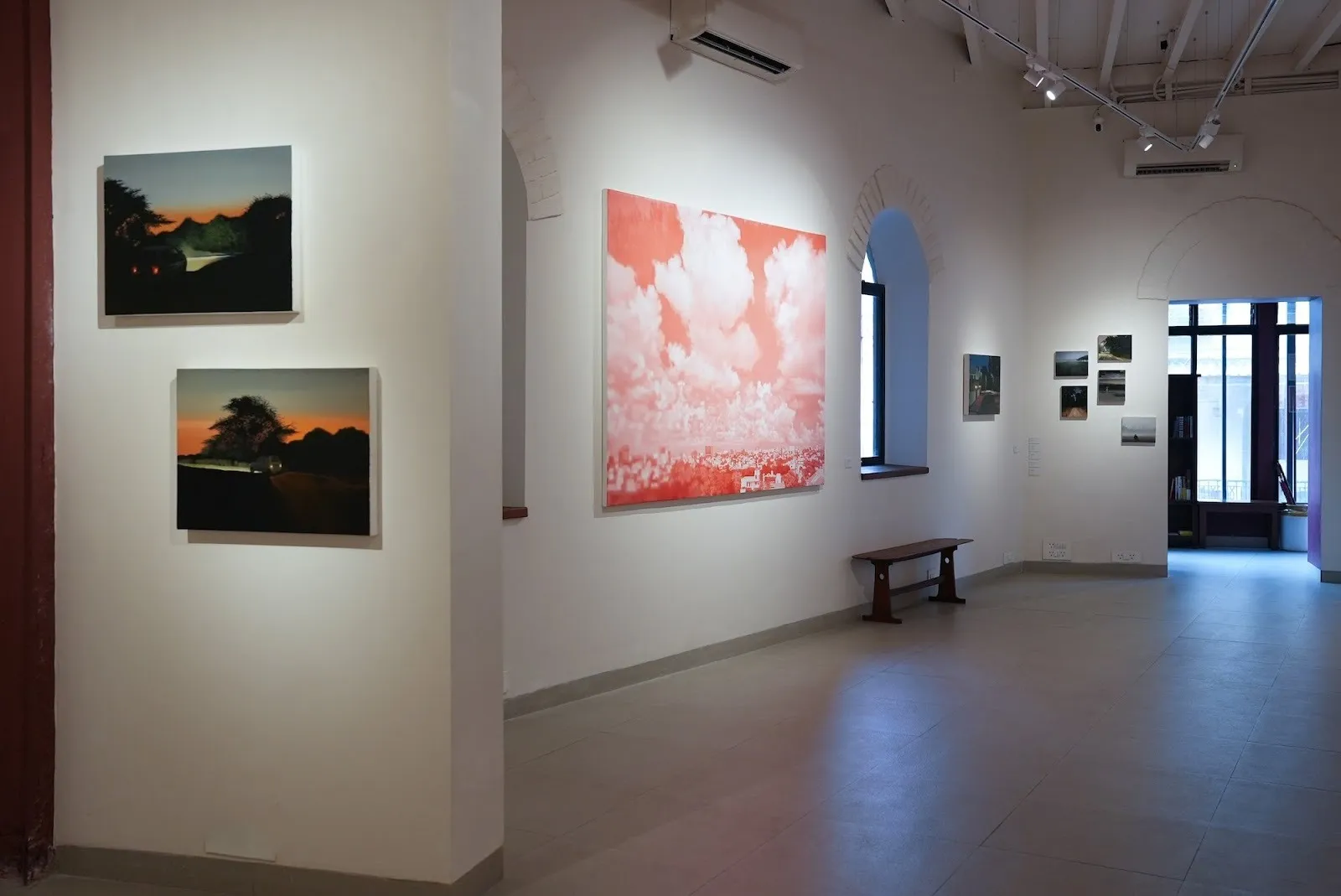
Muziris gallerist Joe Cyril spotlighted the exhibition’s attempt at removing undue romanticism from landscape paintings, centering the artworks within the unavoidable dialogue of environment action and urbanity. The gallery’s eagerness to preamble this cause feels especially apropos with Mumbai Climate Week fast approaching.
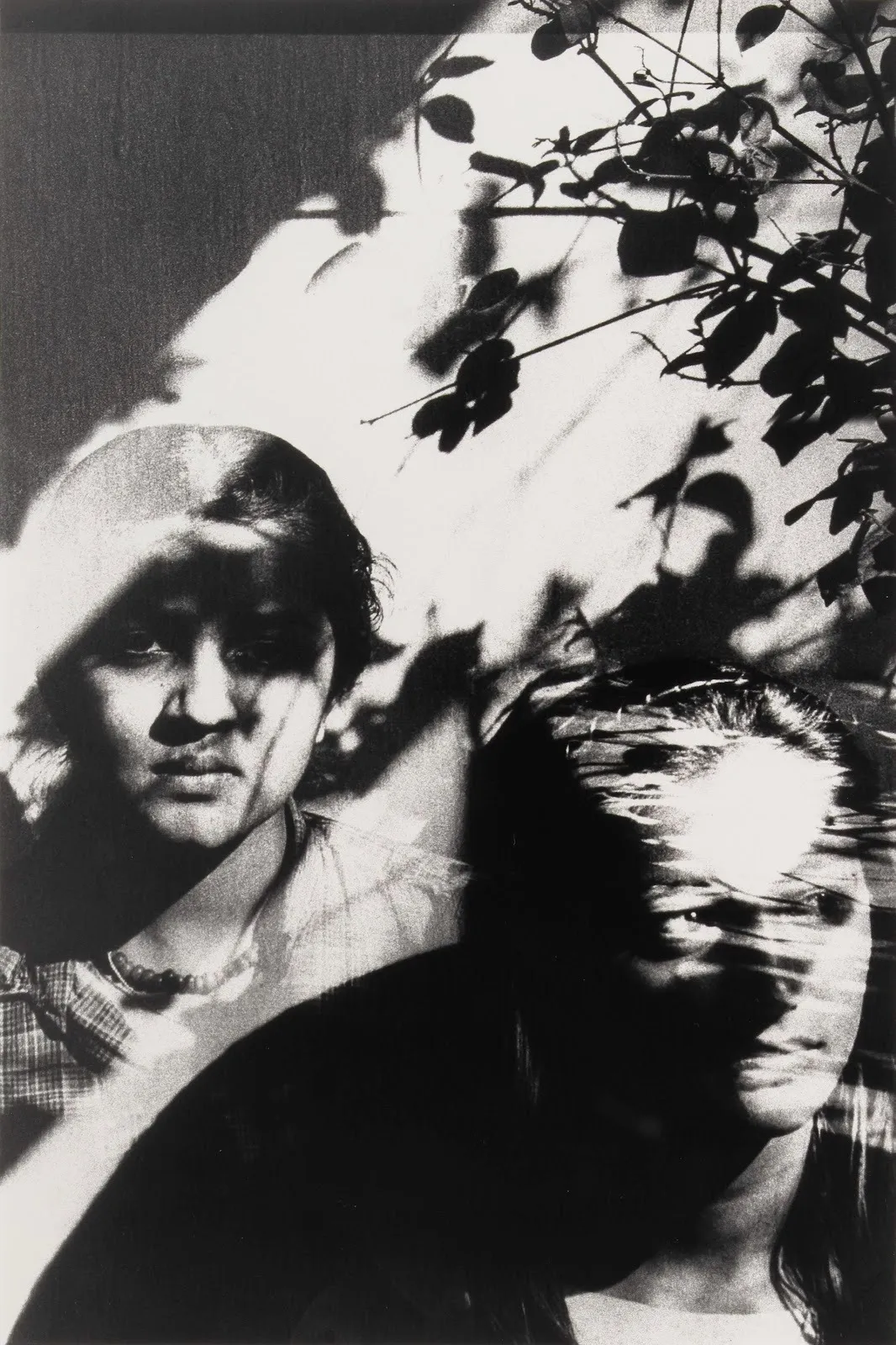
Reconsidering established narratives and modes of engaging with genres is taken a step forward with Jyoti Bhatt’s works on view at Subcontinent. As one of the bastions of Indian modern art, Bhatt’s works are not unfamiliar to most in the country—yet an entirely new dimension within his world has opened up in this new show A Painter with a Camera. These are probably the most unique set of the prolific artist’s works currently on display in the country: black-and-white photographic experiments made from the ‘60s through the ‘80s, presented in silver gelatin prints. They are testament to Bhatt’s spectrum of interests, revealing an exceptional architecture of variation within the practice of a very recognizable and celebrated artist.
These newly reproduced works of photographic manipulation and collages play with positive and negative space, tricking and soothing the eyes simultaneously. Reality is blended seamlessly with the absurd; surreal aesthetics are explored in a distinctly Indian vocabulary of motifs. The analog printing method has given the works a depth in terms of color and contrast that is shocking for eyes trained on digital screens. One might just feel the distribution and shades of black in more ways than the purely aesthetic, tracing the textures in a cross-sensory experience. Bhatt reveals a methodology that pushes the limits of rationality and sanity, creating a set of images from a mystical reality with just a touch of madness.
However, nowhere is the mystical more prominent than in Seeing from the Inside Out by Utkarsh Makwana at Akara Contemporary. Makwana upholds the essence of Indo-Persian miniature painting with a concrete grasp of geometry and architecture, adhering to the enduring, foundational traditions in the Islamic arts. Primary colors dominate the large watercolors. Each color breaks like a kaleidoscope upon the paper, as delicate shades layer, contrast, and build vast and detailed expanses in a sparsely populated world. Mawkana’s paintings demonstrate a diligent and intense craft that has been mastered through tradition and elevated in its contemporary use—works that can lay claim to extreme patience and unfaltering skill that demand a kind of madness and a spiritual discipline to guide it.
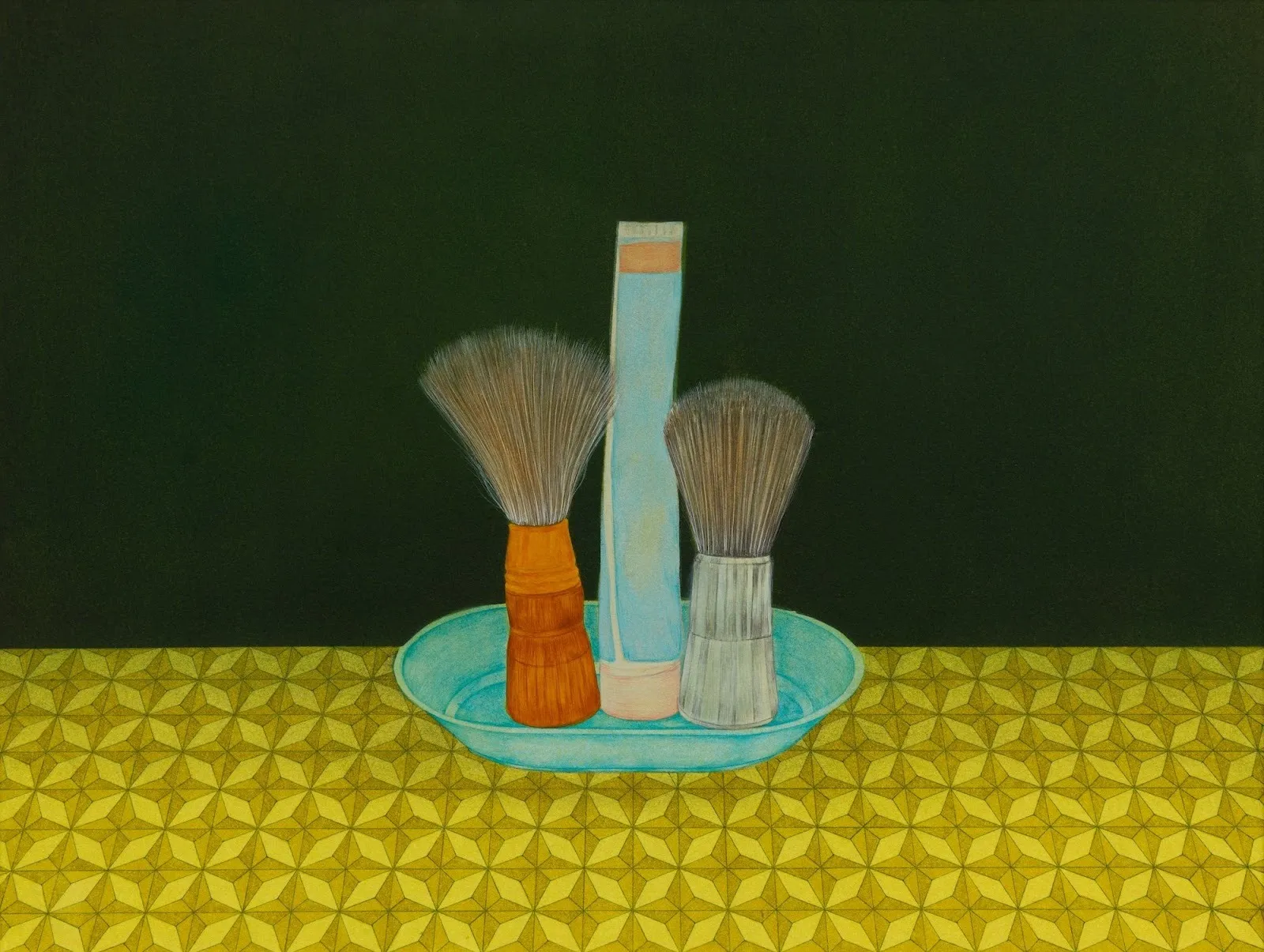
Stills from memories of dreams, or revisiting childhood fantasies—whether exploring private thoughts, or pursuing connections to popular stories, the narrative possibilities in Makwana’s paintings are endless. In quite a contrast to Shinde and Mansoori’s Time and Place, this show engages in romanticism first, and then weaves in elements of our physical reality including a diverse set of characters to produce a sense of the magical.
Magical realism finds its peak in Vinod Balak’s exhibition An Axis for a Revolution at Mirchandani Steinrueke. Through layer upon layer of ambiguity in landscape, characters, objects, flora, and fauna, as well as lighting and color, Balak’s paintings are imbued with a sense of mystery. He creates a constant need to search for clues, to look for signs, to find the next step in uncovering what exactly is taking place in these massive,maximalist images. From cabinet shelves with peculiar trophies and figurines hinting at bodily parts or internal organs to communal gatherings and nude security personnel, the show is bound to foster prolonged looking.
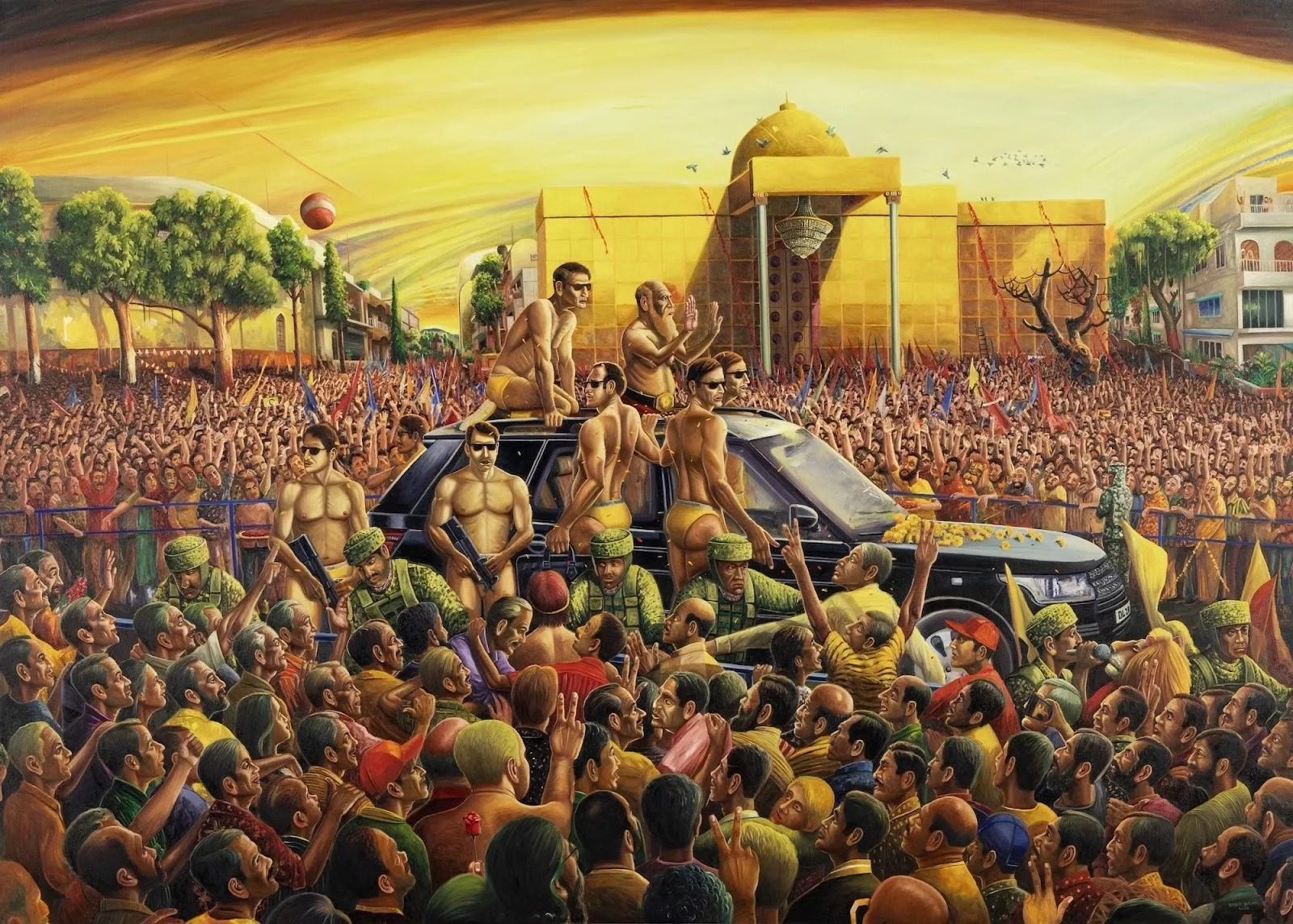
It is explosive, sexy, fun—and unmissable for anyone with a proclivity for the uncanny and queer. It is refreshing to see this kind of magic realism, and one can only hope for continued exposure to not only Balak’s world, but of this genre in the years to come.
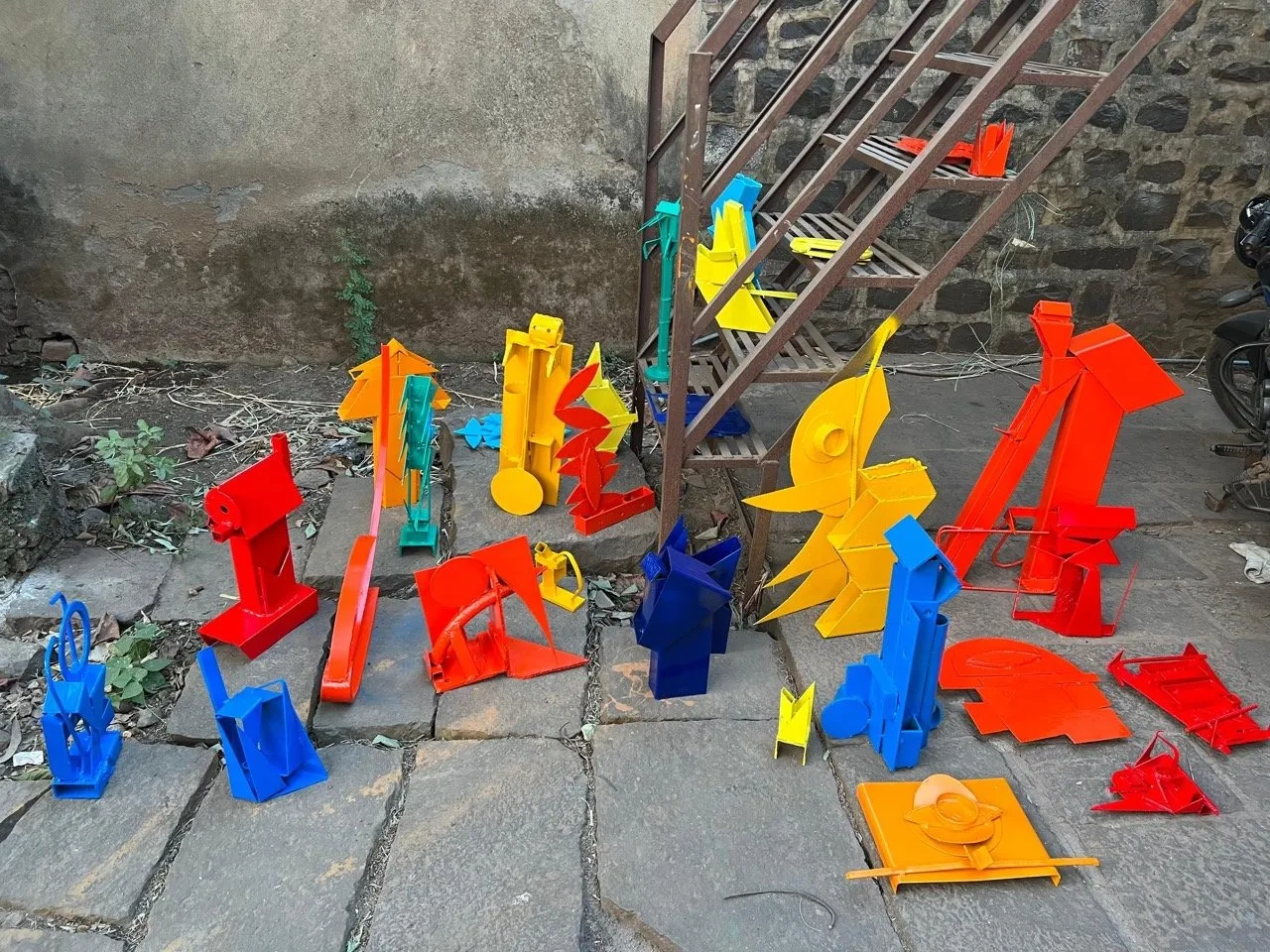
This exposition of worldbuilders is continued in Bhushan Dilip Bhombale’s show Prakalpana curated by Prabhakar Kamble at Strangers House. Bhombale, primarily a painter, dives into sculpture with an internal vision that cannot be ignored—ordered in color and shape, eager to burst forth in whichever direction he permits. Floral and wavy, heavily monolithic bodies of solid colors create jungles across papyrus sheets and find kinship with similarly visualized physical forms in welded iron sculptures. The highlight of the show is however his series of wooden sculptural installations made from broken and discarded wood from different boats. The gravity of this wood, its weight, and its implications in (dis)use is poetic for those with the time to linger and read into their imperfections.
Arshi Irshad Ahmadzai’s Azal se Abad tak at Chatterjee and Lal presents a distinctly different practice yet has a similar emphasis on the unrelenting passage of time. Ahmadzai’s works are a slow and intense deliberation on eternity, a narrative with the recurring motif of an auroboros. This is divided into parts across two rooms at the gallery’s new space at Horniman Circle. The works are starkly minimal from a distance, although intricately detailed and finely calligraphic the closer you get, requiring a calm or even a meditative approach.
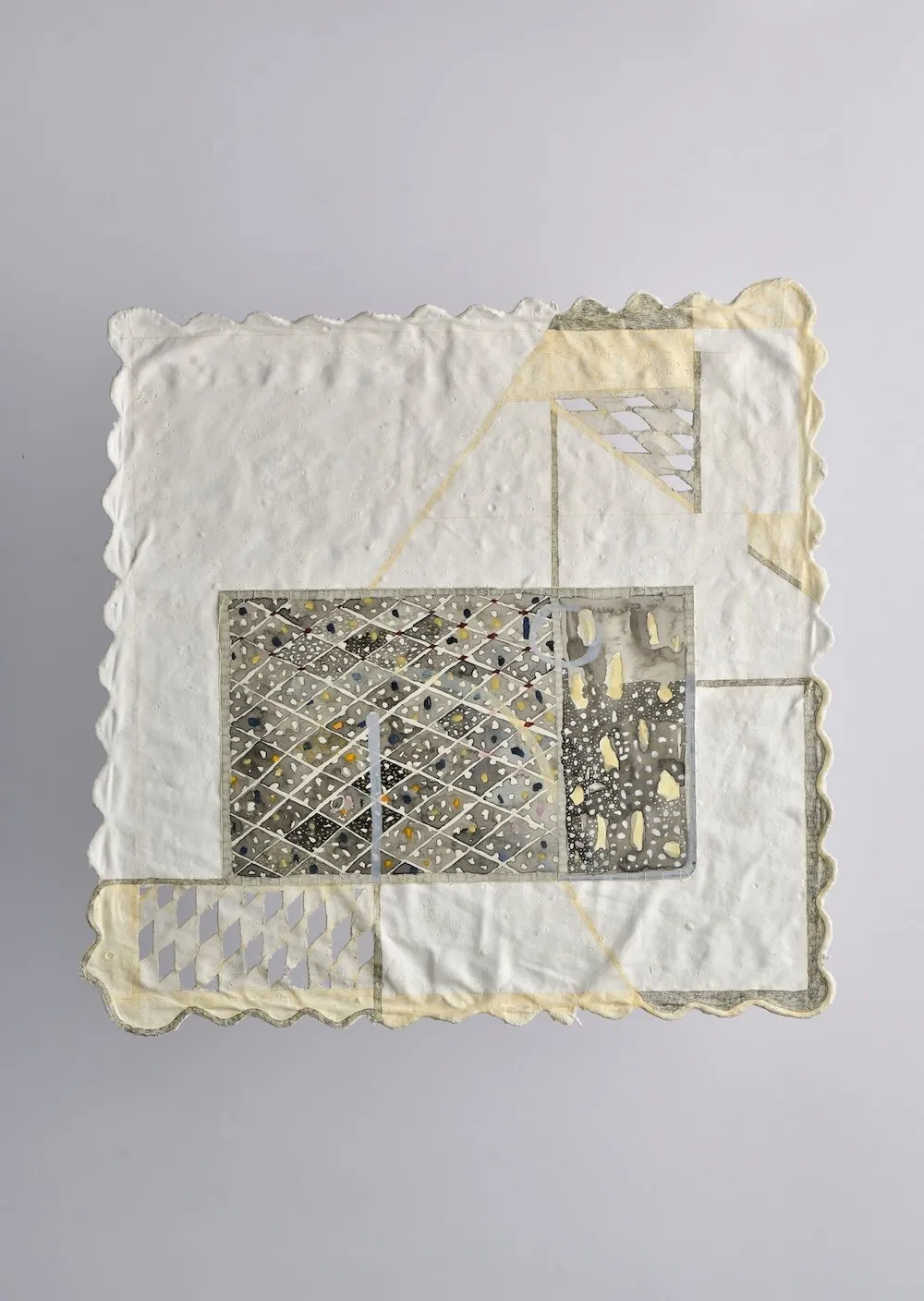
Sabeen Omar at Art and Charlie deserves a special mention, showing multimedia works painted on cutouts and composites of textile and paper. They are delicate and soft, magical and innocent. One such work is titled: in war the dark is on nobody’s side; in love the dark confirms that we are together (John Berger), 2022. All of them following similar trajectories in poetic citation remain floating sandwiched between glass in wooden frames. Mithu Sen’s show What Do Birds Dream at Dusk at Chemould Prescott Road and Prabhakar Pachpute’s Lone Runner’s Laboratory at Experimenter Colaba are also of note—both artists ranking high up in the domain of prolific contemporary masters. Overall, the 14th edition of the Mumbai Gallery Weekend is ambitious and exhilarating, championing artists who work across a diverse range of mediums and who contend with notions of reason, magic, mystery, and the surreal.
Mumbai Gallery Weekend was a four-day event between January 8th and 11th, 2026.