.jpg)


.webp)

SPLIT LEVEL 2026
Review
I see something in the sky.
It isn’t yellow like the sun, glittering like the stars, silver like the moon, or white like a cloud, but it isn’t not like any of those things, either. It’s round or oval or shaped like a lozenge, and I see it from the corner of my eye while staring straight at it and miss it completely.
The only way to grasp it is to turn away and sharpen my tools.
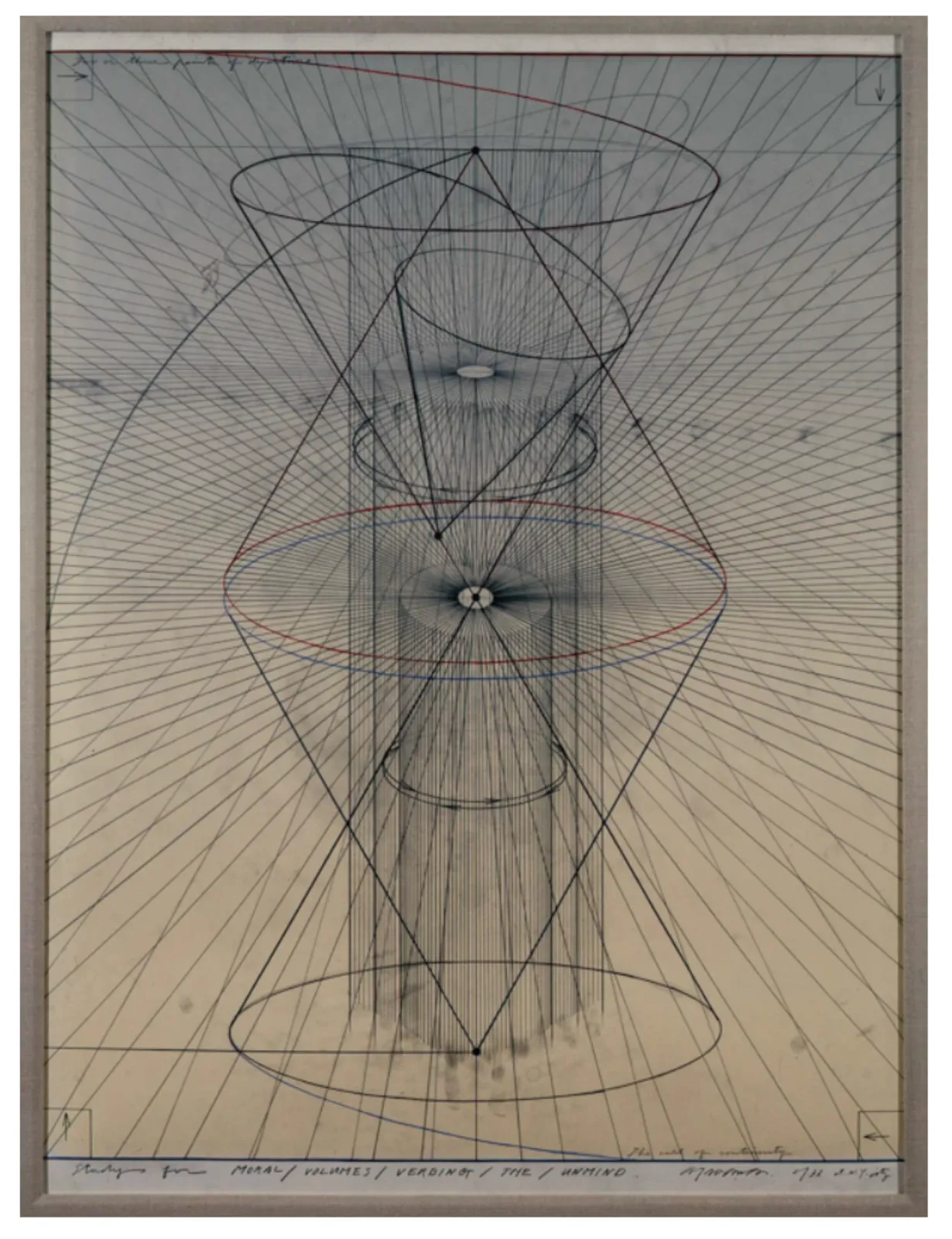
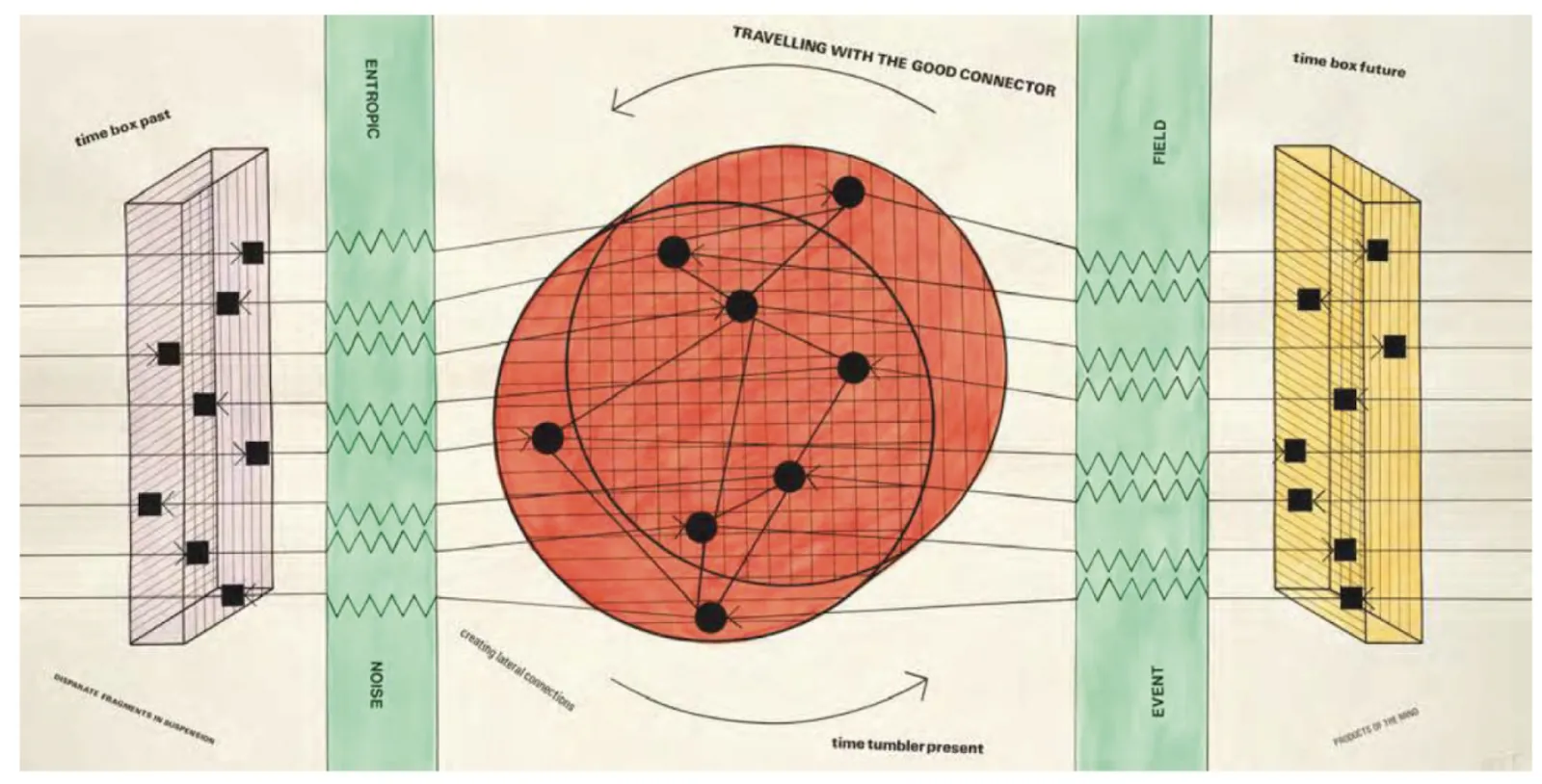
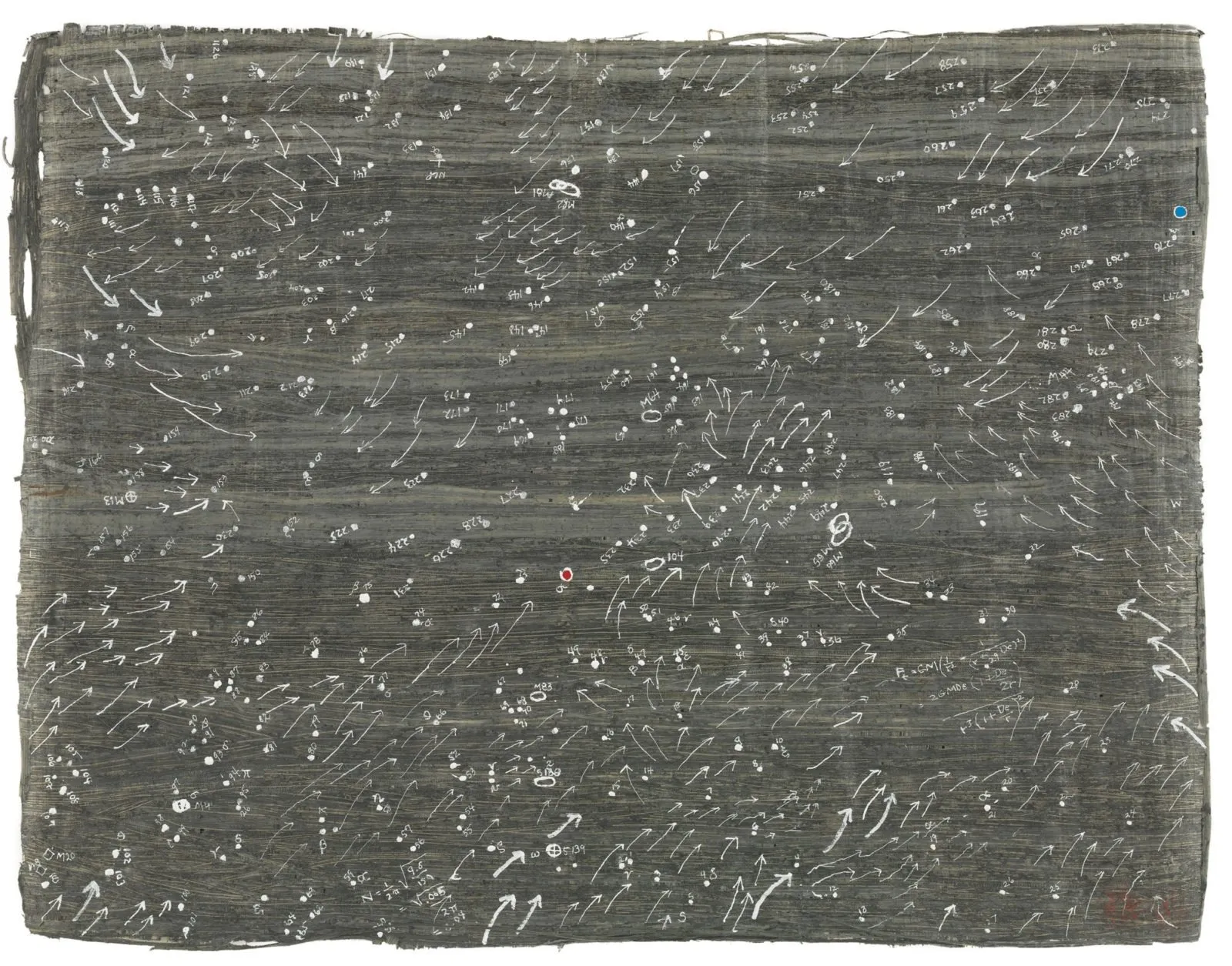
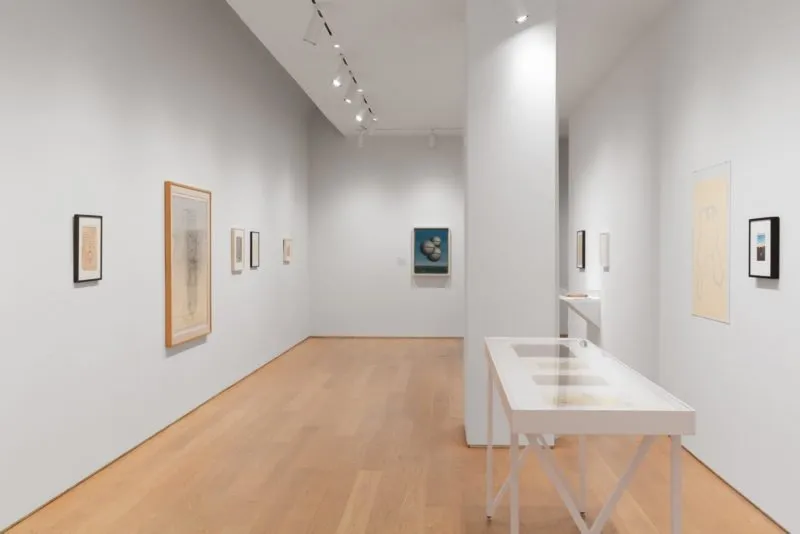
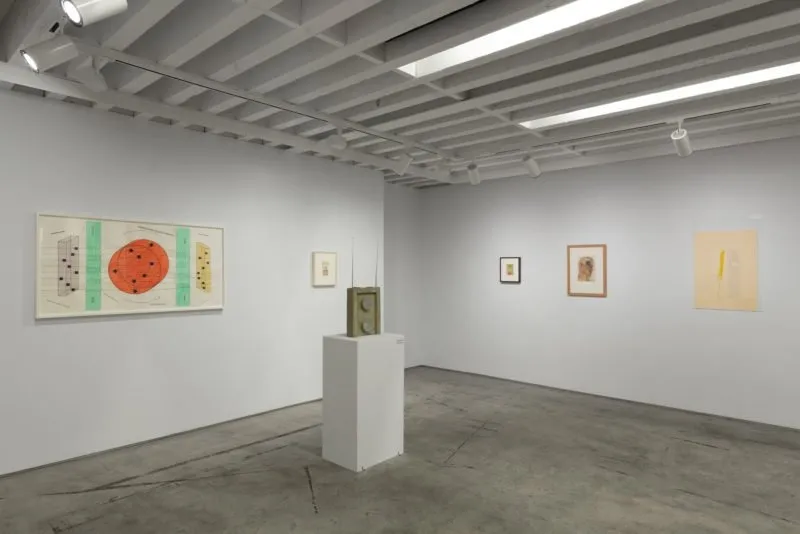
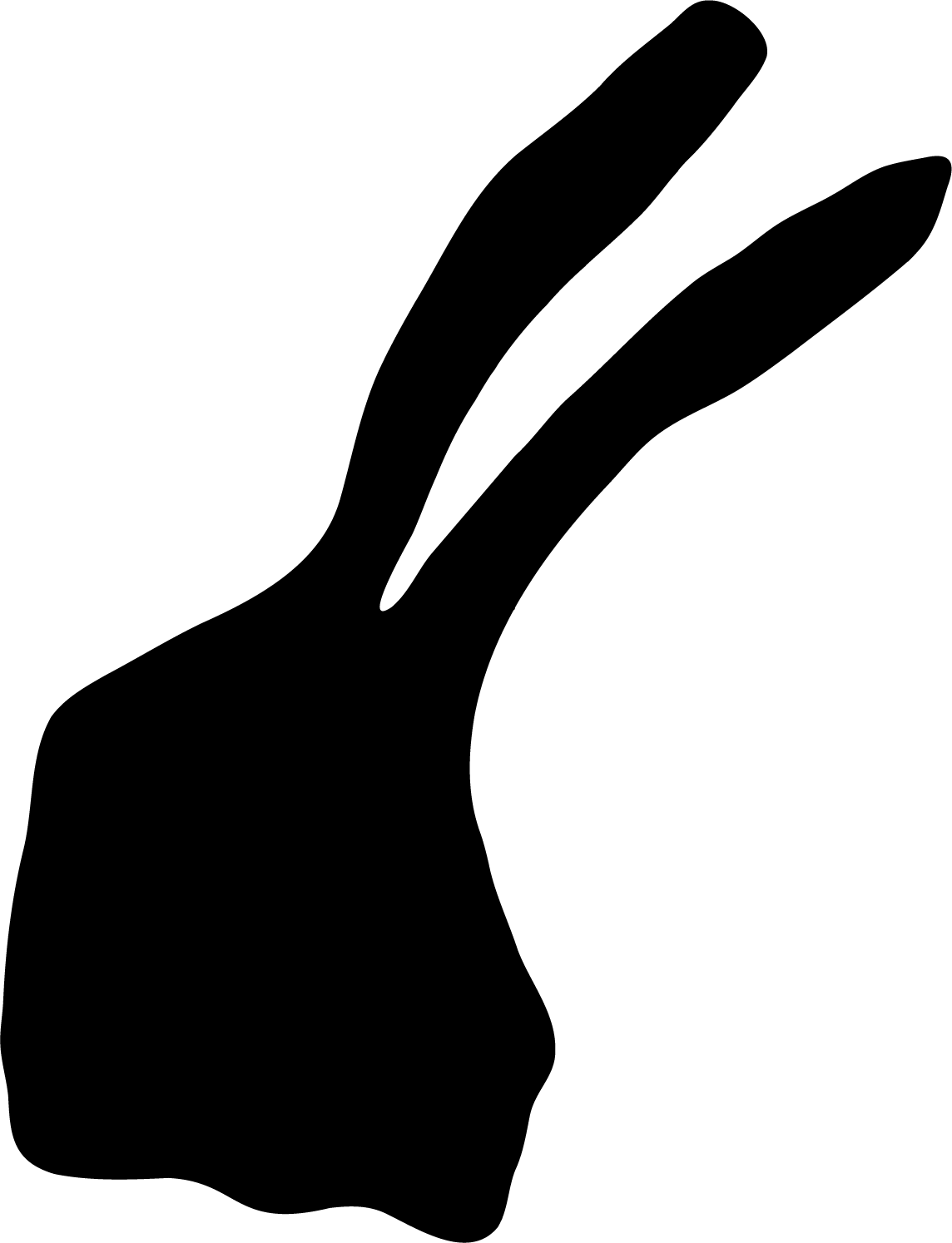
First, I take a sheet of parchment and draw a diagram of the Earth’s position in space so I know where I stand. Along the top of the parchment, I write as many magical formulas as I can recall to hold the diagram in place. Using cardboard, paper, vellum, ink, colored pencils, acrylic, oil paint, and ink, I map the hills and rainbows around the point of contact, and the spiritual currents apparently running through my head, and all visible comets and stars, being careful to ensure that every one is labeled with a unique three-digit number that refers to nothing but itself. Then, taking a deep breath and summoning all my courage, I paint an explosive red splotch above a curving black silhouette. But when I look up at the sky to check my work, I find I’ve only crossed out possibilities. The object now looks like anything but a rainbow, a hill, an explosive red splotch, or the earth in space.
The only way to grasp it is to turn away and focus my instruments.
I make charts of the chemical composition of ether and schematic drawings of radio waves from the future and the invisible acupressure points on the back of my left hand. The right, of course, would be very different. I carefully describe the waxing and waning, as I execute the other charts, of my own attention. But when I look up from my work to check the sky, I find that my feet have become untethered, or the earth has. They say, “On earth as it is in heaven,” but I don’t know what that means when I can’t tell which is which.
The only way to grasp it is to close my eyes.
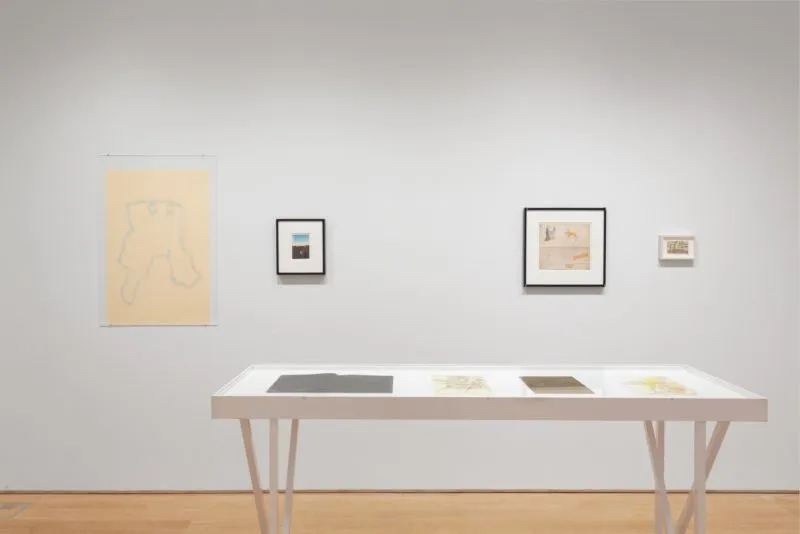
First, I make a visionary drawing of my own head filled with rainbow-colored sludge and mark it with a simple black disc. Is it a planet, a mirror, the convergence of all my hopes and dreams, a fathomless abyss, the pupil of the cosmic eye? Are my colors the infinite variety of expression springing from a single impulse, or are they actually just separate colors? Or is there any such thing as “separate”? Opening my eyes again, I make very different drawings—faint, elegant marks on paper that look like shadows or X-rays or the very edge of an ebbing low tide.
I realize I’m making exacting portraits of inexact memories and associations, and for a moment, thinking of Jung’s description of dreams as the residue of decaying consciousness, I feel my feet triumphantly back on an unmoving ground. What uncertainty can frighten a man who can pin it to the wall with the tip of his pencil?
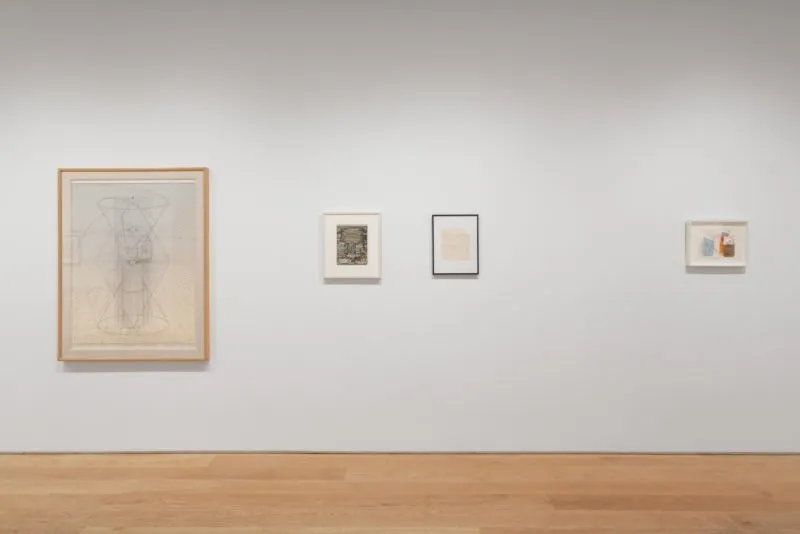
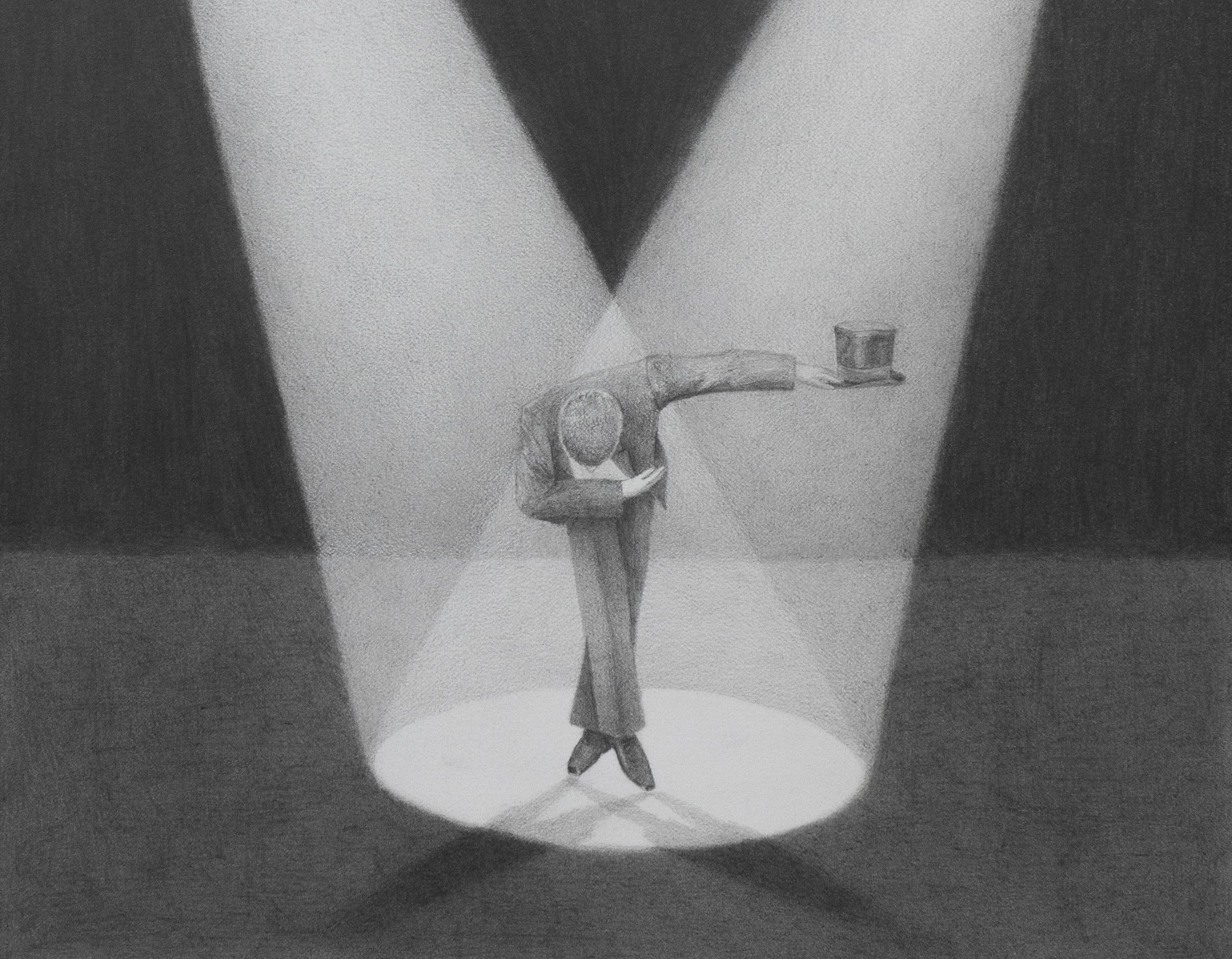
I draw the delicate bones I hypothesize in my arm, and the ribs of a gazelle chasing a lion, and the nostrils of a unicorn sniffing the flop-sweat of a fairy. I draw flat ellipses that stand for hidden dimensions and imaginary numbers. When church bells peal through the open window, I count them conscientiously and make a note of the tally. But then doubt creeps in again. Am I truly pinning shadows with my pencil, or aren’t I just driving them away? What can counting the bells tolled tell me about the meaning of their sound? How can the shape of a comet be captured in two dimensions? How could I have ever believed I was watching the sky through an opaque sheet of paper?
The only way to grasp it is to follow it to the end.
I saw nothing through paper, a comet cannot be drawn, numbers are without significance, and when my pencil moves through shadows, both it and they are unaffected. But in ignorance, I discover, lies a special kind of clarity, in which every negative has its opposite. I can’t draw a comet, but a comet also can’t make a drawing. If I can’t see the sky through my paper, the sky equally can’t see me. Numbers are numbers, shadows are shadows, pencils are pencils, and meanings are meanings, and all of them lie in their proper places, on earth as it is in heaven.
I see something in the sky. I don’t know what it is. But I want to make a painting, and so I picture two sleigh bells, enormous, like extraterrestrial craft, hanging in the air.
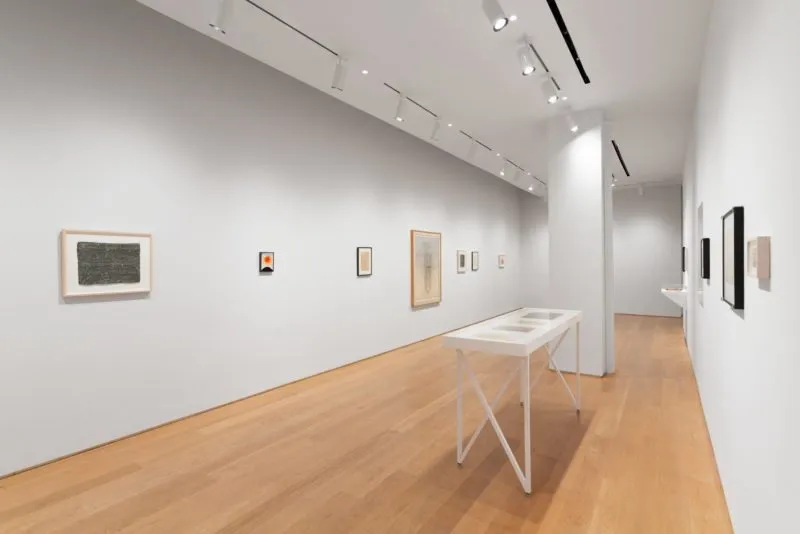
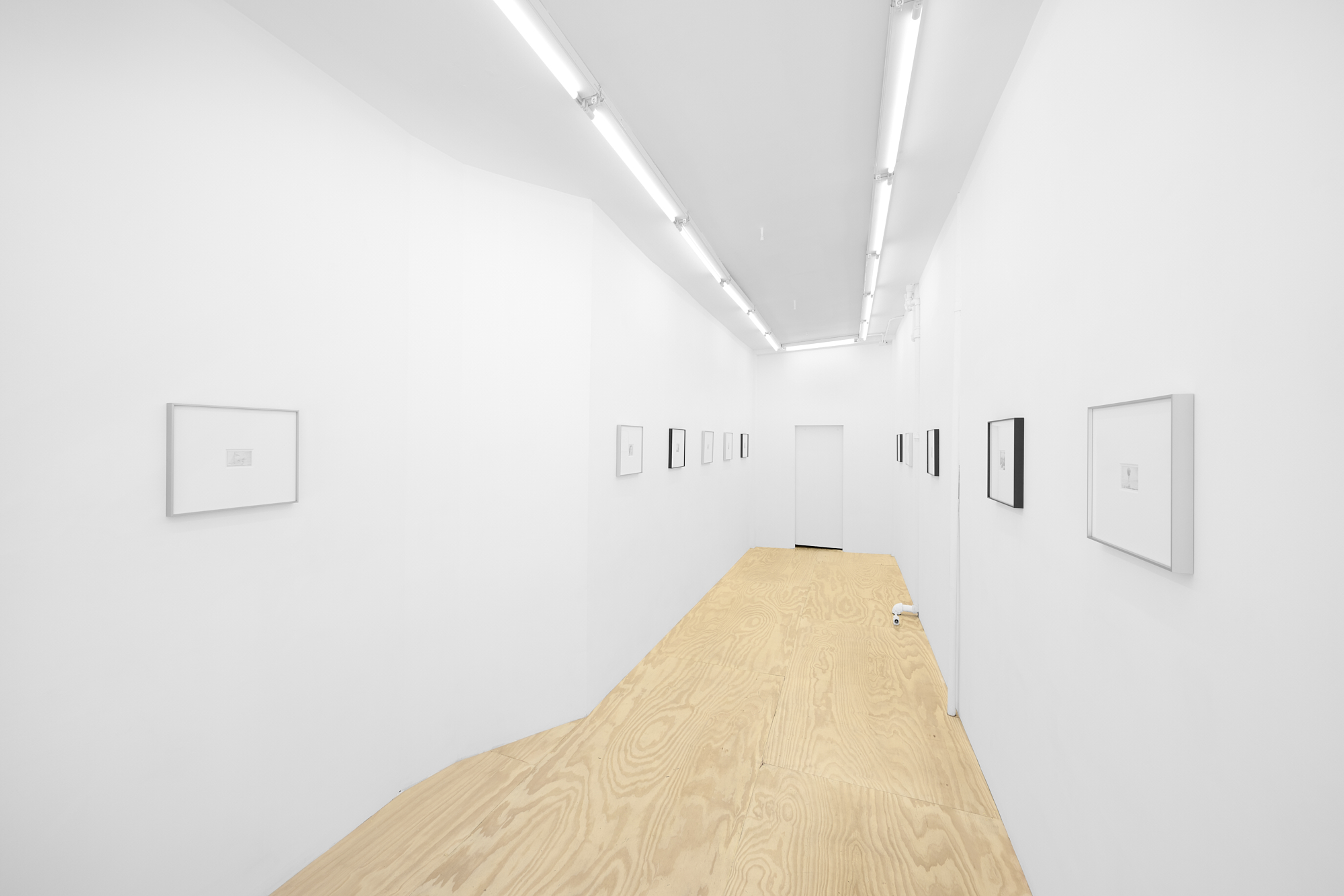
Voice of Space: UFOs and Paranormal Phenomena was on view at The Drawing Center from Oct 17, 2025 to Feb 1, 2026.