Samuel Alexander Forest: “A Bag of Tricks” at Ortega y Gasset Projects
Review
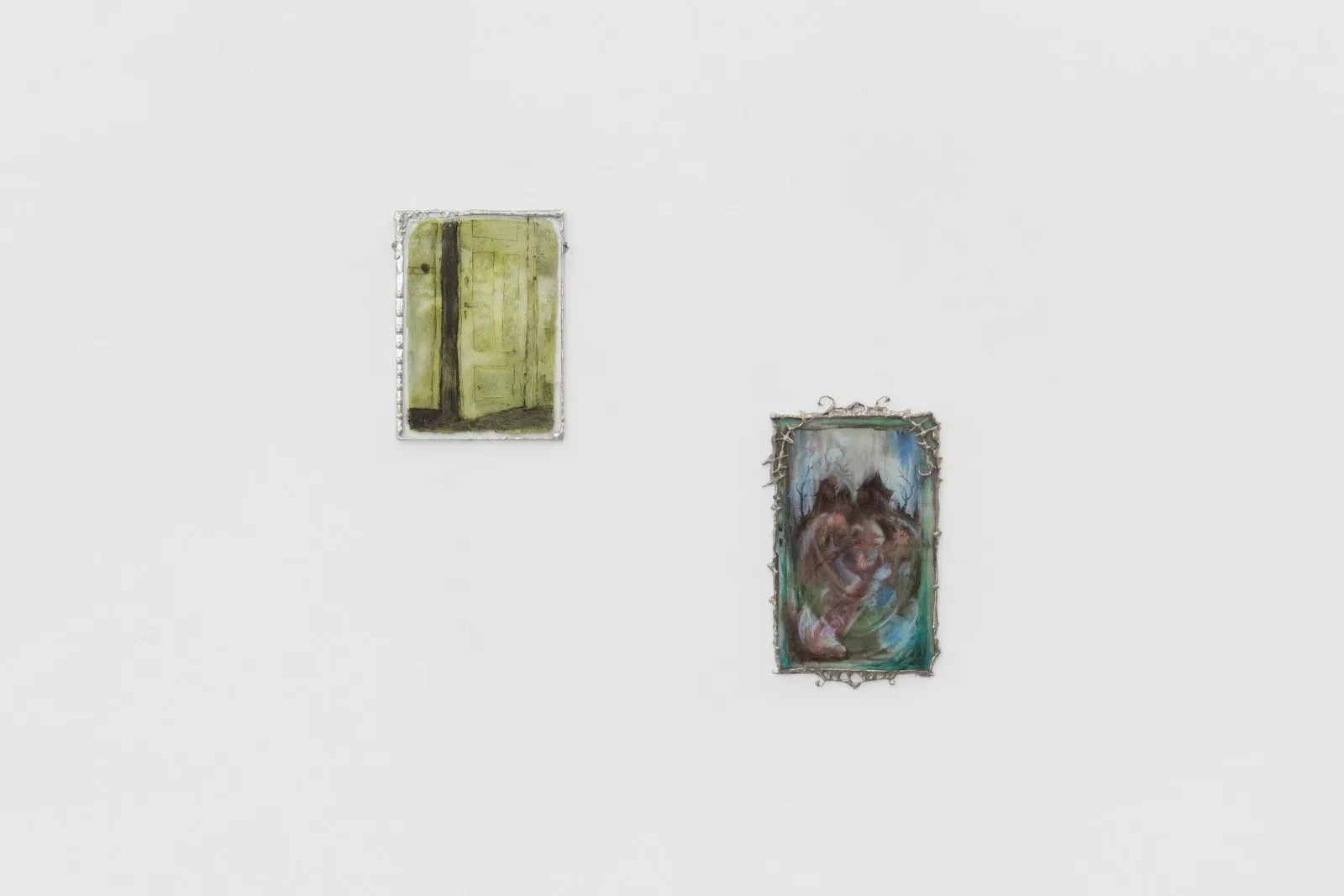
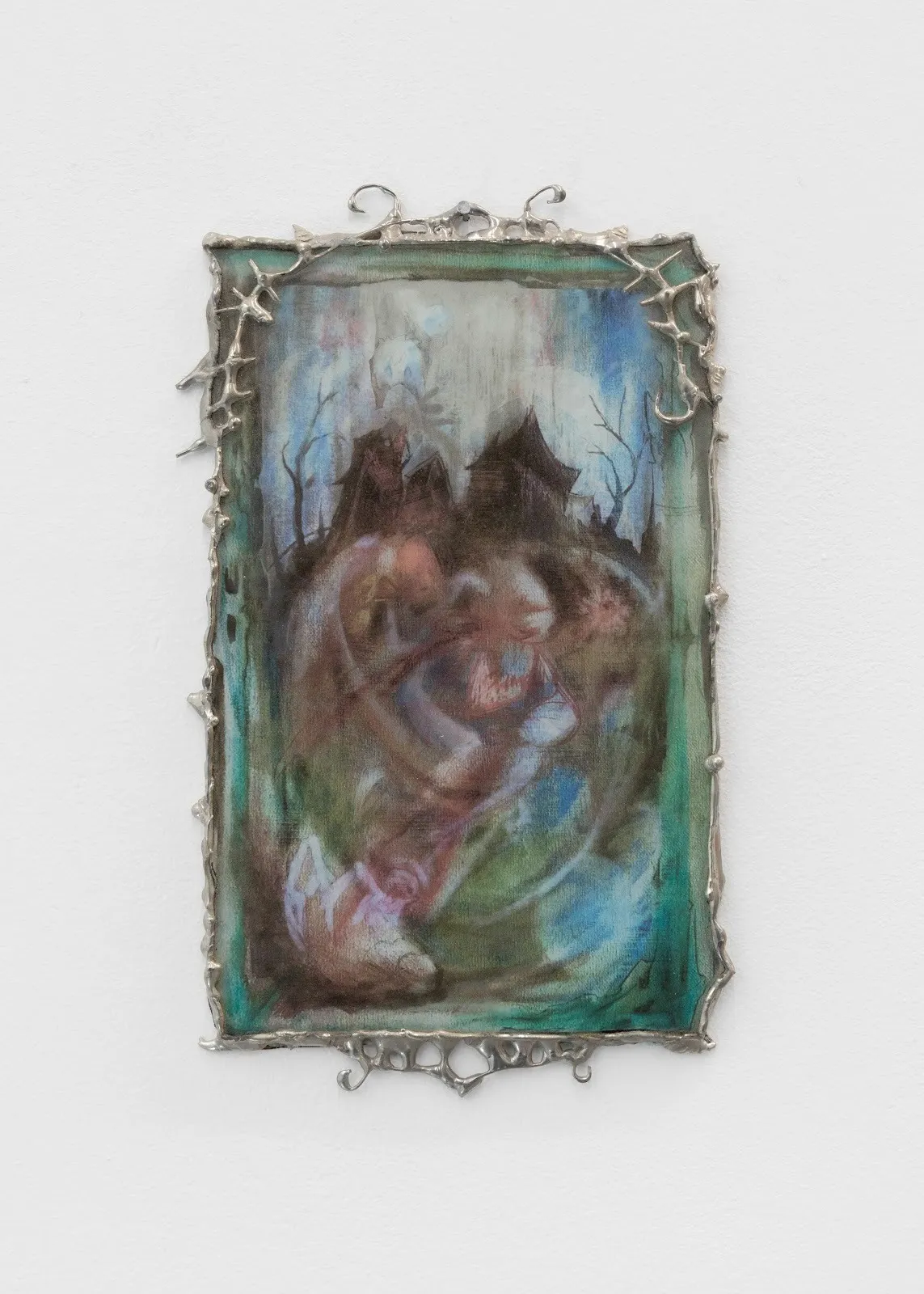
It’s snowing outside in Montreal, but inside her warm studio is artist Anjali Kasturi, recalling faint memories of her life as she holds her brush over a tiny canvas. In her recent solo exhibition at Indigo+Madder, Lamina, she lets us behind the veil, revealing “impressions of vanished interiors: a door that forgot where it led, a ribcage where the map once was,” according to her self-written exhibition text. Her delicate and fluid compositions speak to something fragile yet unmistakable—something viewers recognize yet might struggle to manifest into language. She lends a tangibility to her works, creating creeping roots akin to human finger bones crawling on the edges of the canvas, trying to grasp faint memories, which may as well be dreams—indistinguishable visions of recognition or fantasy as we grapple with our day-to-day life in the unrelenting face of time.
Shreya Ajmani: Is this body of work an entry point into a new direction, or a revelation of another side of your practice?
Anjali Kasturi: This show is the culmination of the past few years of my practice. It feels like a point of convergence rather than a break or a departure, bringing the techniques and themes together in a more defined language. Each piece carries forward threads from earlier works—the fragmentary bodies, the tension between translucency and opacity, the dialogue between fragility and structure—but here, they cohere into a more deliberate system.
It is interesting to me how, as time goes by, I keep circling back to the same ideas. They return like recurring motifs in a score, but each time refracted through the lens of a different moment in my life. The repetition is not static—it gathers light and shadow from my shifting perspective, showing me what I couldn’t see before. In this, I think of Piero della Francesca’s slow geometries, where a single form takes a new weight depending on its position in the composition. It is a practice of returning, retracing, but always arriving somewhere altered: a combination of a layering of experience, technical experiment, and emotional weather that transforms the familiar into the newly charged.
SA: Why did “lamina” feel like the right name for this exhibition?
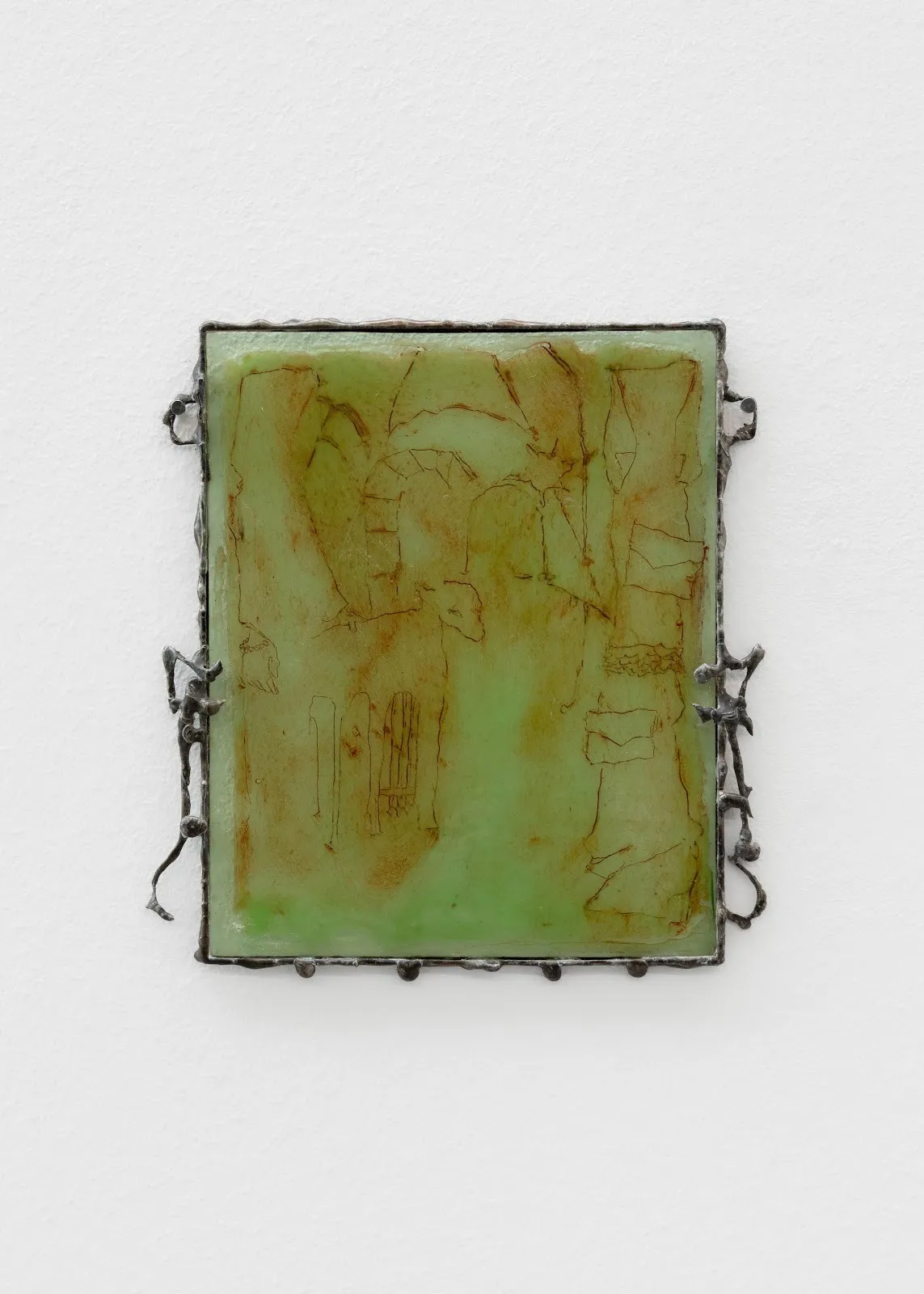
AK: “Lamina” names a surface that is never just a surface. It is a sheet, a film, a plate, but always with another side pressed against it. Wax layered on glass layered on metal—each lets something through, but never cleanly. The show is built from these membranes, thin partitions that both reveal and obscure, leaking light while stockpiling shadow. It suggests layers that refuse to cohere to a single perspective. Instead, they offer interruptions, contradictions, passages that stutter and overlap.
A lamina is fragile skin, but also a hinge—something that can fold back on itself, carry irony, host dissonance. In this way, layering becomes less a method than a worldview: transparency that is never pure, depth that is never singular, meaning that is always unstable. The world holds together by admitting its fracture.
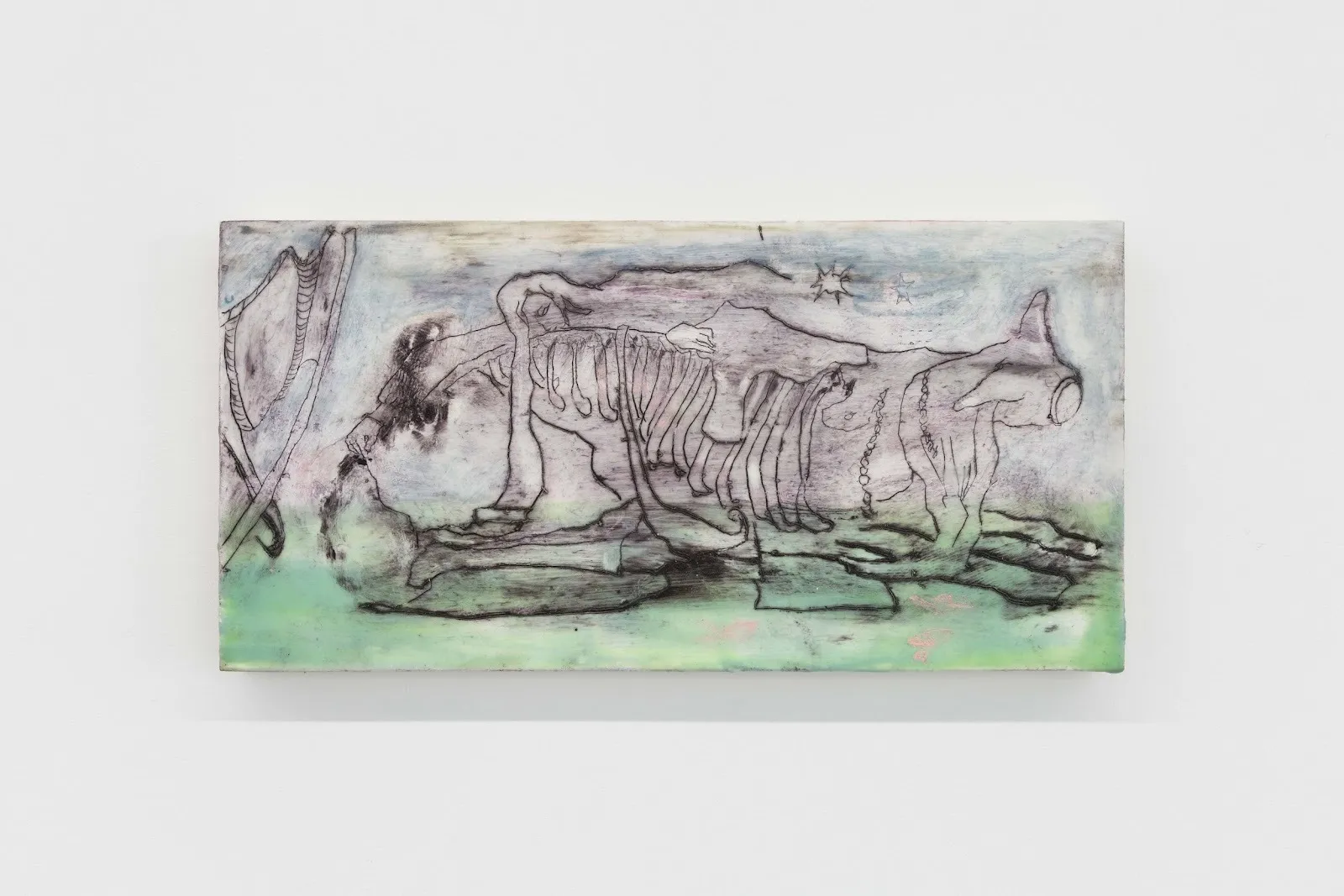
SA: There’s a sense of fragility in the materials and in the lines you make, yet together, they convey a kind of measured strength. Could you speak to the materials you use and what informs your choice?
AK: I choose materials that interrupt my familiar ways of thinking and making. Glass holds a rigidity that fixes the structure of the work, keeping me from dissolving into the haze of softer, more malleable mediums like wax or paint. It refuses to blend, and in that resistance, it creates clarity. Metal, by contrast, feels like a thread, binding fragments together, carrying tension across the form. Each material insists on its own language. What I learn in one medium follows me into another, pushing work forward: glass sharpening the way I handle paint, paint softening the way I treat metal, metal giving weight to wax. The process becomes less about control than about listening to those demands, carrying lessons across thresholds, letting their resistance reshape the work and communicate in ways I had not expected.
SA: How do the themes of survival and persistence manifest within this show?
AK: Lamina speaks of adaptability, but not in isolation—always in relation to spaces that shape us. The works began as fragments of their surroundings: glass once built to anchor light, metal shaped to a solid, colours bleeding out into wax. I set them in new alignments, and they revealed a truth: we are never separate from what holds us. Our surfaces change because the world around us changes. The narratives running through the show are about that reciprocity. A body learns to adapt because its surroundings demand it; a material bends to pressure and becomes something else, and in the process, we recognize ourselves as inseparable from the structures that support, resist, and remake us.
SA: What lingering questions or uncertainties does this body of work hold for you as an artist?
AK: For me, the central question is how to move beyond the comfort of repetition, beyond the risk of falling into formula. This body of work gathers together many of the ideas I have been cycling through for years, but it also makes me aware of how easily language can calcify once it becomes recognizable. The uncertainty lies in how to keep pushing to make sure the work remains alive and for it to resist its own patterns, all the while maintaining its roots. These works leave me with a sense that there are thresholds I have not yet crossed, which is a very exciting and inspiring place to be.
I’m searching for ways to destabilize my own methods. I think of Richter, who refused to remain in one idiom, shifting between abstraction and photo-realism to keep his language unstable, or Sigmar Polke, layering transparency and opacity until the work collapsed into dissonance. There are so many artists, many of them my peers, who remind me that continuity does not have to mean stasis—that it’s possible to take the same set of questions and drive them into new, more volatile terrain.
This interview was edited for clarity and length.
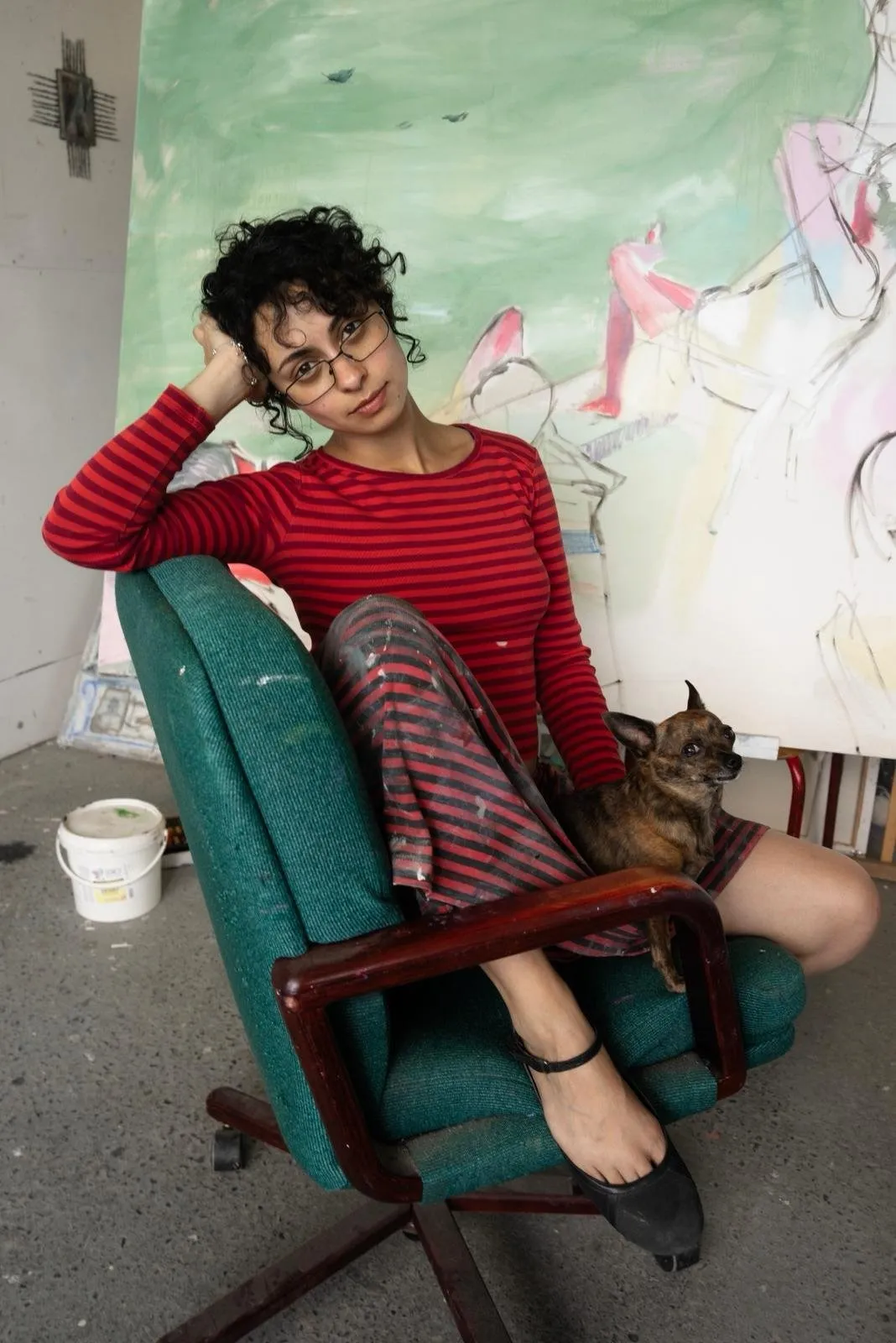
Anjali Katsuri: Lamina was in view at Indigo+Madder from July 19 through September 13, 2025.