.jpg)


.webp)
“Thucydides Fever Dream” at Hill Art Foundation
Review
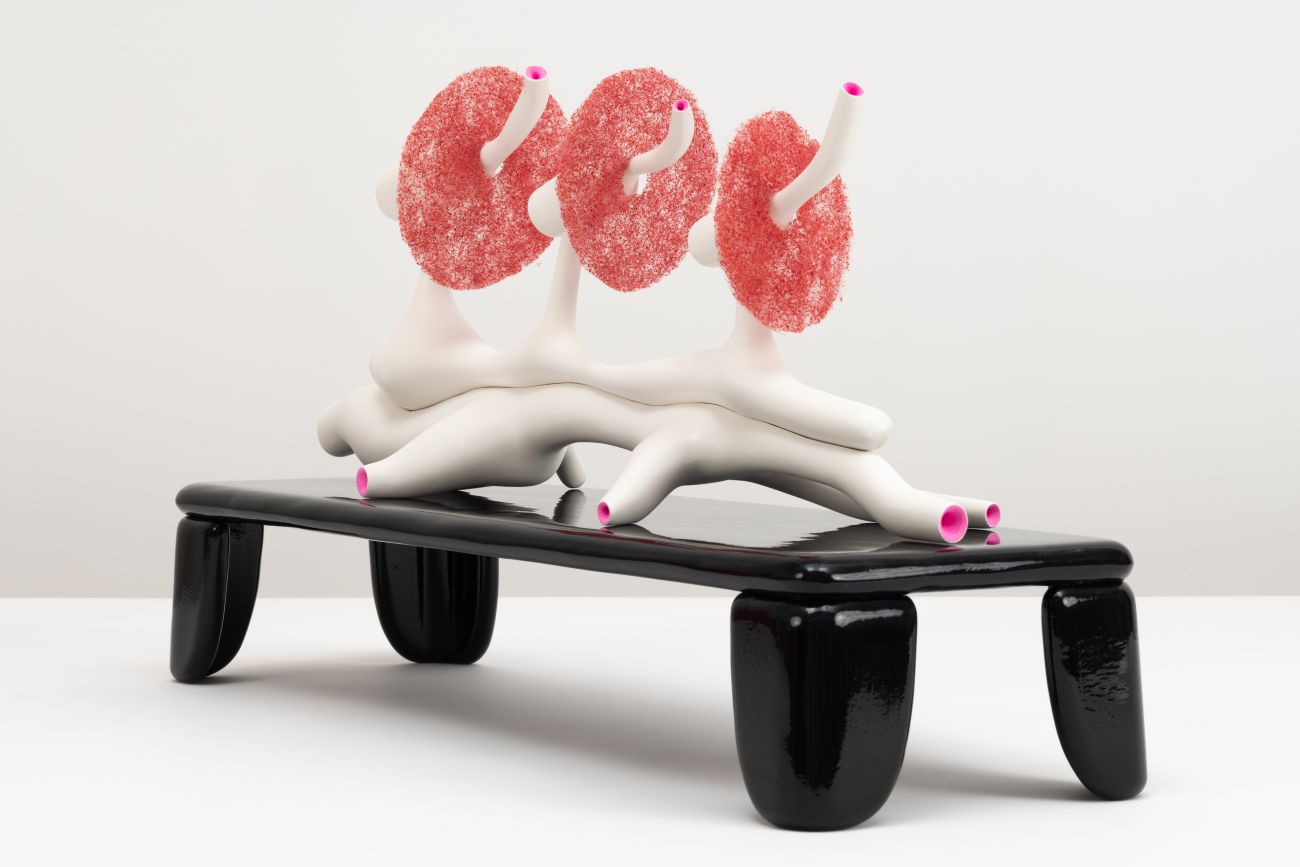
There’s a seductive disjuncture between the lilting, doe-eyed names of Nicki Cherry’s works and exhibitions—The sensation of touch is a refusal (2023), I can be a woman for you (2024), I get so weak in the knees (2025)—and the fleshy grottos and brittle strands of calcified sinew that make up their oeuvre. Their material lists beguile with the same abject innocence: turmeric, cherries, cement, blister pearls, oil of milk, ocean-polished stones from the coast of Maine, cast beeswax candle scented with aromachemicals and sweat.
Cherry initially studied to become a particle physicist before venturing into sculpture. It feels like the next sentence should be something like, “This experimental impulse is evident in their work,” but I’m not entirely sure I know what a particle physicist does. What I do understand on a cellular level is the concurrent cravings permeating Cherry’s leaky forms to escape the body and to crawl deeper inside it, curling up like a cat in a silk-lined sac. Cherry has spoken about their experience living with chronic pain, and sometimes mines their own body and past work: After the flame, after the pain (2022), shown at Ghostmachine in 2023, is a bronze cast of a previous work, Coping Mechanism (vessel for spilt milk) (2021), comprised of a used candle in the shape of the artist’s injured spine. The resulting bronze cast rests on a surgical instrument stand flecked with wax.
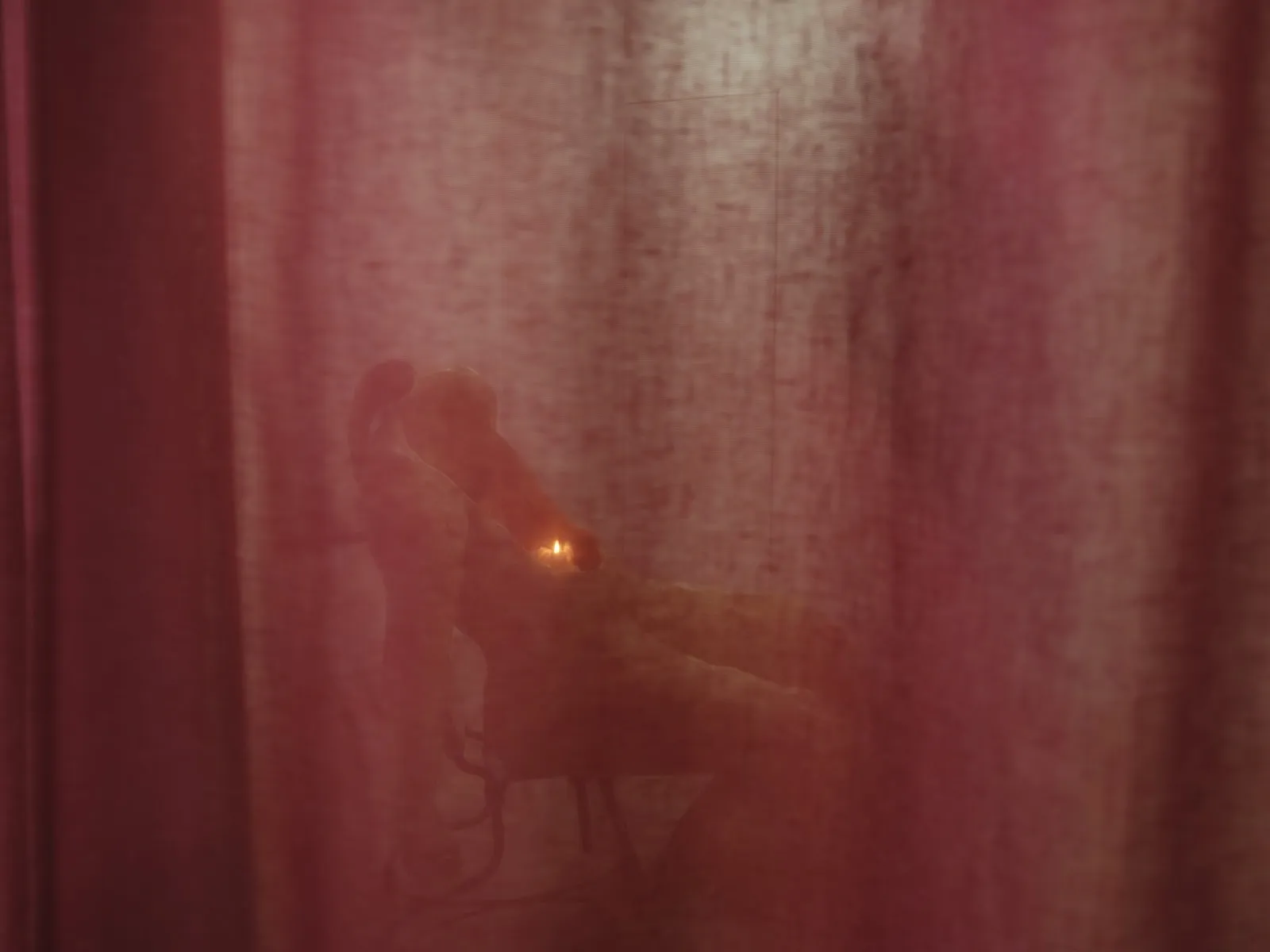
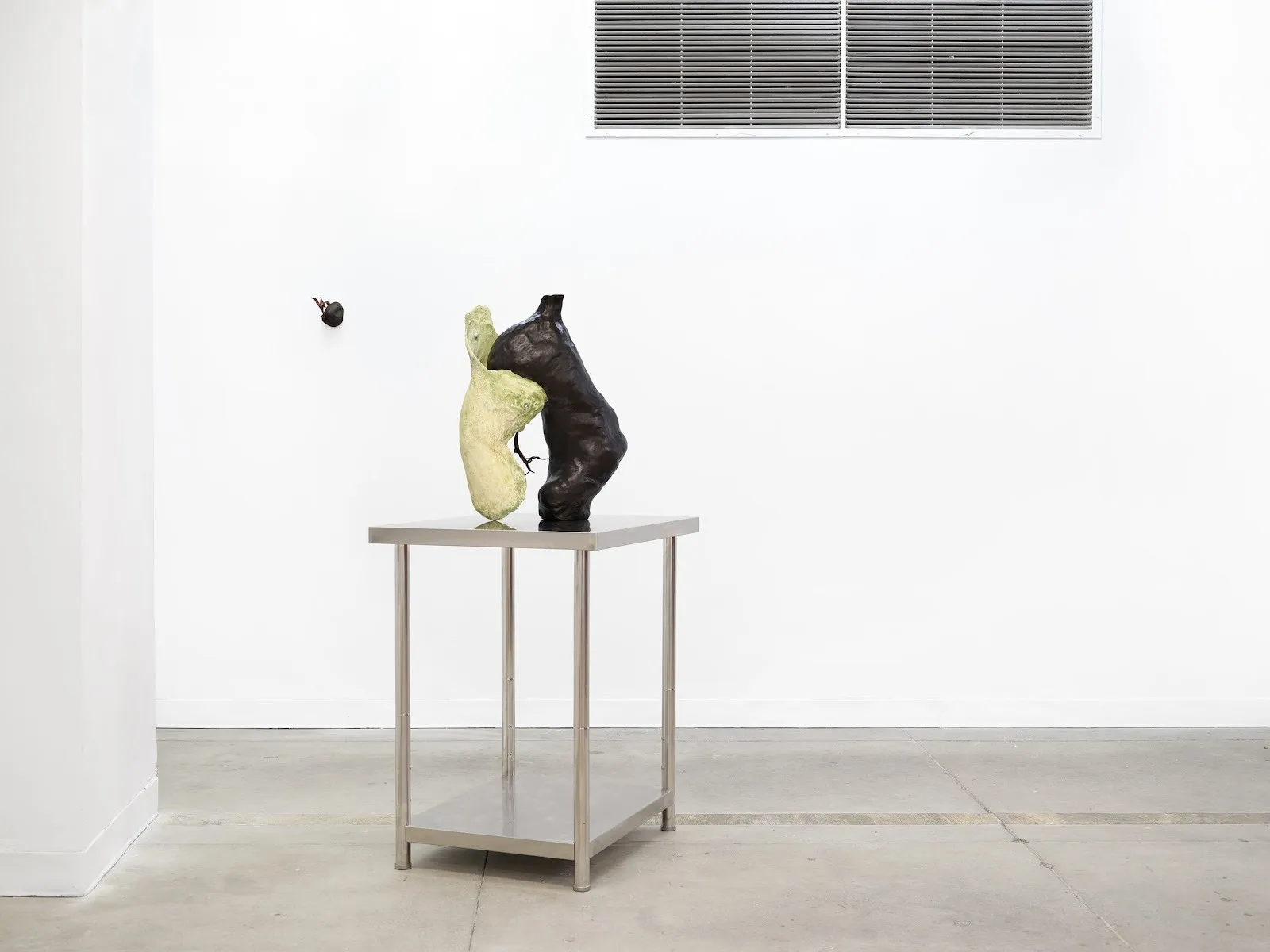
In Cherry’s current exhibition at MAMA Projects, Quadraphonic Crush, a wine-red curtain splices the space in two. Discordant notes emanate from everywhere and nowhere, like a sound bath meant to unsettle rather than soothe. On the far wall of the first half, force-bloomed tulips plated with copper are suspended from dainty copper chains bursting through stoneware forms. Mottled, melting, incomplete body-like entities of fiberglass-reinforced gypsum cement tinted black, purple, and absinthe green—one standing on the cement floor, the other two perched on steel tables—anchor the space. The silhouette of a figure sprawled across a chair is just barely visible through the curtain. Passing through its opening, a gaping, seeping, corpselike form comes into view. In the opposite corner, more copper-plated tulips dangle from pipes overhead, like forgotten IUDs left to fester, relics of a fated foray into medical obedience.
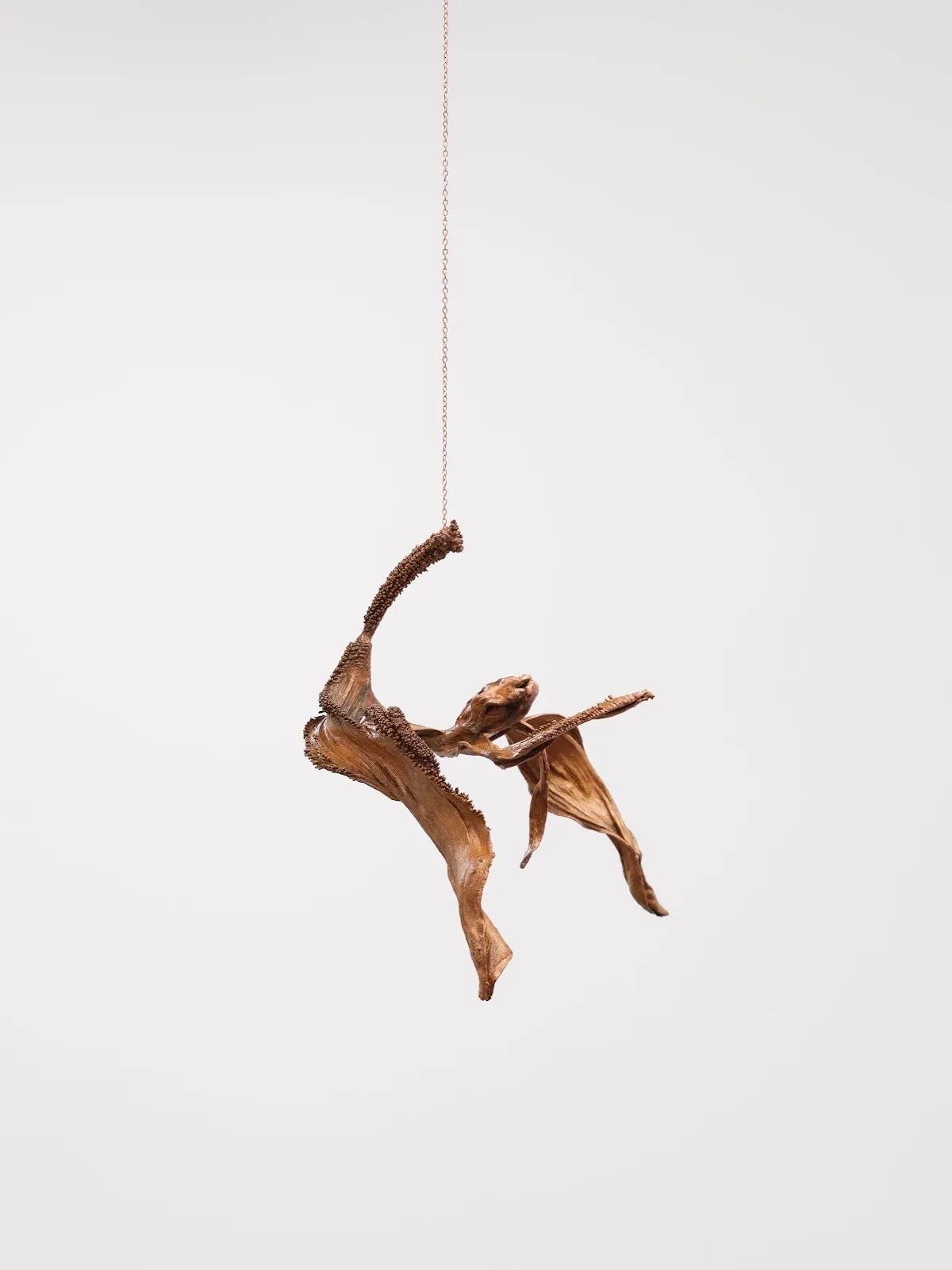
The overall effect of Quadraphonic Crush is what I imagine would spill out if you sliced open one of Greer Lankton’s dolls. The slumped figure in the chair emits a sickly glow from a candle in a chasm where their uterus would be, as if they fell asleep smoking a cigarette and inhaled the smoldering stub in a deep snore, or a friend used their prostrate body as an ashtray. Up close, the force-bloomed tulips swaying gently from the ceiling morph from medical devices to frayed organs, their grainy exteriors jarringly devoid of residue. Their conception stems from the Hieronymus Bosch painting Cutting the Stone (c. 1494)—alternatively known as The Cure of Folly, or Extraction of the Stone of Madness—in which a doctor cuts a hole in a patient’s head and removes an object sometimes identified as a tulip bulb.
The cement sculptures in the first space feel almost like an afterthought, discarded, left to rot, but maybe that’s exactly the point. Punctuated with opaline cysts—blister pearls, which form on the inner surface of mollusk shells in response to a foreign object lodging itself between the tissue and the shell—the figures render skin an ecological interface rather than an impermeable container. A lone tulip hovering near the ceiling at the curtain’s edge seems to have evaded capture. Its elegant tendrils disappear into a mound of stone, like fingertips curling into flesh, longing for a closeness that the physical boundaries of the body preclude.
Quadraphonic Crush dissects the body-as-project and the absurd and ever-multiplying rituals that produce it. Spilling across the gallery is a queer/reproductive body caught in the crossfires of myth and a medical industry with its sights set on profit and purity. In Cherry’s hands, injection sites morph into puncture wounds, and wounds are surrogates for wombs; flowers are fertilized in vitro and exoskeletons revolt, leaving their organs behind. After all, what use is a heart when you have perfect skin?
Nicki Cherry: Quadraphonic Crush is on view at MAMA Projects from December 11, 2025 through January 24, 2026.