

In Conversation with Paulina Emilia Aumayr
Interview
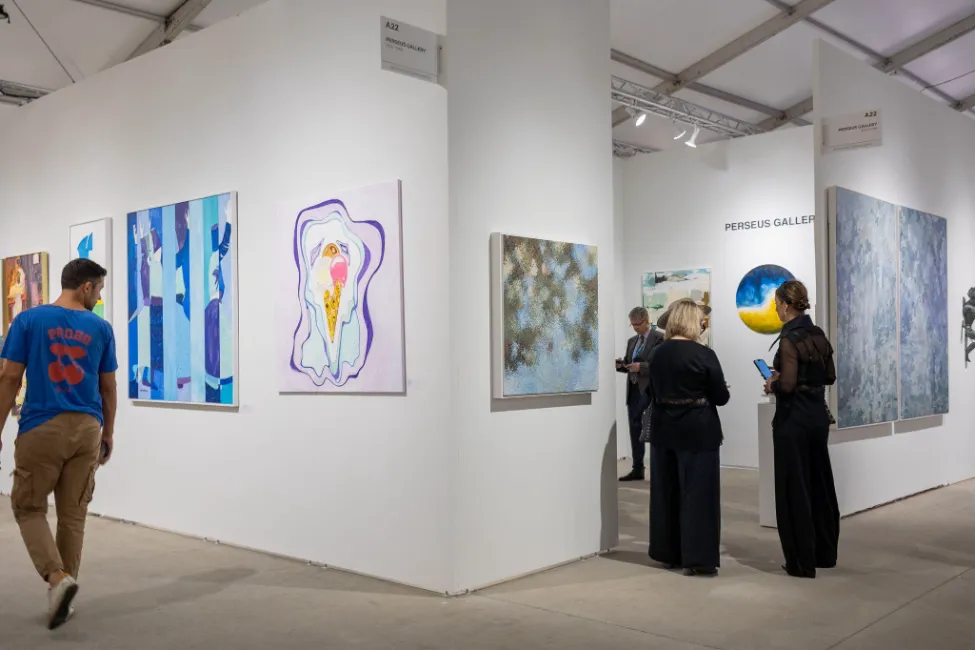
In time for Art Basel Miami this year, some galleries reassessed their participation in the fair; eight galleries pulled out less than a month before the fair. They forfeited their deposits rather than moving ahead. For some, this is a worrying indicator of art market uncertainty; for others, galleries that have been wining and dining the fair’s selection committee to get a booth, for example, dropping out represents an opportunity to get in. Despite some galleries closing, there are plenty of galleries still running and more artists looking to show. One gallerist who has done exceptionally well this year in Miami is Iana Safina of Perseus Gallery. The gallery charges artists upfront for representation. With a proven track record of many repeat clients, artists who have worked with them for years, and a growing business, they prove that their straightforward and transparent approach is preferable for many artists. Especially international ones who can’t spend their Thursdays and Fridays chatting up gallerists at openings in New York or Miami in hopes of getting shown, and need another way to enter the U.S. market.
A previous collaborator and colleague, Oluwaseyi Awoyomi, director of Nike Art Gallery, a Long Island-based gallery, commented to IMPULSE: “Her leadership contributes significantly to expanding international art dialogue and strengthening the U.S. art ecosystem.” Awoyami and Safina have mounted ten joint exhibitions and art fairs together since they first met in 2023, both exhibitors at the Hampton Art Fair. Awoyami continues, “Safina stands out for her exceptional curatorial eye, fearless creative vision, and deep commitment to artistic excellence—regardless of an artist’s career stage or commercial visibility. She curates with integrity, courage, and cultural awareness, prioritizing artistic merit and storytelling over trend-driven limitations.”
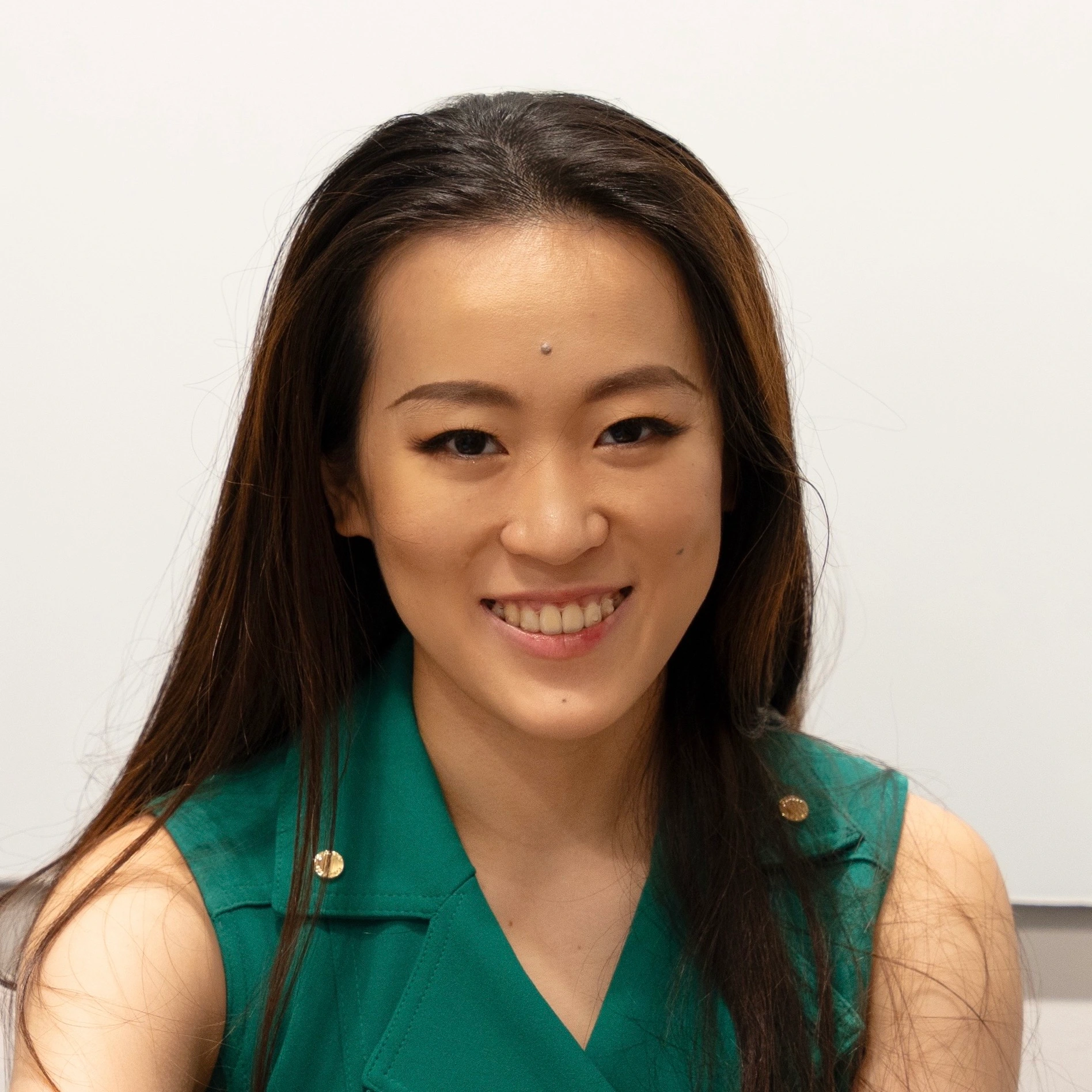
After seeing Perseus Gallery’s large footprint in Miami this year, I just had to interview their founder Safina—a veritable tour de force—to find out more. With the gallery model she has created, she has found a way to thrive, bringing success to her gallery, the artists she represents, and the galleries she partners with on the way.
Xuezhu Jenny Wang: Your presence in Miami during Art Week was very impressive this year. Tell me more.
Iana Safina: Yes, this year’s Miami Art Week was a very strong and important season for Perseus Gallery. As the owner and curator, I had the opportunity to work with more than sixty-seven artists across two major platforms: Red Dot Miami and Context Art Miami, both run by the Art Miami Group. At our 2,000-square-foot booth at Red Dot, we showcased primarily emerging artists, giving them visibility within a large-scale, high-energy fair environment. Context, on the other hand, is a more carefully curated platform aimed at a high-end, professional audience, where we presented a tightly edited selection of works in a 600-square-foot booth. We saw strong outcomes both in terms of sales and in the long-term representation of our artists.
I personally oversaw the curatorial direction, logistics, and coordination for both shows together with my twelve-person team. Team members included installation specialists, photographers, videographers, and sales assistants. Managing two different formats simultaneously required precision, flexibility, and strong organization, but the results were extremely rewarding.
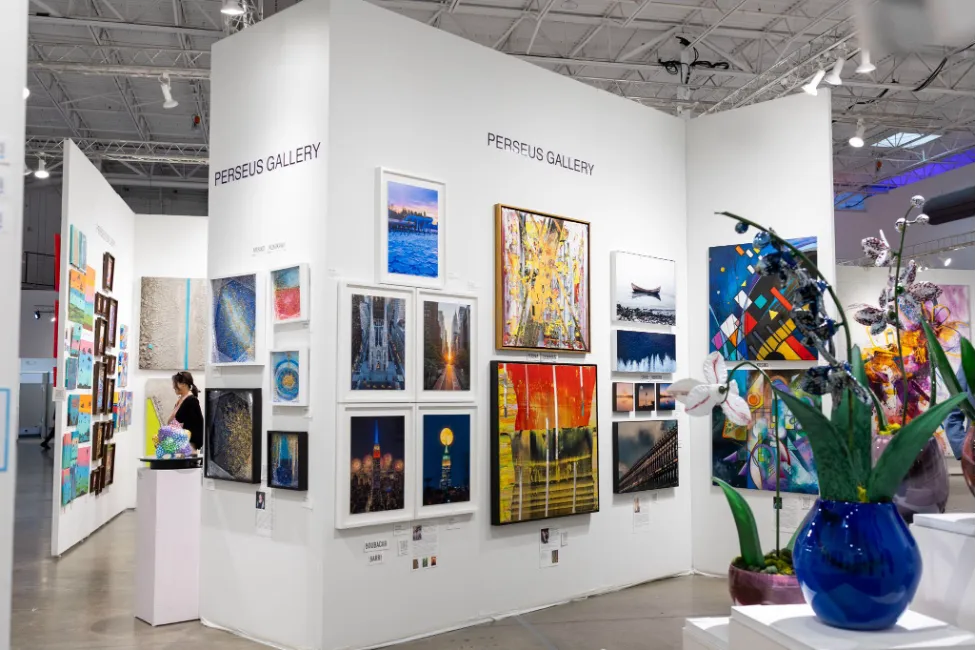
XJW: You are continuing to grow your business despite the art market in 2025 and Miami Art Week overall this year having a tepid reception. What are your thoughts about the market downturn? Is it happening in the markets that you are operating in?
IS: Despite the frequent narrative of “doom and gloom” around the art market in 2025, my personal professional experience tells a very different story. I have been in this business for eight years, and for Perseus Gallery, 2025 was actually a very strong and productive year—one that gives me confidence heading into 2026. Throughout 2025, I worked with more than 300 artists across eight major art fairs in the United States. Our program included the LA Art Fair in February, the Seattle Art Fair, Hamptons Fine Art Fair, Art Expo New York, Art on Paper New York, Red Dot Miami, CONTEXT Art Miami, and the San Francisco Art Fair. Each show had a different audience and dynamic, but overall, we saw consistent interest, solid sales, and the development of new collector relationships.
What stood out to me most was not only the strong flow of emerging and professional artists seeking serious representation—which is always a positive indicator for the health of the art market—but also a noticeable shift in the collector base. Collectors are becoming younger, more informed, and more confident in acquiring contemporary works. This generational shift is creating new energy and sustainability within the market.
Additionally, the growing ecosystem around the art market—from specialized shipping and logistics companies to professional installation teams—continues to expand and improve, which reflects ongoing demand and activity within the art-fair sector.
XJW: Interesting. Yes, art fairs are still going strong, as are artists. Many of the artists you work with come from abroad, outside of the United States. Why is a gallery like yours important to them?
IS: Perseus Gallery provides artists with the ability to build visibility, reputation, and sales within one of the most influential and competitive art markets in the world. Through participation in major art fairs and events in cities such as New York, Miami, and across California, artists gain direct access to new audiences, collectors, and industry professionals that would otherwise be very difficult to reach independently. Many of the artists we work with come from outside the United States, including Canada, Germany, the United Kingdom, Japan, and China, among many others. For international artists, entering the U.S. art market can be both an incredible opportunity and a complex challenge, and this is where a gallery like ours becomes especially important.
Beyond exposure, we offer full professional support. From curatorial guidance to logistics, shipping, customs, and on-site coordination, we act as a key partner for our artists. This allows them to focus on their creative practice while we navigate the structural and operational aspects of the U.S. market on their behalf.
For many international artists, working with Perseus Gallery is not just about participating in a single show—it is about entering the U.S. art market in a structured, professional way, building long-term credibility, and reaching the next level of their careers.
XJW: I think there is a real need for what you are doing, and you were not just an early adopter but a trailblazer. There are more and more resources ranging from books to groups, agents to coaches that help artists grow their careers. Providing both strategic support and real exhibition and sales opportunities through a gallery is a great bang-for-your-buck service.
IS: Yes, and additionally, on a personal level, having lived in the United States for many years, I deeply understand the local mentality, cultural codes, and collector behavior. This allows me to guide artists not only in where to show, but also in what to show. I help them select works that resonate with the American audience while still remaining true to their artistic identity.
This strategic selection is crucial for building a sustainable career. Choosing the right artworks for the right market directly affects sales records, collector confidence, and long-term professional positioning. By aligning artistic vision with market understanding, I help artists make informed decisions that support both their creative growth and their future success in the U.S. art market.
XJW: Galleries create a backbone of the art world; they support artists with sales, exhibitions, and relationship building—in the current climate, I don’t think galleries and gallerists get enough credit for the work they do. How do you think about Perseus within the larger structure of the art world? Where do you fit in?
IS: I completely agree that galleries and gallerists often do not receive enough credit for the work they do. Galleries are very visible in the art market, but they are usually seen only as the final result—the exhibition, the sales, the finished presentation. What is often invisible is the enormous amount of work happening behind the scenes long before anything reaches the wall.
Today, the role of a gallery has evolved far beyond exhibition-making. The traditional business model has changed, and galleries are now responsible for a complex structure of operations. This includes logistics, customs, shipping, installation, relationship-building with collectors, long-term communication with art-fair organizations, and maintaining trusted partnerships with logistics and service providers. All of this is essential for the artwork to exist professionally within the market.
At Perseus Gallery, we also work very closely with each artist on an individual level. Understanding an artist’s vision, direction, and personal creative process is just as important as understanding market dynamics. A gallerist today must balance sensitivity to the artistic “soul” with strategic thinking, professionalism, and responsibility toward the artist’s career.
Within the larger structure of the art world, I see Perseus Gallery as both a cultural and economic bridge. We connect artists to audiences, ideas to collectors, and creativity to real-world structures that allow art to circulate, grow, and be sustained. Galleries today are not only cultural institutions—they are active participants in society, the economy, and human relationships. And that responsibility is something I take very seriously.
This interview has been edited for clarity and length.
Find Perseus Gallery at booths at major art fairs across the U.S. or at their brick and mortar gallery on 456 West Broadway, 10012, New York, New York.