
.webp)

“Thucydides Fever Dream” at Hill Art Foundation
Review
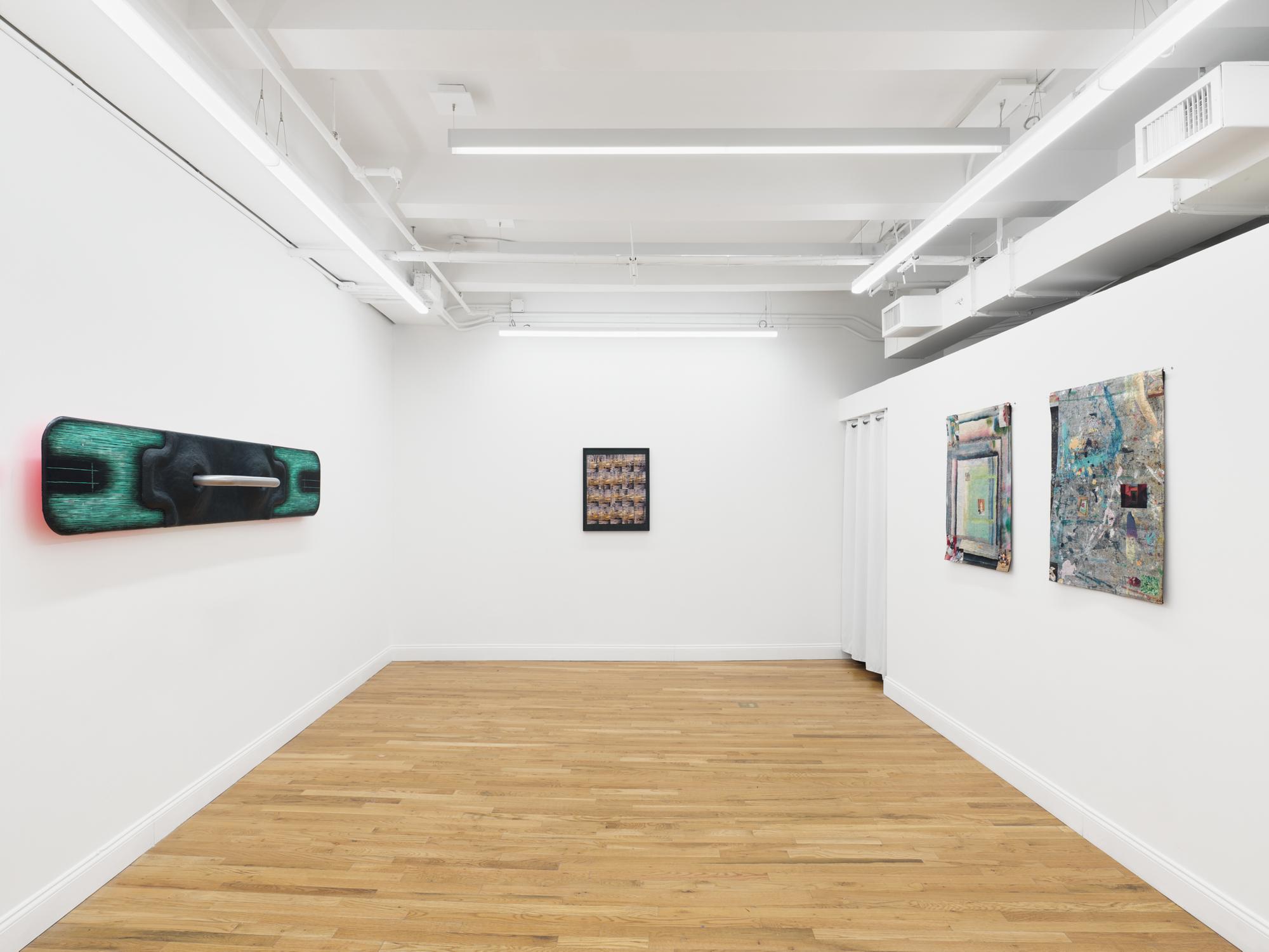
Fibers of all kinds are interwoven in The Hole’s latest exhibition, Thread Count. Curated by Administrative Director Charlotte Grüssing, the show features the work of twenty-five contemporary fiber artists, including Antonio Santín, Mia Weiner, Qualeasha Wood, and Forcefield.
This abundant lineup is united by a thesis fronted by the art historical contributions of Anni Albers, the Bauhaus-trained, Black Mountain College-tenured textile artist. Albers’s written and practiced aesthetic ideology, one that pursued a perception of textiles centered on their materiality and beyond their mere usage for pictorial representation, forms the undercurrent of the show. Through it, Thread Count aims to reinforce the often undervalued and misunderstood virtues of fiber arts, and instead encourages observing the form’s essence as intricate construction.
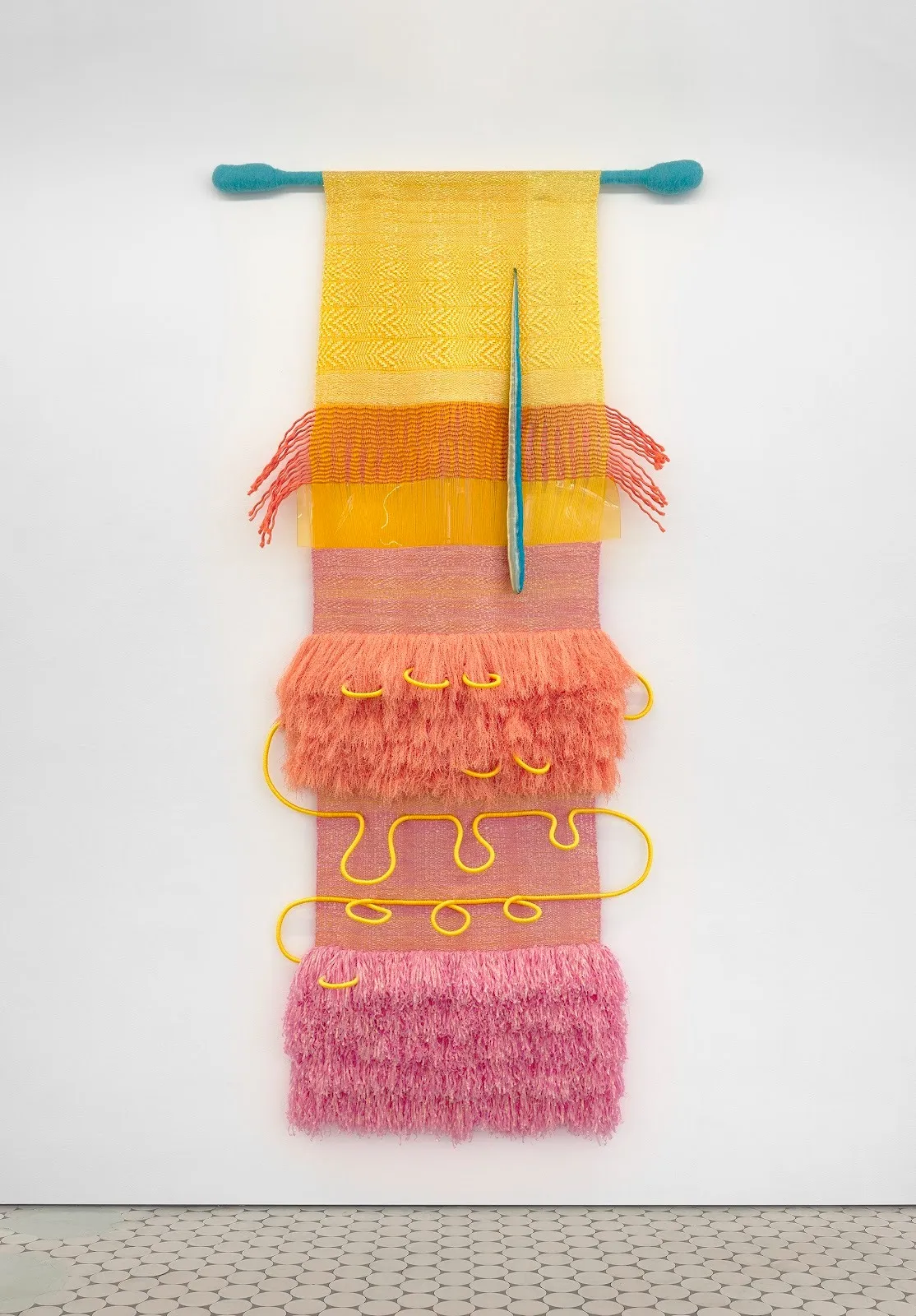
Desire Moheb-Zandi’s Textile Score (2024)—a towering amalgamation of linen, lurex, rope, cord, cotton, filling, nylon, fabric, wood, wool, thread, PVC—provides a strong opening to the exhibition. The work is rich both in material and in execution, with each of its tiers challenging any determinate definition of textile. This monolith sets the stage for the profound technicality present throughout Thread Count, as the labor endured for each work is made self-evident by its sheer craftwork in existing techniques and innovation of new ones.
Vibrant color is another recurring characteristic of the works in Thread Count, as seen in Tundra (2025) by Rachel Mica Weiss, which combines an infinitude of threads held by brass hooks to create a seamless transition between hues. Color’s occasional absence, however, is also worth noting. Rebecca Ward’s intricately dyed, monochromatic piece Edge Shadowing (2025) presents more shades of blue than initially meet the eye, while the achromatic ivory of Formation (Bone) Expanded (2025) by Molly Haynes elucidates its own composition. Artists working in a wide range of color usage—from the whole spectrum to none at all—demonstrate fiber’s distinct ability to engage with chroma.
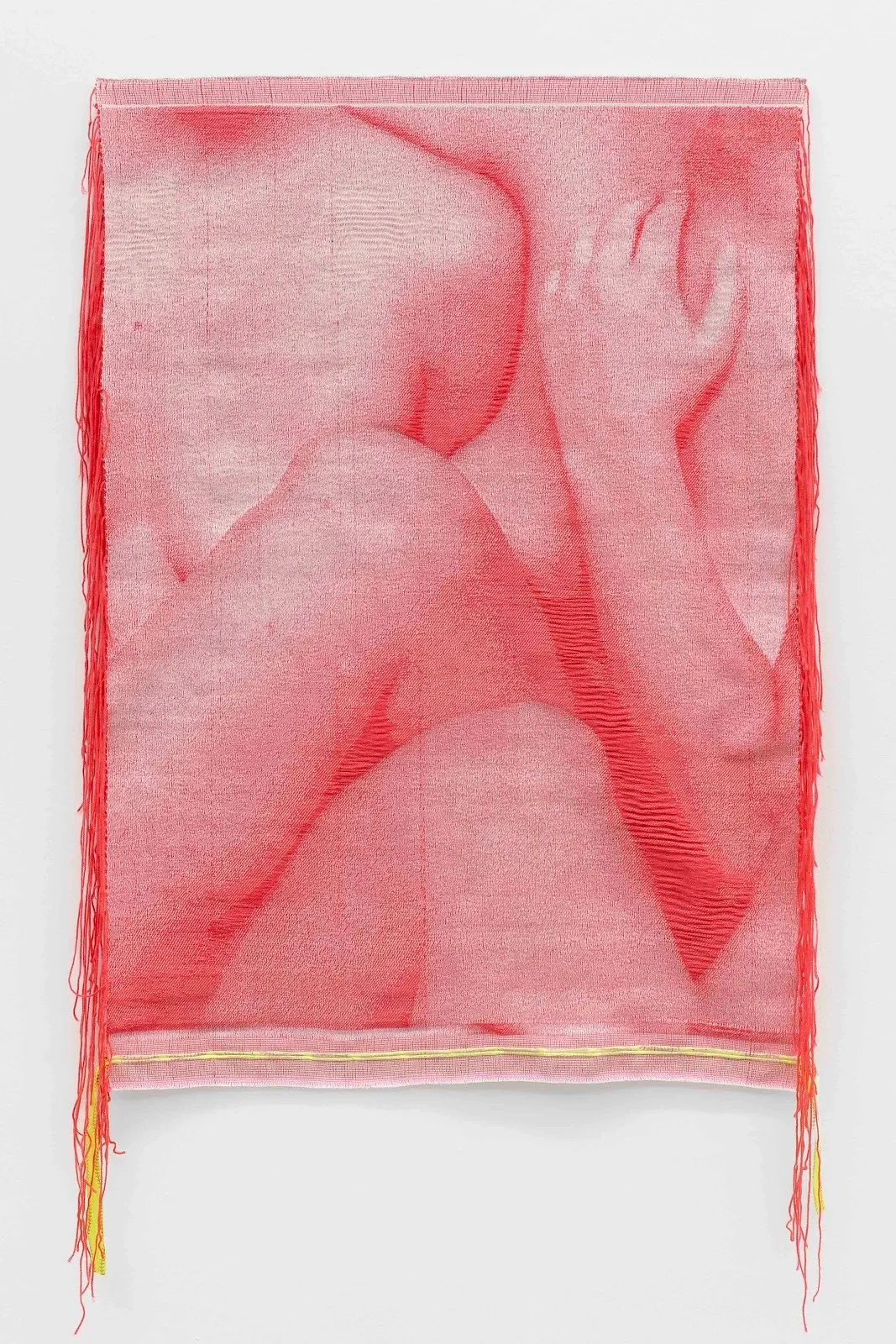
Despite the curatorial aim to chasm textile work from a pictorial function, image renditions are by no means excluded from Thread Count—for example, the picture plane is crucial to Strawberry Juice (2025) by Mia Weiner. Weiner began her work with a photograph, then used a digital jacquard loom to weave the image. The work is consequently contingent upon this image transfer, and the spontaneous idiosyncrasies introduced in the weaving process directly impact the variable outcome of the image. Thus, in the work, the tenderness of corporeal contact is translated into image by the arrangement of each thread. Other standout works wherein an image plays a central role include Antonio Santín’s Al lío (2022) and Qualeasha Wood’s Peep Show (2023). Such pieces in the show posit that perhaps a grander appreciation of fiber art is possible not through distance from the pictorial, but in its embrace. Indeed, the relation between textile and image need not be a purely formal one: there still remains a unique capability within fibermaking to engage with images, and appreciating such fortifies the aesthetic possibilities of the medium.
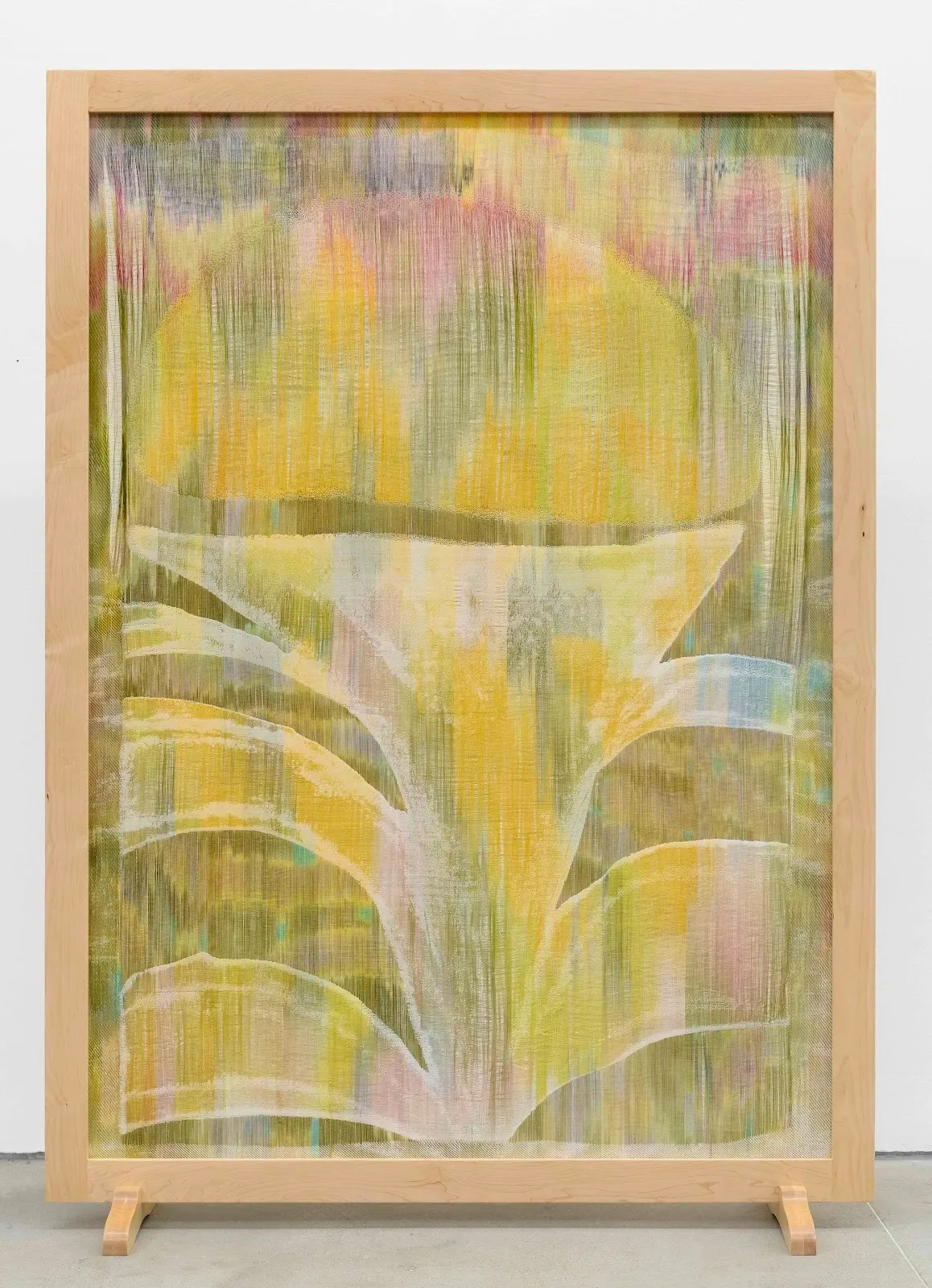
In this regard, a mesmerizing centerpiece in the exhibition is Chanting Sunlight into a Mineral (2025), a collaborative work between artist Abraham Cone and Chicago-based textile lab LMRM. A painter by trade, Cone is the inaugural partner of a project facilitated by LMRM that initiates artists working in other forms to create a textile-based work. Chanting Sunlight into a Mineral was created over the course of an entire year, a process that involved aligning approximately 3,600 long silk warp threads and painting two surfaces across them before weaving on a double-beamed TC2 loom. As the work was woven, the two paintings reveal themselves, making the act of weaving a key component to the generation of images. Housed in a freestanding wooden frame, the work playfully traverses textile, painting, and sculpture.
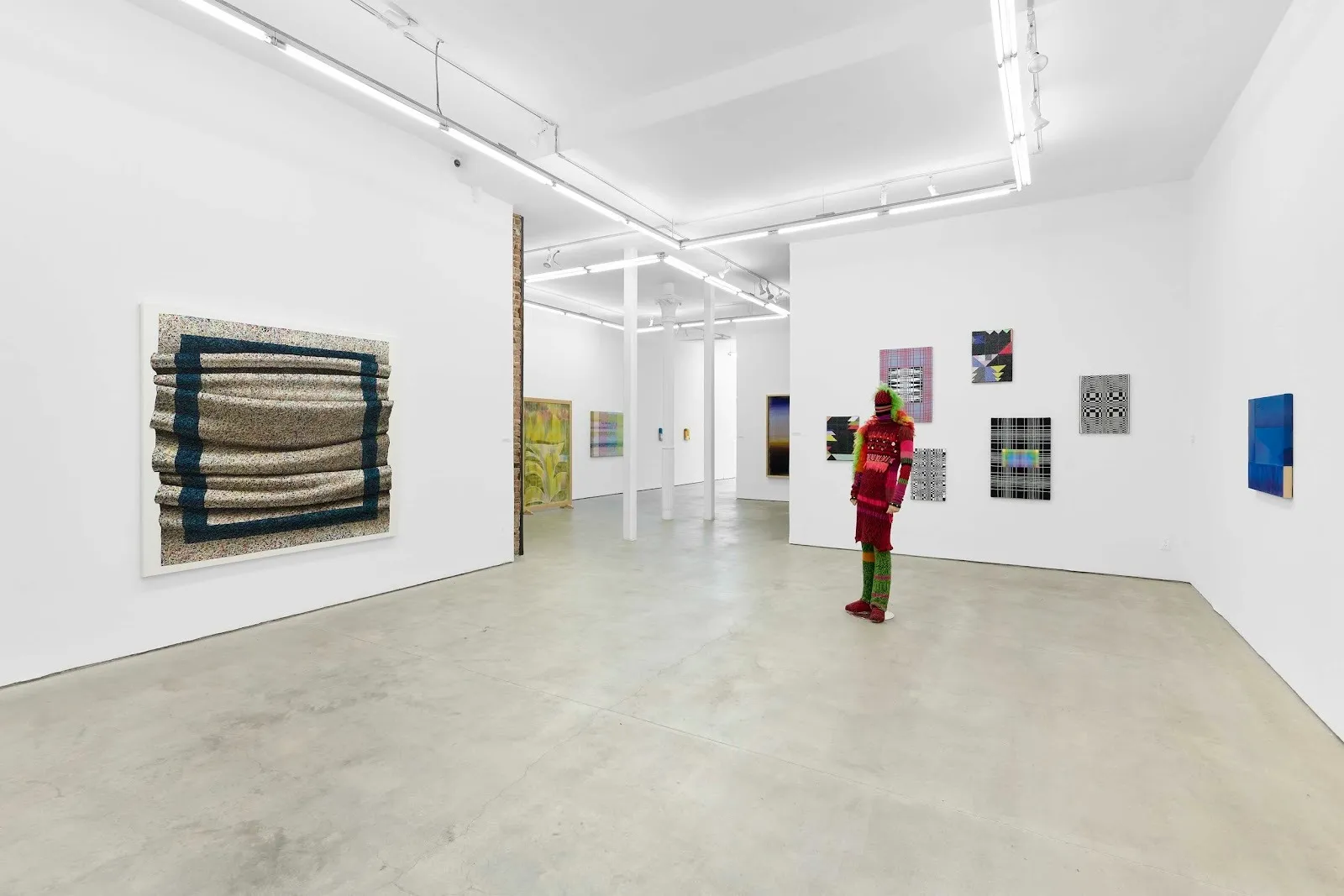
Collaborations between artists and methodologies, like LMRM x Abraham Cone, have historically formed a core pillar of textile making, yet the works in Thread Count are eclipsed by a singular Anni Albers. Given the show’s complexity, it feels both historically and culturally outdated to anchor it on one canonical figure—especially considering that Albers’s own inspirations, Indigenous and ancient Peruvian weavers, often go institutionally uncredited. In a way, the show’s narrative decenters its long list of participants, whose work is compelling independent of any unilateral reference point. Sure, Albers’s impact on the inclusion of fiber in the art world is noteworthy, but this is a story that has been written long before; it resurfaces a redundancy in art history. Prescribing this repetitive narrative overrides other innovators in fiber, both historical and current. In any case, especially given its artist roster, one would think this show would be more fitting as a counterargument against the canonical monopoly of figures precisely like Albers, not as its benefactor.
Artists in the show themselves bear historical allusions that transcend the designated fiber arts canon led by Albers. Meg Lipke’s wall-sized piece Mendieta Grid (2020–2025) references the late Cuban artist Ana Mendieta. With its painted, sewn canvas tubing resembling an intestinal interior, the work quotes her dedication to land via the direct involvement of her body in her artmaking. Threads such as these lie dormant across the exhibition, making the curatorial thesis solely anchored by Albers seem out of place.
Fortunately, the subject of Albers does not go so far as to overshadow the show’s participants. The works in Thread Count are extremely dexterous, alive, and outright gorgeous, showcasing true contemporary talent in fibermaking. Though the involved artists’ own voices are a missing presence in the show’s text and are instead insufficiently substituted by one underlying figure, this lack may be aided by a forthcoming exhibition audio guide featuring each artist's narratives on their work. Ultimately, one departs Thread Count thinking not of Anni Albers, but rather distinctly beyond her role in art history. Its contents amount to a refreshed vision of fiber arts in the contemporary. New threads are in.
Thread Count is on view at The Hole from November 20, 2025 through January 11, 2026. See the online viewing room here.