.jpg)

.webp)
SPLIT LEVEL 2026
Review
Mexico City’s Art Week—like the city itself—can seem infinite with possibilities. The annual event includes three art fairs: the decades-old and established Zona Maco, its cooler younger sister Feria Material / Material Art Fair, now in its twelfth edition, and the unpretentious, friendly, and exciting Salón ACME.
After a whirlwind of art fair openings, contributing writer Lodoe Laura has compiled a roundup of the standout artists, booths, and galleries for IMPULSE.
It’s almost impossible to pick the best booths and artists at Salón ACME. The fair is a choose-your-own-adventure through the labyrinth-like Proyectos Públicos, with each turn bringing the cutting-edge of contemporary art practices from Mexico and beyond.
Marcelino Barsi’s wood and dyed-textile work in the “Puebla” section was a standout. Also in the section, architectural collective MUNA displays a fired clay installation foregrounding testimonies from the Cuautle Coyotl family of San Antonio Cacalotepec, Puebla, whose members have learned the trades of masonry and construction across several generations. The installation aims to acknowledge the often unrecognized authors who dedicate their bodies, knowledge, and networks to the creation of architecture. And, of course, LLANO artist Enrique López Llamas’s cartoon-like hand-painted acrylic-on-plastic polymer installation of a disassembled body serves as an iconic centerpiece for the entire fair.
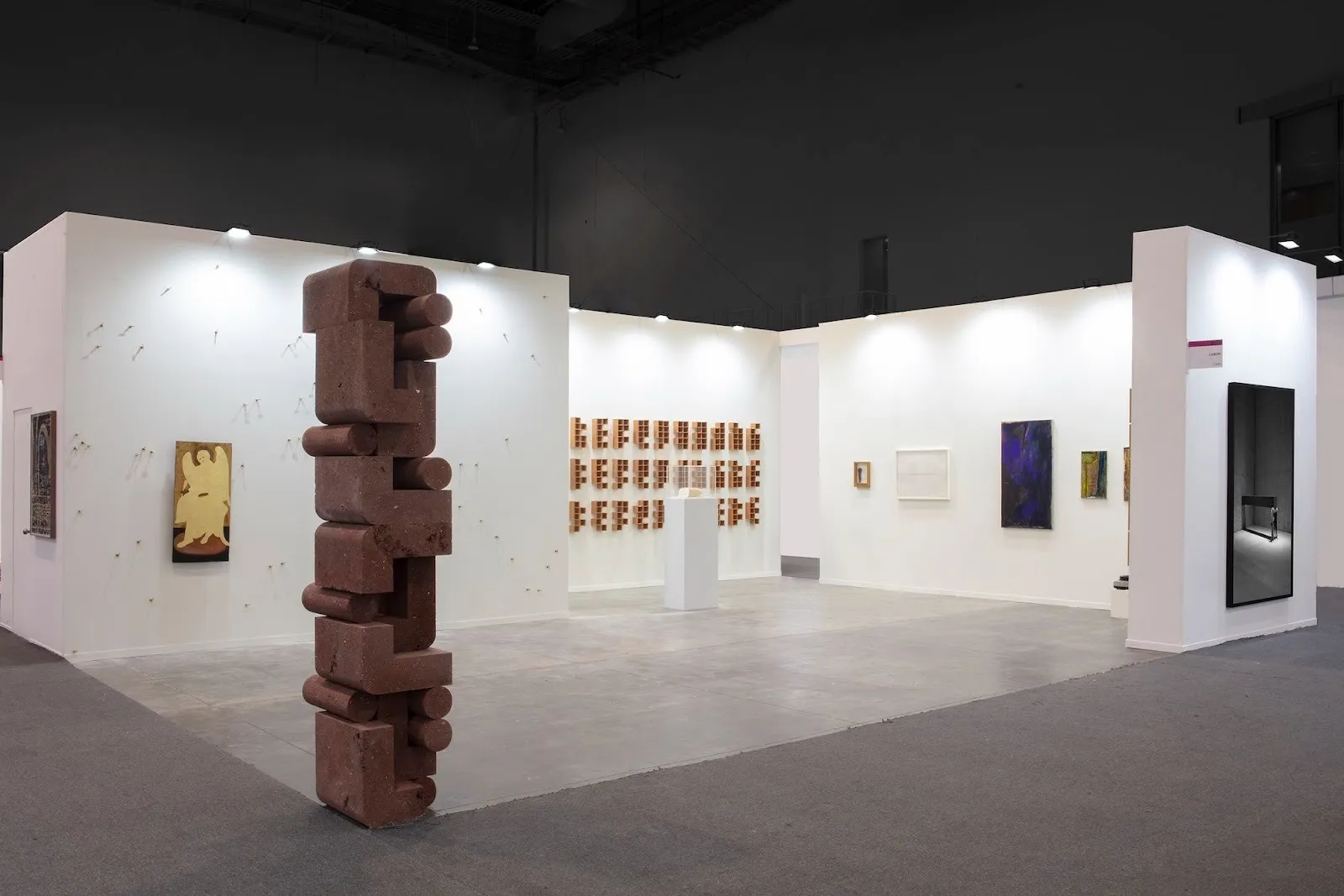
Referencing both modernist form and Mexican and Mesoamerican traditions, Pedro Reyes’s solid sculptural work carved from red volcanic stone stands as a grounding marker for the Mexico City-based Labor, a gallery whose artists’ research-driven approaches engage with contemporary social and political issues.
The refined smoothness of Reyes’s abstracted form enters into dialogue with Hector Zamora’s brick sculptures, installed on the back wall of Labor’s Zona Maco booth. The bricks–often used in Zamora’s site-specific installations that probe the thresholds between private and public space–are made of locally sourced terracotta. They register a tension between fragility and mass, and appear at once hollow and heavy.
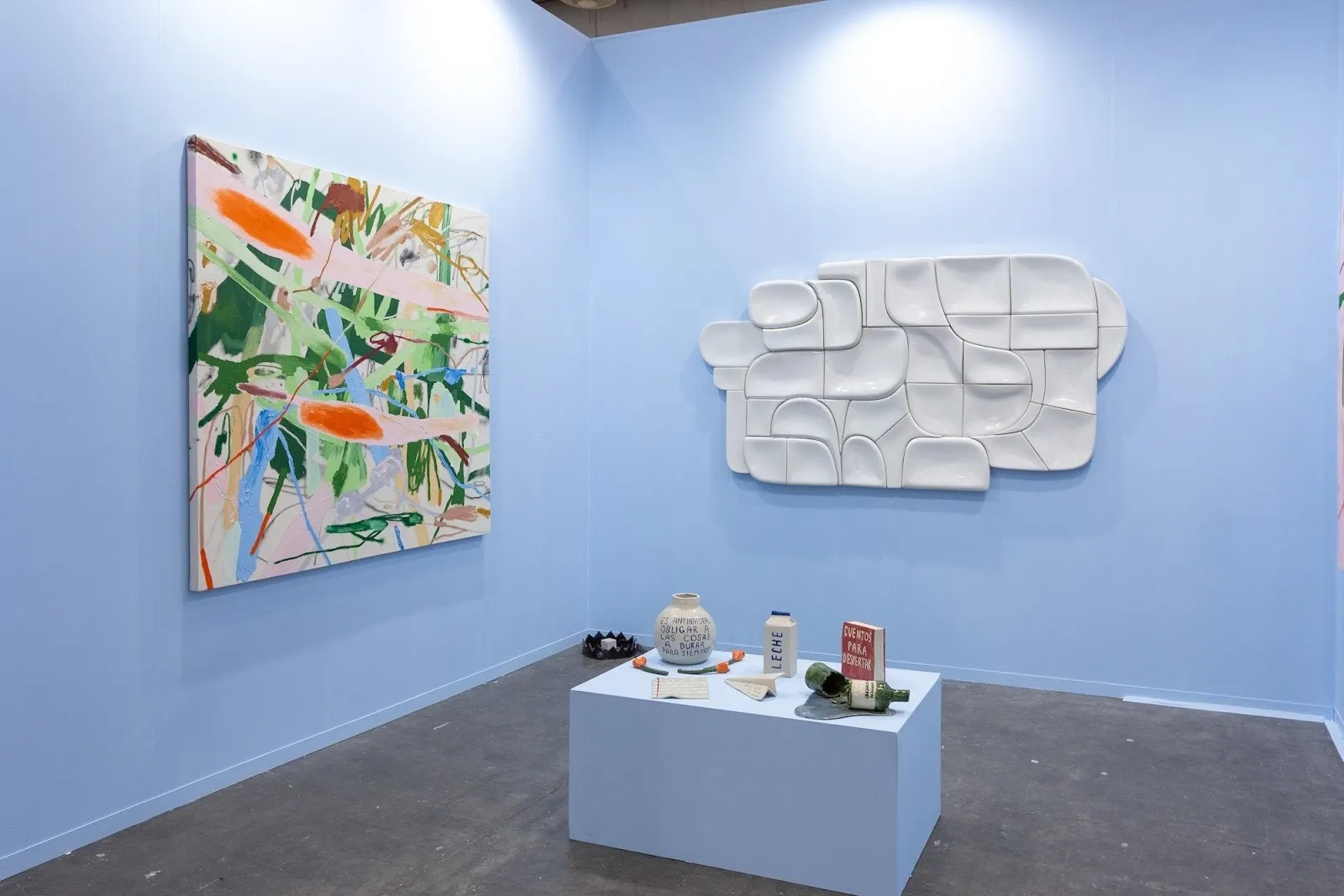
Marchante arte contemporáneo’s Zona Maco booth, in collaboration with Proyecto H, stands out with its sky blue walls. Bringing together three emerging artists based in Mexico, the booth’s curator Alejandra Tena intended for the space to be playful and naive. In the overwhelm of Zona Maco, the booth is refreshingly simple.
Daniel Adolfo’s acrylic, oil stick, charcoal, and graphite gestures across colourful pink and yellow canvases are playful and expressive; Román de Castro’s cheerful and reflective ceramic objects combine poetic sensitivity with everyday objects; and Fernanda Carri’s high-temperature ceramic work Querido universo, aquí sigo (2025) evokes historical Mexican sculptural design while creating something totally slick and new.
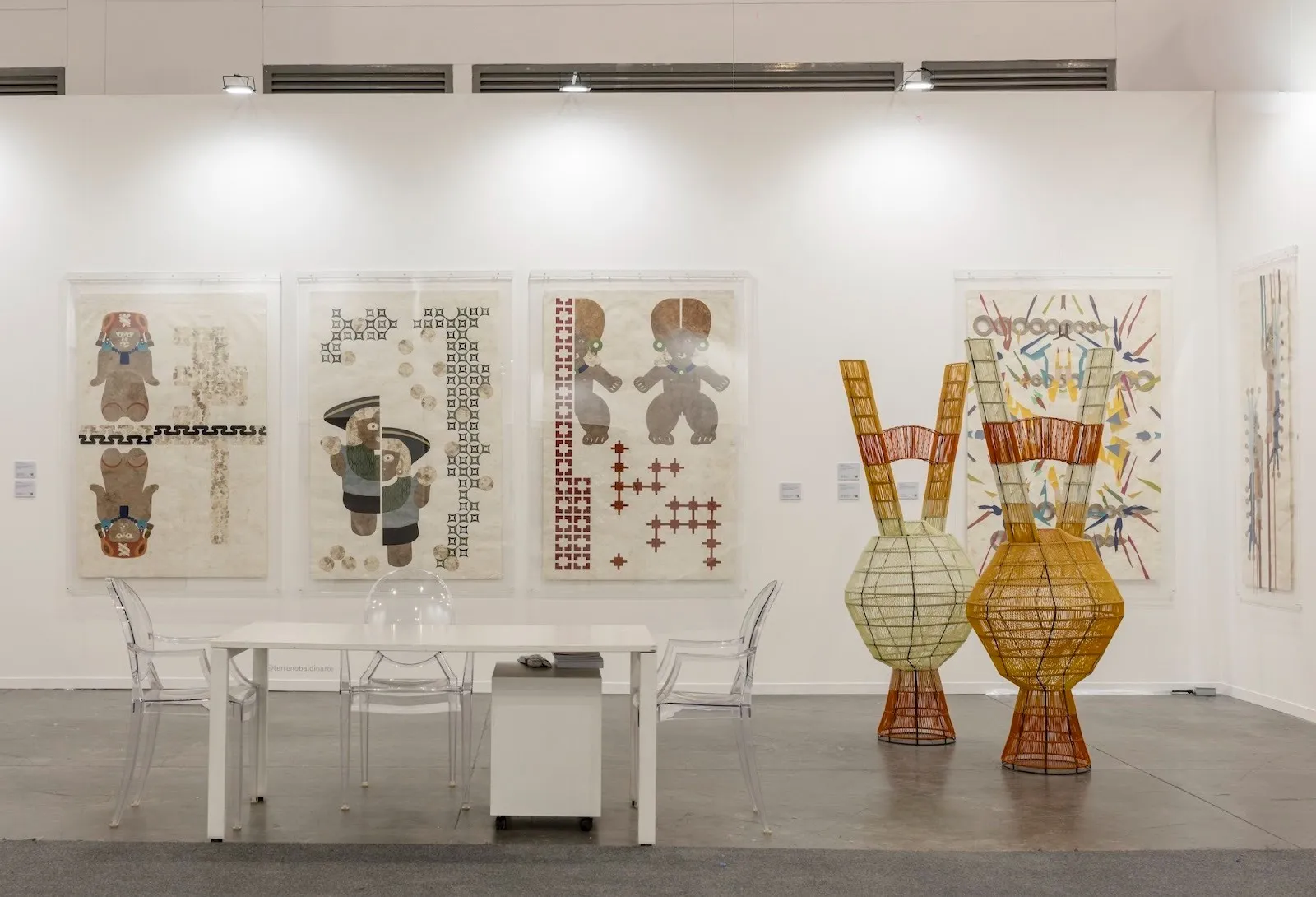
Based in Mexico City’s Roma neighbourhood since 2005, Terreno Baldio Arte’s exhibition of Aurora Noreña’s work at their Zona Maco booth was a standout for its clarity of vision. Noreña’s longstanding practice has investigated the loss of Mexico’s pre-Columbian cultural heritage, focusing on the trafficking of cultural objects and its impact on Indigenous rights to memory and identity, and reflecting on this cultural dispossession. Noreña’s works on paper employ additive and subtractive methods of collage techniques, combining plastics, papers, and cowhides in their compositions. Drawing on the materials and construction of the iconic Acapulco chairs, her sculptural works transform steel and vinyl cord into reimagined objects.
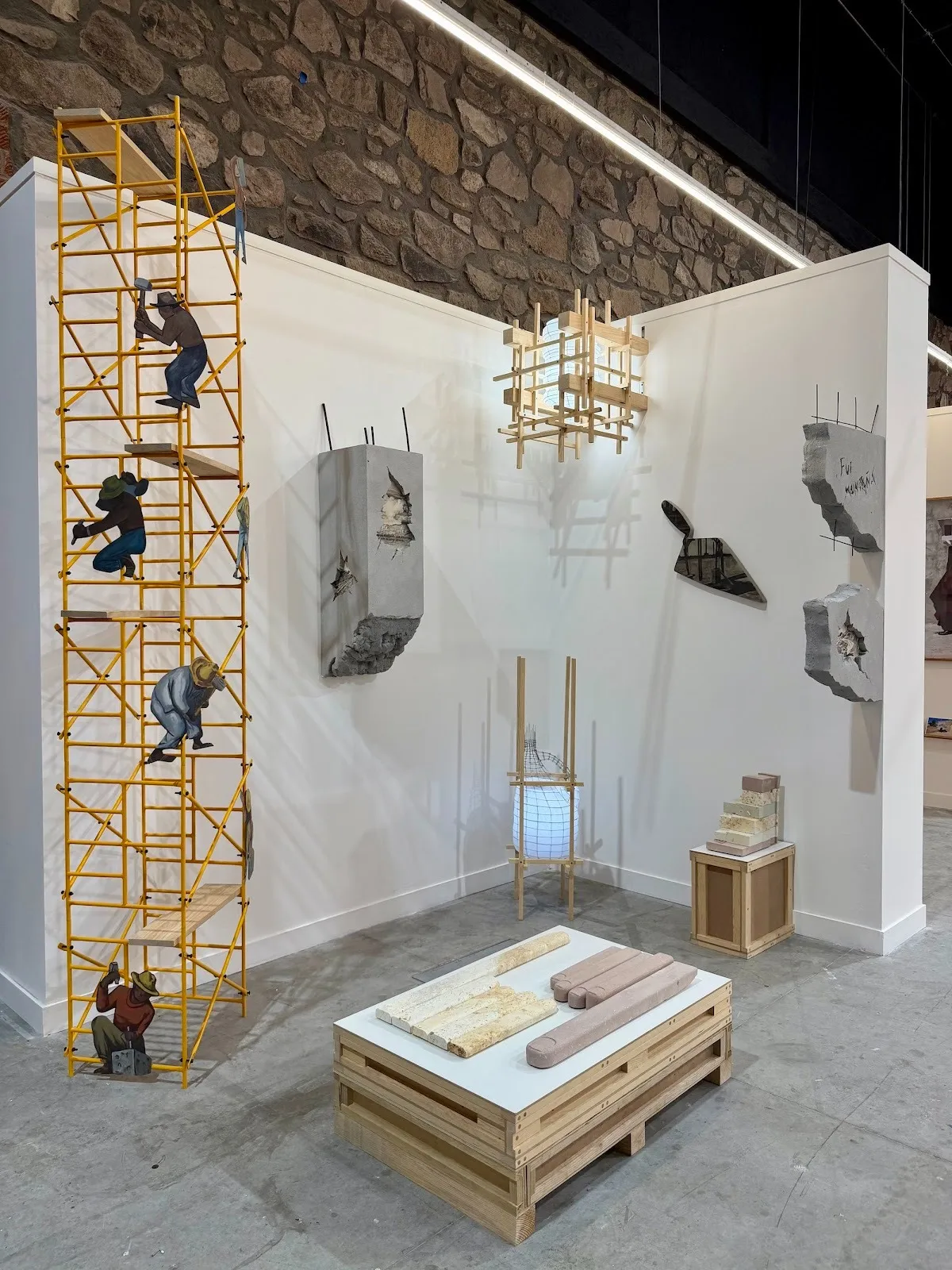
CIMBRA makes its debut at Material Art Fair, presenting in the Proyectos section, which highlights contemporary Mexican art. Organized around the theme of labor, the booth brings together four artists whose practices engage with the aftermath of systems of so-called progress.
Jysus Ramirez’s installation features scaffolds dotted with cardboard figures of construction workers, while Guadalupe Vidal’s Styrofoam structures mimic fragments of cracked concrete—the refuse of modern infrastructure. Blanca González transforms locally sourced quarry waste generated during the production of flooring and ornamental pieces into smooth sculptural hands. Marco Velasco’s structural lighting pieces examine the instability of water access in Oaxaca, which is driven by both inadequate public works and the climate crisis.
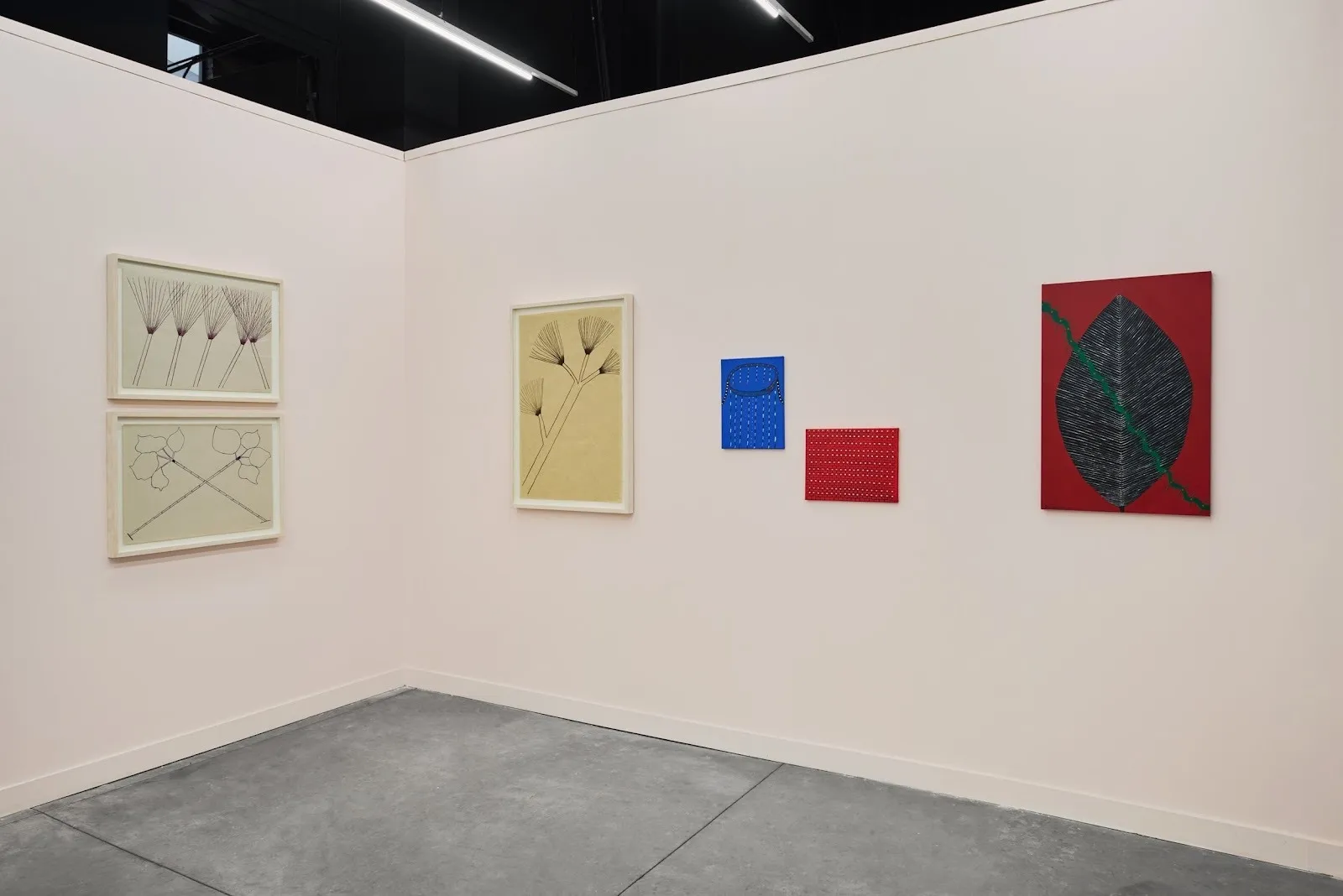
At Material Art Fair, a collaborative booth by Proxyco Gallery from New York and the Caracas-based Abra brings together a collection of drawings and paintings by Sheroanawe Hakihiiwe, an Indigenous Yanomami artist who lives and works between Caracas and Platanal in the Upper Orinoco region of Venezuela. Employing minimalist iconography to evoke Amazonian flora and fauna affected by the climate crisis, Hakihiiwe’s work stands out for its simplicity and focus on form.
Berries, snakes, leaves, and palms are rendered over uneven canvases. Alongside recent pieces on mulberry, cotton, cane, fiber, and ash papers, the booth includes a large-scale painting of a swarm of ants, which references a Yanomami myth about the tears of a malevolent being, as well as a work focused on the bejuco vine, a vital element within Yanomami ecology and cosmology.
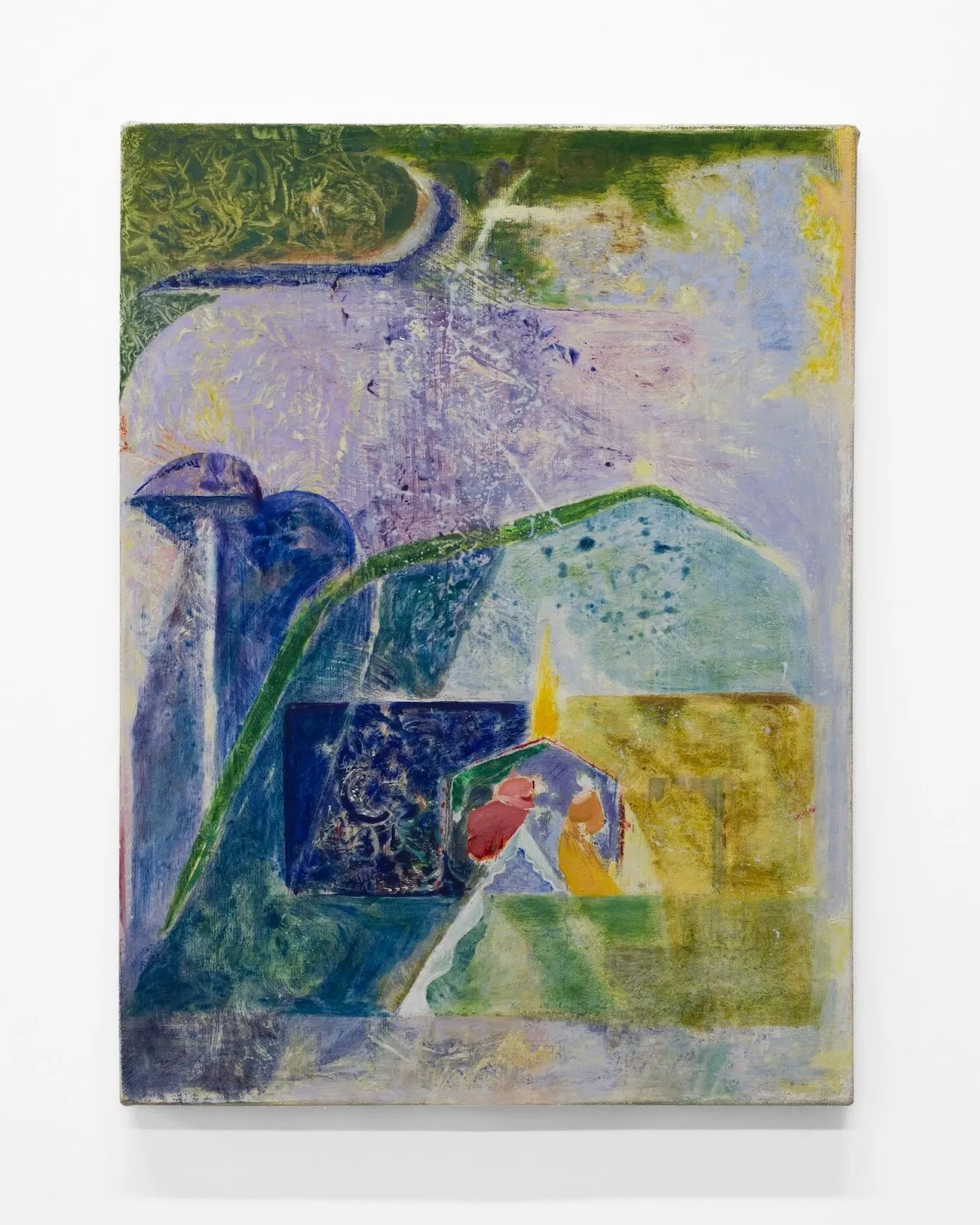
Work by the Tehran-born, Montreal-based artist, Pardiss Amerian, is on display at ZALUCKY’s Material Art Fair booth. Amerian’s practice unfolds as a process-driven investigation of painting and collage, guided by narrative digressions that engage nature and myth. Drawing inspiration from Persian history and literature, she builds her canvases through layered compositions that incorporate shifting textures and timelines. The paintings, which shift seamlessly between realism and abstraction, reward close looking and sustained attention from the viewer.
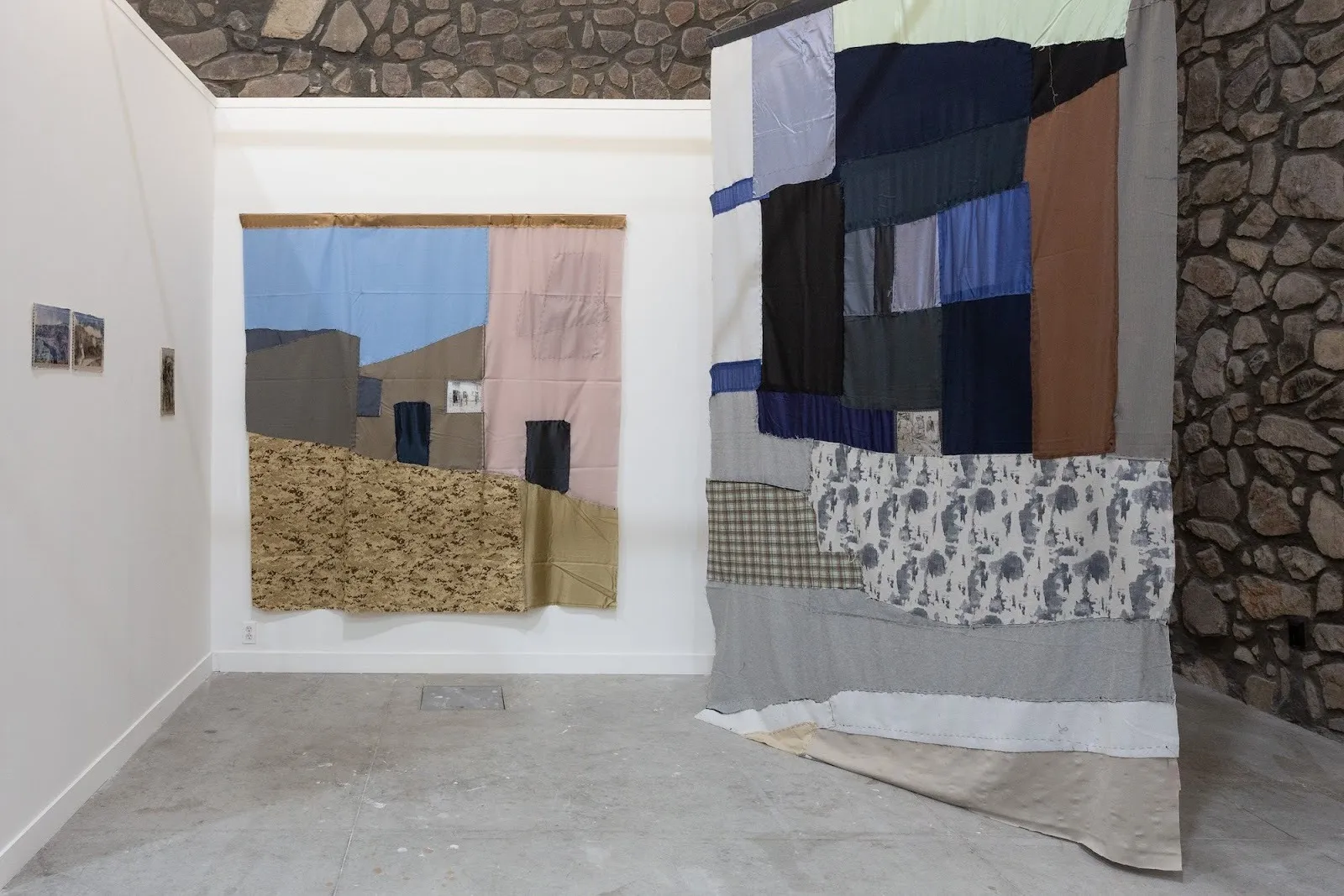
Also at Material Art Fair, El Chico presents Elián Stolarsky’s Strange Country (2023), which examines the entangled dynamics of memory, migration, and history. Grounded in her family’s experience of forced migration from Poland to Uruguay due to war and religious persecution, Stolarsky’s textile-based practice engages fragmented familial histories and the lasting aftermath of violence. Referencing the history of photography and Robert Capa’s photographs of the Spanish Civil War, she stitches into their surfaces to create monumental, quilt-like assemblages in which the past is rendered present.
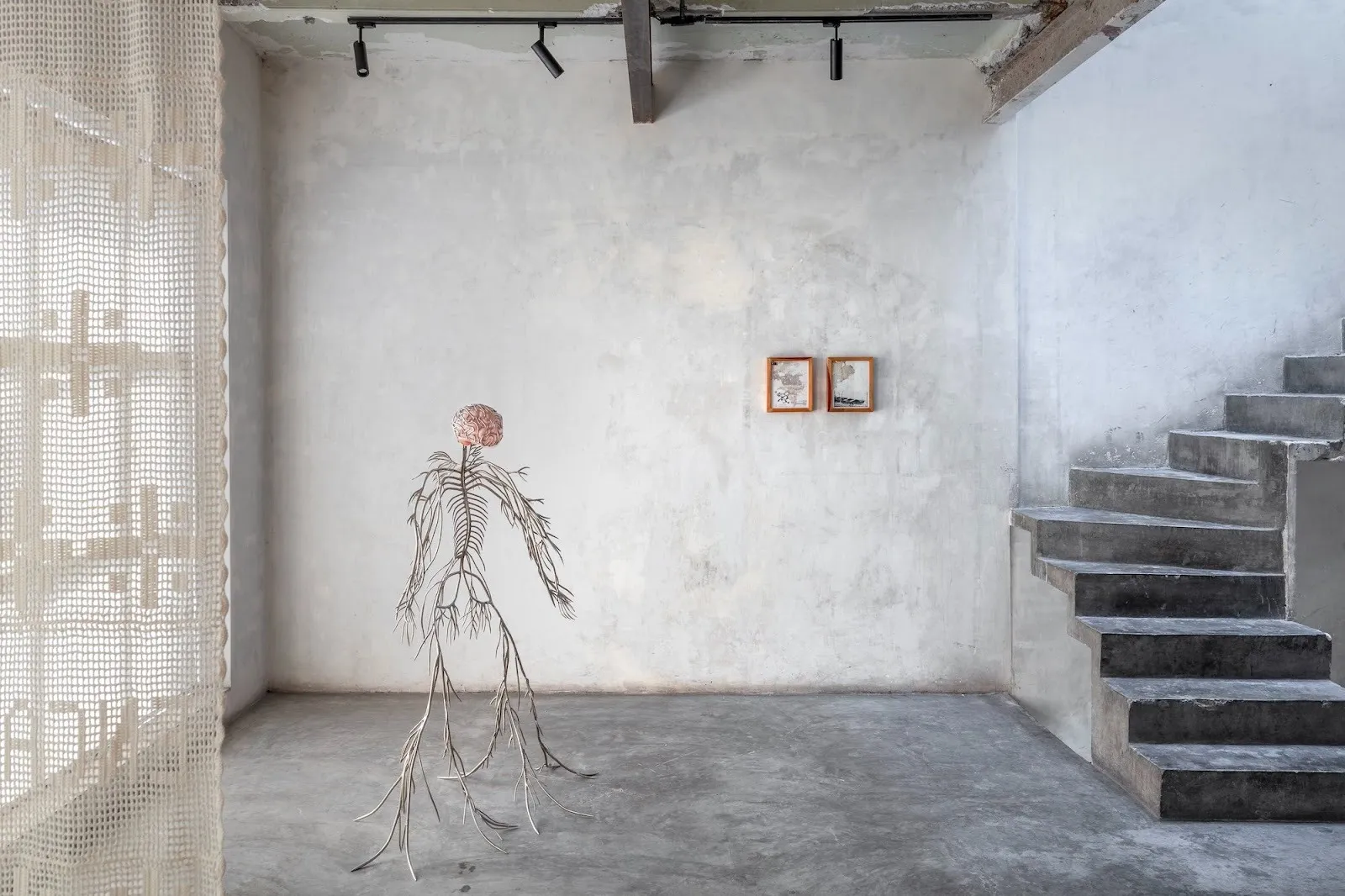
While not officially part of any fair, the Peru-based N.A.S.A.L. Gallery—with spaces in Guayaquil and Mexico City—opened a group exhibition of its represented artists on the second floor of its CDMX location during Art Week. Fuerzas Motrices (Grounding Forces) expands on what might otherwise have been contained within a fair booth, bringing together works that examine the internal and external forces shaping emotional, psychological, and social experience, and framing mental health as a dynamic, embodied process.
Highlights included recent works by Manuela García, including a felted wool knife and pair of scissors shown alongside pigment and encaustic wax works on wood that attempt to depict what she perceives when she closes her eyes; Miguel Andrade Valdez’s Gritto, a large-scale work articulating the somatics of mental health; and Luis Enrique Zela-Koort’s self-supporting rendering of the human nervous system in blown glass and soldered copper with a chrome finish.