
"The Ballad of Little Jo" (1993) dir. Maggie Greenwald at Anthology Film Archives
Review
I had the chance to sit down with Ana Alpizar, director and writer of the short film Norheimsund (2025), and the first Cuban female filmmaker invited to present her work at the Venice Film Festival. Alpizar’s provocative fiction follows Yaíma and her daughter Yaímita through their lives in modern-day impoverished Cuba. Yaímita’s long-distance internet romance with an older Norwegian man promises to pull them out of their circumstances, but these dreams are shaken when he turns out to be less trustworthy than he once seemed. In our conversation, Alpizar and I discuss her life growing up in 1990s Cuba, her portrayal of care networks between women, and the role of hope in motherhood and Caribbean life.
After its Venice premiere in the late summer of 2025, Norheimsund was screened at Festival de Cine de la Habana, Sundance Film Festival, and the Clermont-Ferrand International Short Film Festival. This interview contains spoilers from the film.
JS: Watching this film, I recognized so many touchstones of my own Caribbean heritage. Can you tell me about your experience growing up in Cuba?
AA: Cuba is a special country with beautiful people. I grew up in Cuba in the 90s. After the Soviet Union collapsed, it was one of the most difficult times—the Período especial. We had very, very little. Many people were hungry. We used to collect envolturas, the wrappers of chocolate that we found in the street. We had never tasted the chocolates, but we had books of collected wrappers because our dream was to taste the candy. I grew up thinking that Coke was a luxury. Though we had little, the situation brought out a generosity in people.
One of the most important ideas in the film was the idea of the “outside”—the world beyond socialist Cuba. I grew up without the internet. The first time I had the chance to Google something outside of a work context was in 2017, when I came to the US. The first thing I did when I arrived was search, “Who are the Kardashians?” For us, the idea of the outside was magic.
JS: The mood of the film is humid and lingering; shots are filled with the earth tones of Cuba. But there’s a depressive undercurrent. In Habana, where the film was shot, Yaímita and her mother live in extreme poverty, like 89% of today’s Cubans, while screenshots on their iPhones of the “outside” world disrupt their harsh reality. We see flashes of colorful, bountiful supermarket aisles, sent to Yaímita by her internet lover. Cinematically, the contrast between Habana and the screenshots is jarring. Can you tell me more about those interruptions?
AA: In Cuba, that’s very common. On the island, the stores are mostly empty. I would always ask my family outside to send me photos, or to bring photos when they visited: of beautiful things, of colors. It was like seeing what we saw in movies for us, seeing another world. And we still do it. Right now, there is internet in Cuba—my mom says, “If you go to the store, please show me, call me, do a video call.” For her, that’s how she sees the world beyond.
JS: When you left Cuba in 2017, what was it like for you?
AA: It was a lot of change. I came long after the post-Soviet era, at 27 years old. When I first got to the US, I didn’t know what a credit card was or how to use a vending machine. I started working as a waitress, and I remember people asking me, “What kind of dressing?” I was so confused. It wasn’t my English—I was working at a Spanish restaurant in Miami—the concept of salad dressing was new.
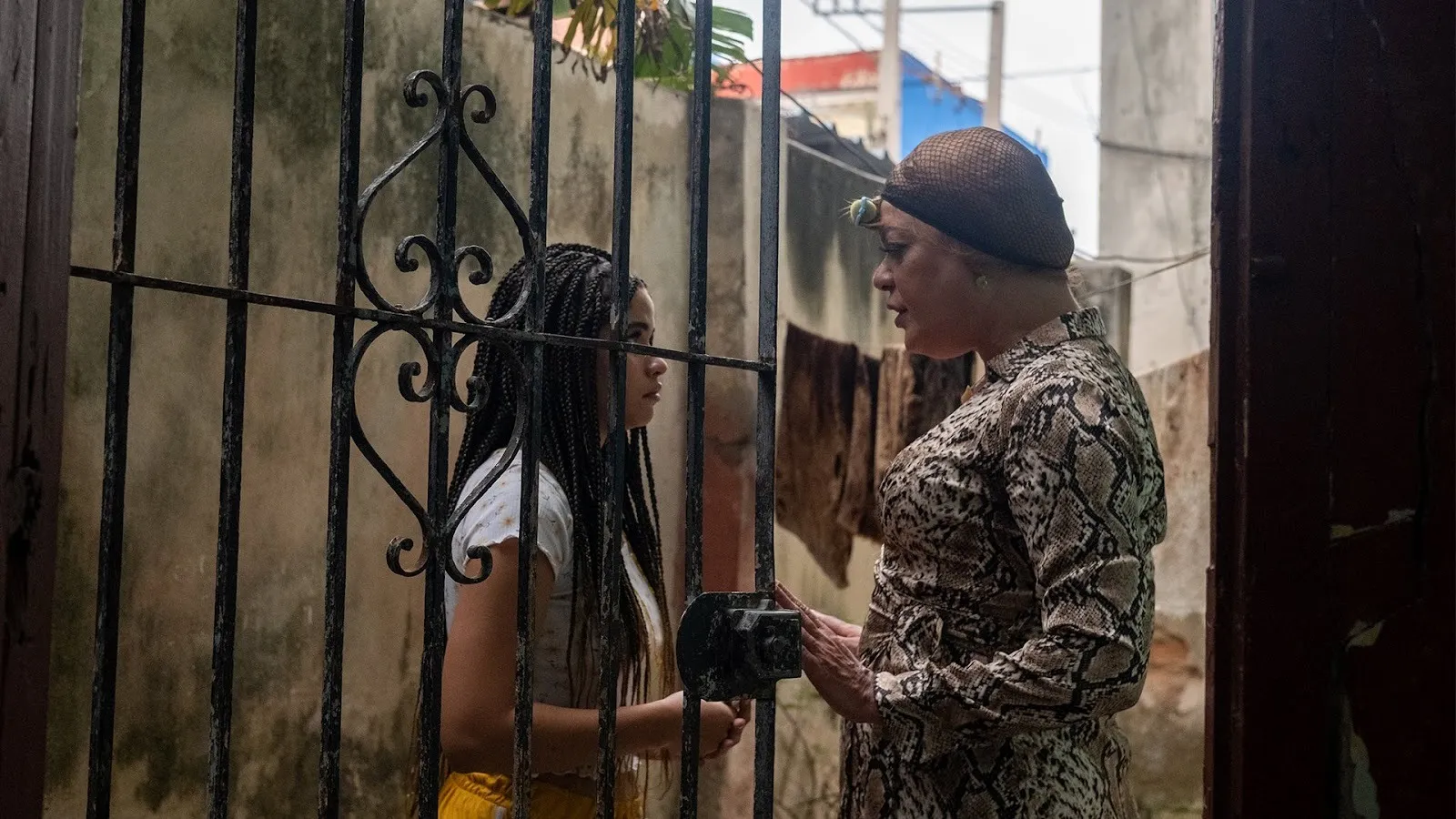
JS: Information restriction plays a huge role in both your personal story and Yaímita’s. So does gossip. In the film, the beauty parlor serves as a central source of information. Where mobility is restricted, gossip functions as a means of protection.
AA: Gossip, for me, is very important. It was the narrative core that I followed in this film. In my neighborhood, it was very common: you knock on my door, you sit there, and you tell me everything that’s happening. Everyone knows everyone, and what everyone is doing. That idea of who knows who, who hides what, was very important for me. This relationship with Sven is probably something that the whole neighborhood knows about. When Katia, one of the women at the beauty parlor, steps in to warn Yaímita that Sven is talking to multiple girls, she is trying to protect her.
In the film, an urban legend is mentioned about a girl from Cuba who is whisked away by an Italian man who promises to take care of her. She comes back without eyes and serves as a warning to Yaímita of how dangerous these men can be. In Paris, I showed the film to a friend from Havana. He told me that he knew the story of that very Cuban girl.
JS: No me digas.
Ana: He told me he remembered when that happened, when she came back to Cuba blind. When I incorporated it into the film, I thought it was a legend.
JS: In the film, the first scene shows Yaíma taking nude photos of her daughter. It is deeply unsettling, yet we realize this “relationship” poses an opportunity for them to escape poverty. Can you tell me more about this practice of turismo sexual, “sex tourism”? How does a young woman in Cuba find a sixty-year-old man in Norway online?
AA: As I said, the 90s were very hard times for Cuba. The country had just opened up for tourism. Many Europeans were going, and sex tourism became a big thing. Many men used to go there just for that. They looked for women who were well-educated, who attended university. For the women, this was often their only opportunity to leave the country or support their families. Today, it’s still very common. I grew up believing the best thing that could happen to you was meeting a guy from another country—younger was better, but if not, it didn’t matter.
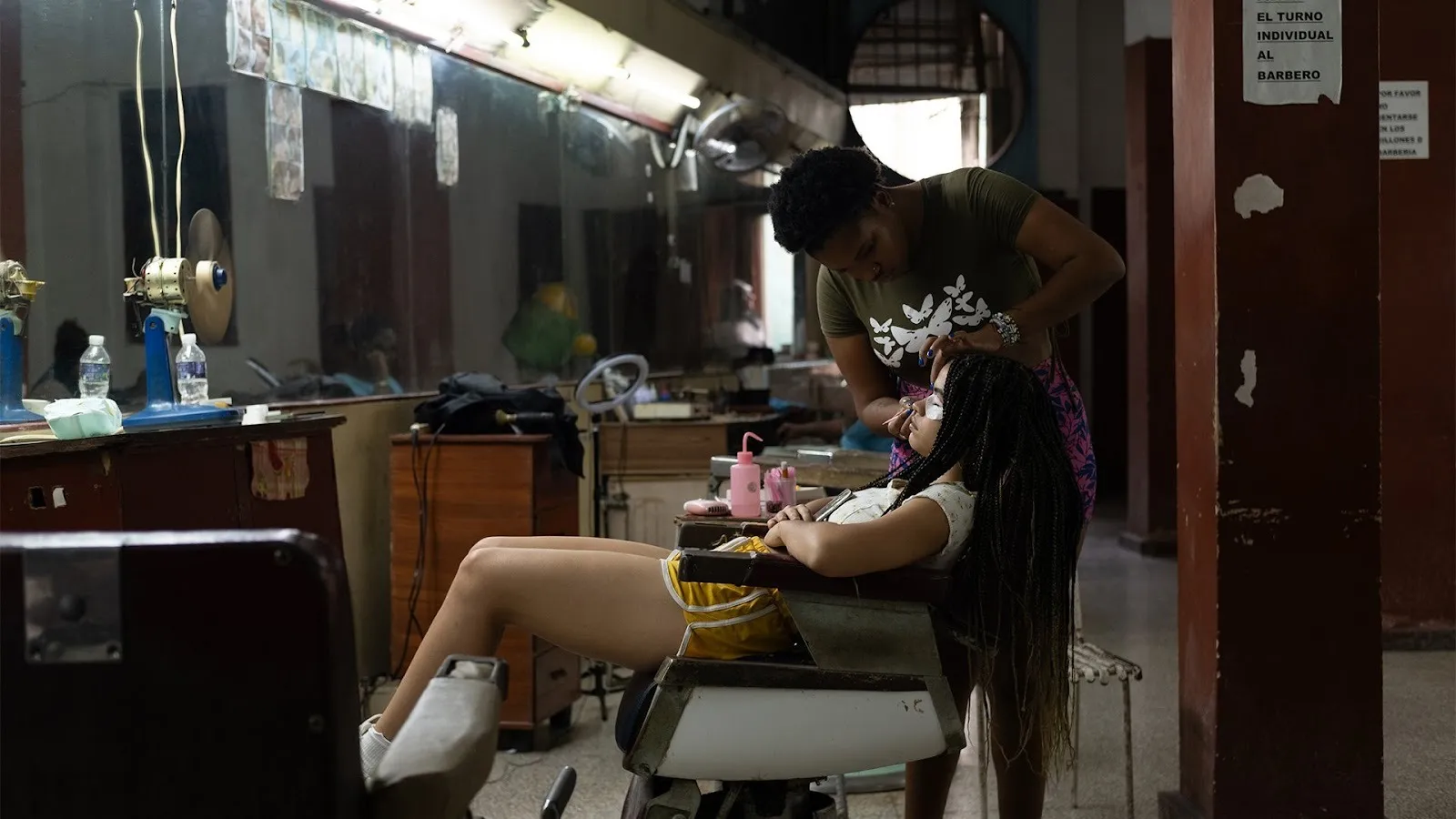
JS: On another note, I wanted to touch on the role of beauty in the film. No matter what else is crumbling, people will still gather at the beauty parlor. I remember a scene from Christiane Amanpour’s documentary Sex and Love Around the World (2018). She captures Beirut in 2018 under the ever-present memory and threat of war. The economy is collapsing, and so are the schools, but the institution of the beauty salon remains. For many women in Beirut, the beauty salon is a social space, a hub of intergenerational care, mutual protection, and maintenance of normalcy amidst violence. It also maintains the commodity of women’s beauty—the currency Yaímita might use to leave Cuba one day.
AA: Beauty is a way of anticipating the arrival of a better future. In Cuba during those years of the crisis, people still went to the salons. It’s a space where women can be together. It’s part of our culture. You don’t have any money, but your nails are good. There was no food, but your hair was good. For many women in Latin America, the salon is a place of hope.
JS: In the beauty parlor, one of the aunts comments on her hope for Yaímita’s potential future child: “blancita, blancita, child of the sun.” Blancita is the diminutive of blanca or blanco, meaning fair-skinned, or white. What role does race play in the film?
AA: Unfortunately, there is a lot of racism, as well as colorism, in Latin America. In Cuba, it matters if you are mulata or jabaó. There are one hundred categorizations for skin color. In this system, whiteness is synonymous with beauty. Yaíma dreams that her grandkids will be more light-skinned than she is because it’s that important. We have a phrase for this: adelantar la raza. Unfortunately, whiteness is a status symbol. It’s very difficult for me to talk about.
JS: It’s directly related to el sistema de castas, the system of the Spanish conquistadors, which classified and ranked people of the Americas by skin color.
AA: Exactly. This is the history and the reality of Latin America.
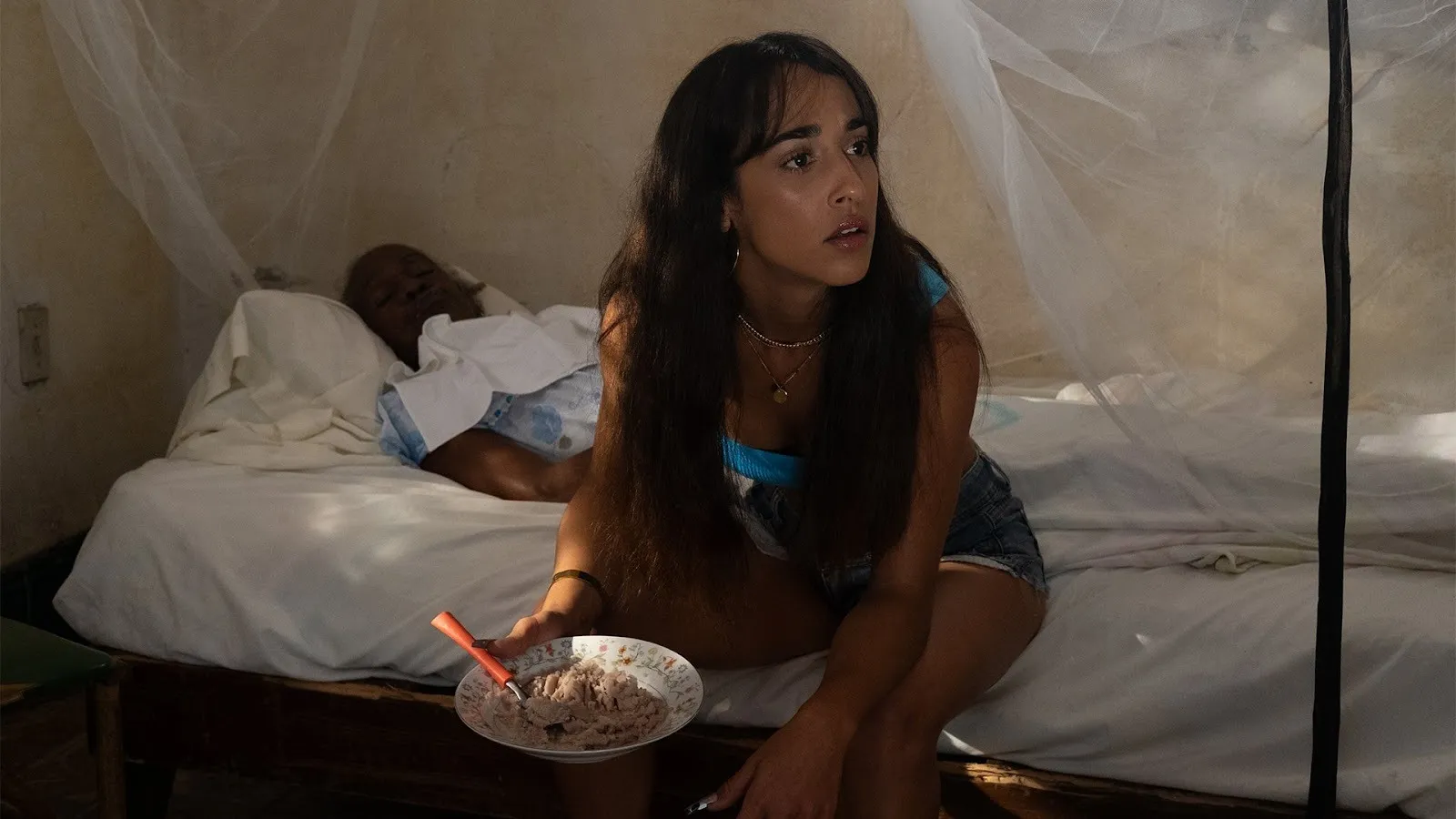
JS: There’s a scene featuring another intergenerational dialogue between women: close to the end, when Pocahontas, another woman who has slept with Sven, tries to warn Yaímita of continuing with Sven. This scene feels very dark to me. Can you talk about that moment?
AA: For me, the film is a coming-of-age: Yaímita realizes that hers is not a love story. Pocahontas reflects Yaímita and tries to protect her from the same future. In the scene, Pocahontas is spoon-feeding her abuela, who’s refusing to eat. This might tell us something about Yaímita’s fate. Pocahontas is perhaps better off because she has an air conditioner, but you can imagine everything that she must have done to achieve what she now has.
JS: And I wondered, as the observer, if the heaviness of this moment changed Yaímita’s relationship to her mother. Can you talk about Yaíma and her perpetual hope?
AA: Ella es una mujer a la que la vida le ha dado muy duro. Yaíma’s dream is not for herself, but for her daughter. She wants Yaímita to leave the country, to have a life better than her own. Hope is the only thing that she has.
JS: The last thing I wanted to talk about was the atmosphere and sound of the film. After the scene in the beauty parlor, Yaímita goes for a walk in Habana. We see people waiting, we feel the heat, and a low depressive hum. There’s a heaviness to the atmosphere, but it’s also teeming with life. There’s lots of chatter. To me, this sound is the heart of Latin America.
AA: That sound was so important for me, because in Cuba, there are always people talking. I worked with a Cuban sound mixer because only they could understand that sound. At the end, I was always asking for more, more, more, more—more conversations, more chatter, more, more, more.
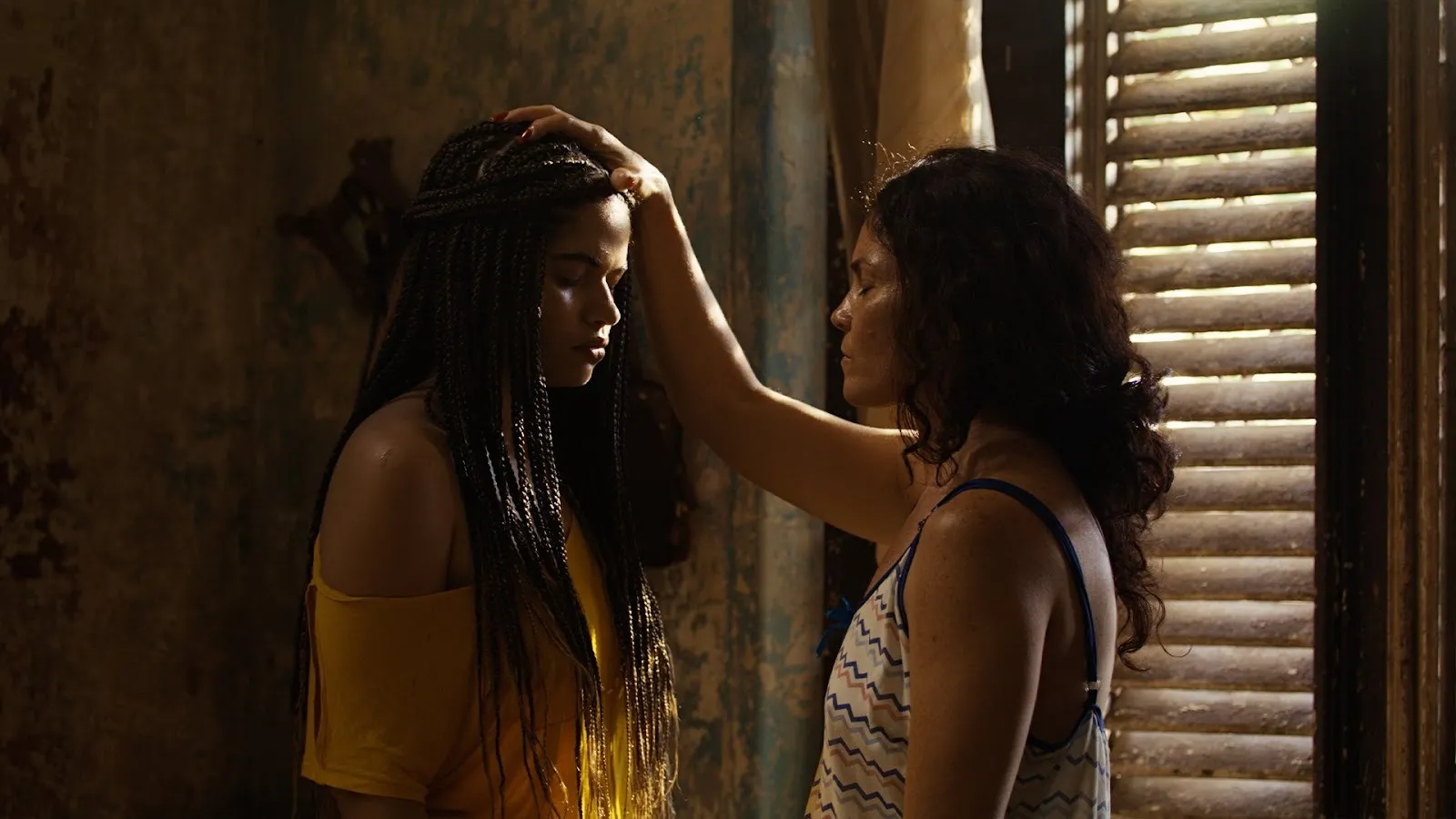
Norheimsund will be featured in the Tampere Film Festival from March 4 through 8, 2026.







.jpeg)