Leah Liu: “susurrus 聲聲私”
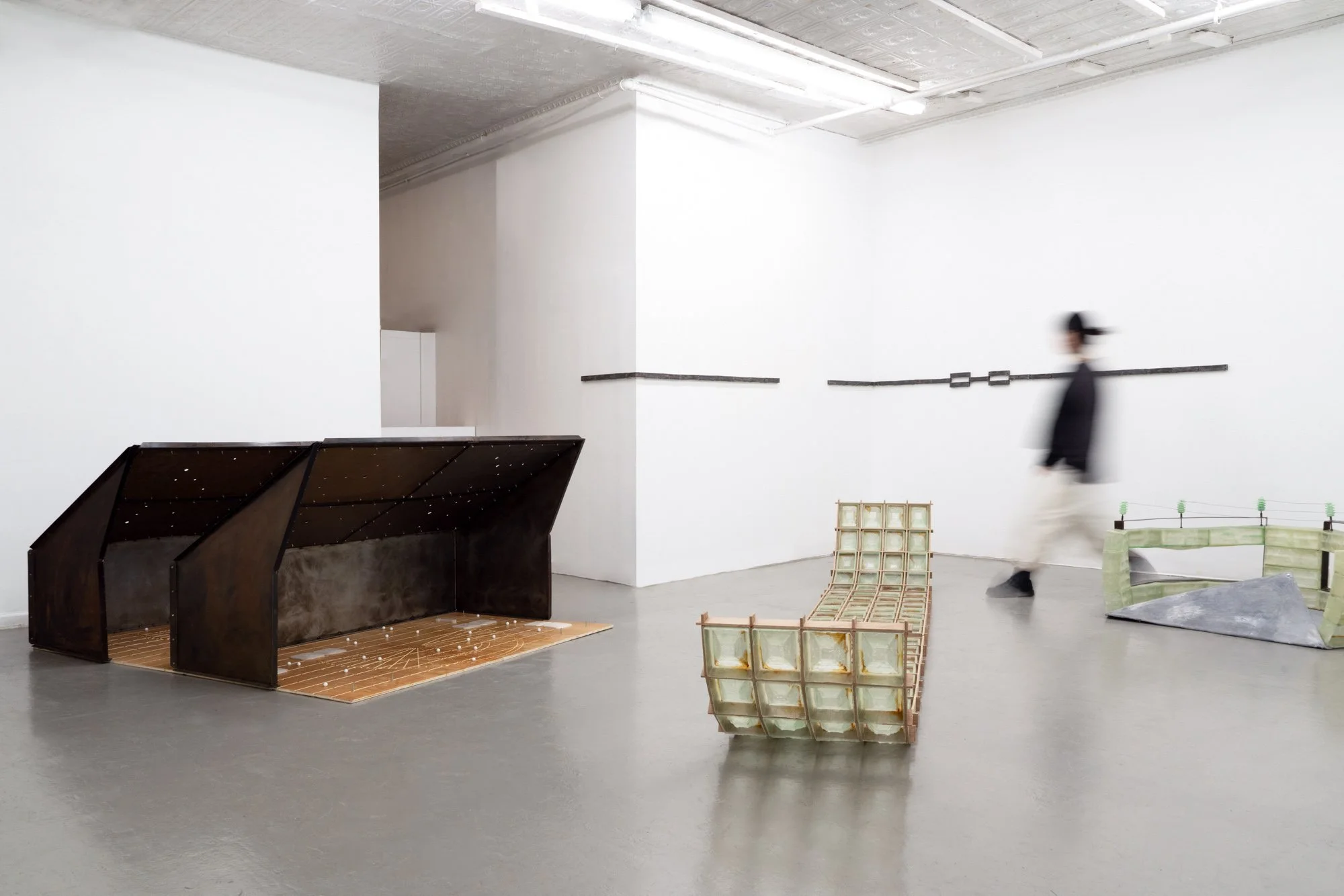
Leah Liu, susurrus, 2026. Courtesy of the artist and Gallery 456/CAAC. Photo: Zhu Gaocanyue
At the center of Leah Liu’s solo exhibition susurus 聲聲私 at Gallery 456/CAAC, In Tandem (2025) anchors the surrounding works in a study of tension. Epoxy, fiberglass, silica, and shellac form ninety-six modular gridlocked blocks, slotted into interlocking wooden grids, their forms recalling jade ice trays. Yet the artist’s laborious repetition and modularity are not to be mistaken for force or stability. Instead, variations in the wood cuts slowly misalign the joints, straining the grid, ever so slightly warping the sculpture’s edges upward. The grid does not bend to the hand of its creator. Rather, gravity, in its hollowed chambers, asserts itself as an equal collaborator. Weight and negative space shape the work as much as the artist’s hand.
As curator Vu Thien An (Thea) Nguyen notes, absence is not to be resolved or negotiated; it is an activator. Geometry, repetition, and material restraint are not mere formal decisions, but methods for articulating gravity, natural law, and spatial awareness. A crack in carved oak is sealed with wax, while a metal pole, appearing to anchor the sculpture, hovers a centimeter off the floor. Breather (2026) opens the show, revealing that its support comes from foam board, plaster, and papier-mâché peeling off the wall, as if the architecture itself were exhaling.
The exhibition’s conception returns to a line from the poem “Pipa Xing” (琵琶行): “弦弦掩抑聲聲思,” which translates to “Silence can surpass sound.” For the title of the show, Liu replaces the final character 聲聲思 (longing) with 私 (privacy or intimacy). Phonetically, the phrase remains the same, but the meaning has shifted to “speech near the ear.” Throughout susurrus 聲聲私, works contain hollow chambers, but none are activated. There are no speakers, no audible cues. While an underpinning of sound is constantly suggested by the instrument-like construction of the pieces, sound itself is withheld.
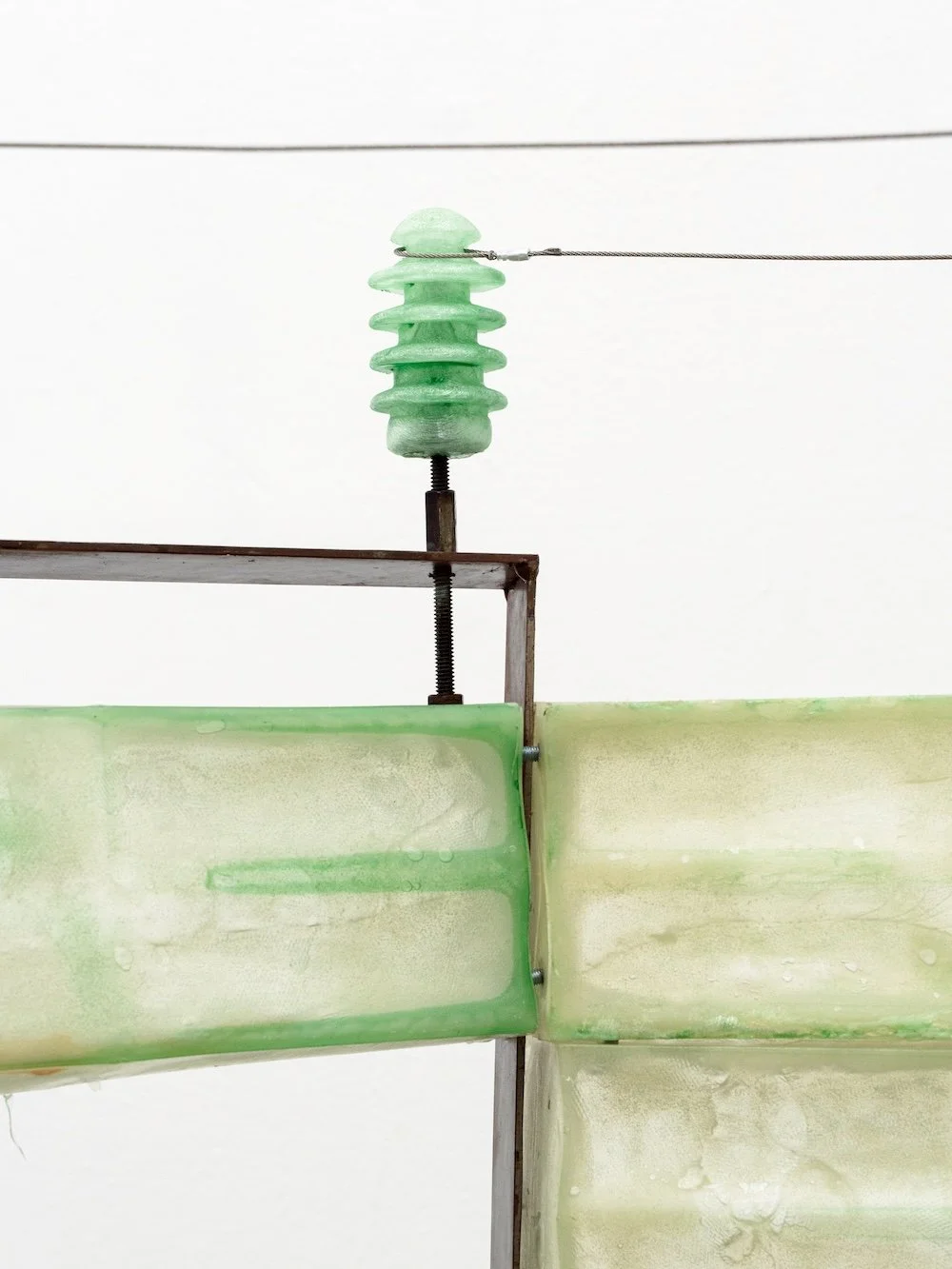
Leah Liu, Orbital Strata, 2024. Courtesy of the artist and Gallery 456/CAAC. Photo: Zhu Gaocanyue
Susurration (2026) fractures the gallery’s white walls, mounting broken ceramic bars at eye level. Each hollowed form rests on two nails. The viewer could almost breathe into its openings like a whistle or flute. Encountering the entire work requires carefully navigating around other forms like Orbital Strata (2024). Taken as a whole, the show’s installation creates pathways and interrupted sightlines. Careless Architects (2026) cuts into Susurration’s cadence—a stutter in a dashed line, a brief collapse of rhythm. To proceed, the viewer must pause, recalibrate, and continue.
susurrus 聲聲私 hinges on a misalignment; its English title has no direct Chinese equivalent. The word in English derives from Latin, meaning whispering or humming, describing the diaphanous sounds produced by the remnants of friction: breath passing through the body, wind brushing through an opening, air moving through a cavity. In the provided translation, 聲聲私, the first two characters denote “sound,” while the last character suggests privacy or intimacy. Even as the English title and the Chinese title (pronounced Shēng shēng sī) share a distant rhyme, inevitable hegemony and incongruence emerge in both sound and meaning. The show’s title reveals a gap—a hollow chamber between different systems of linguistics and semantics. It is precisely this chamber, the slight space of misalignment, in which Leah Liu’s sculptures activate.
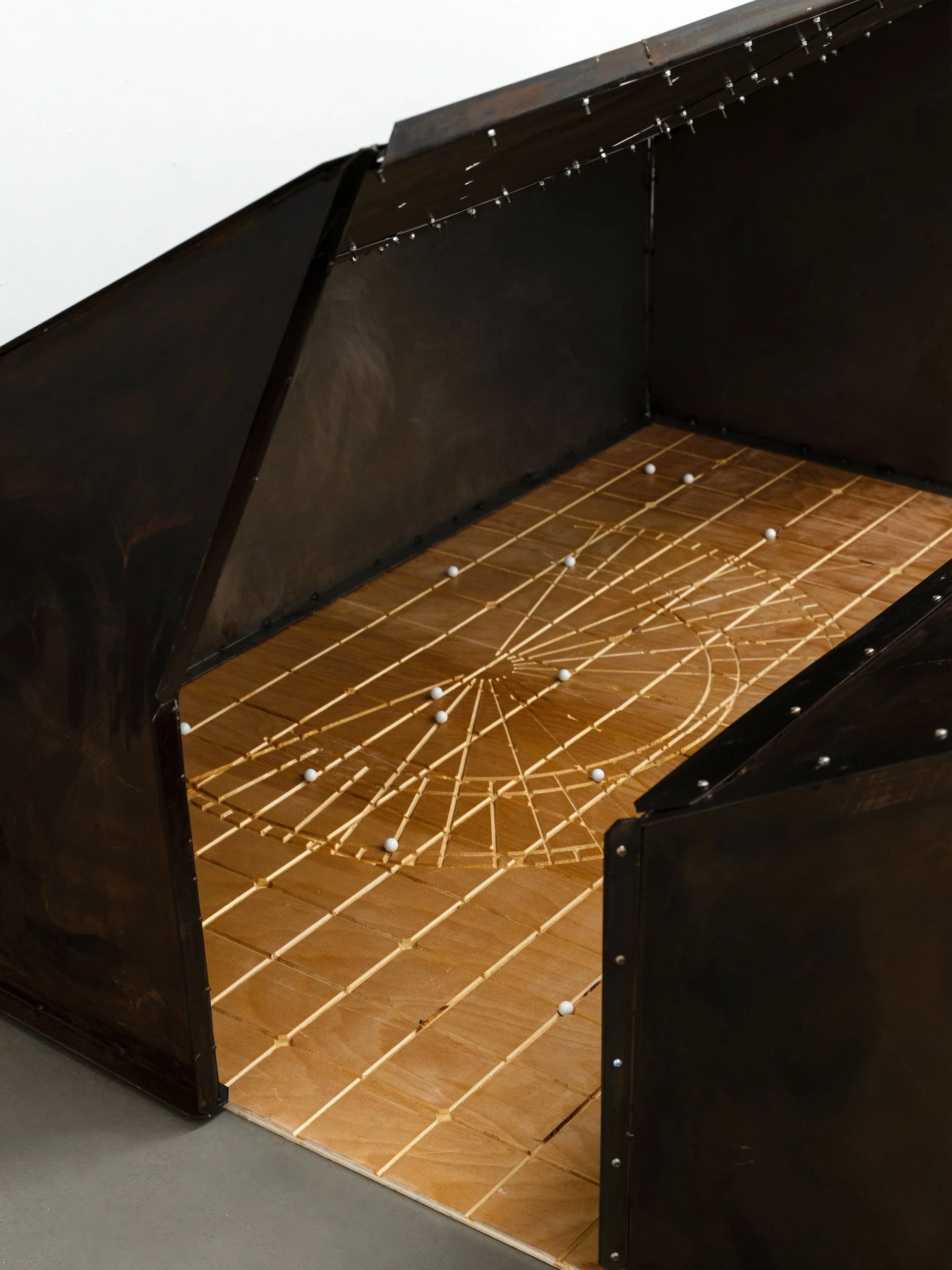
Leah Liu, para//el cell, 2025. Courtesy of the artist and Gallery 456/CAAC. Photo: Zhu Gaocanyue
A quote from the press release reads: Knead clay in order to make a vessel. Adapt the nothing therein to the purpose in hand, and you will have use of the vessel. (Laozi, Tao Te Ching, verse XI). In susurrus 聲聲私, it is not the hollow that makes the vessel useful. It is Liu’s insistence on adapting the nothing therein to a material condition. This “nothing” is then generative. It is porous and attentive. It links viewers’ breath to the breath of her sculptures, held in its chambers and crevices. It is restrained, intimate, and very much alive. The works in susurrus 聲聲私 sit in a state of anticipation. With one shared breath or murmur, they might speak.
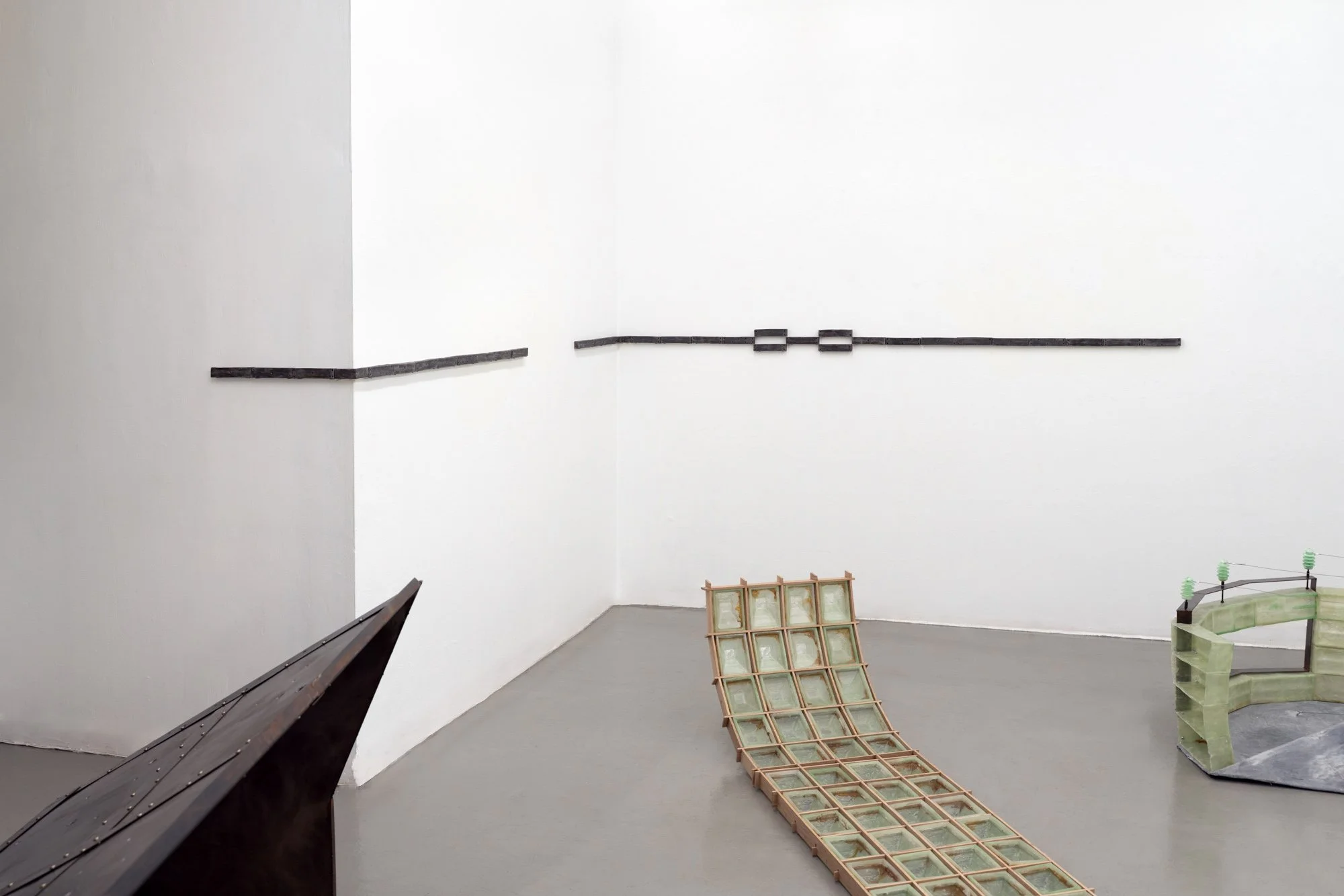
Leah Liu, susurrus, 2026. Courtesy of the artist and Gallery 456/CAAC. Photo: Zhu Gaocanyue
susurrus 聲聲私 is on view at Gallery 456/CAAC from February 12 through 26, 2026.