
.webp)
Wenfei Quan: “Contemporary Hominin” at TaThaTa
Review
The works spread along the walls at YveYANG Gallery examine how objects can be charged with spiritual power and act as a site for the convergence of enchantment and truth, just humanly shy of magic. Curated by Hindley Wang, each work feels almost prescient in its inclusion in this exhibition. Through Talisman, the gallery demonstrates in its tenth year how it’s stuck around: its reinvention in the formula of curation and installation. The talisman, an object rooted in the desire for enchantment, becomes a lingua franca; although shaped by faith and different projections, it proves intrinsic to humans.
Magical, emblematic work hung on chipped wood walls near industrial elements (a large metal window fan, a room-spanning skylight, and older wooden floors) grounds us in our painfully human reality. The hanging placement and various framing create a balance that invites a heavier consideration of the hierarchy of thoughts.
The mediums in Talisman span painting, drawing, sculpture, and embroidery. Organic forms exist within the confines of neat frames and tactile materials such as burlap or metal. Even the ceramics feel unearthed, born rather than manufactured or processed. Rust and wear appear in materials that aren’t metal, hinting at indefinable painting processes. These very palpable surfaces act as physical conduits for the intangible mysticism.
The gallery divides the space phenomenally with its two major rooms. Where the first room is spacier, cleaner, allowing the art to stand on its own, the back room feels more immersive and transporting, yet to a place inside: understandable and common. It is more raw and inviting, albeit uncharacteristic for the New York City gallery space. The atypical rough walls, with unpainted spots and gapped wood, add to the transportation—as viewers, we can suspend our belief of being in a carefully planned spot. We are in our natural curiosity. The wear of the surroundings and the markmaking in the works themselves make the show feel like waxy-colored pencils spilling over onto raw wood, making the works feel alive within the gallery rather than just temporarily exhibited.
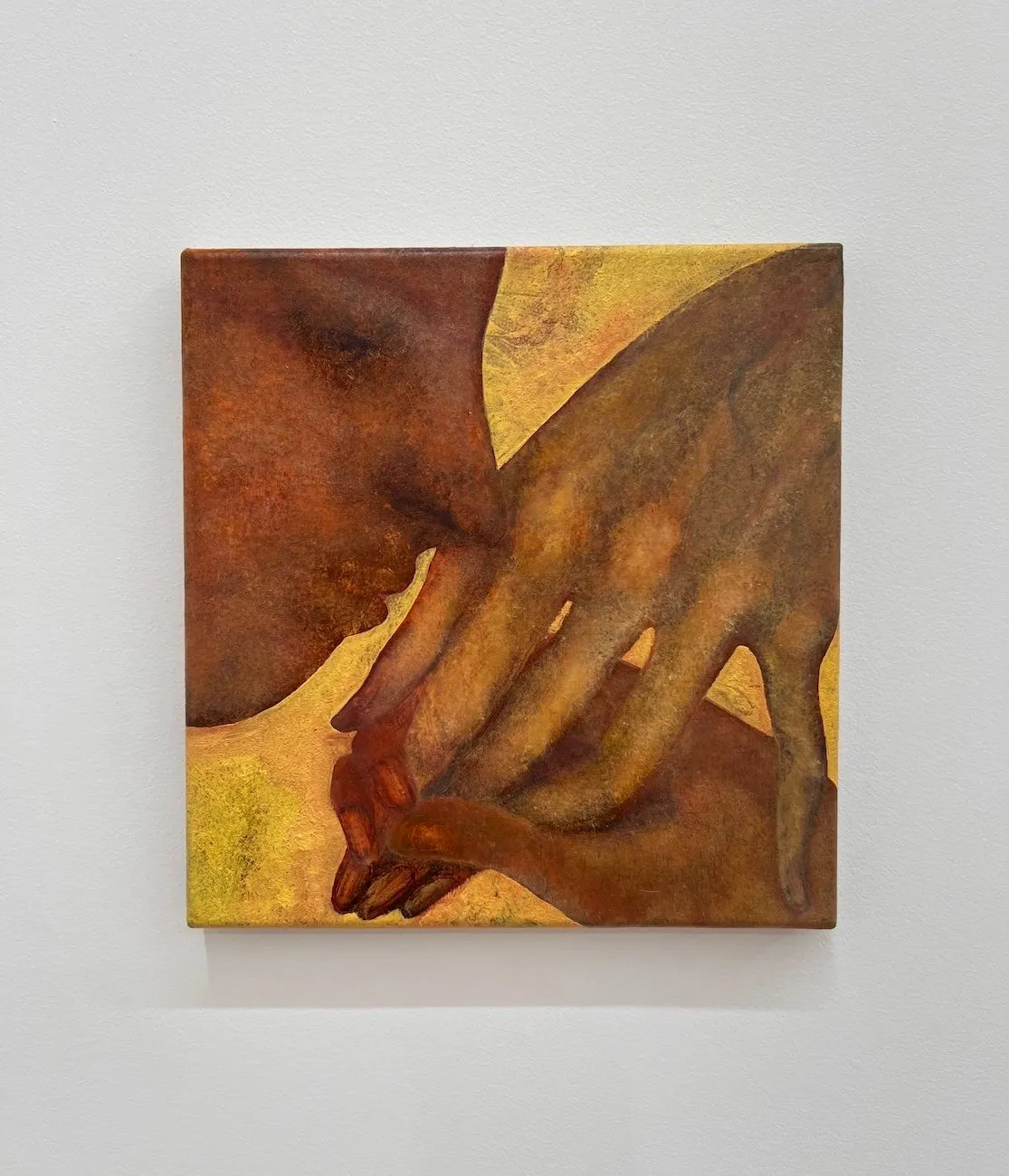
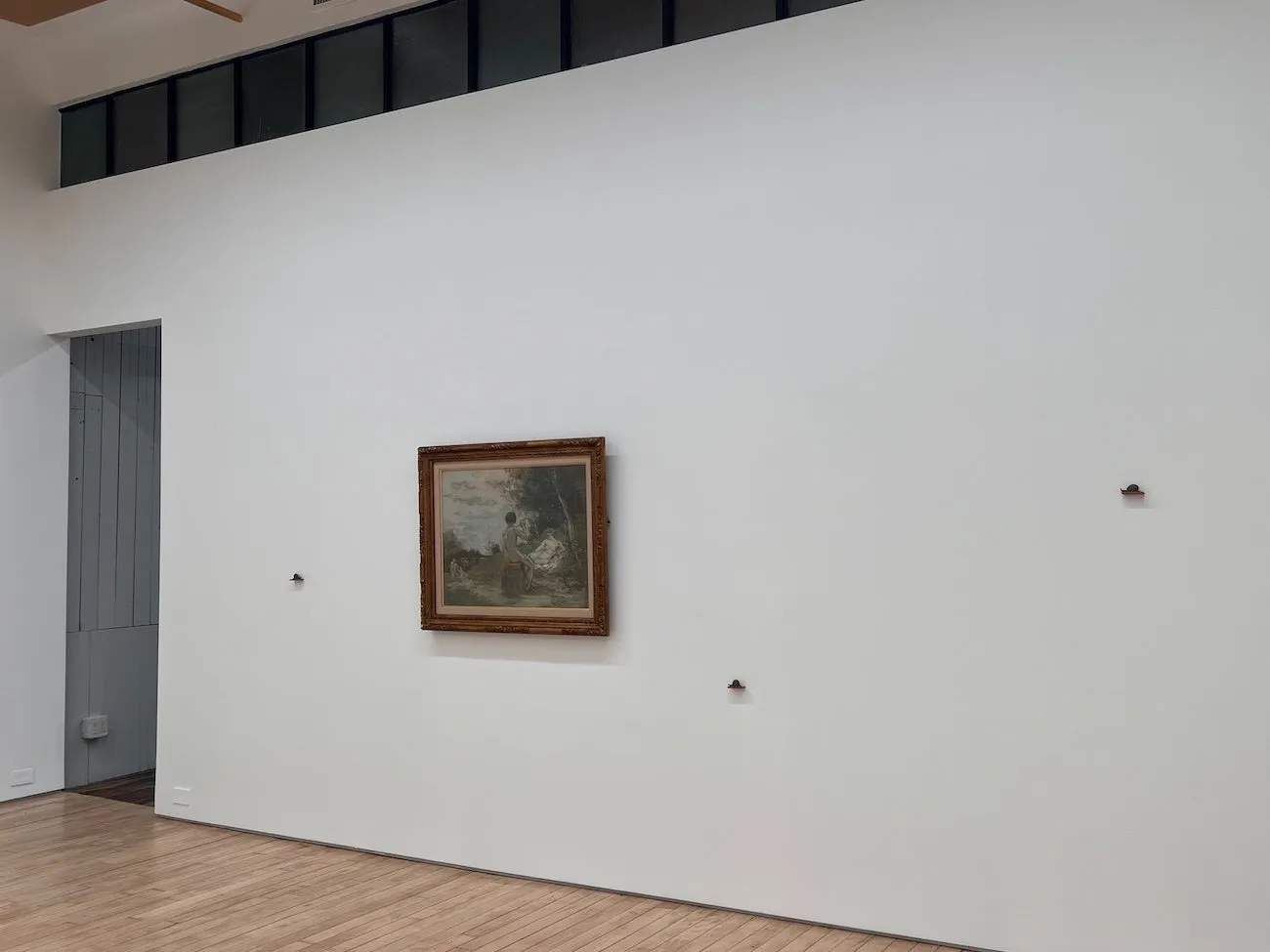
Most notable upon entering is the French Modernist painting Pastorale (c. 1900) by Ker-Xavier Roussel, where a figure within a green field plays a flute for a captivated woman. Already steeped in myth and spiritualism symbolism, Kiki Smith’s bronze snails (Wives and Mistresses [2019]) crawl along the same, otherwise empty wall; perhaps they are gliding to the music. In this context, Roussel’s painting becomes less of an art-historical anchor for the show and more so a living talisman itself, setting a tone for the rest of the exhibition. The works that call the loudest are by Pauline Rintsch; through all the charged pieces, I still found myself looping back to them without quite realizing it at first. With hands being tenderly kissed (Handkuss [2025]) and tousling hair (Untitled (facing the fears) [2025]), these small paintings worship the viewer of the spiritual, striking in their grunge color palettes and unique perspective of the beholder. Between imagery of hands and physical soul throughout the exhibition—cats, expressive figures, bodies—there is a deep call to the tactile in both subject and material. Works like Raphaela Simon’s Rain (2024) have markmaking that becomes unfettered when it echoes into the surrounding worn walls. Overall, the markmaking in works is danced, dappled, and etched across surfaces. Works are thoughtfully grouped by how they call to different talismans.
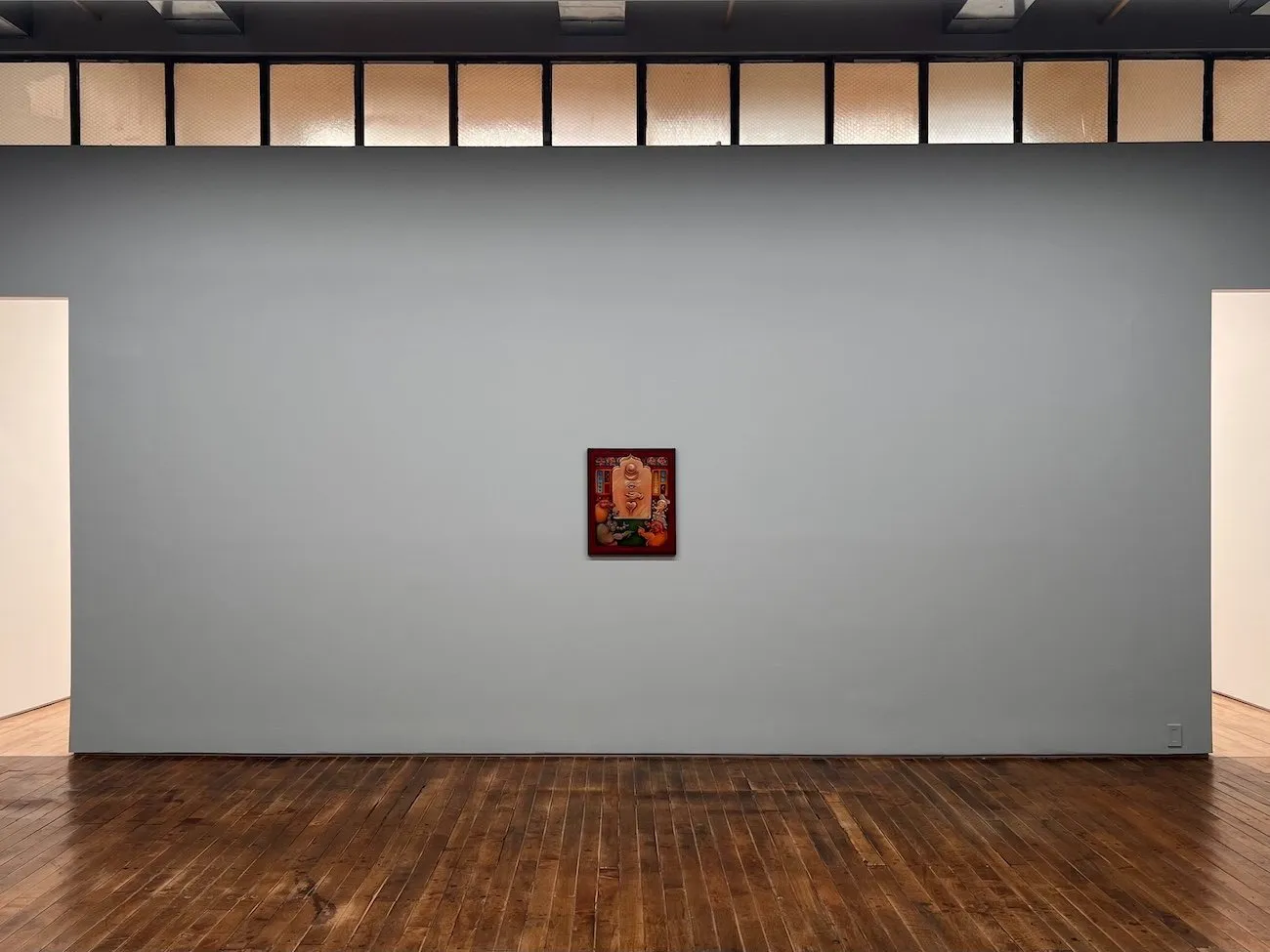
It is always complicated yet undeniably rich when an ambitious theme spans so many artists, and here, it was pulled together with care. There is a singular unresolved tension in the placement of Tibetan Painting (1972) by Martin Wong behind a partition wall separating the two gallery rooms; it feels too heavy a grandeur reveal. While the piece speaks powerfully on its own, its placement suggests a singular truth within a show otherwise filled with multiplicity. It forces a very specific confrontation with belief itself, and where the painting is compelling, it feels too conclusive for an exhibition that thrives on ambiguity rather than arrival. Where other pieces feel singular in their placement, such as Kiki Smith’s Minou (2022) or Anna-Maria Škroba’s my favorite soft contrast (2024), their installations succeed through environmental interaction rather than isolation against a barren white wall. Where it misses a point, it also scores in boldness, exciting themes, and great works. Most curatorial installation placements are exciting and new. And we can’t fault YveYANG for trying something—where it lingers in my mind, it may as well be a win.
There is always a desire for the fantastical as a human: seeking answers and worship even when we can create it ourselves. It doesn't have to be didactic or grand. The more we crave this fantastical answer, the more we see our human fault of age, decay, and fragility. A talisman, an object meant to bring good luck or avert evil, reminds us that hope must be made. In these times, when good fortune seems to evade us, Talisman shows that we are capable of crafting it and recognizing it within ourselves. While this has been true throughout history, it feels especially urgent now. Talisman is a rare experience not to be missed.
Talisman is on view at YveYANG Gallery from January 9 to March 7, 2026.