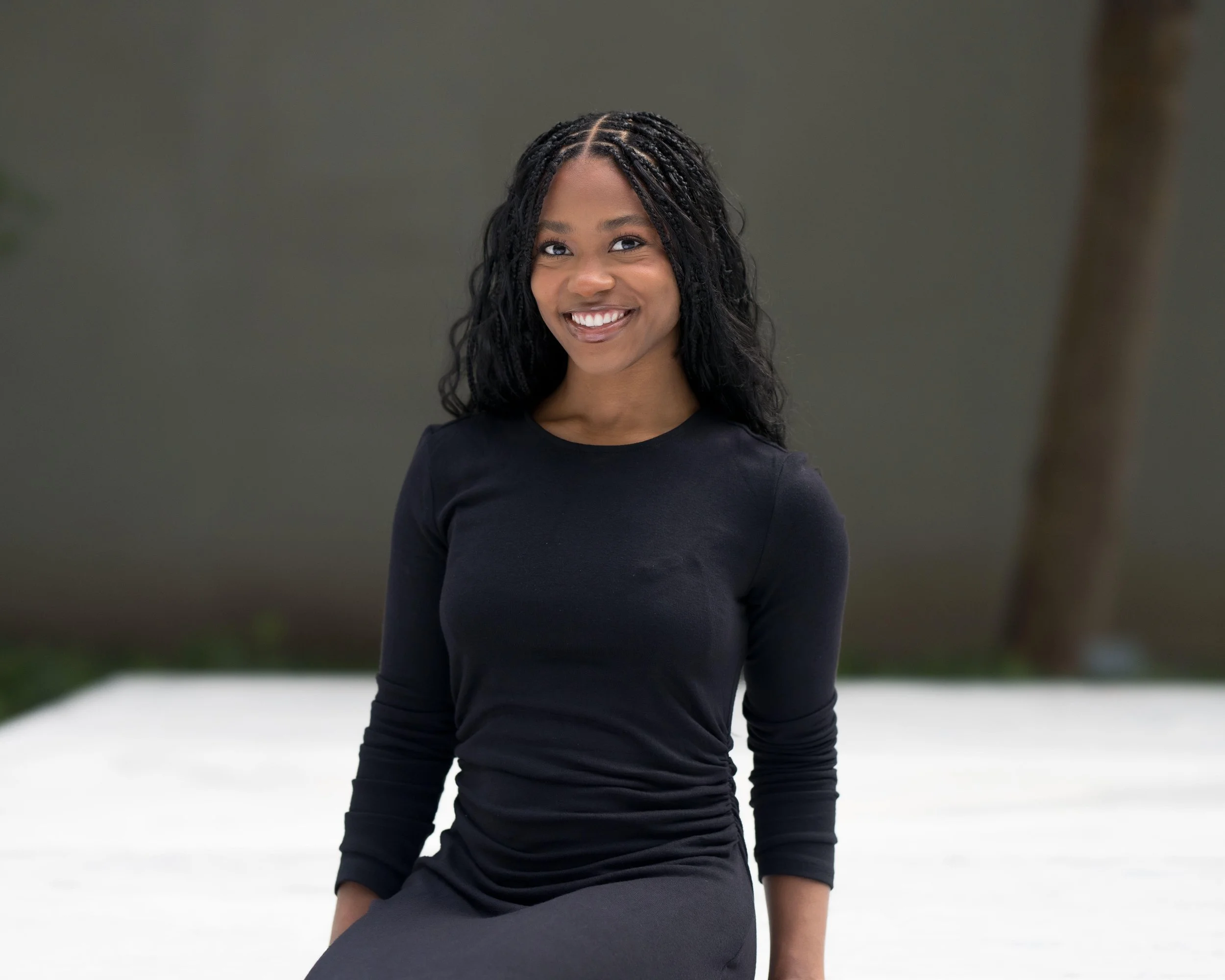
In Conversation with Baldassarre Ruspoli
Artist Baldassarre Ruspoli founded arts space 99Canal in response to the unaffordable expenses of downtown New York, providing affordable studios for working artists and free public programs for local audiences. Ruspoli, born in London and brought up in Florence, graduated from Goldsmiths, University of London, with an MA in Fine Arts and Art History, and lived and worked in Berlin before moving to the United States in 2021. The cutthroat studio rents led him to embark on the new venture that is 99Canal, finding their current space and starting this program in May 2022. He found refuge in New York’s creative scene while facing rejection due to the city’s high expenses—like-minded peers experienced similar struggles, being creatives unable to afford spaces to create in. Ruspoli built a place for them by hand.
The spacious, sixth-floor loft is unafraid to transform. In 2025, 99Canal was emboldened through its flexibility—hosting 13 artists-in-residence and over 20 public programs, including an 18-person exhibition in collaboration with the Rockbund Museum in Shanghai, Under Light of Moon and Sun, and Alexa West’s traveling performance Jawbreaker Part 1 Part 2 co-presented with Pageant, which was included in “Best of 2025” by the New York Times. Emerging with a vibrance, 99Canal is rooted in fluidity, experimentation, and non-hierarchical dialogue, reimagining how constructive movement manifests. Early January, the organization offered fully-funded residencies for the first time in its history. Accepting applications from artists of all disciplines, the 2026 Open Call selects applicants based on artist need and potential impact on the community.

Under Light of Moon and Sun, an exhibition curated by Cici Wu and Karen Wang, Courtesy of 99Canal.
Maya Davis: When you’re traveling, in what ways, if at all, do you think about New York?
Baldassarre Ruspoli: I grew up in a family of travelers. When I was old enough, I began traveling on my own, pushed by the curiosity I developed as a child while listening to my father’s stories about his travels. I moved to New York four years ago, and I found it incredible how each neighbourhood is so characterised by its own culture—whether you’re walking from downtown to uptown, or through Brooklyn, Queens, and the Bronx, it feels like traveling. Just by walking, you’re going through multiple countries without having to take a plane. That, I feel, is the beauty of New York City: its diversity. Coincidentally, one of the first restaurants that I recently went to in New Delhi was a South Indian restaurant of the same chain that I frequent in New York.
MD: Do you attribute your artistic background to being the reason why 99Canal operates the way it does?
BR: I never originally intended to build this program. It developed organically into a space that became necessary for artists working downtown. It began with my own need to find a studio, and in this area, the only way to do that was through collective use—by sharing space with other artists who also needed a place to work. The studios were constructed by collecting art crates and cutting them to fit the specific shapes of the walls I wanted to build. Once the space was fully realized, it began to function like a sculpture in itself, shaped by use.
My work while studying at Goldsmiths was largely rooted in performance, often taking the form of installations that emerged from actions I was doing in the studio. In this way, I eventually started to understand 99Canal as a social sculpture: a space shaped by the relationships, labor, and exchanges that occur within it. I do not consider myself a curator—I am fully an artist who has taken on the role of facilitator, allowing the work to be shaped collectively.

Sophia Giovannitti, Confession Prototype 1, On Having “Alot of Heart”, 2025. Courtesy of 99Canal.
MD: On the topic of community building, how does collaboration influence the operations of 99Canal?
BR: It influences the public program here. I had quite an overview of it, but it really comes out of collaborations. The public program stems from the studio program and the daily conversations we have with artists in residence and visiting curators. These exchanges shape the program, with participants encouraged to take the lead in deciding what and how to present—it takes really trusting their vision. What is distinctive about 99Canal is that it functions as a genuine joint effort: rather than operating under a fixed curriculum, the space prioritizes shared authorship and experimentation. This structure allows artists the freedom to try things out and take risks and collective responsibility. Artists are rarely given complete carte blanche.
MD: What do you believe is the importance of presenting a project that is not fully completed? What does it mean to let audiences into this space in those moments?
BR: I was recently reading the essay “Vito Acconci’s Bad Dream of Domesticity” by Christine Poggi, and it got me thinking about how much of an artist’s work happens in private. Artists often labor in spaces no one else can access, only revealing the results—the “object”—to the public when it’s ready for presentation. Working as an artist can be lonely and exhausting; the artwork is the culmination of a thought process, an intimate piece of the artist’s mind offered to a public that may critique it. Art becomes meaningful when it provides the viewer with insight into a way of thinking, but it cannot serve as a vehicle of understanding if it is presented as a closed, self-contained object.
That’s why our public program feels so vital. They give a glimpse into the “soft tissue” of a developing work, a chance to see artists at work as they move toward a final presentation. Whether it’s a performance, screening, or talk, these moments aren’t just previews—they’re active parts of the creative process. The public’s response can shape what comes next. I saw this clearly with Nile Harris last year: a performance at 99Canal felt like a laboratory version of what later became the piece at the Shed. Seeing both versions side by side made it clear how formative the residency presentation was.
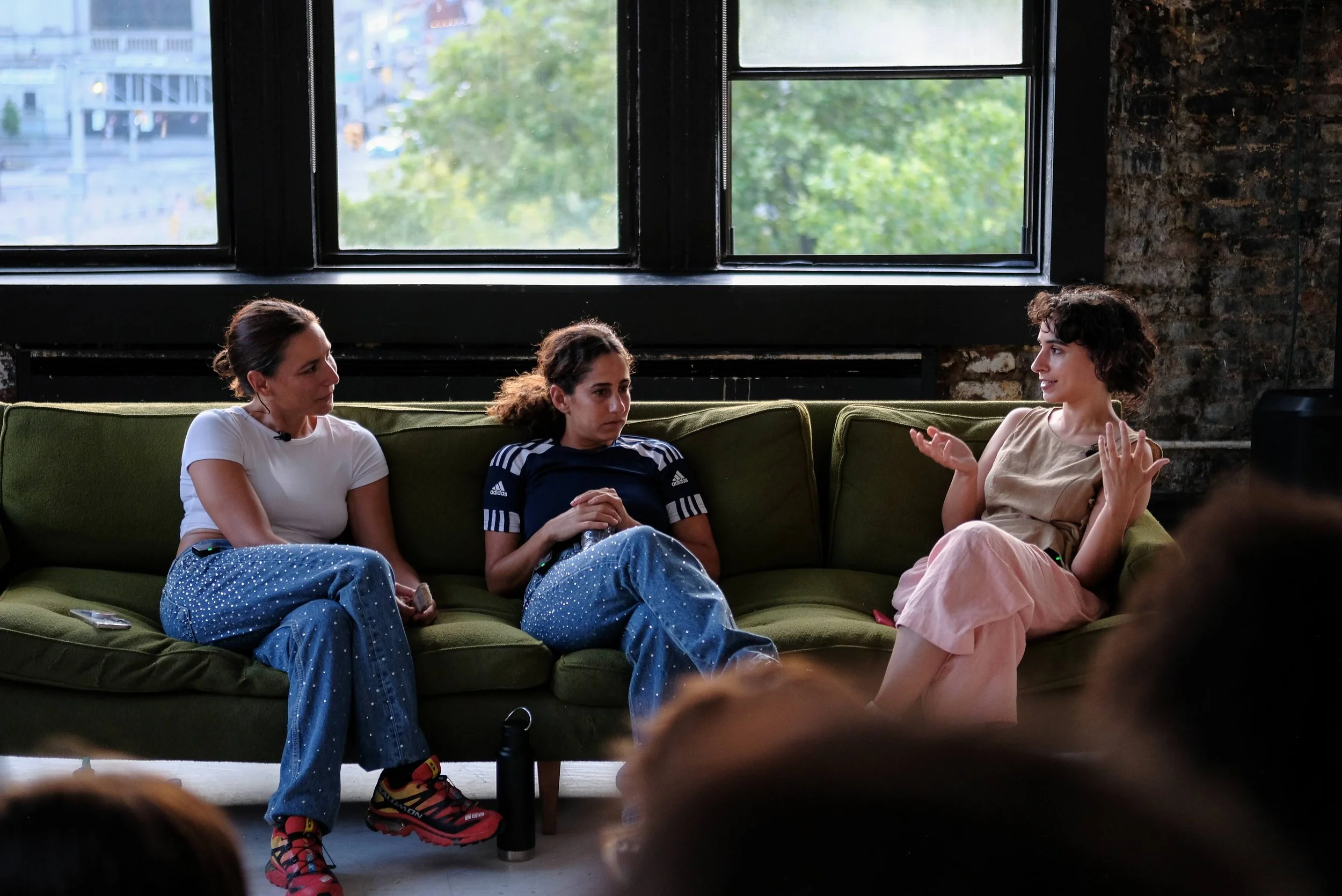
Nasa4Nasa in conversation with May Makki, Courtesy of 99Canal.
MD: What are your aspirations for both 99Canal and the broader New York City arts environment?
BR: I’m someone who doesn’t really think further than a month, and I find value in that, especially in art. It wouldn’t be interesting for me to try to limit a program like this to an idea that already exists. There is a real beauty in not knowing what is going to happen and in taking a program forward day by day. I’ve always wanted 99Canal to work as a mirror, reflecting what is happening in New York. This program has become that and is able to respond to actual necessities, whether it’s an artist needing access to more space or a public presentation that feels particularly relevant. Everything is changing all the time. We need spaces that respond to artists’ necessities, but also to public interest in presentations in the short term. That’s what 99Canal is, and it will remain, I hope.
This interview was edited for clarity and length.
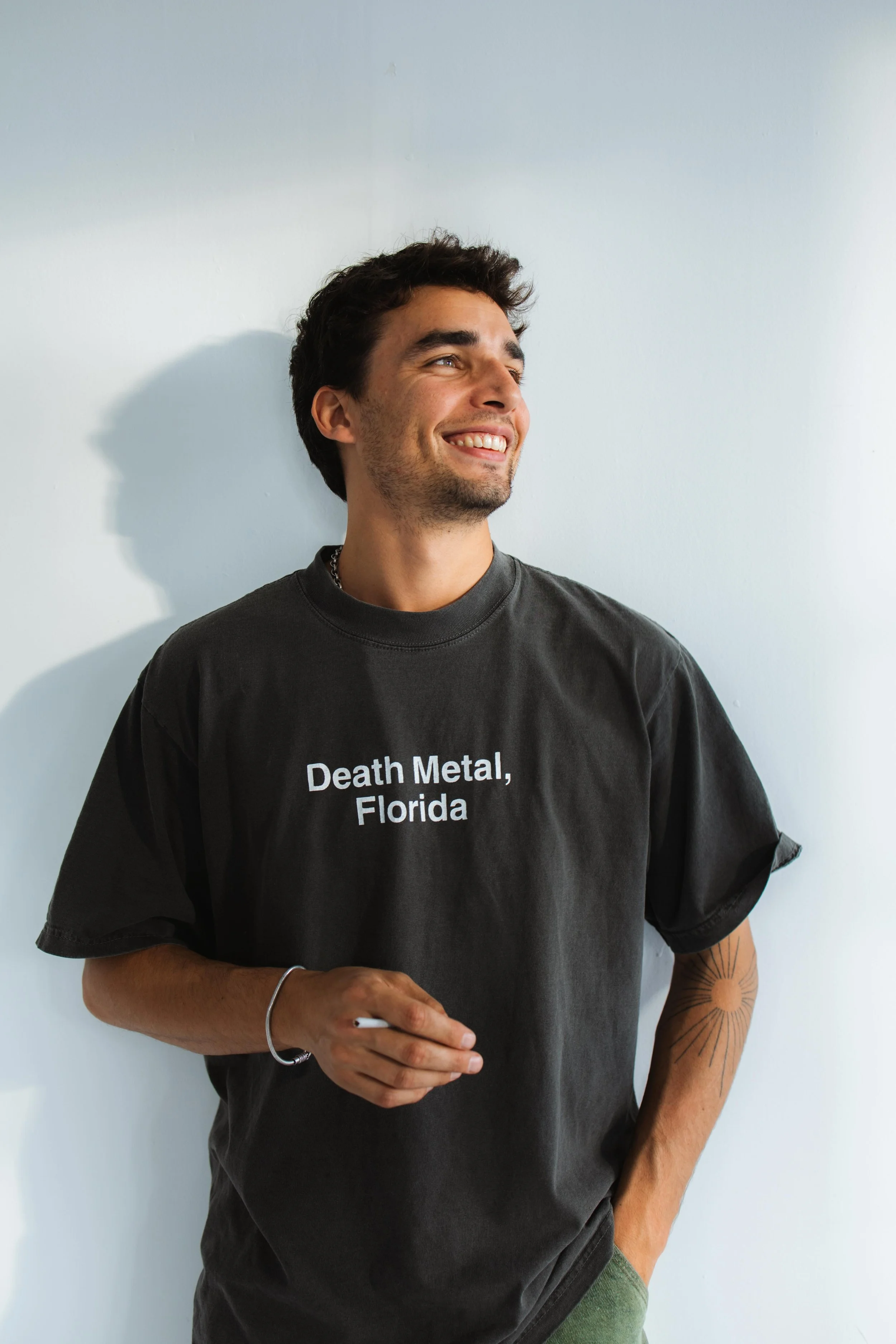
Baldassarre Ruspoli portrayed by Kimiko Singer. Courtesy of 99Canal.