

Jala Wahid: "Ungovernable" at SOPHIE TAPPEINER
Review
Matthias Groebel’s A Nervous System at Ulrik brings together recent machine-assisted photo-based watercolors on canvas made in 2025 with selections from the Chemical series he completed in the 1980s, revealing a practice that has been quietly post-photographic since long before that term entered the critical fold. At the core of this exhibition is a simple proposition that centers the grainy photographic image as a mutable substrate that slows and thickens the operations of vision within the space of painting and taps into the heightened nervous tension of the present moment.
The exhibition’s title offers an apt bodily metaphor to Groebel’s image-making approach, which began decades ago when he first developed a machine that translated television footage and photographic imagery to canvas. These chemically embedded photographs merged with gestural oil brushwork, complicating any clear boundary between latent and manifest image, pushing the canvas toward a site of negotiation between chemicals and indexicality. Groebel has described this approach in terms of “latent painting,” an idea that strongly resonates today. Our present era is characterized by endlessly modifiable images, where latency is no longer confined to darkroom chemistry, and every new image implies another version of itself. By foregrounding the influential structures of pigment and emulsion, Groebel’s work reminds us that the photograph has always been a process rather than a fixed object.
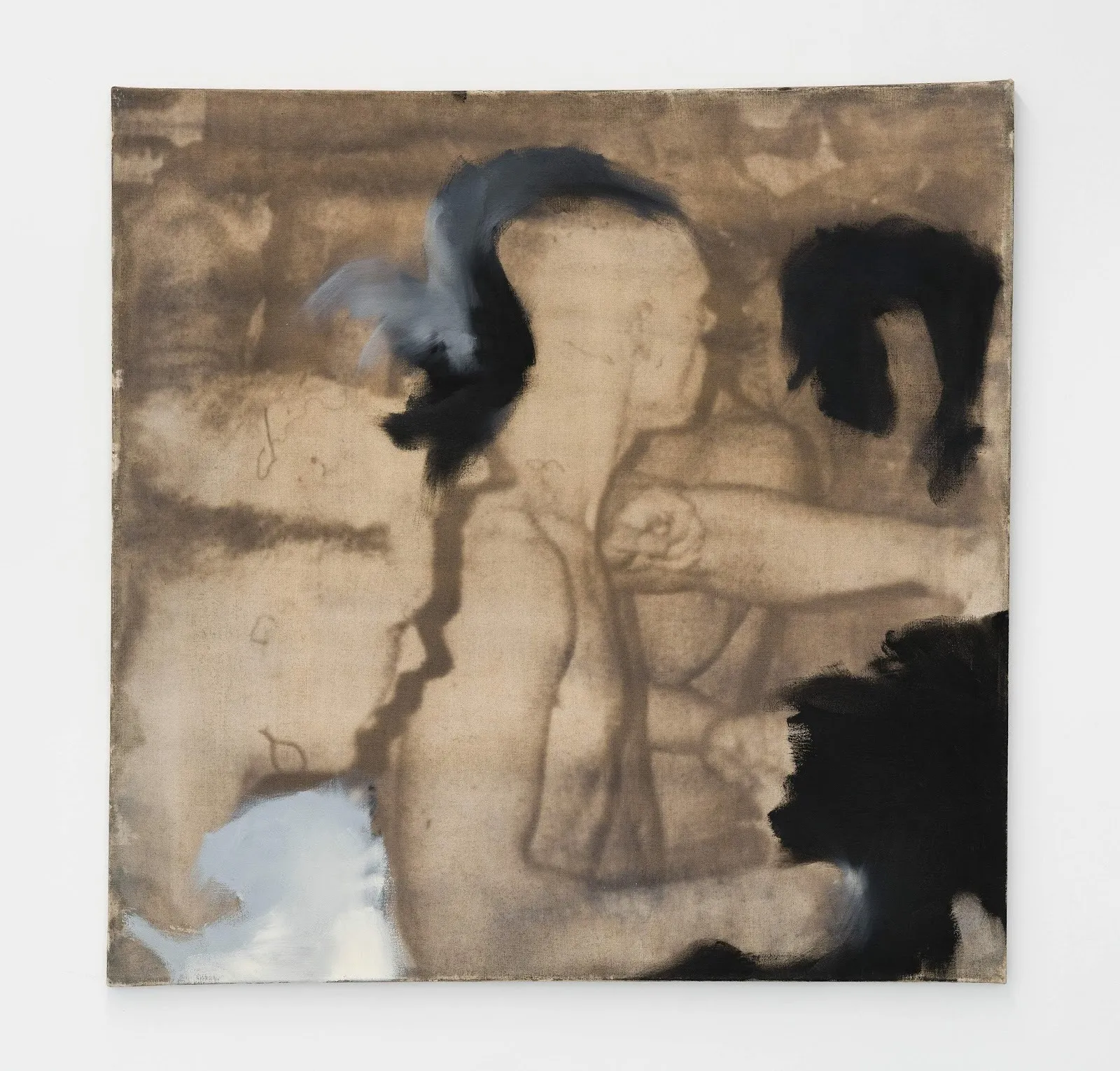
In keeping with this idea, Groebel’s new paintings were produced using a reconstructed version of the custom machine he originally built. Monochrome layers of pigment are individually applied and then partially washed away, leaving behind a delicate composition of color. This layer tricks the eye with the appearance of dissolution, giving the image an appearance of being perpetually on the verge of reassembling itself. When viewed from a distance, the image settles into recognizable photographic form. Yet the documentary content matters less than the condition the images were captured. They include images taken in Chinatown with a spy camera; a close-up of a figure outside Cologne Cathedral dressed as a priest during a religious procession; and scenes shot outside the Anatomical Institute of Cologne University with a retrofitted analog camera transformed into a pinhole camera. With its nearly infinite depth of field, this simple image device reorients pictorial clarity, meaning objects at different distances from the camera can all appear uniformly legible as long as they do not move. This echoes Renaissance painting’s use of linear perspective to create the illusion of three-dimensional space where everything in the scene, from foreground to background, could be clearly apprehended within one coherent spatial system.
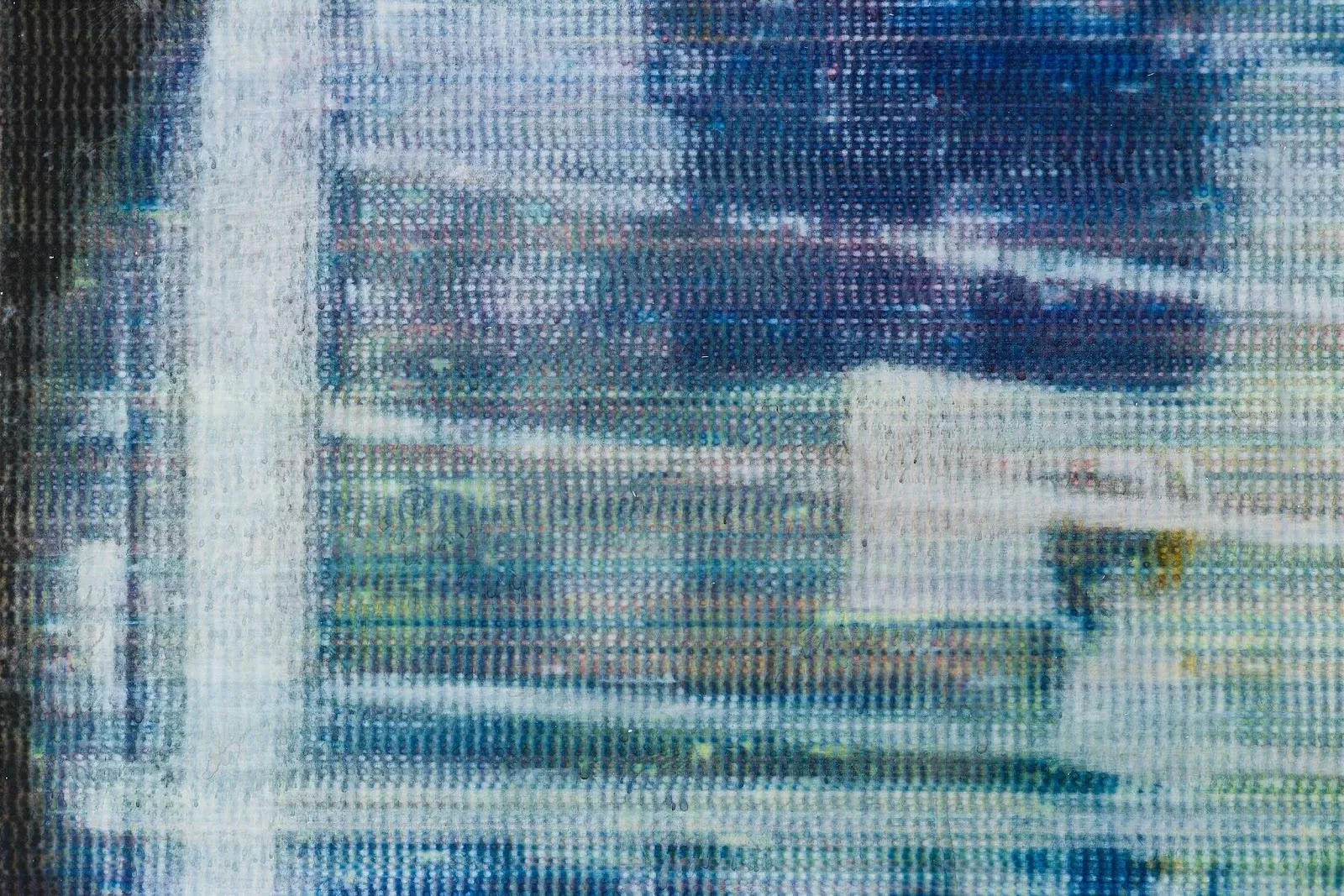
A Nervous System is rife with references and techniques that stretch from Renaissance spatial construction to early photographic experimentation to contemporary image-making systems, yet the exhibition never feels nostalgic or didactic. Instead, it reads as a sustained inquiry into remediation, the way images are continually translated from one medium into another, collecting noise and losing fidelity even as they gain new forms of presence. The grainy photographic image, once a guarantee of authenticity, here becomes a field of painterly possibility, at times indicated by a conspicuous smudge of paint. While early photography sought to index reality, Groebel’s project accepts the unstable image as a given, and with that, it is also attuned to the visual logic of surveillance. With the source images originating in devices associated with covert looking, these already compromised images are further processed through painterly translation toward an elevated status of the operational image. In this way, they reveal the nervous tension inherent in systems of observation, where both the subject and the system of looking are exposed and obscured. The exhibition thus reimagines photography as a sensorium of watchfulness, where an awareness of looking produces anxiety, latency, and the sense of being held within an unseen network of attention and capture.
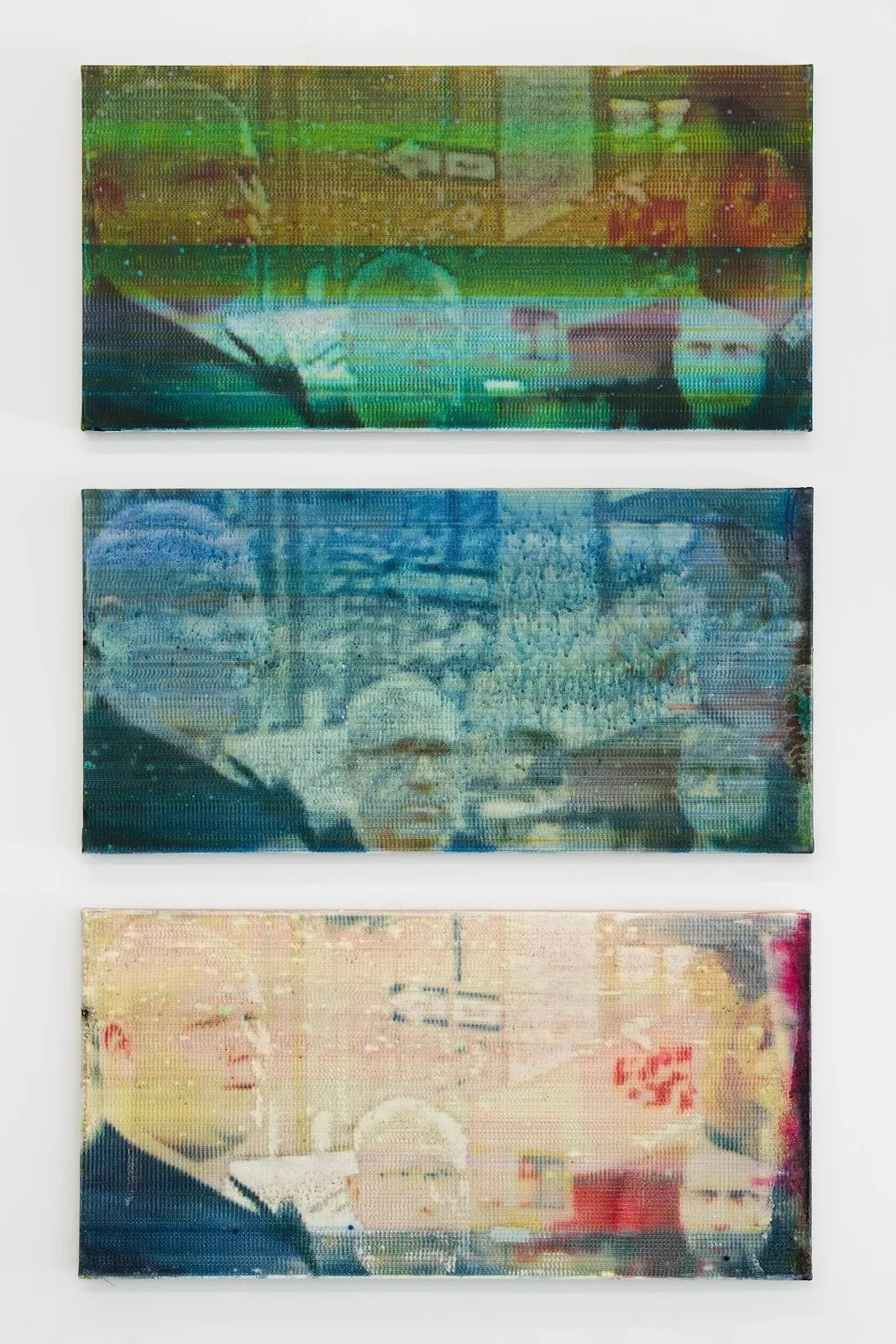
In bringing together works separated by decades, including a one-time screening of his video work, Groebel underscores the continuity of his concerns. The premise of the work is the same, but the mechanics and context of images have changed. Today, when digital images proliferate at a dizzying speed and machine vision reshapes perception, Groebel’s analog and mechanical experiments appear prescient. They insist that every image carries within it a history of mediation, and with that, the grain of a photographic image is evidence of an increasingly unfamiliar process. Through chemical emulsions, pinhole exposures, and machine-assisted watercolors, photography is staged as an ongoing transformation into painting, calling attention to processes and alluding to operational systems that collect, measure, and translate. Ultimately, A Nervous System proposes that the photographic image survives precisely through such mutations, resulting in a body of work that acknowledges this shift and the creation of an image-field aware of its own constructions of vision.
Matthias Groebel: A Nervous System is on view at Ulrik Gallery from January 31 to March 7, 2026.