
.webp)

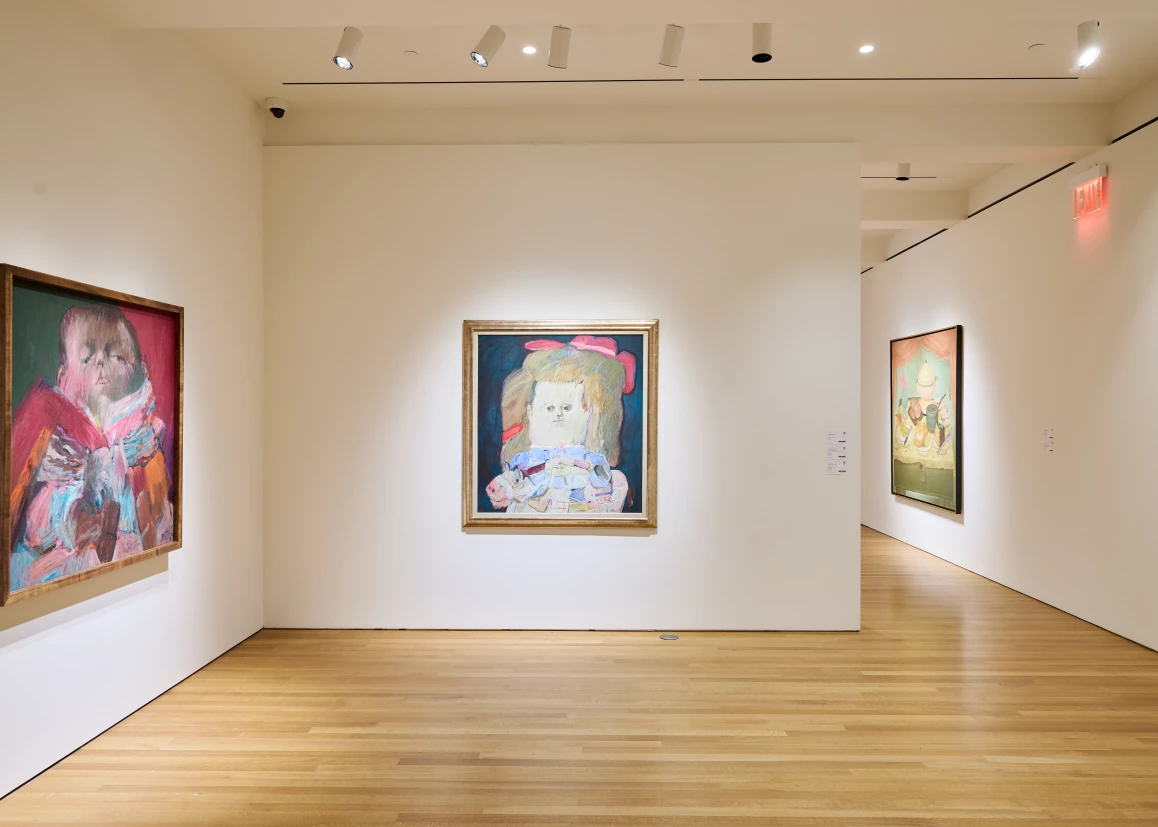
"Botero in New York" at Sotheby’s
Review
15. September 2025
I arrive in Dessau, Germany, at 17:00, three suitcases and one backpack in hand, after two flights and four trains. This city, a long way from LA, will be my home for the next ten months.
I am excited to see what Dessau will hold for me, but for now, just rest.
16. September 2025
The next day, I go on a run to stave off my jetlag and orient myself to my new surroundings. Four kilometers in, chest cramping and legs already aching, I stumble upon a prize of modernity: Walter Gropius’s Bauhaus Dessau building, constructed in 1925 to house the experimental art school of the Weimar Republic.
During its brief existence between the two World Wars, the Bauhaus became widely known as a hub of technological exploration in the arts. The school has garnered a compelling reputation in the Western modernist canon for its host of internationally-regarded teachers, including Anni Albers, Wassily Kandinsky, and Paul Klee; industrial design workshops that produced a plethora of futuristic household objects; self-promotional publications and advertisements enacting new photo-typographic principles; and more.
These varying strains of research and practice generated a utopian atmosphere at the Bauhaus. While its practitioners expressed widely varying formal concerns, political beliefs, and aesthetic principles, they were aligned in pursuit of a unification of all artistic mediums, as outlined in Gropius’s 1919 Bauhaus manifesto, Program of the Staatliche Bauhaus in Weimar.
I pause my run to wander the building’s perimeter, my fatigue overshadowed by curiosity. The building has endured several complicated histories: seizure by National Socialists and conversion into a women’s labor school; heavy bombing by the Allied Powers; and communist rule in a partitioned, Cold War Germany. Today, exactly 100 years later, the Bauhaus Dessau that stands before me is a research foundation and museum, as well as the spitting image of avant-garde European aesthetics.
Freshly energized, I pick up with my run and head home.
18. September 2025
Seated in the bistro of the Bauhaus Dessau building, I meet with Oliver Klimpel, the foundation’s Head Curator, to discuss the upcoming year at the institution. After a pleasant conversation, he walks me through the building and its current exhibitions.
The tour starts in the theater, which can either be divided into multiple rooms or opened up into a single, sprawling expanse. Like its theater, the Bauhaus Dessau as a whole is characterized by spatial and programmatic flexibility. Workshop spaces have become galleries, dormitories have become a hotel, and so on. The testing grounds of western modernity have turned into a site where its underlying principles are expanded, questioned, and challenged.
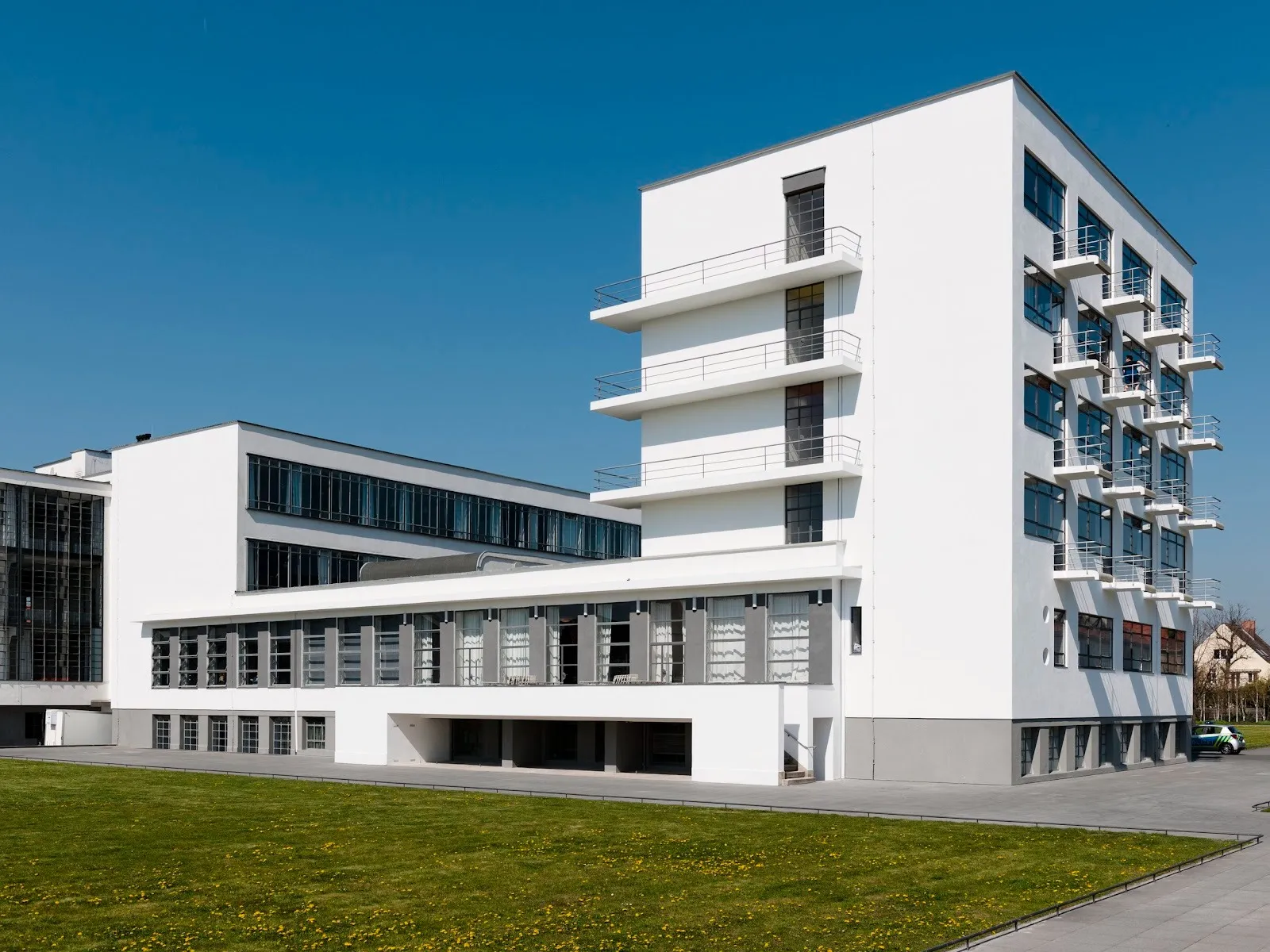
There is a certain stereotypical image of the historical Bauhaus—an austere school of arts and crafts, the epicenter of functional design and industrial style—which Gropius’s building and its contemporary foundation destabilize. I am drawn to the vibrant pops of color scattered throughout the architecture, to the eclectic geometry of its light fixtures, and the trickling of light through its glass façade. Despite its derivation from factory architecture, Gropius’s building is playfully expressive, as Klimpel himself mentions, clearing space for fun within functionalism.
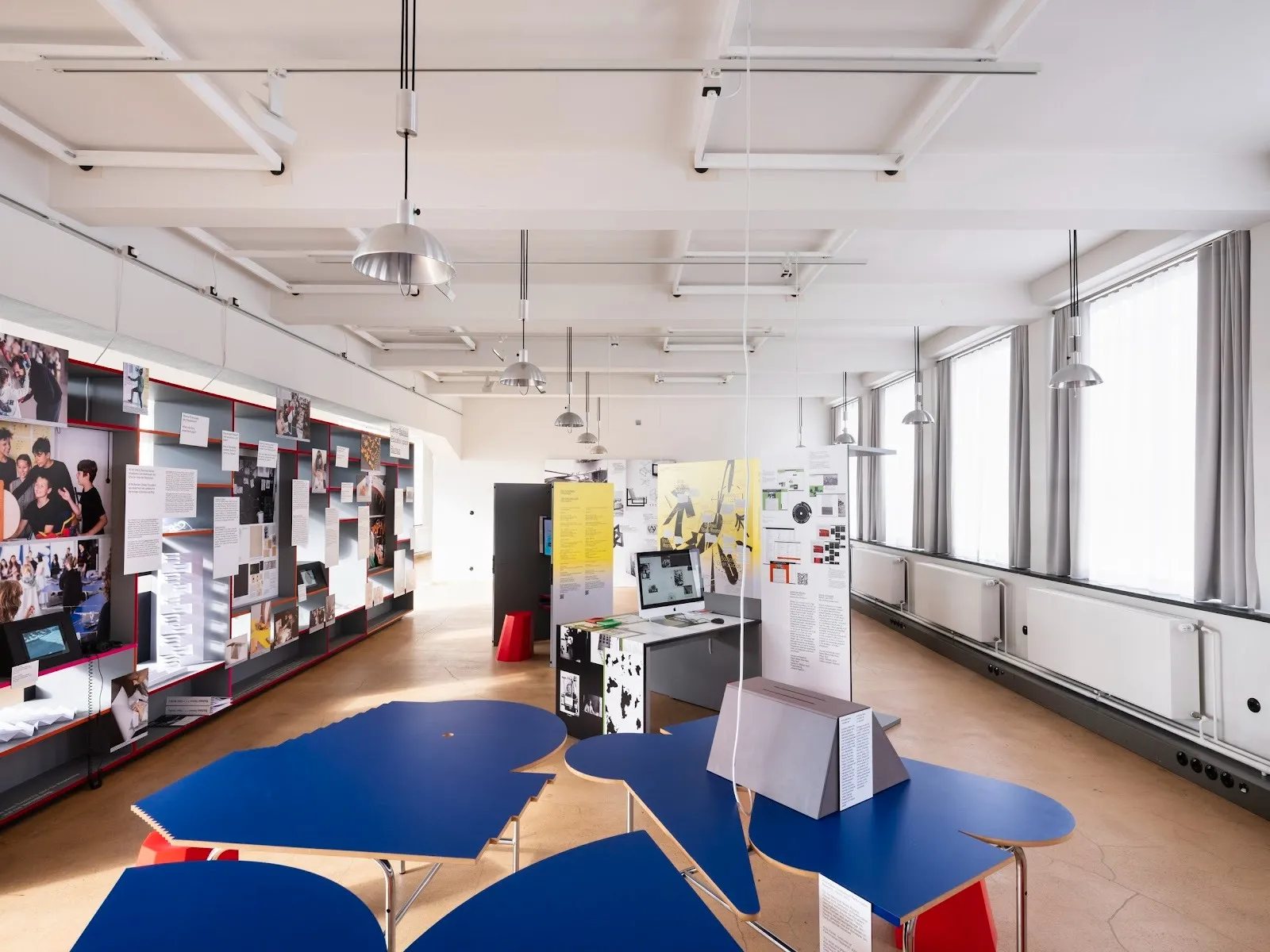
In one exhibition space, titled Lernort Bauhaus (Education Space Bauhaus), the historical Bauhaus pedagogy is characterized as “unlearning.” In the aftermath of World War I, Bauhaus teachers founded entirely new educational practices, rejecting the stale doctrines of European arts academies in favor of a more sensory, tactile approach to artmaking rooted in craft workshops.
Perhaps the time has come to once again unlearn. The historical Bauhaus did not enact any single way to make artwork or to design, yet the school has inherited a monolithic legacy of rationality, faith in industry, and hyper-accelerationism. While these sentiments were certainly prevalent at the school, the notion that the Bauhaus embodied a singular orientation to technology is as much a construct as Gropius’s building.
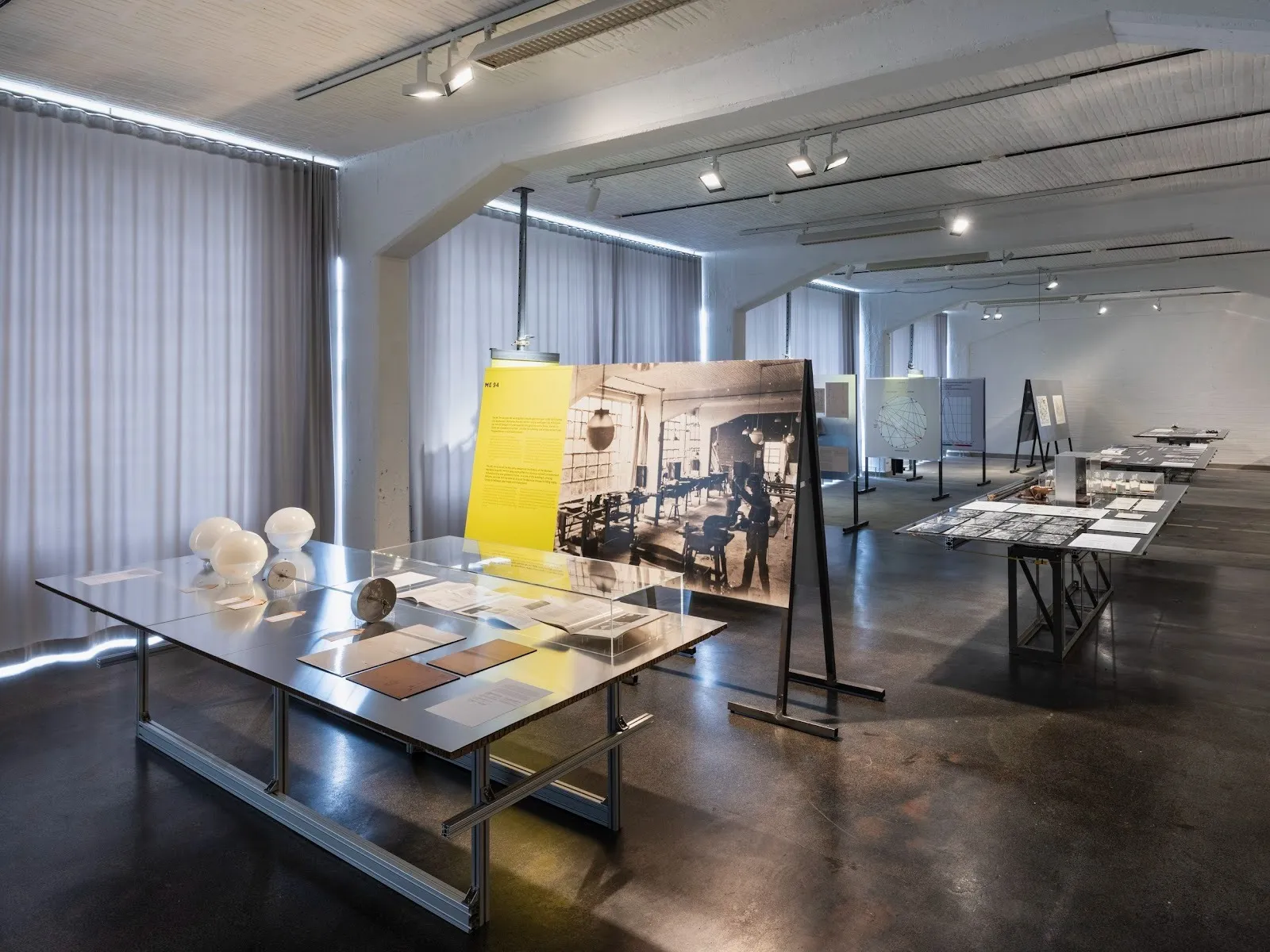
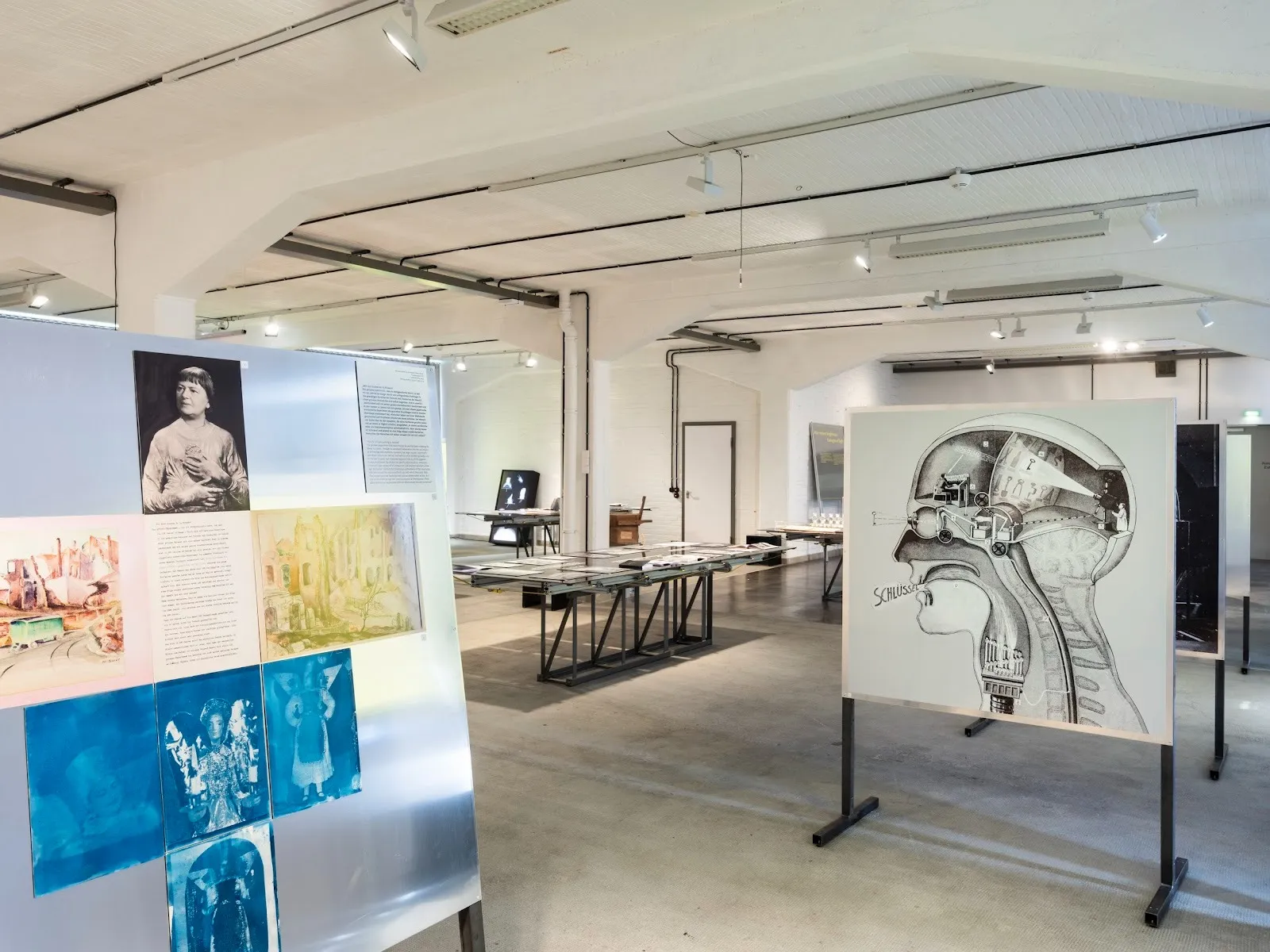
Many Bauhaus practitioners themselves expressed concern about the social and ecological ramifications of industrial capitalism, even while embracing mass production and mechanical aesthetics. The exhibition After Modern Brightness: Ecologies of Light, open through March 2026, exemplifies this fact.
The show explores the development of modern electricity infrastructure through the work of Marianne Brandt, a student and teacher of the historical Bauhaus known for creating its lamps. Despite her role in designing mass-produced objects, Brandt expressed concerns regarding industrialization, as articulated in a manuscript included in the exhibition:
“How far are you pushing it, Human?
The greatest experiment that world history knows has been underway for about 150 years. Through its successful penetration into the vast realms of technology and chemistry, humanity has begun a great experiment with itself. Only in our century, and with its entire shattering clarity only in the last 10 years, has it become apparent how much this gigantic human experiment has shaken the very foundations of our existence. Historians have spoken of a turning point and prophets proclaim a new age. But today’s humans find themselves at the mercy of the very forces that their ancestors summoned forth and with which they work daily. They accept personal hardships and natural catastrophes as fate. But how much of this is truly fate, and how much is a consequence of this subversive human experiment with our environment and with ourselves?”
There is evidently much more nuance to the historical Bauhaus than the flattened mythology imposed onto it. Counterbalancing some Bauhaus practitioners’ embrace of rationalization and technological progress is a skeptical outlook by others regarding the social consequences of mechanization. Overall, the school’s members were acutely aware of the culture they helped engineer, including both its generative and destructive forces.
Today, the Bauhaus Dessau Foundation expands the historical Bauhaus’s legacy by attuning it to the 21st century and directly confronting its destructive forces. Sustainability has become a guiding ethos for design and curation in the face of ongoing environmental collapse, as reflected in the foundation’s recent conference, “Learning Environments.” At the Gropius building, for instance, many exhibitions are constructed out of elements from previous shows and fixtures.
In After Modern Brightness, for instance, old solar panels become tables on which exhibited objects are shown. The show’s material foundation becomes the unseen sources from which we extract our energy, as well as the waste left behind by such extraction. This curatorial choice both mobilizes ecologically-conscious design and makes the exhibition’s guiding themes tangible.
A similar choice is made in the Lernort. As one wall text in the space notes: “In an unusual arrangement, furniture from previous exhibitions takes on a new life. Tables and benches are tilted, turned, stacked, fitted with colourful velcro-tape. This results in new possibilities of use and presentation, allowing sustainable long-term reuse.”
This statement reflects the Bauhaus Dessau Foundation’s broader relationship to the past. Odds and ends from the building’s complicated, century-long history, spanning artistic exploration and historical violence, are tilted, turned, and ultimately organized into something completely new. Through strategic, critical upcycling, what is modern becomes once again contemporary.
Bauhaus Dessau celebrates its 100th anniversary on December 4, 2025.