



.webp)

"The Scout" (2025) dir. Paula Andrea Gonzalez-Nasser
Review
Nothing is more fun than a misanthrope. That is one claim largely forgotten, low-budget filmmaker Paul Bartel seems to make with his 1989 sex comedy, Scenes from the Class Struggle in Beverly Hills, screening this month at Anthology Film Archives. The film has fun with the pain of the rich; the film has fun with the pain of the poor. But what is the purpose of all this fun? Bartel, most known for Eating Raoul (1982), seems to be asking this question of all comedies, especially those concerned with class and social climbing. What is the point of the joke?
In Scenes from the Class Struggle, the main joke arises from a bet. Two friends and attendants of neighboring affluent households, Juan (Robert Beltran) and Frank (Ray Sharkey), decide to try to bed each other’s employer. If Juan has sex with Frank’s boss, Lisabeth, he’ll get $5,000. If Frank is the first to succeed with Juan’s boss, Clare, he’ll earn sex with Juan. Other sexual antics follow from there, carried out by some of the film industry’s most reliable comedic actors of the time: Wallace Shawn, Jacqueline Bisset, Ed Begley Jr., Bartel himself, and Bartel’s muse and frequent collaborator, Mary Woronov. Overall, the film gets great mileage out of portraying sex as a tool used to successfully transcend class lines. Yet sex always feels secondary to Bartel’s and screenwriter Bruce Wagner’s main interest: language.
Upon its premiere, famed critic Roger Ebert pilloried the film for its dialogue. All of the speech, he said, sounded the same: “ . . . one-liners and bitchy insults, assigned almost at random to the movie’s characters.”[1] Ebert’s impression is fair: every character, rich or poor, speaks with a similar cockiness and spite for those around them. With everyone tossing out great one-liners, all the characters sound nearly identical, with only their confidence levels varying here and there. However, this is not a weakness of the film—rather, this is one of its most intriguing and political qualities, which should earn Scenes from the Class Struggle a greater cultural relevance than it currently holds.
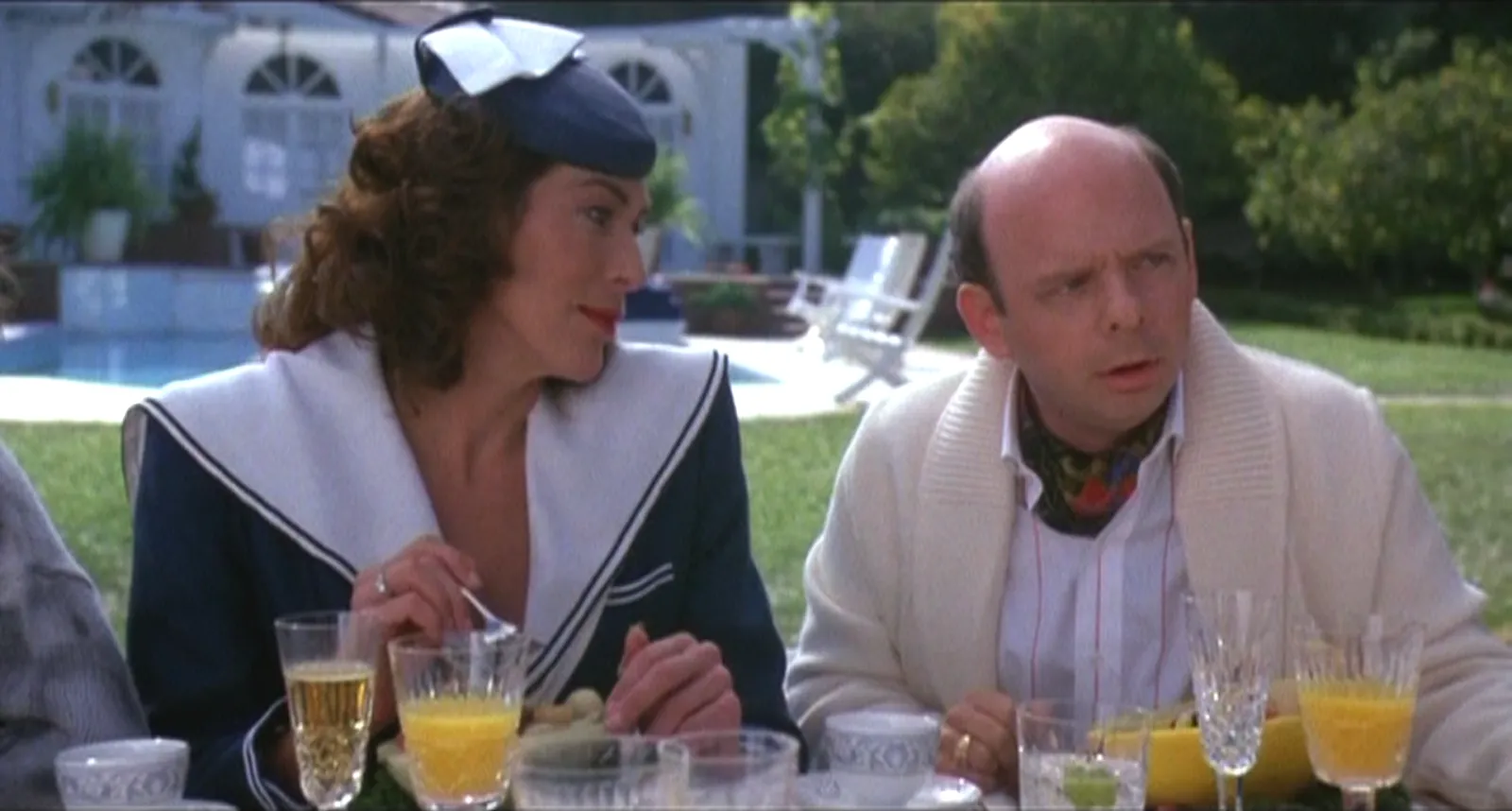
The film is filled with memorable one-liners. “The ocelot must kill every day to live!” “To these rich bitches, life is just one big situation comedy.” But these lines are never delivered with the fabulous, uninhibited bravado of those that give life and longevity to camp classics like Death Becomes Her or Pink Flamingos or Dark Habits. Instead, these one-liners come across as aspirational. When reciting them, each character seems to be saying, “This is something somebody important would say, right?” Or, “Do I sound sufficiently rich and powerful yet? Do I?” This is true of both the high and low status characters, of both the men and women. They are all desperately searching for the thing to say that could save them from their disappointing lives.
Scenes from the Class Struggle uses its one-liners in a radically unconventional way. Like sex, these jokes become a tool for evading class categories. If you talk like a rich person, perhaps you really are a rich person or can become one. Yet these bon mots, as Ebert hinted, also mask character differences. Everyone, with their near-identical dialogue, begins to meld together into an undifferentiated ensemble, allowing for the film to make its misanthropic political statement. The rich and poor are not so different: they are all desperate; they are all boring; and they all sound the same.
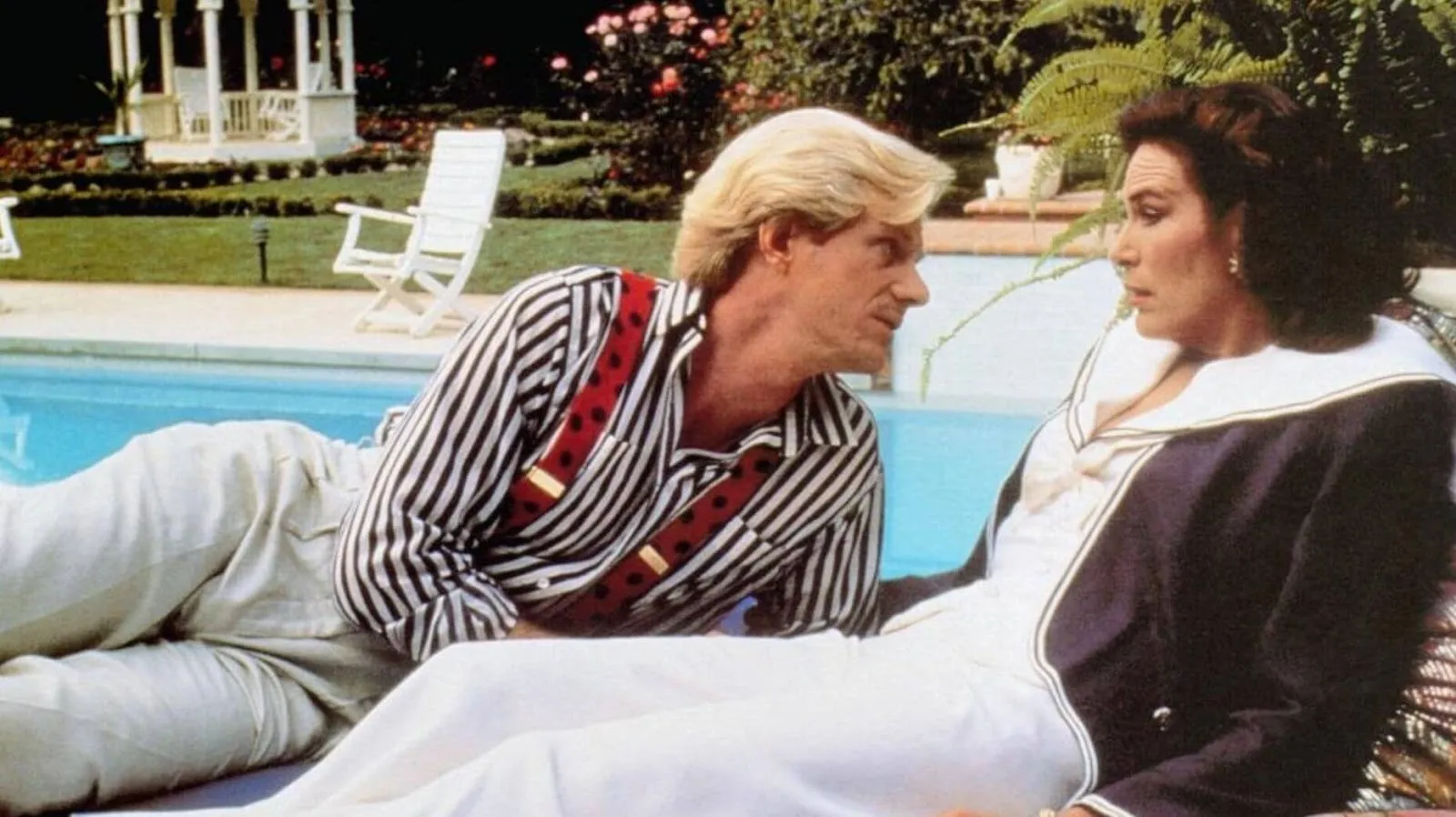
As if to add to the general misanthropy, the most beautiful sight in Scenes from the Class Struggle is the billowy, blood-red fabric that shrouds Lisabeth’s house while it is being exterminated. Are we meant to think of these characters like little bugs, crawling around, infesting everywhere they go? Bartel is never quite so cruel to his characters as to overtly suggest that. Yet it does sound like something they might all suggest.
Scenes from the Class Struggle in Beverly Hills, like many of Bartel’s films, is silly, electric, and watchable. Yet perhaps what stopped it from enjoying a larger cultural footprint is a lingering oddness about those one-liners. They do not quite invite the audience to endlessly repeat them to their friends like those in more quotable comedies—they are delivered with too much insecurity and desperation for that. Nevertheless, these malevolent zingers lift the film into something that deserves to be remembered, creating politically homogenous dialogue that purposefully strips its characters of their individuality and their class.
Scenes from the Class Struggle in Beverly Hills is playing at Anthology Film Archives in New York City on December 14, 20, and 21.
[1] Roger Ebert, “Scenes from the Class Struggle in Beverly Hills,” (Rogerebert.com, 1989), originally published in the Chicago Sun-Times.







%2C%20dir%20(2).%20Brydie%20O%E2%80%99Connor%20-%201.jpeg)