

.webp)
Marc Kokopeli: “M.Kokopeli CURSED/01” at Gladstone
Review
Maintaining a career as a full-time artist in New York City can feel like a fantasy, yet Brooklyn-based painter Ari Brochin has achieved this feat by intentionally avoiding the rat race of gallery representation in favor of cultivating an online presence and fostering a loyal digital community. With a distinct artistic style, Brochin engages accessible themes and imagery in her practice that create not only visually engaging works but also instantly communicate a sense of intimacy in shared fandom and mutual understanding with her audience. Through her art and meticulous content creation, Brochin demonstrates deep care for her followers, continuously experimenting with inventive ways to transcend preconceived notions of what it means to be an artist and an influencer.
This winter, Brochin took her work offline in her debut solo exhibition, Welcome Home, where she displayed a series of new paintings, released a collection of handmade keychains, and invited her many fans into an immersive multimedia installation. In our conversation, I learned about Brochin’s decision to forego the tired traditions of the fine art world and the highs and lows of becoming an independent artist through leveraging social media.
Eden Chinn: Can you describe the moment or period when your current practice began to take shape? What were you responding to at that time?
Ari Brochin: Right after college, I decided to pursue being an artist. I knew if I got stuck in a corporate job, I’d get comfortable and never leave. About five years ago, I dove right into social media. At that point, I was just throwing anything at the wall to see what stuck. Then, in early 2025, I finally started seeing the benefits of all the work I’d done on social media over the years. I also realized that my audience likes to be involved, so I prioritized that.
For example, I had this pencil painting I wanted to put a tattoo on, so I’d crowdsource ideas in my comments, and people loved the chance to feel creative in that sense without really lifting a finger; they could give me an idea, then I would execute it. That really helped my social media following once people felt they were fully involved in my process, which I also had a lot of fun with.
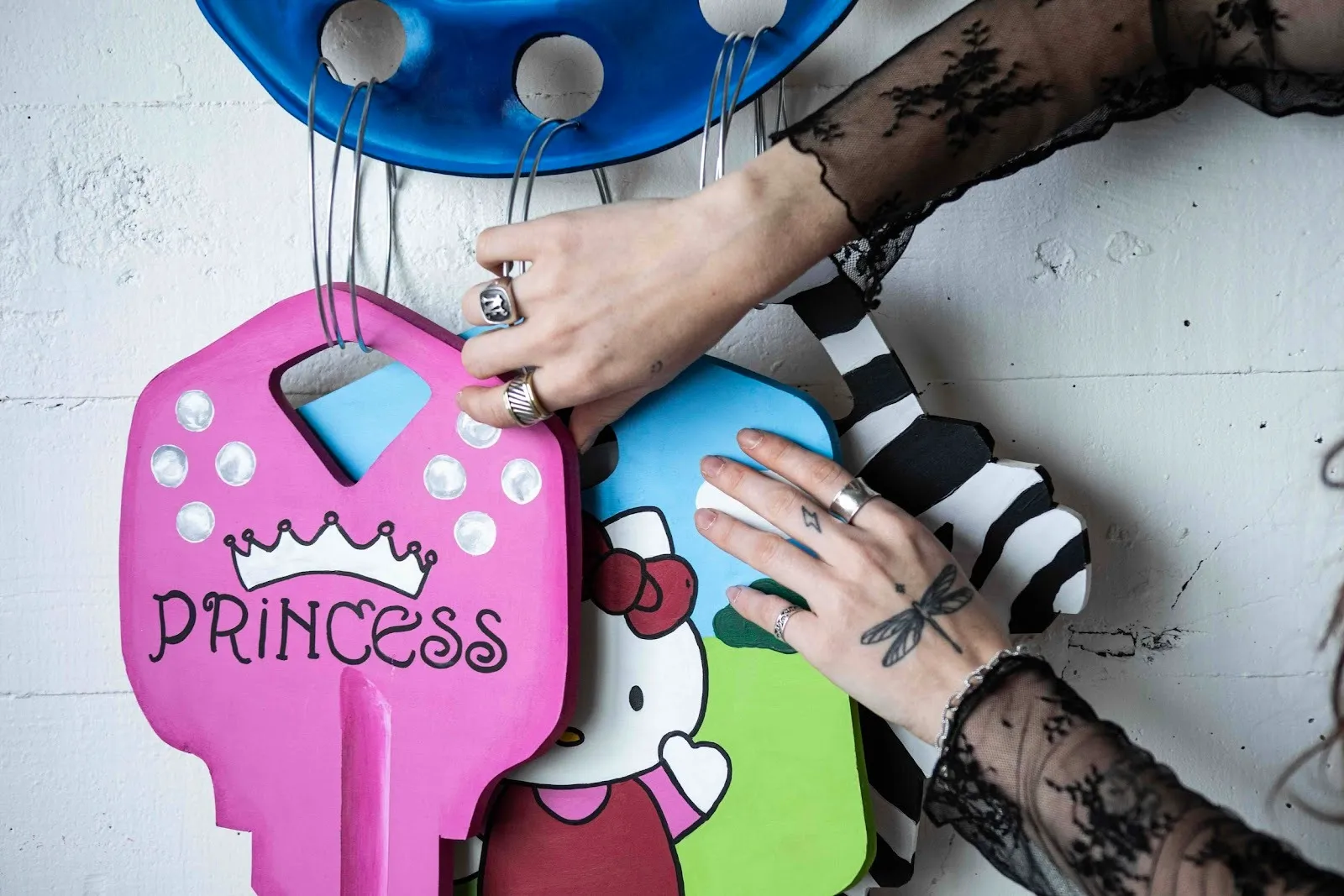
Now I’ve continued that participation in a new way with these three-dimensional, almost monumental keychain paintings. The first keychain painting I made has a Tamagotchi, a LEGO piece, and a key on it, and those items were all inspired by comments from my TikTok audience. That really catapulted this idea of doing all these different keychains, personal objects, and everyday things.
EC: Why do you think you and your audience are invested in these everyday collectibles, trinkets, and small nostalgic items?
AB: I have a fascination for collecting little things. I have a trinket shrine in my home where I could tell you exactly when and where I got every item. There are things I’ve had for years. My audience is mostly women, ages 25-35, and I think certain trends definitely lean more towards women and queer people and things they collected and enjoyed as kids.
When I started to post online and ask people what keychain I should paint next, I got comments like, “Oh my god, I've had this Tamagotchi since I was 12. Paint this!” or “This is the princess key that I've had for years, you should make this!” So I noticed that other people also had all these little trinkets and precious things they collect.
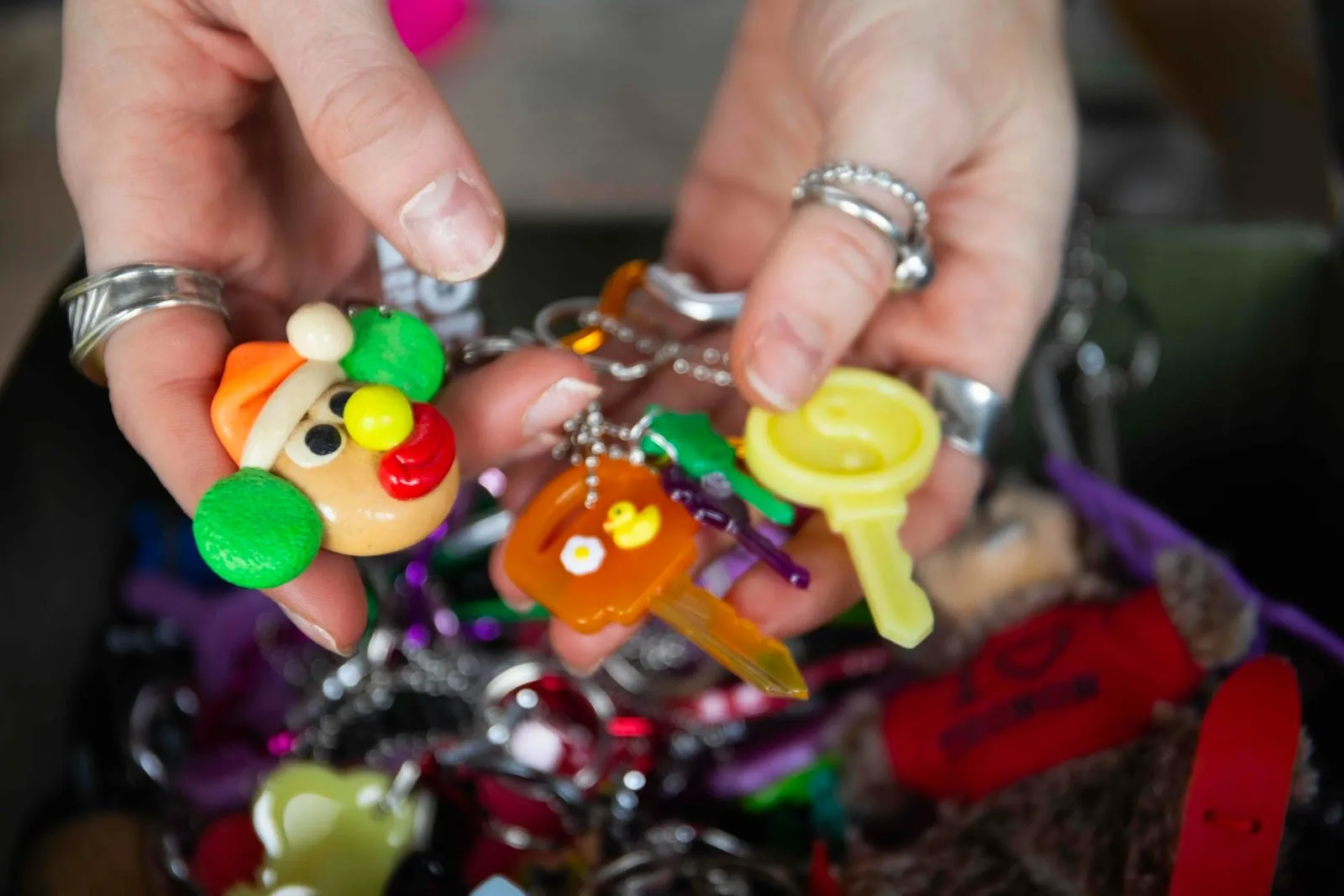
EC: I also wonder about the scale of the objects—you’re transforming these handheld objects to a relatively monumental scale. How did you decide to essentially inflate them in that way?
AB: I love playing with scale. I love it when things that are supposed to be really small are blown out of proportion. Reimagining everyday objects at a much bigger scale makes you reconsider the object and look at it in a new light. Normally, someone might say, “Oh, that's a cute keychain,” and that's it. But now you have a moment to really take it in, and that gives the object new life.
EC: Can you tell me more about the flow between the art you make in terms of original paintings, prints, and other forms of merchandise, and how these different parts of your practice sustain you? Further, why is it important for you to have different modes of access for your audience?
AB: I’ve always had prints, now I do phone cases, and I used to make candles. It's important to me because someone is more likely to continue being a fan if they've already collected something, and it's unrealistic to expect everyone to be able to afford my paintings. I want people to collect my work in any form that’s most suitable for them. That is something I have prioritized since becoming a full-time artist. I've always wanted options that allow all people to collect. When you go to a museum, one of the best parts is the gift shop, because you can support your favorite artists and feel like you have a piece of them. When I get a coffee table book, it makes me feel like I’ve collected a piece of their work. That’s always felt important to me and will continue no matter what.
EC: We’ve talked about the benefits of social media, but I’m also wondering, where do you feel tension?
AB: After my solo show in December, which I spent four straight months grinding for, I was so burnt out. I worked every single day in the studio. I knew I was going to be drained, but didn’t realize the extent. I took two weeks off, which gave me anxiety because when I don't post, my engagement goes down, and I feel like I'm not doing my job. Since I have no boss, it's just me holding myself accountable. So there’s a disconnect when I’m not doing well mentally, but still have to show up online. I pretend to be this person, and I’m literally performing in front of the camera, but when the camera goes off, you have no idea I’m actually really struggling mentally because I never show it.
In the scheme of things, TikTok and the influencer industry are still very new, so I only have a few people I can really look up to, but even what I do feels so niche and specific to me that, at the end of the day, I have no fucking idea what I'm doing. It's really confusing to me to take two weeks off social media, and then see someone else who has a much bigger platform than me, who is incredibly successful, and posting every day - doing 100 stories every day, engaging with their audience, posting on their YouTube, on their Facebook shorts, and it just becomes a comparative game.
EC: How do you decide what to share and not share?
AB: Sometimes I love sharing personal things. I'll share videos of my girlfriend when I capture a cute moment of us. I talk about mental health and my personal relationships. Even really traumatic things that I’ve gone through that may feel weird to share, I still do. I’m a real person, and I want people to know that. I don't share 110% of myself, but from the outside perspective, it seems like I do.
A whole other aspect that develops is the parasocial relationships. At my show, some people came up to me who knew me, but I had no idea who they were. One person was like, “Oh yeah, this is like that bunny tattoo that you recently got.” And I'm like, “Whoa, I got that in April. How do you still remember that?” It's just so interesting to me that this is my first time seeing your face, but you know exactly who I am. You know my tattoos. So it’s interesting to be the person that people are “consuming,” but on the other side, I also follow and consume other people’s content, too.
EC: Art and creativity today often feel deeply intertwined with branding, visibility, and spectacle. How do you navigate that landscape while staying connected to your own values and process?
AB: In the back of my head, I constantly question, “How can this painting be branded?” or “How will a brand look at this painting?” in deciding if they want to do a brand deal with me. I still try to paint what I want to paint, while also keeping that in mind. I love to explore themes of hyper sexuality in relation to women and the objectification of women in media, but those are things that are really hard to portray while trying to get brand deals. I do censor myself in those ways, which is something I wouldn't think about if I were operating more in the gallery world, but it’s just something I navigate because brand deals are how I pay bills, mostly, and they're very lucrative. Brand deals are how I can afford to do what I do.
EC: How have your online connections shaped your real-life community, and what feels most sustaining for you right now as you think about where your practice is headed next?
AB: When I got to New York, I really wanted to be around people who were doing similar things to me and pursuing a creative practice or social media. So I've made a little community for myself from different pockets of people that do similar things, and I couldn't have done that without connecting with them on social media, and then our online relationship turned into a real-life friendship.
The idea and cycle of worldbuilding through collections feels especially inspiring. This may include paintings, mini collections that I fabricate like keychains, and all of that culminating in an immersive show. For some people, I just exist on their phone screens, so that’s a big reason why I want to keep exploring with in-person exhibitions and producing collectibles, because I want to build a sense of community and presence offline as well.
This interview was edited for clarity and length.
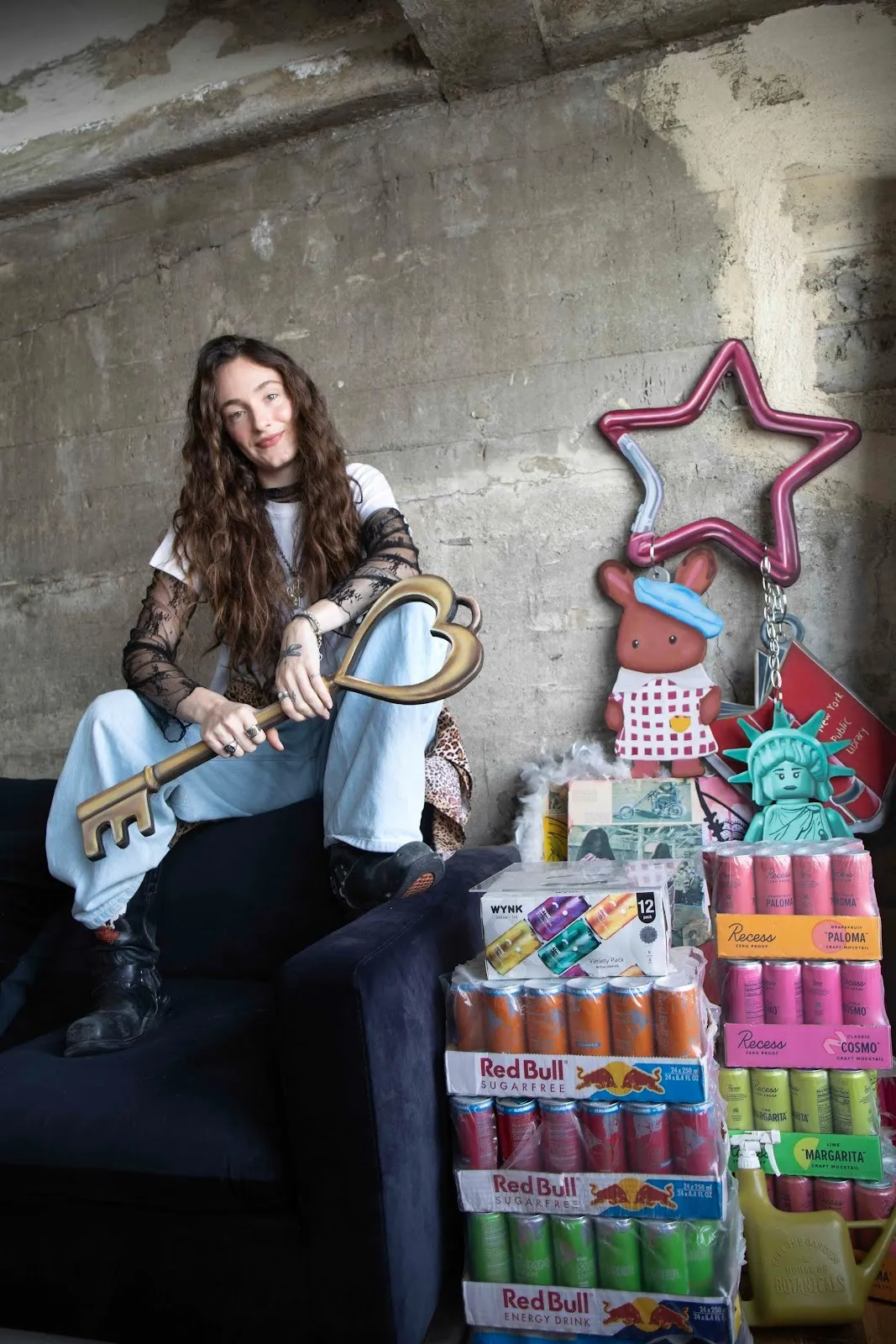
Ari Brochin: Welcome Home was on view from December 12 through 14, 2025.