.webp)

SVA MA Curatorial Practice Program: "N3O_iD011z"
Review
Heidi Norton’s practice spans sculpture and site-specific installation to explore an embodied connection to land, plant life, and the natural world. Her work utilizes glass, live plants, candles, and more ephemeral materials, and through processes of growth, decay, and transformation, Norton considers materially-responsive and process-driven approaches to art making. She is currently included in In the End, Everything Gives at Silver Art Projects, on view at 4 World Trade Center, featuring artists from the Women Sculptors Group, a collective of more than 300 members which she stewards. In early February 2026, she presented new works on paper with BEVERLY’S at the twelfth edition of Feria Material in Mexico City. She also leads Vantage Points, an artist collective and community, with a forthcoming spring exhibition of the group’s work.
Mána Taylor: How do you typically start a project?
Heidi Norton: It’s usually a response to an inquiry from a previous project, and that can look like material exploration or a concept. Sometimes I’m looking for a way to expand my practice through space, and sometimes there’s an idea that may reveal itself through a different exploration of making. Most of the time, though, it’s a need to explore or expand a materiality within the work.
For years, I made these huge setups, these still lifes in my studio, and would photograph them with a 4x5 camera. I was also building the plexiglass 3-D armatures to hold the plants and objects. The work was a lot about perception and how I could isolate the viewing experience. I then became bored with making them and felt they were limiting what I was trying to say, so the challenge became making them into sculptures without merely recreating the setup. The resolve was something so simple that was inspired by the act of pressing flowers and plants. I found my childhood field guide in a box of books from my parents, and I was thinking, “Why don’t I just make a large, pressed plant?” The gesture seemed so simple, but it opened the door to work on the plane of the wall, which totally changed by practice.
MT: In thinking of finding this childhood field guide, I’m curious about place and location. Where do you make your work, and what materials do you need?
HN: I can really work anywhere, because I often use a space to set limitations or boundaries. I have a studio, and I sometimes work in my basement on 2-D work, but my favorite place to work is in response to a site. For example, at the Museum of Contemporary Art Chicago, I worked on the loading docks, appropriating glass used from Liam Gillick’s vitrines, and I thought that was interesting. It led me to think more about museological displays and the way humans preserve or present the natural world.
At Elmhurst Art Museum, I was inspired by Mies van der Rohe’s first tract house and how we bring nature “inside” by using glass and the natural park around the museum. Similarly, at Wave Hill, I forged from the grounds and photographed the plants to incorporate into the photographic scrolls. I have also had a studio in the woods. Space and environment can be what sets up the prompt to make; what you surround yourself with or have access to becomes your medium.
MT: How or when did you realize you would become an artist?
HN: I think I was always reaching for forms of expression beyond words. I’ve always been vocal, but language alone didn’t have the gravity I needed—it was too simple or empty, and art gave it a grounding. I also grew up in a creative family, and in a natural world that kind of forces you to use imagination. You learn early that you have to make meaning, make stories, make worlds out of what’s around you. The discovery of art as a vehicle and a container felt like “wow,” and I also got really hooked on the object itself—the way a thing can function as an index, like a relic without reverence.
MT: You also use translucent materials a lot in your work, like glass. Can you talk about how you interact with translucency?
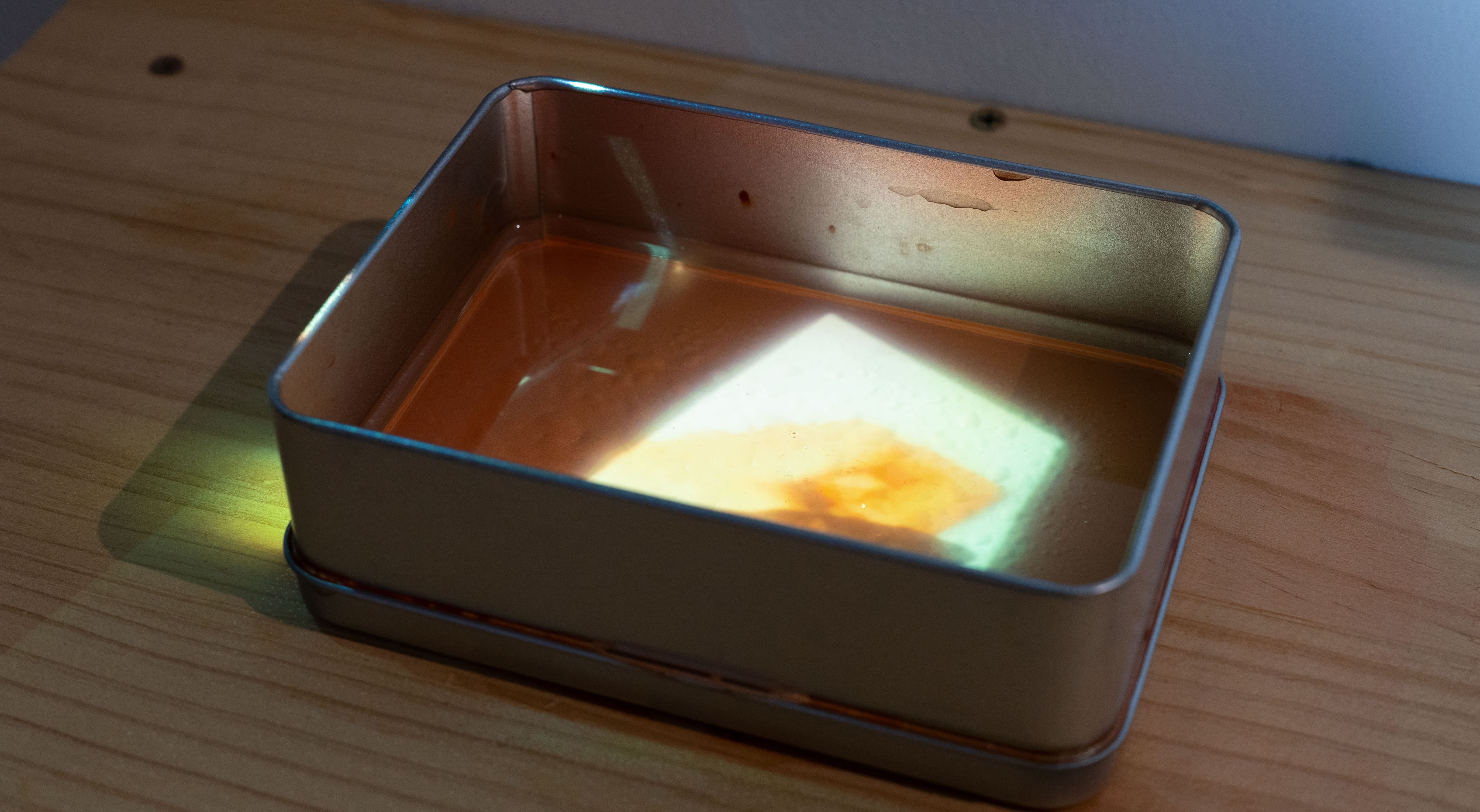
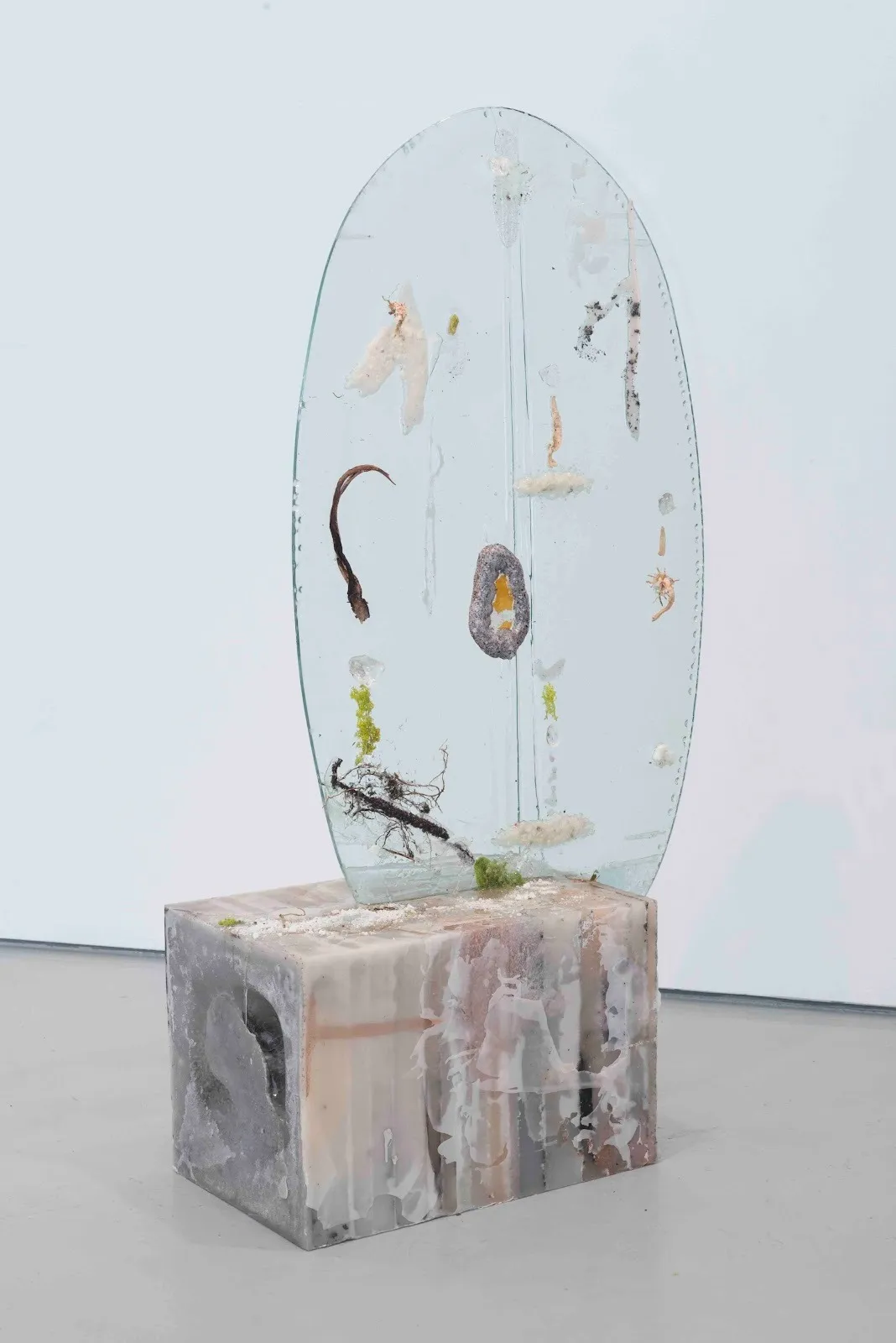
HN: I think I’m deeply connected to things that reflect and refract light, but also create a flat linear space between an interior and exterior, and that weird moment where you can’t tell where space starts and ends. In Colin Rowe and Robert Slutzky’s book Transparency, there’s this idea of phenomenal transparency: not just “see-through” as a material fact, but this spatial condition where multiple readings sit on top of each other at once, and you’re holding a contradiction without it resolving. It creates a paradigm. And I also think about it like a vitrine or a lens sometimes, because glass isn’t just “clear”—it sets up the conditions of looking, what’s protected, what’s exposed, what’s kept at a distance. But I also love the ability to make it hard or soft, or mold it, or make it so flat. And I think that directly relates to entropy and various states of something so pure, like water to ice to vapor, where transformation is built in and the boundary between inside and outside, solid and fragile, containment and change is always shifting.
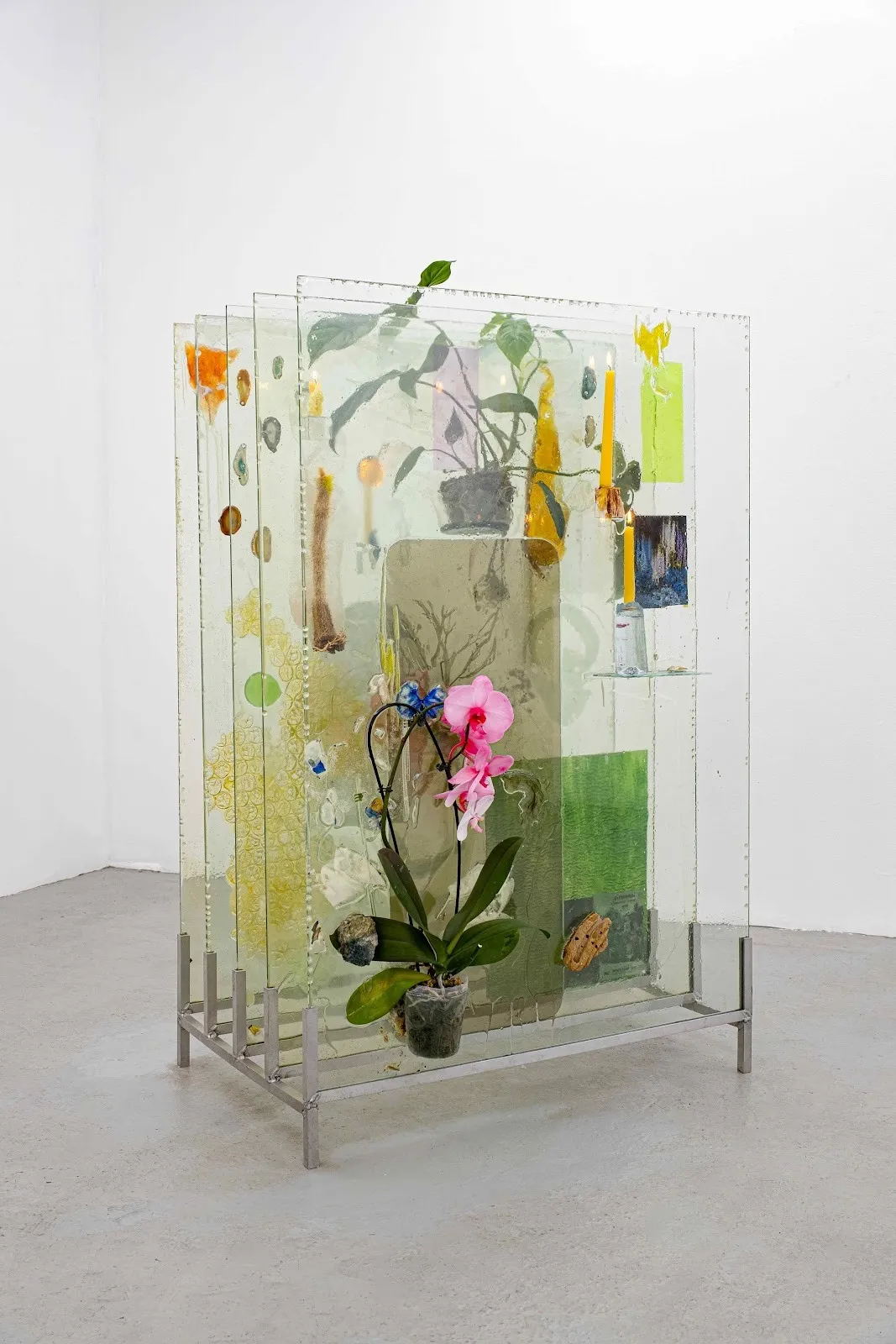
MT: In your artist statement, you speak about preservation. What is important to you right now to preserve? What is something you have had a difficult time preserving?
HN: That preservation has always been about time. Time, in a lot of different mediums and registers, is present within all my work, even when it looks fixed. The farther I go into my practice, the more I learn that the plants are metaphors for holding on to a state of purity or innocence: a longing for being separate from the present. Then it gets tricky, because the second you try to preserve something, you’re also changing it—you’re turning it into a kind of display, a kind of container. What happens when a living thing becomes an object, a specimen, something framed and looked at?
And the work isn’t just the plant itself; it’s the material and the way the plant is held—glass, resin, wax—the whole language is about containment. Light is part of it, too. Light is the thing that makes the “preserved” feel alive, but it also shows you the fragility, the shift, the change. And yeah, it’s me trying to hold onto innocence while knowing you can’t. There’s always that tension: protection versus exposure, holding versus letting go, keeping versus accepting the cycle.
MT: There is also something ephemeral about your work, even though it’s about preserving. How do you view this dichotomy?
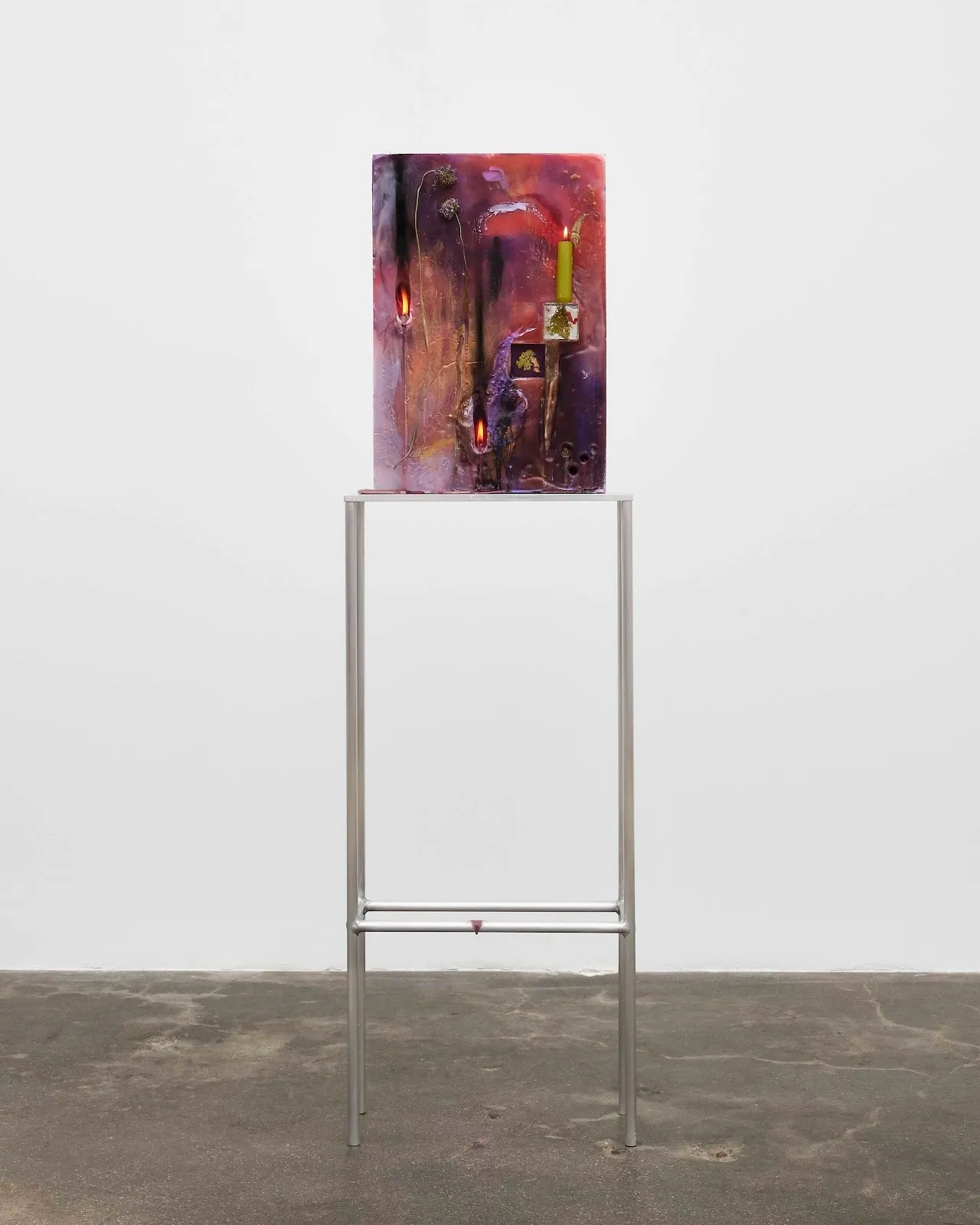
HN: The dichotomy is the tension, is the desire to hold something close, to protect it, to keep it alive, but it all never seems graspable. When I first started working with plants encased in resin, I would leave the roots exposed so I could mist them to try to keep the plant alive. This was futile, and I knew it, but it was about the gesture. All of this tension is about illusion, that preservation equals permanence, that containment equals safety. This is where I keep thinking about Timothy Morton’s notion of ecological thought and how we “save” nature by turning it into an object, a scene, a museum display, instead of actually relating to it as something we’re entangled with every day. Preservation becomes a substitute for care. We want the natural world as a National Park or a sealed relic—clean, legible, protected behind glass—because that’s easier than the daily, messy work of care. But the materials betray that: plants decay, wax shifts or melts, light redefines surfaces. The object becomes an image, the image becomes an object, and the meanings keep moving. Nothing is stable, and nothing works or flows on a straight line; it’s all a cycle.
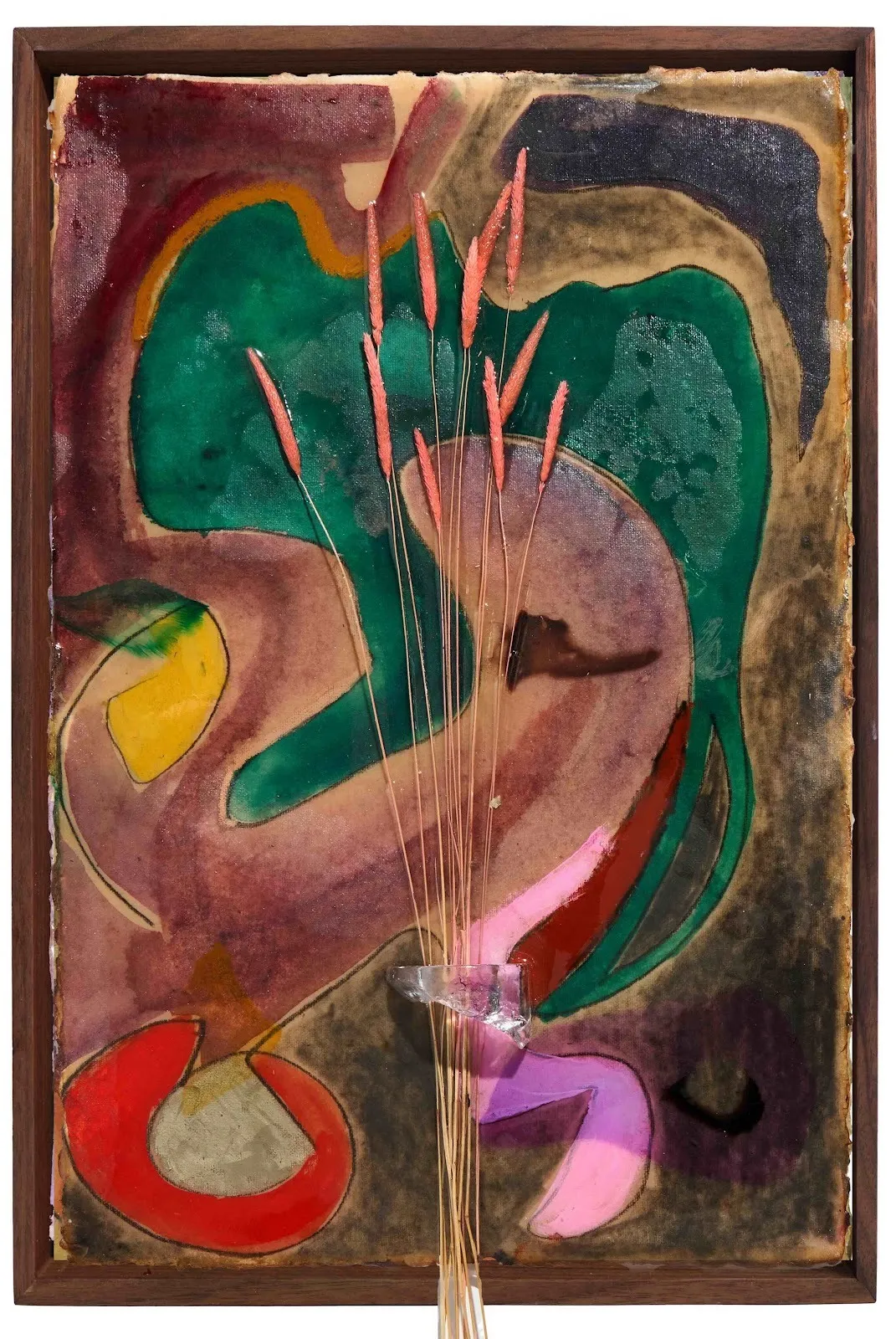
MT: How has your relationship to plants changed since making work about them?
HN: I’m trying to figure out how to answer this. Has my reverence for them changed? I think it has. I went from protecting and trying to keep a living plant alive to working with dead ones. I used to return to my studio with so much anxiety. I’d ask myself, “Are the plants alive or dead?” That anxiety was something I wanted to transfer to the viewer and the person who may own the work. They are holding this thing and also holding the responsibility for it.
At some point, I realized that not everyone may want that burden inside my work, so I learned to use the plant in different ways. They are encased, replaceable, detritus, preserved, dried. The work can still carry time and change without asking someone to caretake it in the same way. The reflectivity of the glass merges the viewer into it, layered into the plant as it changes over time. And maybe this feels darker, but it also feels honest in modern times.
Our ecological state is heavy, and our political climate is heavy, too. You can’t unsee how much of it is tied up in control, extraction, and who gets protected and who doesn’t. So it aligns with what I’ve always been saying: entropy and ecological thought are not a continuum, but instead a cycle of growth, decay, return, and what we do with what’s left.
MT: What is something you wish someone told you when you began to make art?
HN: So much. I think what I have learned the most over the years is about the long game. I was born an impatient person, and it’s a trait that I’ve had to mold and work hard on over the years because it directly crosses with ambition and persistence. Being persistent is important, but it needs to align with time in the right way. You can’t just drive fast and go without space and time. Each day, year, or decade as an artist develops our practice deeper, and then new goals arise. The trajectory changes. Honestly, that’s how the work treats time too—less linear, more unstable, it loops and rewrites itself as you go.
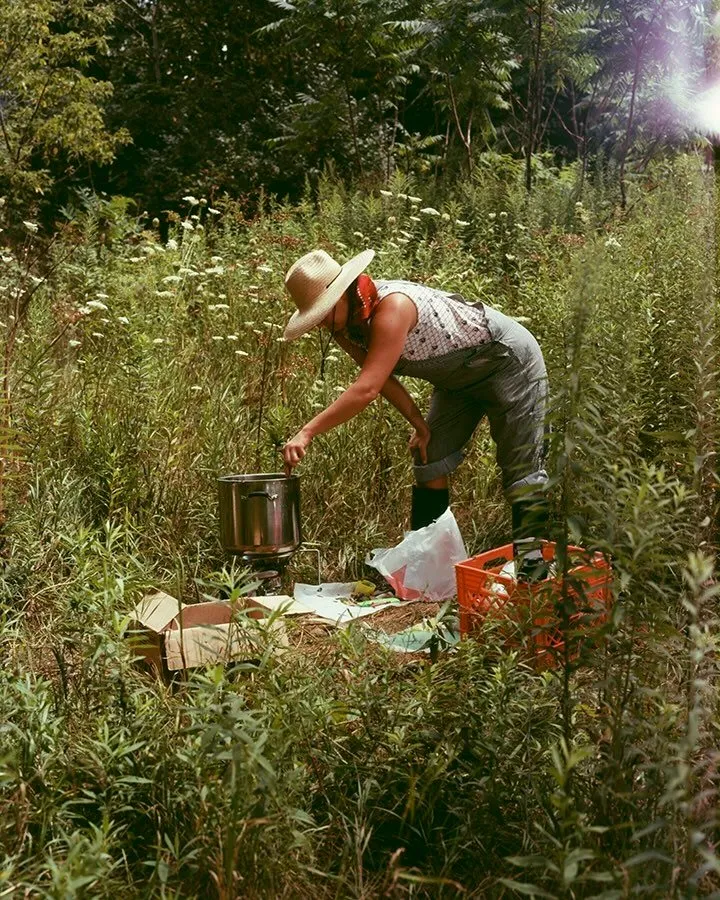
In the End, Everything Gives is on view at Silver Art Projects from January 23 through April 3, 2026.