

.webp)

Marc Kokopeli: “M.Kokopeli CURSED/01” at Gladstone
Review
When my friends visit my apartment, they don’t need to ask me any questions. They know which kitchen cabinet holds the coffee mugs, where all the light switches are, and which door leads to the bathroom and which to the linen closet. This is the type of intimacy that must be slowly built up over time, crafted by the humdrum familiarity of domestic rituals and routines. FLOHAUS Gallery’s latest exhibition, Intimate Structures, considers how industrial design, urban architecture, and proximity mediate interpersonal relationships, as repeated interactions with physical space and functional objects form the foundation of human flourishing and our mode of dwelling in the world.
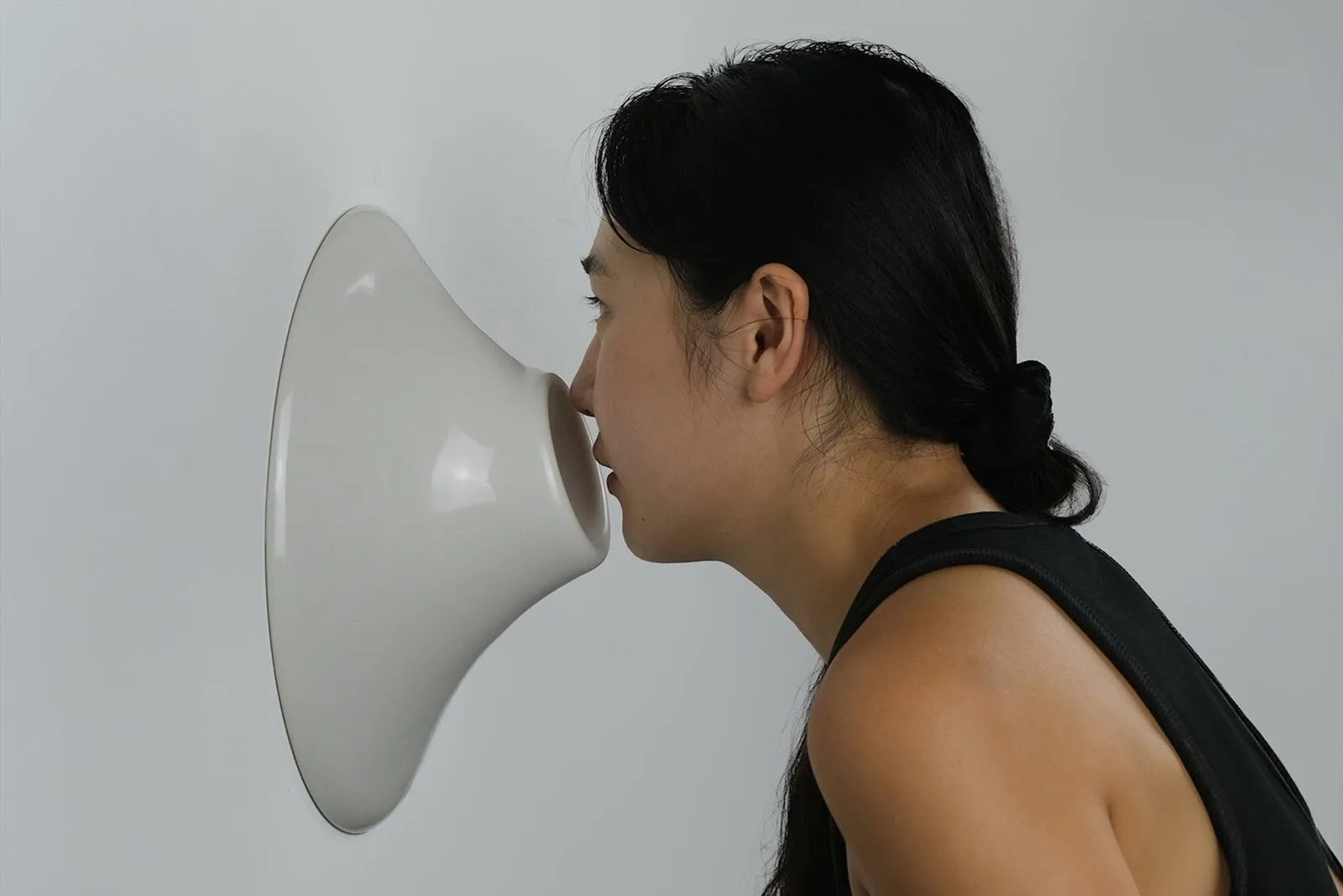
Esther Choi sculpts items that you could easily find in your own home—a bright red plastic bag knotted at the top, a neatly folded undershirt, the pink dishwashing gloves you buy at the local convenience store, and a pair of slightly drooping rubber rainboots. None of these objects is particularly precious or symbol-laden; they are just tools meant to facilitate daily chores until they are thrown out and replaced by an identical copy. Yet Choi’s ceramic reproductions allow the malleable materials of cotton, rubber, and plastic to harden into permanent forms, preserving the unique traces of human interaction with each object before it is eventually discarded. Similarly, Yameng Li questions the relationship between damage and an object’s structure. The series, Speckled Disease, argues that the totality of an object encompasses both its vulnerabilities and imperfections, and that it is only through embracing this reality that one may hope to achieve a truly intimate knowledge of the world around us. Daeun Lim’s work echoes this sentiment of openly acknowledging objects’ functional and emotional shortcomings. Lim’s sleek white ceramic objects evoke the visual language of streamlined industrial design, but questions of functionality arise the longer one looks at them. At first glance, one of Lim’s works appears to be a ring or incense holder, but it is actually a lacrymatory, or a tear-collecting vessel; and a porcelain sconce is meant to function as a device for lonely people to talk to their neighbors through the wall. These unusual functions amplify the alienation of the objects’ hypothetical owners, offering neither consolation nor critique, but simply acting as emotional vessels that tacitly witness a person’s lived experience.
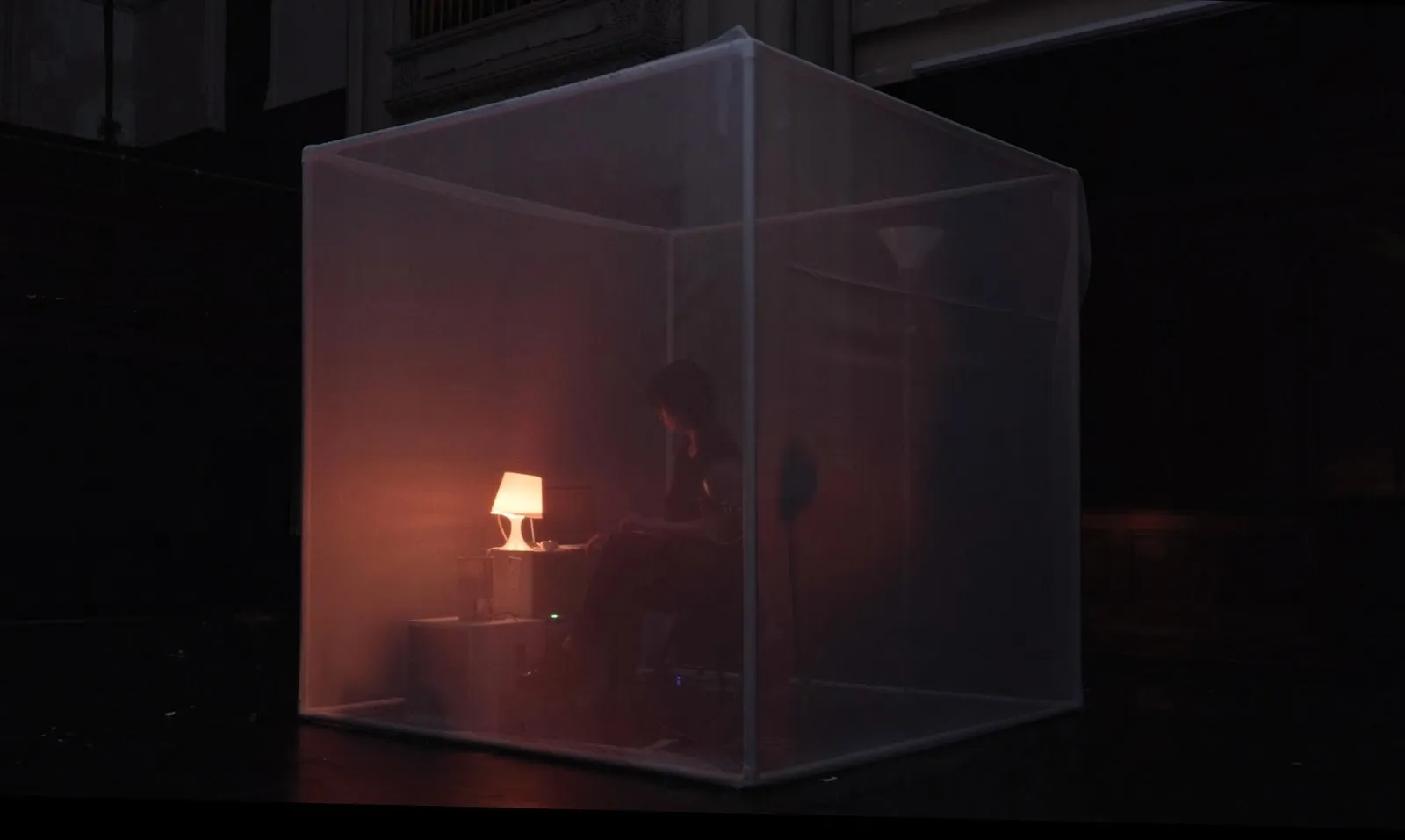
Conversely, the household lamps in Mingna Li’s In a Box double as artistic collaborators. During this multimedia performance, light switches correspond to different notes, loops, and MIDI instruments, generating various melodies and beats as a performer moves inside a semi-transparent box. The structure itself is inspired by the act of glimpsing into a stranger’s apartment window, when one briefly encounters another person’s interior world nestled among countless others. As the performer continues to interact with their surroundings, it results in a unique interplay between light, choreography, and music, which then becomes a metaphor for the millions of individual stories that play out simultaneously within the shared architecture of urban life. The tension between intimacy and distance is further explored in Seirim Yoon’s paintings, The Hill and Playground, which are reconstructions of the artist’s own memories. In a similar vein to the Impressionists, Yoon’s scenes attempt to capture a transient moment that could otherwise be easily forgotten, whether it is the quality of light at a certain time of day or the atmosphere of a mundane suburban setting. The architectural structures in Yoon’s paintings extend beyond the canvas in the form of vividly saturated bricks that eventually fade into pale colors the farther they stray into the physical gallery space, mimicking the inevitability of forgetting even the most treasured memories.
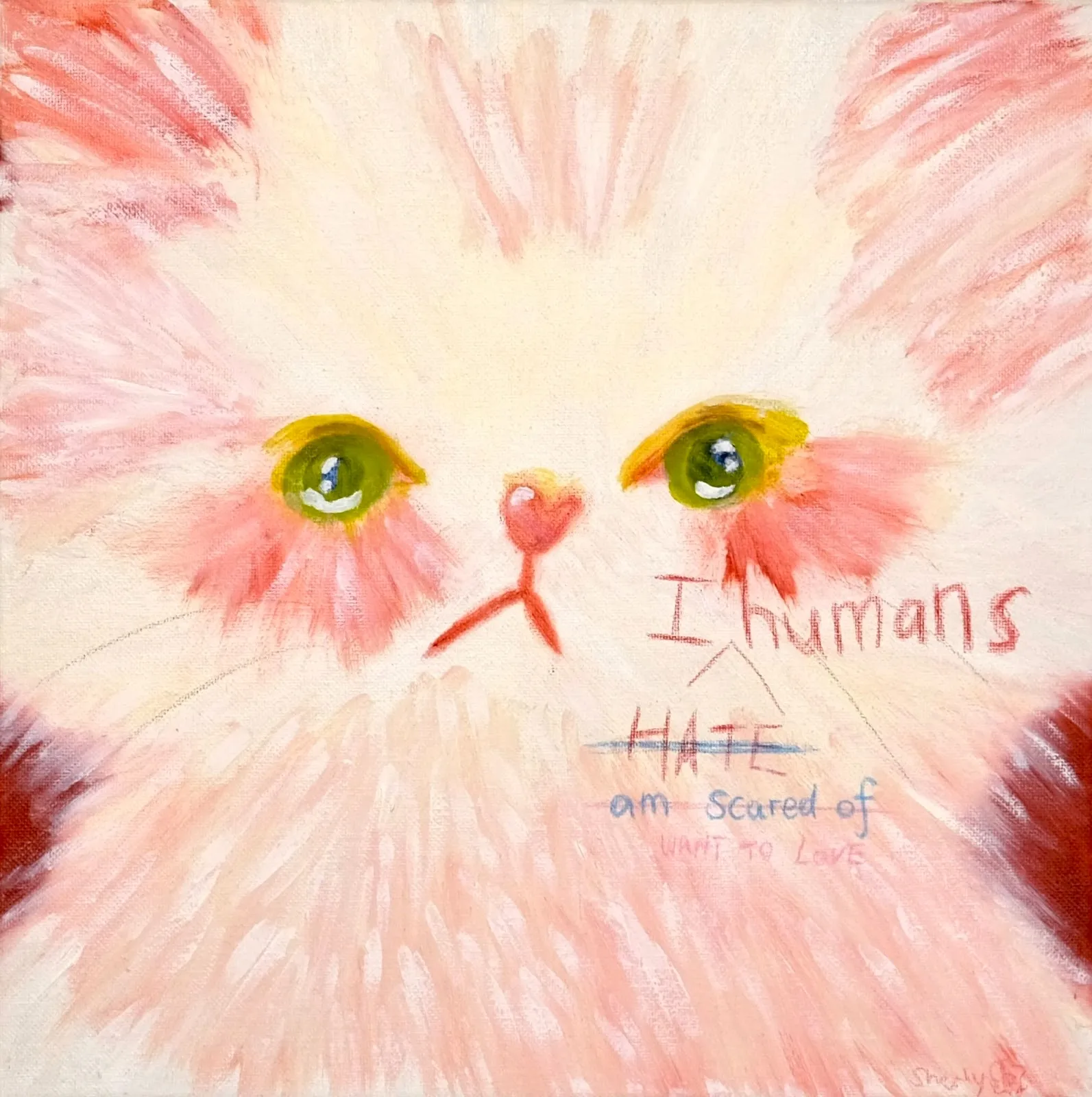
Physical proximity and intimacy may sound synonymous, but this is not always the case. For instance, in Sue Beyer’s installations, there is a reorganization of meaning as found objects, and electronic elements are brought into dialogue with one another in a single composition. The tactility of artificial flowers and dainty charm bracelets, both associated with girlhood and its nostalgic memories, stand in contrast against the digital aesthetics of pixelation and blur, prompting the audience to question their own structures of perception and proximity: Are the paintings depicting the objects next to them, or something else entirely? Likewise, Sherly Fan utilizes the aesthetics of cuteness to both attract and repel. The protagonists of Fan’s paintings—animals and plushies—lure the audience to come closer so that they may coo and fawn. But upon closer inspection, one realizes that Fan’s adorable bunnies and charming teddy bears are outright rejecting this gesture. Overlaid with text that read “Don’t look at me!”, “You are not invited!”, and “We are not cute!!!”, these pieces prompt a reconsideration of the power dynamics behind the notion of cuteness. I heart humans (2025) depicts a wet-eyed cat with the words “I HATEam scared of WANT TO LOVE humans” scrawled on top, implicating the perplexing state of longing to experience intimacy but being unable to erase concurrent sentiments of pressure, unease, and instability. The claustrophobia that belies express emotions, then, becomes physically manifested: the women in Emma June Jones’ Pain and Fortune are folded, stacked, and intertwined with one another. Their contorted bodies in uncomfortable positions are each other’s only support, coming back to the exhibition’s title, framing intimate structures as something architectural, social, and emotional all at the same time.
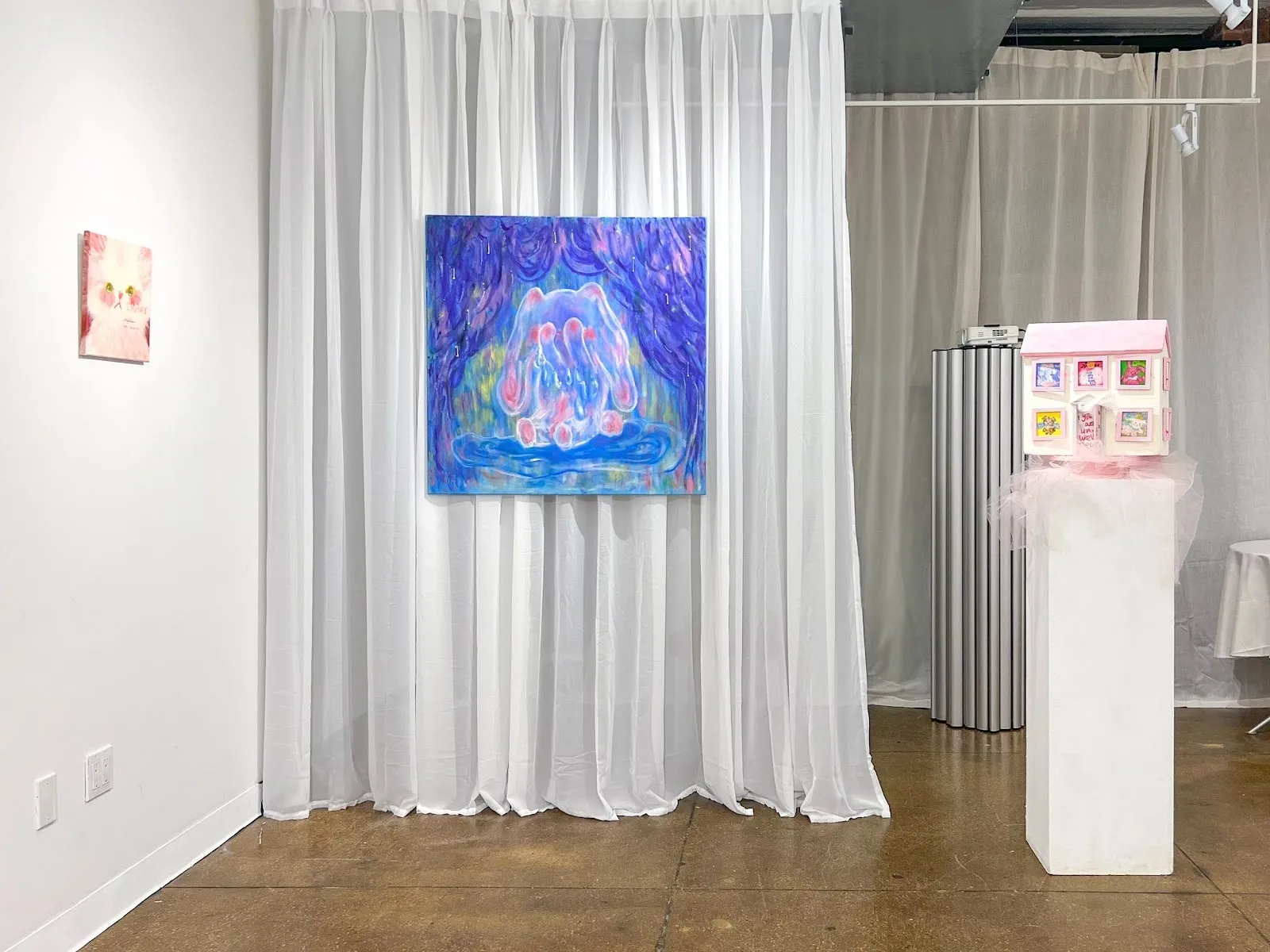
Intimate Structures is on view at FLOHAUS Gallery, New York City, from March 19th to April 5th, 2026.