.jpg)

.webp)
.webp)
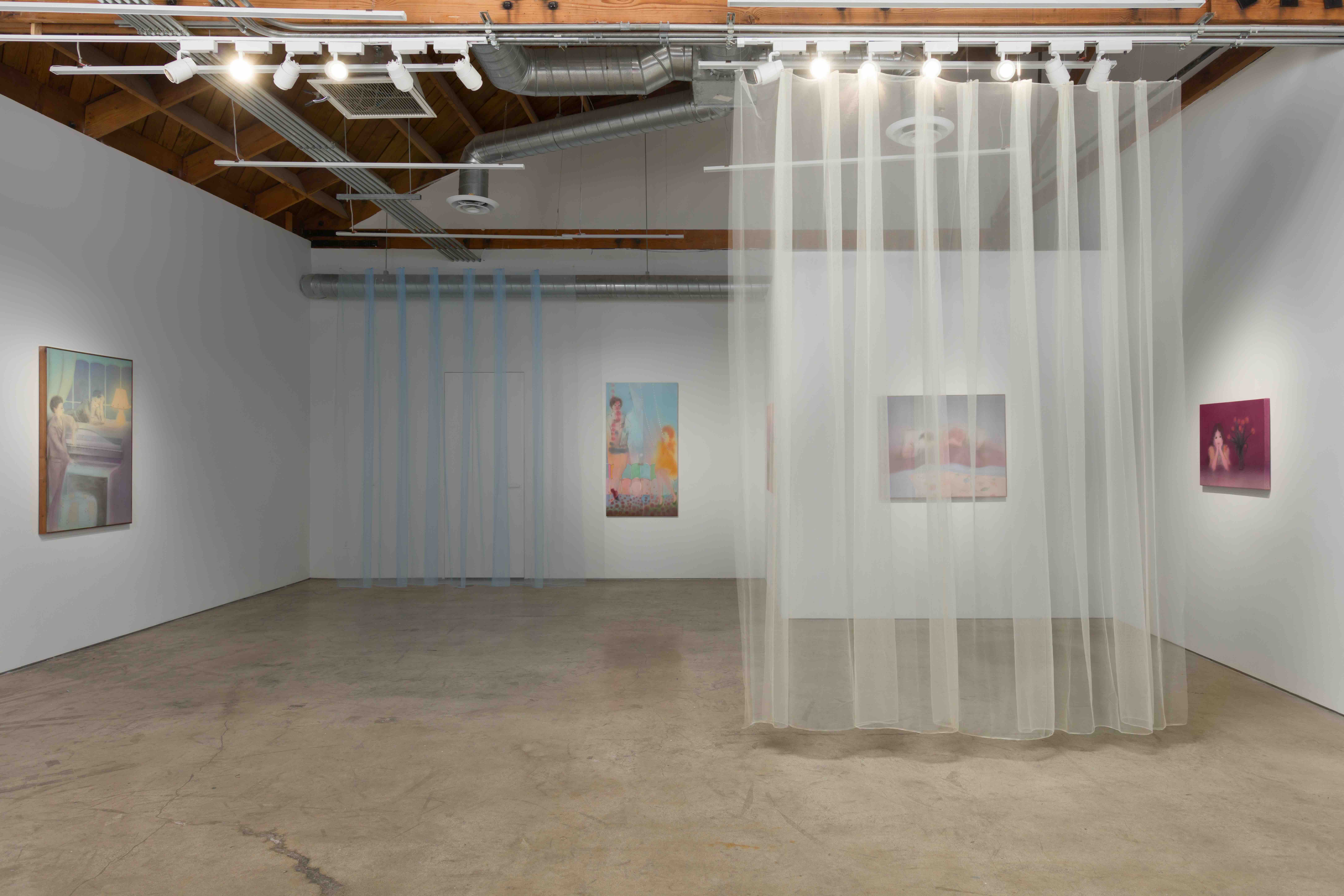
Xingzi Gu: "Periphery Dreaming" at Make Room
Review
Aging has become quite the taboo subject in today’s culture—it is an inevitability, so why is there so much fear and resistance surrounding it? Against the white walls of Essex Flowers, EXPIRED, curated by Roxanne Wolanczyk in collaboration with apexart, challenges that fear. The exhibition hinges on the dual meaning of its title: “expired” as social obsolescence and “expired” as a clinical term for death. This frames aging as a cultural problem before it is a biological one: a struggle over visibility, value, and relevance. Across the work of three artists, the exhibition reveals how aging and one’s relationship to it become gendered. Women are asked to manage time through beauty and self-maintenance, while men have the privilege of meeting it through the lens of death and mortality.
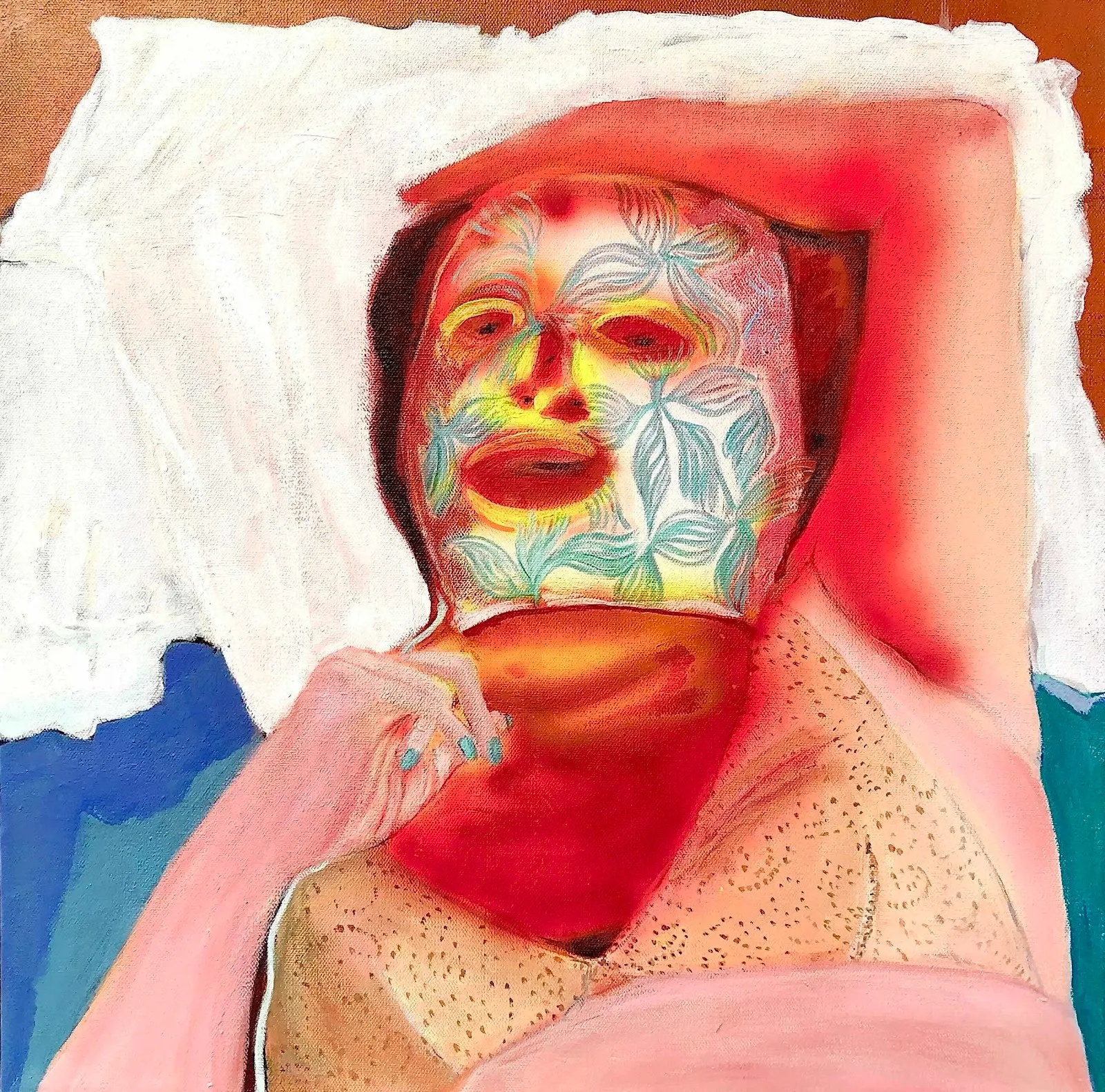
As seen in movies like The Substance (2024), fears of aging and the desire to delay its tells are at an all-time high. Retinoids, LED light therapy masks, injectable fillers, and Botox are all tools used to grip onto the beauty and value often associated with youth. This is particularly evident in Carol Saft’s paintings, where her portraits stage self-care as both tenderness and mandate. The LED mask her subject wears is marketed as a form of rejuvenation, but in her paintings, it reads more like a tool that treats visible signs of aging as a problem to be solved. In Bedtime Mask (2024), the subject reclines peacefully on her bed as the red light of her mask leaks out and casts a powerful glow onto her neck and arm. Rest and work become parallel. These portraits, however, are not critical assessments of the subject but intimate depictions of the artist’s partner. Suddenly, intimacy complicates the easy dismissal of beauty culture as vanity. Saft shows how the labor of self-care often appears as a form of personal wellness: a ritual performed lovingly, even when it is shaped by a culture that punishes aging by equating it with decline.
Wolanczyk’s ceramic vessels move the exhibition away from correction and toward authorship. By blending classical forms with declarative text, the works position aging as something not to be hidden or treated but to be embraced. The symbolism of the medium is not lost—ceramics carry their own progression, from their humble beginnings as clay, to being shaped, fired, hardened, breakable yet always enduring. The vessels are printed with bold statements like, “I RESERVE THE RIGHT TO AGE WITHOUT APOLOGY.” The boldness of the text commands the viewer's attention, allowing Wolanczyk to effectively push back against the idea that a woman’s value or worth should be tied to her age. The juxtaposition of classic forms and modern text shows the evolution and timelessness of humanity.
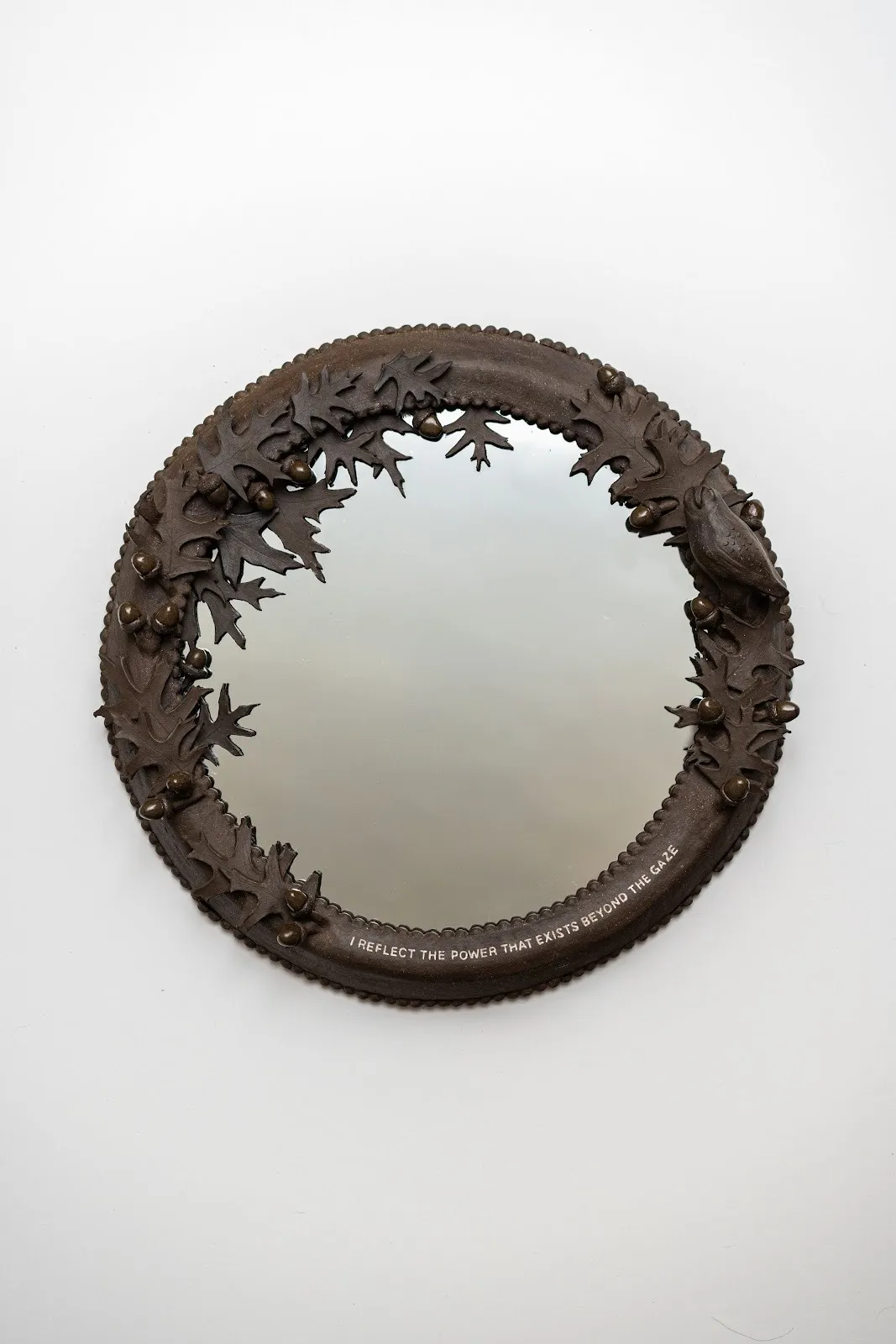
Upon first viewing Wolanczyk’s I reflect the power that exists beyond the gaze (2025), the viewer is confronted by their own appearance. One might easily become preoccupied with the complicated gaze of their reflection if not for the eponymous text printed on the mirror’s frame diverting their attention elsewhere to a question that dips below the surface of the mirror. Beyond the exterior lies something much more valuable than youth or beauty alone, but are we willing to search for it? In an era of constant comparison, the artist urges us to try. Where Saft reveals the pressure and care taken to remain visually acceptable, Wolanczyk asserts that relevance is neither granted nor guaranteed by youth.
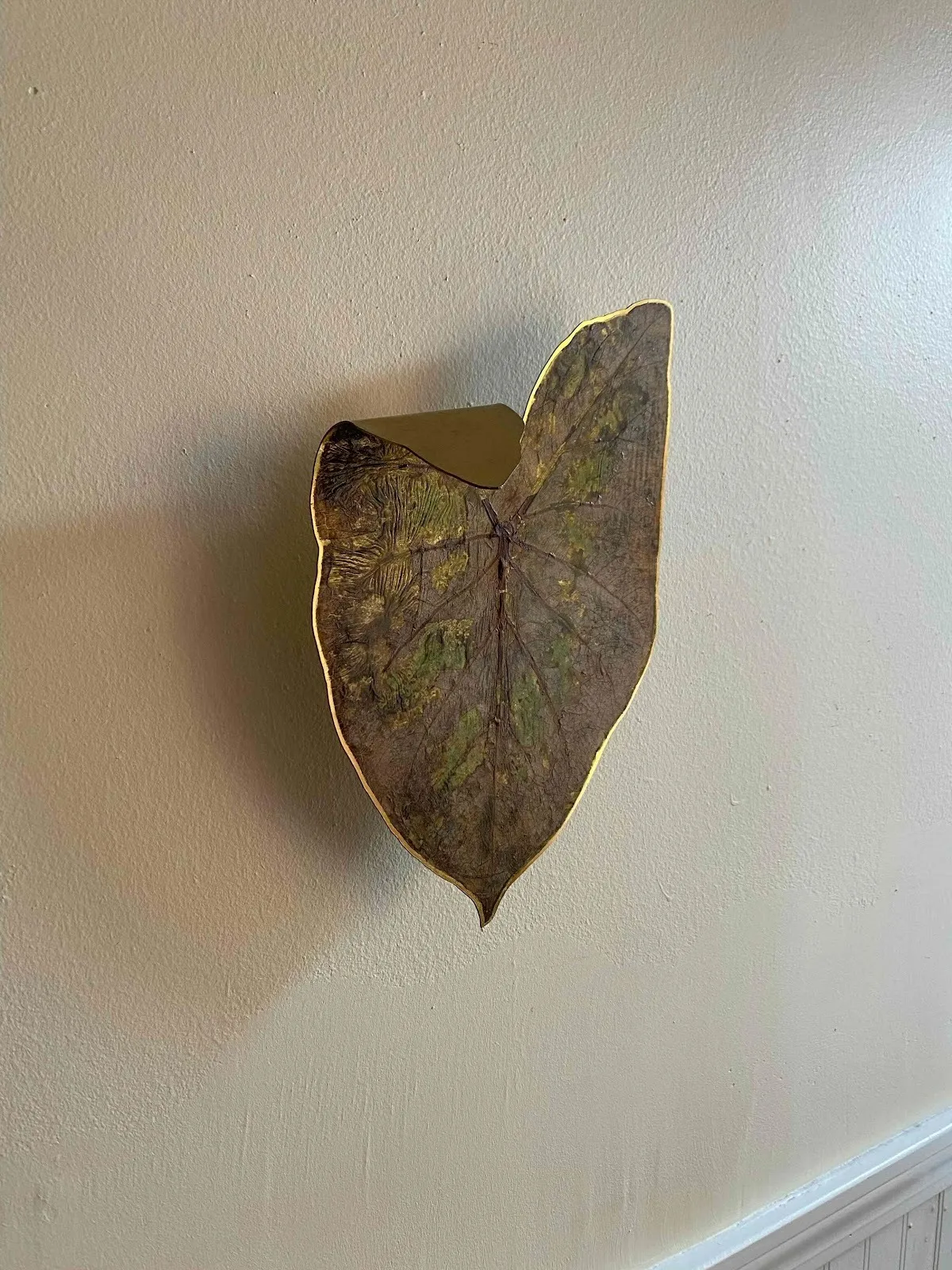
Kenneth Zoran Curwood approaches the exhibition’s subject matter with a slightly different perspective: not held down by the weight of maintaining youth and beauty, his work speaks to aging as a timeless philosophical dilemma. Aging here is oriented toward mortality rather than the social norms that dictate who is allowed to remain visible. In Sans Soleil (2017), a found leaf is mounted onto the wall with a brass backing. Signs of aging manifest in the leaf’s shape and coloring; one corner sinks sullenly into itself. The once vibrant, green material is now a marbled array of browns, yellows, and dull greens. Here, there is no pressure for the subject to conform to arbitrary standards or transform itself into something it is not—it simply is.
EXPIRED reminds us that aging is not one experience but a set of privileges and permissions. Saft and Wolanczyk approach aging by examining how bodies are scrutinized, evaluated, and asked to prove continued value, while Curwood treats aging as a direct encounter with time. Yet even where works depict decay, they do not collapse into despair. EXPIRED rejects the idea that aging is synonymous with diminishment and offers a new reality where value and relevance do not expire—nor does the right to be seen.
EXPIRED is on view at Essex Flowers from February 7 through March 7, 2026.