.webp)

“Call me gravity” at WIELS
Review
There is always a story to tell. Human intuition lures us to resort to one story, to satisfy our desire for truth by funneling experience into fact. Our fallibility, though, is all the more vindicated when the monosyllabic story inevitably gets complicated by cognitive dissonance, competing perspectives, or, as the saying goes, shit happens. How could we possibly stick to one story when there is no adhesive?
The inaugural exhibition by Isolde, an apartment gallery in the West Village, accepts and even nurtures the reality of the indeterminable story. Titled Isolde, Isolde, the show gathers a harmonious congregation comprising Claudia Corujo, Praise Fuller, Christopher Gambino, Tristan Higginbotham, Bennett Koziak, Weihui Lu, and Helene von Schirach.
Isolde’s stories begin with its namesake, the eponymous character, a mythical heroine of forbidden love and tragic fate. The title of its current show beckons—coos, even—to this overseeing figure, almost as a conceptual spirit. Invoking the character of Isolde serves to delineate the presence of narrative permeating the gallery. Whereas Isolde, the character, is fated by her story, Isolde the gallery resists the reduction of narrative singularity or one outcome; it opts instead for multiplicity in lieu of certainty.
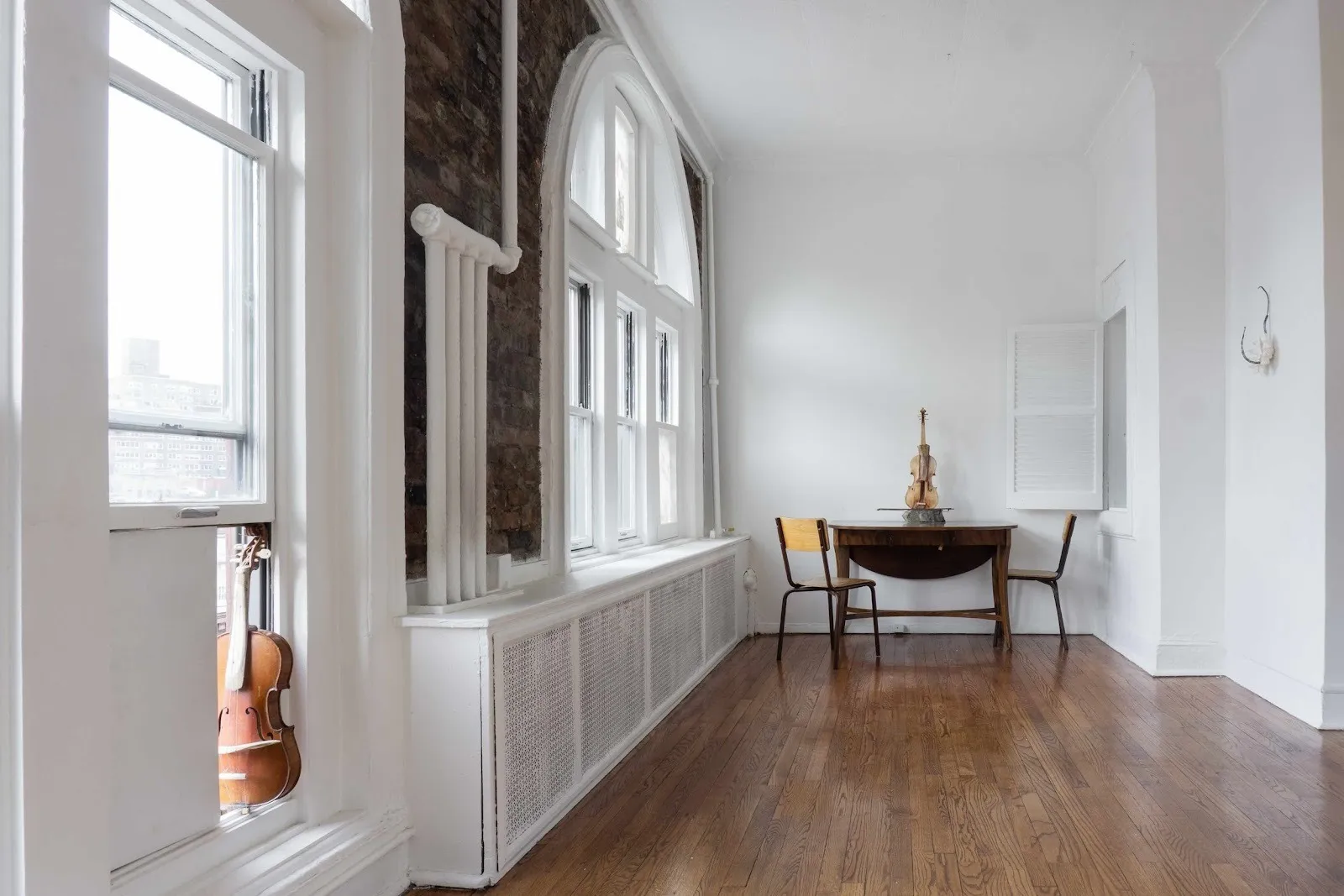
Following a labyrinth of six flights of stairs, one arrives simultaneously at the home-turned-gallery of Talia Markowitz and the world of Isolde, Isolde. Visitors naturally interpose Markowitz’s personal story upon entering the gallery, which in turn interposes the history of the building it inhabits. Markowitz and co-founder Genevieve Nollinger built upon the legend of a mad dentist whose on-site practice harbored a stock of room-temperature mercury well beyond recommended limits. From the oozing of the myth, Markowitz and Nollinger cast their characters of artists to leave their own residue. Stories run rampant across the works in Isolde, Isolde. They underscore their current residence in someone’s actual home. The works visibly carry the weight of their own narratives and, consequently, act as intimate ephemera of life in both appearance and affect.
Claudia Corujo scatters small acorns cast in pewter for Renditions: autumn ‘25 (2026). Their host in the form of a dainty jewelry case evokes an unknown romance we, as the audience, are not exactly privy to. Bennett Koziak’s sculptures bear a similar vague romanticism, as they subtly manipulate the innocence of classical instruments with reconstructive elements such as animal remains and human hair. The imprecise material resonance of found objects is elucidated further by the spore-like renditions by Tristan Higginbotham. Higginbotham folds quotidian objects into her practice of painting and clay sculpting to accumulate a series of objects that are complementary in likeness yet not in materiality. These concoctions by Corujo, Koziak, and Higginbotham contain items rife with ambiguous histories.
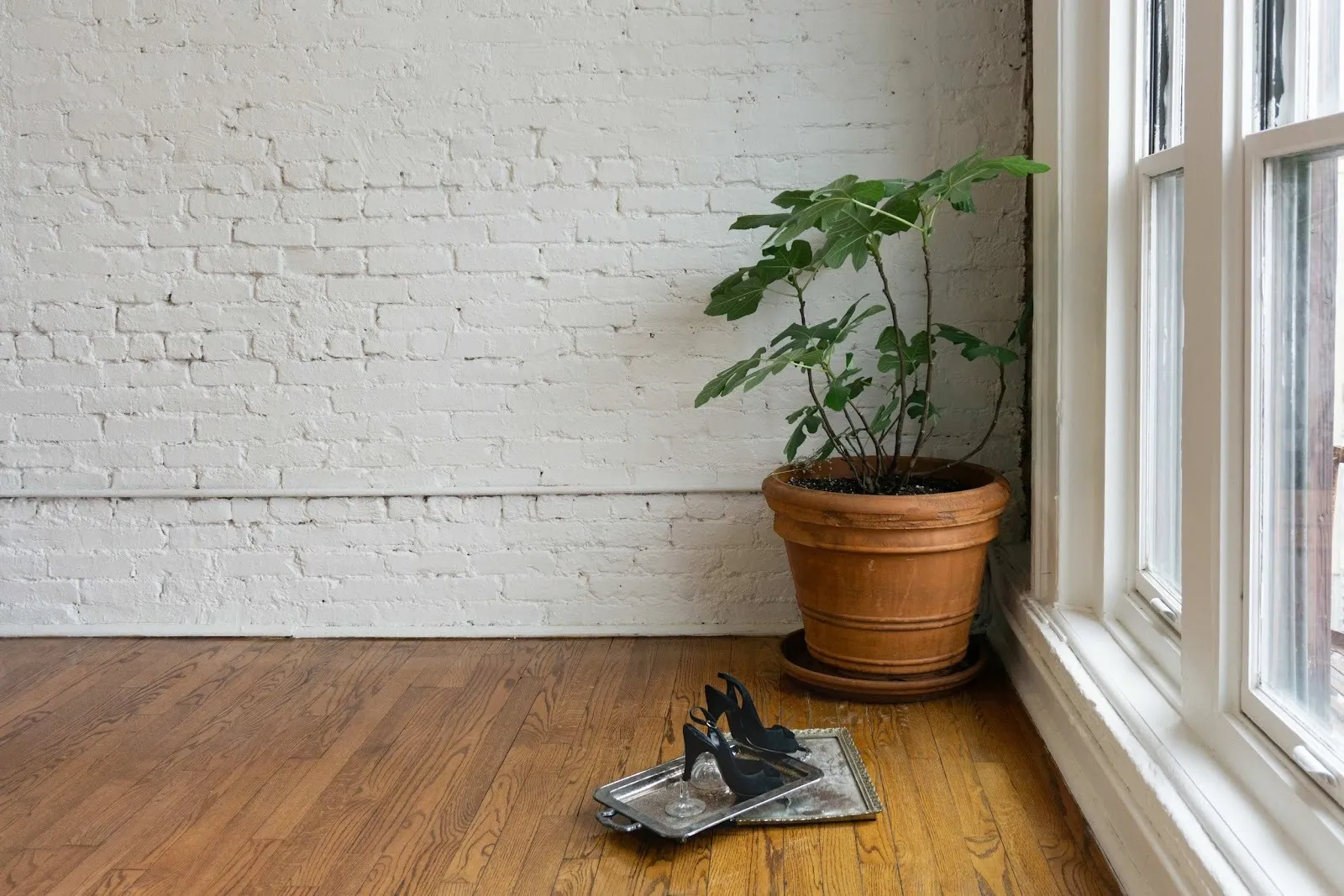
Christopher Gambino’s contortions of household furnishings and feminine attire subvert the manifestations the two forms typically take in a functional household. Loosely inspired by the 1947 play The Maids by Jean Genet, Gambino’s works are similarly dramaturgical, establishing a sort of stage design in the room. The sculptures, as such, also stand as evidence of previous events, definite in their occurrence but unknowable after their passing. Cowardly Isabelle (2026) could have been launched from the overhead loft, while Madame steps out onto the balcony at two in the morning (2025) could demarcate a drunken stumbling towards the fresh air. Gambino presents proof of stories, leaving only a trace of the supposed action that took place.
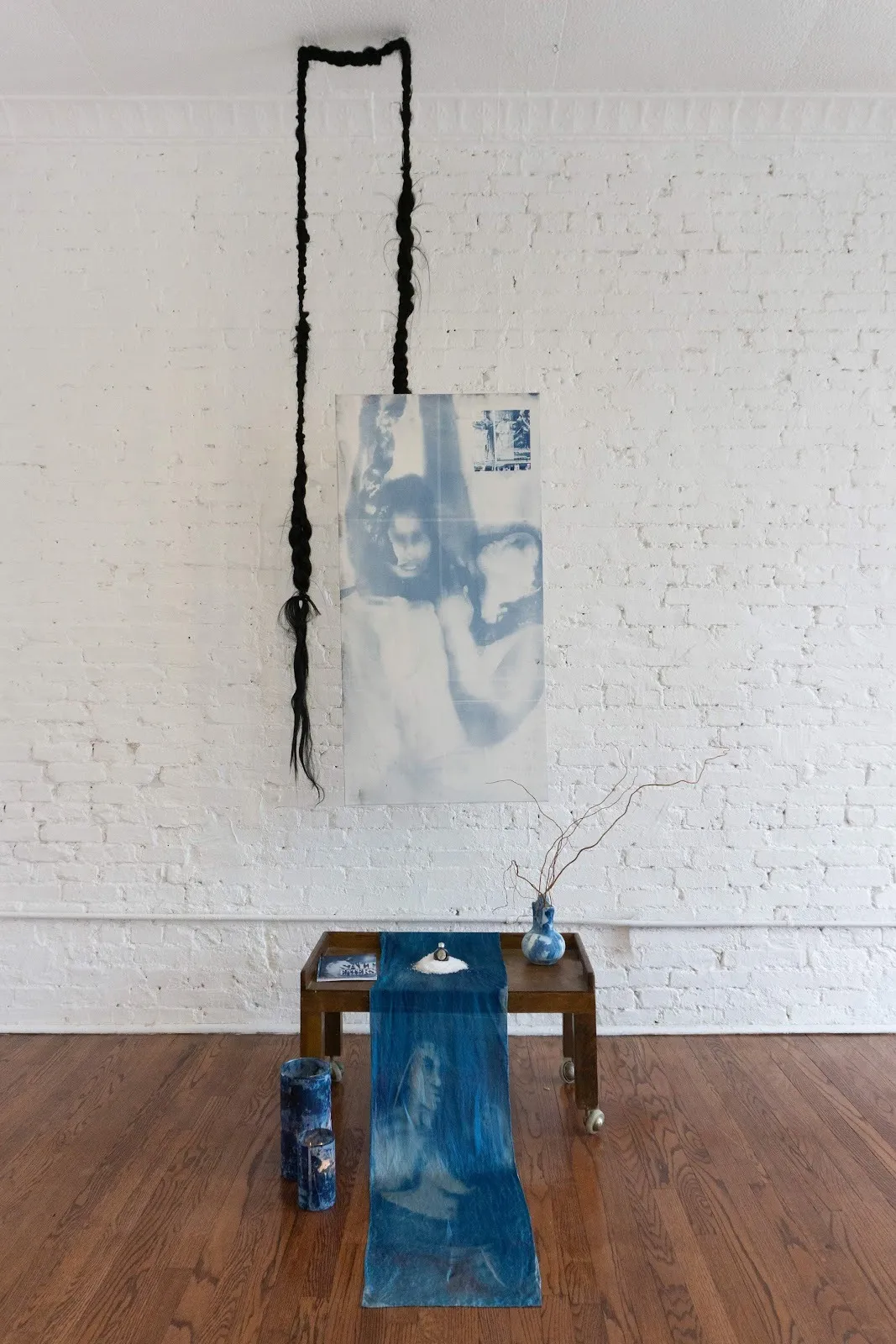
Standing tall, akin to an altar, The Weight of Wholeness Is No Trifling Matter (2026) by Praise Fuller is also an allusion to a literary text. Fuller pays homage to The Salt Eaters, a 1980 novel by Toni Cade Bambara in which a community of Black healers from a fictional Georgia town seeks the healing properties of salt. The vital resource is the focus of her installation; a pile of the element lies tranquil in the center of a second-hand table intricately adorned with a fresh cala lily, kiwi branch, and a reprint of the reference text. The mise-en-scène is brought together by Fuller’s highly pictorial cyanotypes draped over the table, hung above by proxy of braided synthetic hair, and even enveloping the candles. The resulting structure elucidates an overall story of hope that pertains both particularly to the subject of the novel and to its universal resonance.
Weihui Lu’s anthotypes are self-fulfilling prophecies. The light exposure that brought them into existence will also bring them out of it as they fade over time. Naturally, they are installed as close to the sun as one can get in Isolde, right against the monumental windows of the space. Their installation symbolizes an acute awareness and stern defiance of their story, one determined by the forces of illumination.
In the bathroom, perhaps the most intimate site of all, a short video by Helene von Schirach taunts us with its plot (or lack thereof). Mal schauen or Present Tense (2026) takes its voyeurs along the inexact journeys of two women, perpetually moving forwards but constantly looking backwards. The German title of the work bears its sentiment of narrative ambivalence: “let’s see.” The film clearly demonstrates its captured events while occulting its plot. Its characters are in motion; they are certainly living a life, but it is up to the viewer to decide what exactly that life is, to infer where they are going and what they are leaving behind.
At the center of the amalgamation of stories within Isolde, Isolde is collaboration, a pillar that the curatorial duo took quite seriously while orchestrating the project. Besides oscillating the composition of the exhibition text between each other, line by line, Markowitz and Nollinger assembled their artist roster with cross-pollination as the crux. Gathering this particular group of artists stands as a significant curatorial move in and of itself, and the stories conveyed by their work make for a cacophony, one uniquely rewarding to listen to for the sake of complexity. Narrative is what breathes life into Isolde’s first exhibition, without ever really needing to say what exactly it is, if it even is necessarily any one thing. There is always a story to tell, but where do we begin?
Isolde, Isolde is on view at Isolde on Sundays from 12–6 pm and by appointment from March 6 through April 6, 2026.